
Emergency guides
How to find and use your main water shutoff valve
Your main water shutoff valve is the one control that stops every leak in the house at once. Find it on a quiet afternoon, test it, and tag it, so nobody has to search for it with a flashlight while water runs.
By Plumbers in Macomb, MI · Published · Last updated
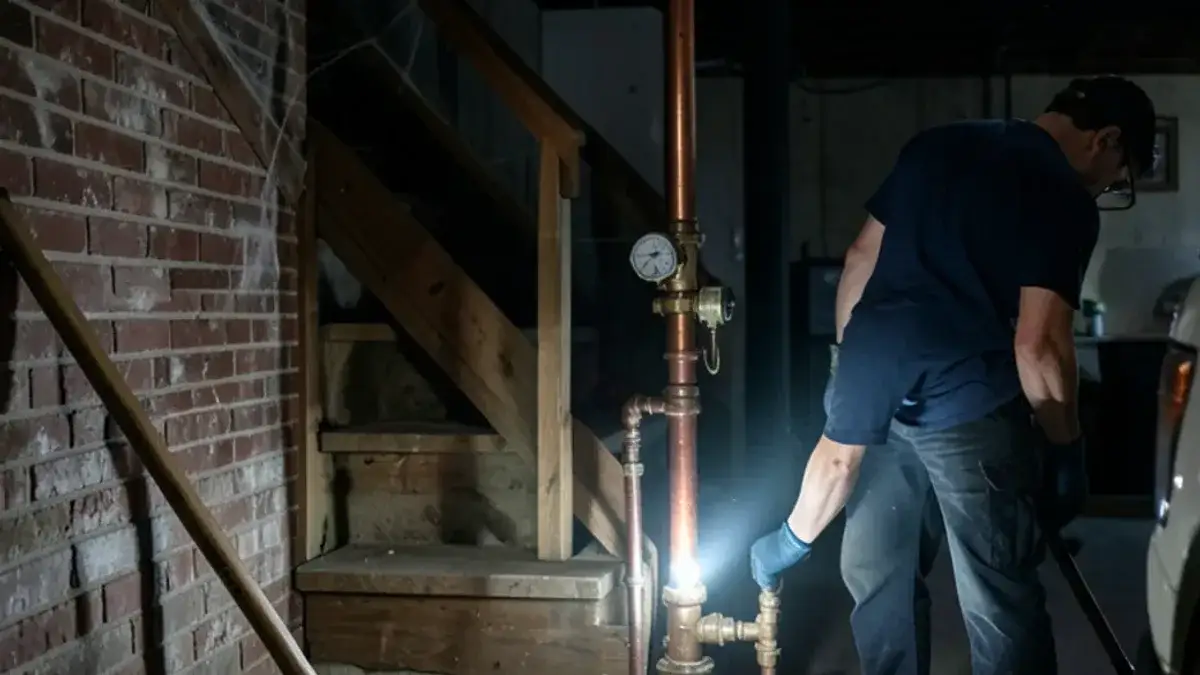
Your main water shutoff valve is usually where the water service enters the house: in a Macomb County basement, low on the front wall facing the street, next to the water meter. Close it by turning a round wheel clockwise or a lever a quarter turn, and test it before you need it.
Where the main shutoff usually sits in Macomb County basements
Start at the front of the house. The water service runs underground from the street, so it usually enters the basement through the floor or low on the foundation wall that faces the road. Look for the water meter, a small round or square body with a dial or digital readout. The main valve sits on the house side of the meter, and many homes have a second valve on the street side as well.
Use the house-side valve when there are two. The meter belongs to the water department, so don't take it apart or move it.
The service line comes in low for a reason. Local codes bury it below the frost line. In Clinton Township, for example, Clinton Township's code has the water service buried no less than five feet down, so the line has nowhere to come up but through the basement floor or the bottom of the wall.
Finished basements
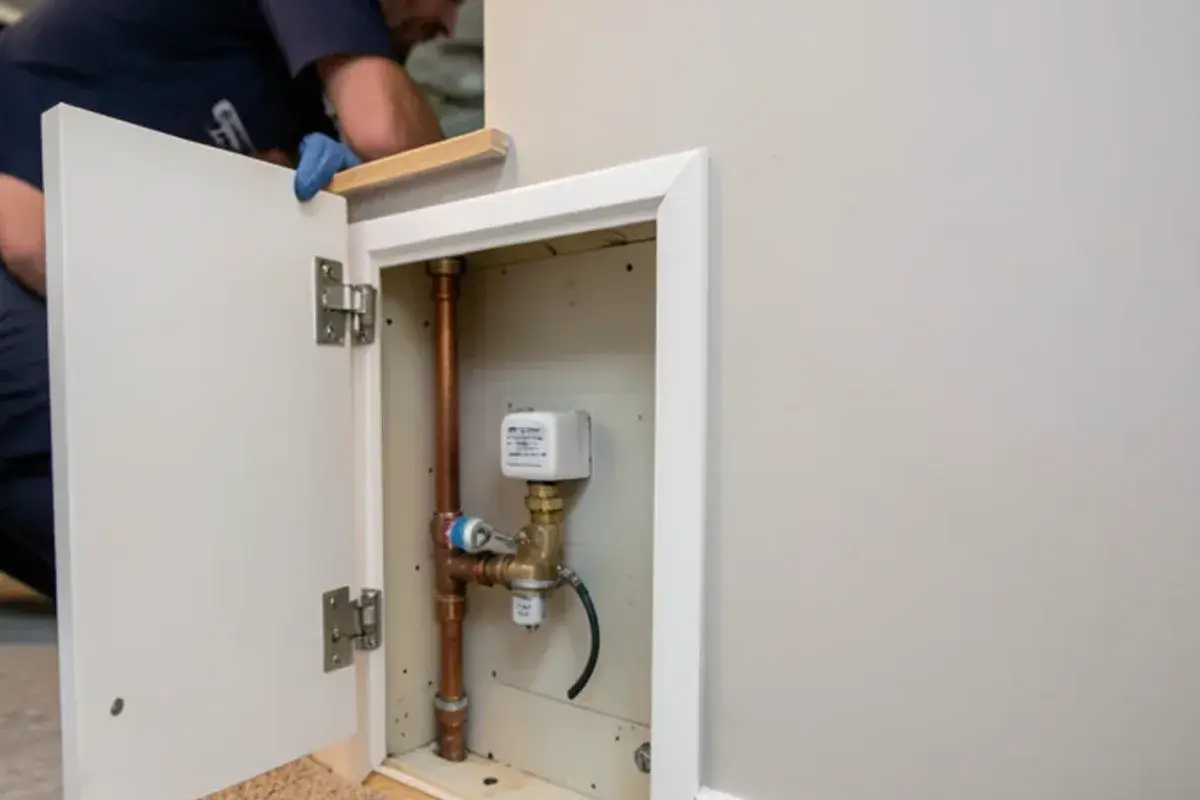
When the basement is finished, look for a small access panel in the drywall on the front wall, a closet built around the meter, or a gap under the stairs. Builders and remodelers are supposed to leave the valve reachable. If someone drywalled over it, that's worth fixing before you need it.
Slab homes, crawl spaces and condos
Homes without a basement put the main in other places. Check the utility closet that holds the water heater, the garage wall nearest the street, or just inside a crawl space hatch. In a condo or apartment, there's often a valve for your unit only, under the kitchen sink, beside the water heater or behind a panel in a closet. The valve for the whole building usually sits in a mechanical room the association controls, so find out now who has the key.
Can't find the shutoff, or it won't close? Get a plumber on the phone
- Your call goes to an independent local plumbing company that does the work.
Gate valves vs ball valves
Most mains in this area are one of two types. You can tell them apart by the handle.
| Gate valve | Ball valve | |
|---|---|---|
| Handle | Round wheel | Straight lever |
| To close | Turn clockwise several times until snug | Turn a quarter turn |
| Closed position | Can't be seen by looking | Lever sits across the pipe |
| Typical age | Common in older homes | Common in newer homes and recent repairs |
| How it fails | Stem seizes, gate breaks off inside, or it never fully seals | Lever gets stiff, but it rarely seizes |
| How to treat it | Gently, without tools on the wheel | Firm hand pressure is fine |
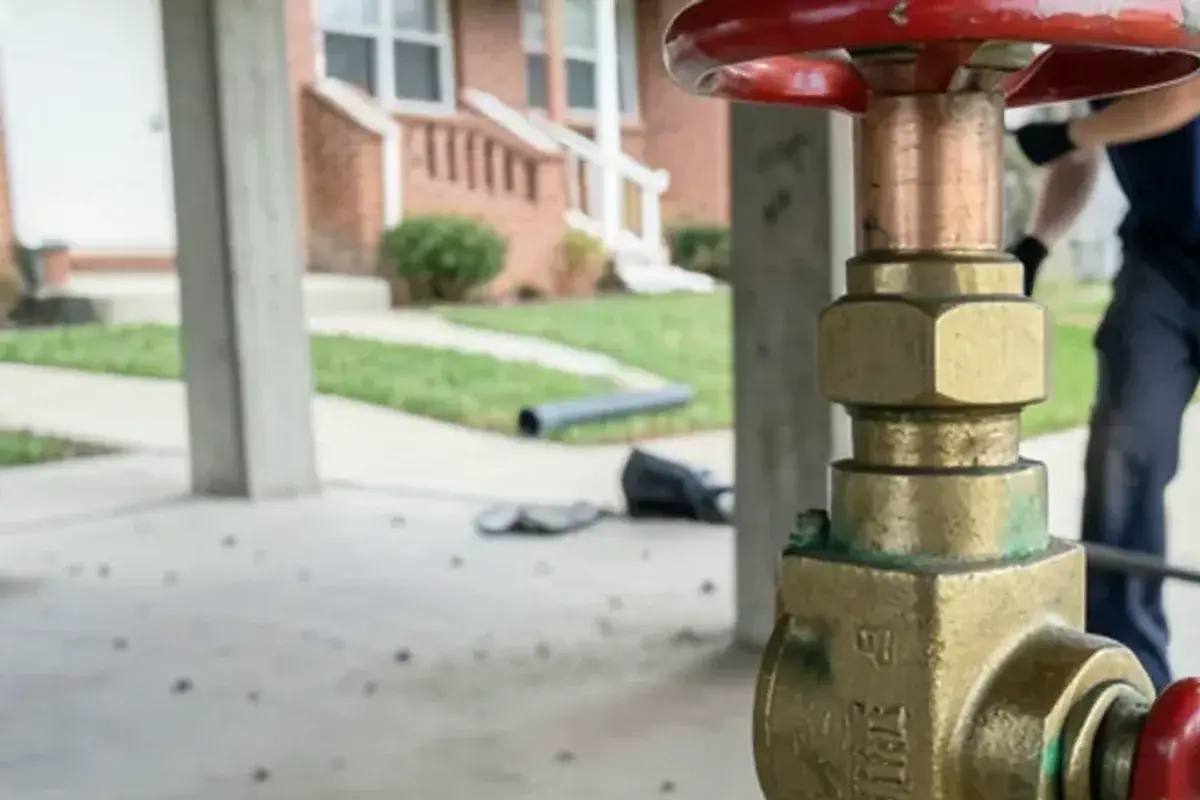
A gate valve that hasn't moved in 20 years is the one to worry about. Inside, a wedge slides down into the flow, and mineral buildup can lock it in the open position or keep it from sealing when you do get it closed.
How to test your main shutoff without breaking it
- Open a faucet on the lowest floor so you can watch the flow.
- Close the main slowly. On a gate valve, stop at the first firm resistance and don't crank past it.
- Watch the faucet. Flow should drop to nothing within a minute or so. A steady trickle means the valve doesn't seal.
- Open the main back up fully. On a gate valve, back it off a quarter turn from wide open so the stem doesn't bind.
- Look at the stem for a drip. A small one can often be stopped by snugging the packing nut a little.
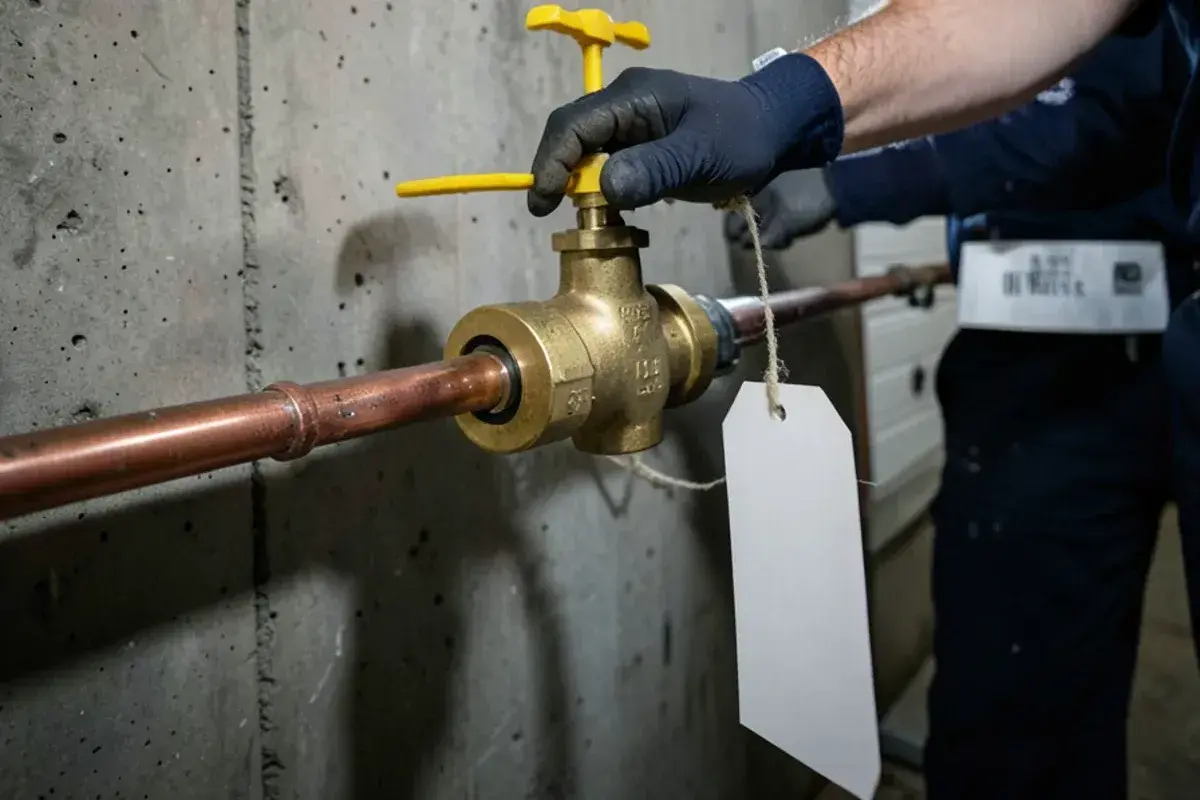
- Hang a tag on the handle so anyone in the house can find it.
If the valve passes, you're done for the year. If it trickles, drips at the stem, or won't move, plan to have it replaced before an emergency forces the issue.
What to do if the valve won't turn
Don't put a pipe wrench or a cheater bar on a stuck wheel. Old stems snap, and a broken stem can leave you with a valve that leaks and can't be closed at all. Try steady hand pressure in both directions, a rubber jar grip for traction, and patience. If it still won't move, stop.
During a real leak with a frozen valve, your options shrink to two. Call a plumber, and call your water department about closing the curb stop.
Use the fixture valves while you wait
Most leaks start at one fixture, and most fixtures have their own valve. Toilets have a small oval handle on the wall behind them. Sinks have two under the cabinet, one for hot and one for cold. The water heater has a valve on its cold inlet pipe at the top, and many washing machines have a pair on the wall box. Closing the one nearest the leak can buy time even when the main is stuck. These little valves seize too, so turn them by hand only.
The curb stop belongs to the water department
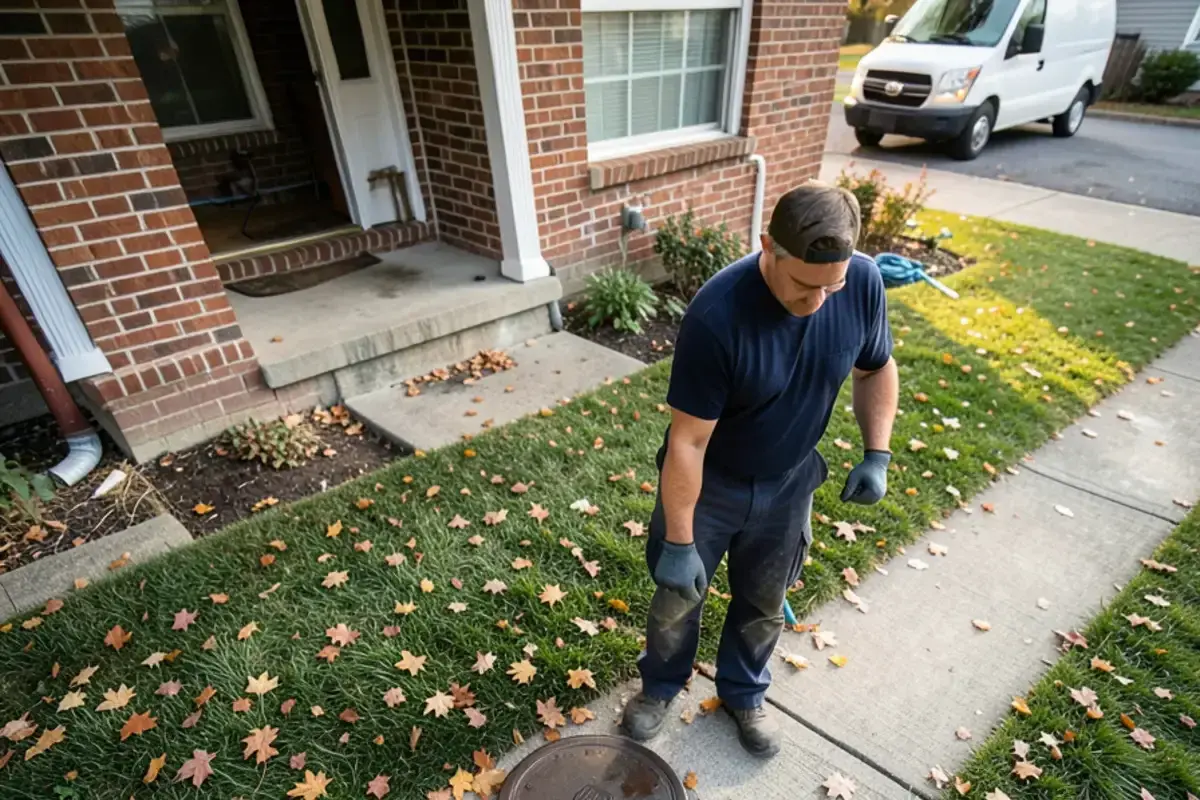
Out in the yard, usually near the sidewalk or the property line, there's a buried valve under a small metal cap called the curb stop. It shuts off water to the whole property before the line reaches the house. It takes a long T-handled key to reach, and it's part of the water department's system. Many departments ask that only their crews operate it, and some bill for damage to one that was forced. Call them, explain the leak, and ask for a shutoff.
Replacing an old main valve
Swapping a tired gate valve for a full-port ball valve is a small job that pays off the first time a pipe fails. The water has to be off at the curb for the swap, so it takes some coordination with the water department. Replacing the whole valve goes beyond a working-parts repair under Michigan's permit exemption, so ask your building department whether it needs a permit in your community.
While the line is exposed, look at the pipe coming up through the floor. Under Michigan rules, the water system pays to replace any lead service line, and your supplier keeps an inventory of what each line is made of. Shelby Township and Macomb Township both report no lead service lines, but older communities have some. Our main water line repair page covers who owns which part of the line between the street and your meter.
What plumbers run into when they replace a main valve
The valve is the easy part. The trouble is usually the pipe around it. On older homes the short stub of pipe coming up through the floor may be corroded where it meets the concrete, and the twisting needed to remove a stuck valve can crack it. A careful plumber looks at that stub first and may suggest replacing a short section along with the valve, which is more work but avoids a second visit.
Meter couplings are the next snag. The nuts on either side of the meter belong to the water department's equipment, and some departments want their own staff to handle anything on the meter. Plumbers typically fit the new valve on the house side and leave the meter alone.
Some homes also have a pressure-reducing valve near the main, a bell-shaped brass body with an adjusting screw on top. It isn't a shutoff. Turning its screw changes the house pressure, so leave it alone unless you're dealing with a pressure problem.
Last, a new ball valve fixes the shutoff and nothing else. It won't help a slow leak in the service line under the yard, low pressure from a narrow old line, or a meter that weeps. Those are separate repairs.
Know your valve before the next leak
Find the valve, test it, tag it, and show everyone in the house where it is. If water is spreading and the main won't close, that's what emergency plumbing repair is for. Once it's stopped, the leak itself is a pipe repair job. Homeowners in Shelby Township, Clinton Township and the communities around them can call (207) 419-2600, and we'll connect you with a plumber who covers your address.
Common questions
Which way do I turn the main water shutoff valve?
A round wheel turns clockwise to close, the same as most faucets, and usually takes several full turns. A lever turns a quarter turn until it sits across the pipe. If the lever already sits across the pipe, the valve is closed.
Can I shut the water off at the curb myself?
No, call your water department instead. The curb stop is part of their system, it takes a long T-handled key, and an old one can break when forced, which turns your leak into their excavation. Many departments will send someone to close it, and they can tell you whether there's a charge for the trip.
How often should I test the main shutoff?
Once or twice a year is plenty. Fall is a good time, before freezing weather raises the odds of a split pipe, and it pairs well with shutting off the outdoor spigots. Closing and reopening the valve now and then keeps the stem from seizing, which matters most on an old gate valve.
Should the main shutoff be replaced when I buy an older house?
Yes, if it's an old gate valve that trickles when closed or won't move by hand. On many post-war Macomb County homes the original valve is decades old, and a full-port ball valve closes in a quarter turn. If the valve tests fine, there's no need to replace it right away; tag it and test it again next fall.
Where we can help
Can't find the shutoff, or it won't close? Get a plumber on the phone
- Your call goes to an independent local plumbing company that does the work.