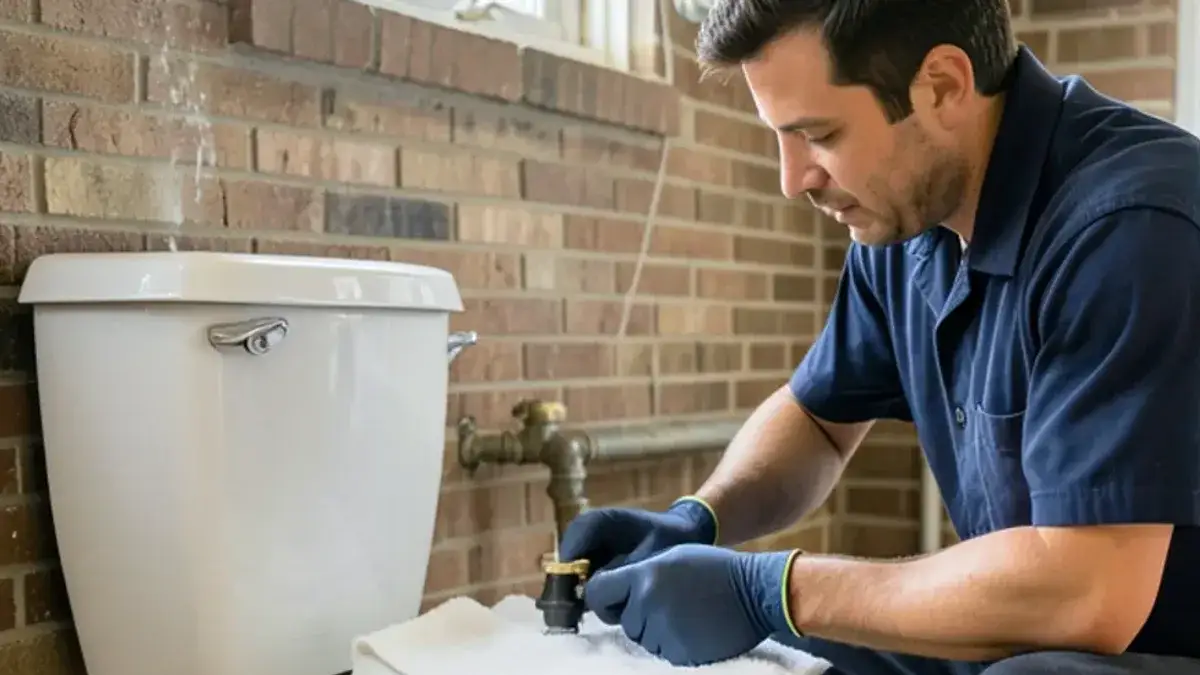
Two local culprits: scale from Lake Huron water and aging cast iron flanges.
Why is my running toilet refilling on its own?
A toilet that hisses, or kicks on for a few seconds every half hour with nobody near it, is losing water from the tank into the bowl. Either the flapper has stopped sealing, because the rubber warped or the chain is catching, or the fill valve won't shut off and the extra water spills down the overflow tube.
Take the lid off and look at the water line. If it's above the top of the overflow tube, the fill valve is at fault. If the level looks right, add a few drops of food dye to the tank and leave it unflushed for twenty minutes. Color in the bowl means the flapper or its seat is leaking.
Local water is part of the story. Macomb Township's supply from the Great Lakes Water Authority's Lake Huron plant averaged 99 ppm of hardness in 2024, about 5.8 grains per gallon. That's moderately hard, and over years it leaves a gritty film on fill valve seals and the flush valve seat. A new flapper can't seal against a scaled seat, so the plumber checks both.
A weak flush with a full tank usually means scale in the rim holes or something lodged in the trap. A slow refill points to a clogged fill valve screen or a stop valve that's only partly open.
Toilet still hissing or rocking? Talk to a plumber
- Your call goes to an independent local plumbing company that does the work.
Toilet leaking at the base: wax ring and flange repair
Water on the floor near a toilet comes from the supply line, the tank-to-bowl bolts, condensation off a cold tank in humid July weather, or the seal under the bowl. Only the last one means lifting the toilet.
A bowl that rocks is the usual reason a seal fails. Each wobble squeezes the wax ring a little thinner until it no longer seals around the drain opening. Watch for a stain or soft spot at the back of the base, a sewer smell at floor level, or a brown ring on the ceiling under an upstairs bathroom.
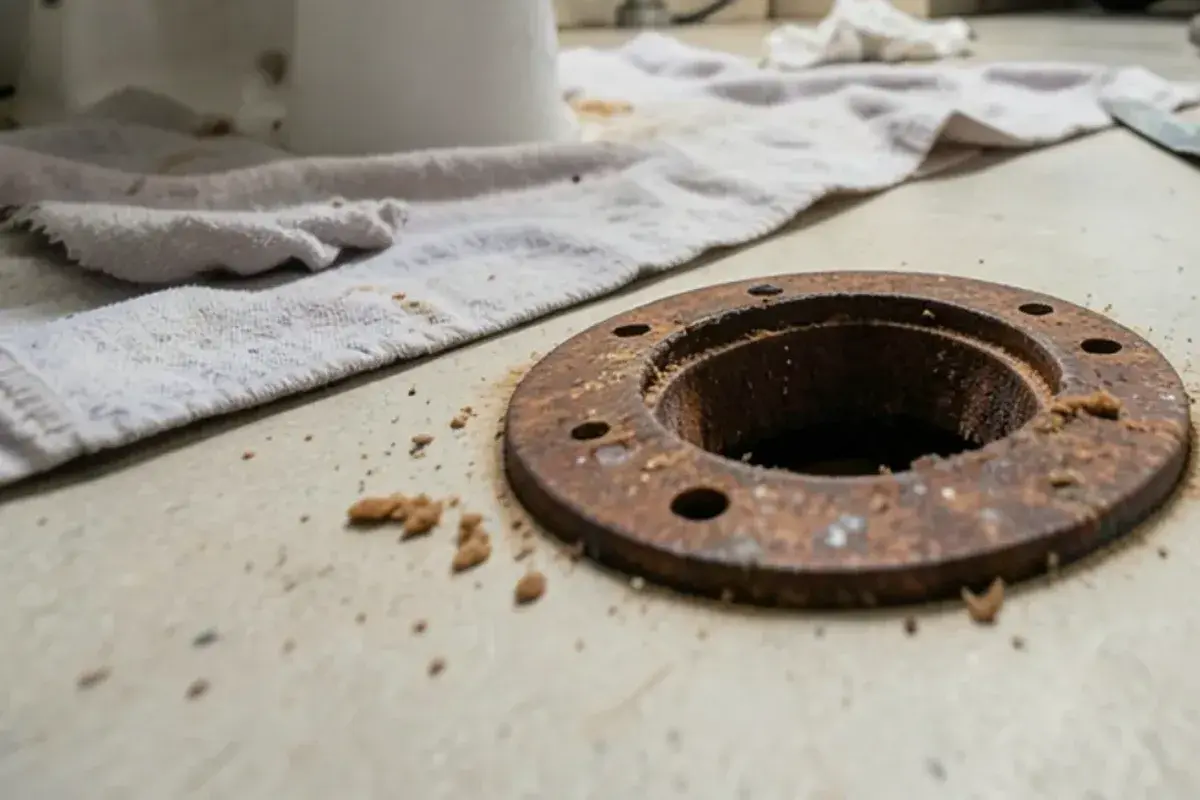
To fix it, the plumber shuts the water, empties the tank and bowl, lifts the toilet and scrapes off the old wax. Then the closet flange gets a hard look. In older houses, like the 1960s-to-80s homes that make up nearly two-thirds of Sterling Heights, the original flange may be cast iron and rusted through at the bolt slots. A flange sitting below a newer tile floor is another common fault. A repair ring, spacer or new flange fixes those, and a soft subfloor has to be dealt with first, because no seal stays tight on a floor that flexes.
The toilet then goes down on a new wax ring or waxless seal, with new closet bolts and shims so it can't rock. Wax forgives an uneven flange; a waxless rubber or foam seal costs more but tolerates slight movement, though not every one fits every flange. Caulk goes around the front and sides, with a gap at the back so a future leak shows instead of soaking the subfloor.
Is it the toilet or the main drain?
A toilet that clogs once after too much paper has a toilet problem. A closet auger clears the trap and the seal stays put.
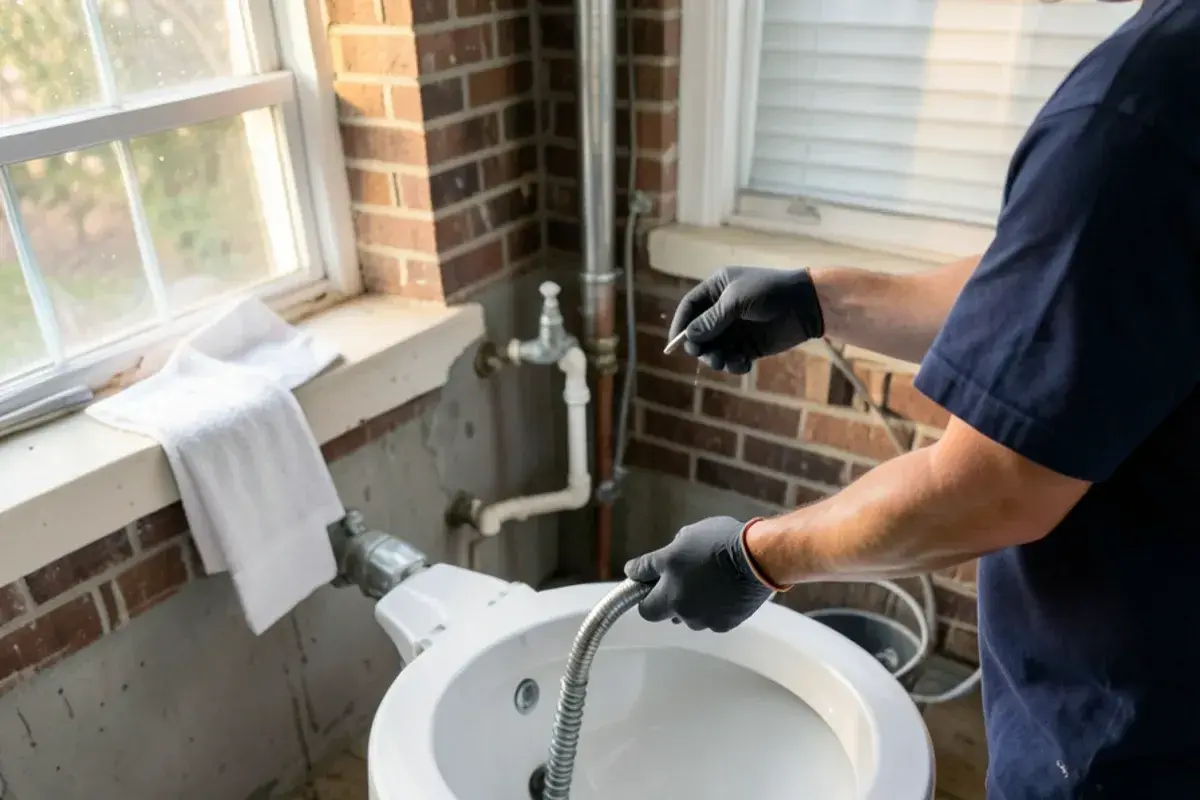
Other signs point past the toilet. If it gurgles when the washing machine empties, if water rises in the tub when you flush, or if the basement floor drain backs up, the blockage is in the main drain or the sewer lateral. Plunging harder only pushes water out somewhere else. That calls for drain cleaning from a cleanout, and a camera look if it keeps coming back. Our guide on why a drain keeps clogging walks through those patterns.
One toilet that clogs weekly while everything else drains fine often has a toy or bottle cap stuck in its trap.
Toilet repair in Macomb homes, step by step
What toilet repair and installation covers
A visit can be a quick part swap or a full replacement. The work usually falls into one of these:
- a new flapper, flush valve or fill valve, or cleaning a scaled seat and rim jets
- tank-to-bowl bolts, supply lines and seized stop valves
- pulling the toilet to replace the wax ring or waxless seal and the closet bolts
- flange repair with a ring, spacer or new flange, once the subfloor is sound
- clearing the trap with a closet auger, or a referral to main-line cleaning
- setting a new toilet that matches your rough-in
The visit in six steps
- Call (207) 419-2600 and say whether the toilet runs, rocks, leaks or clogs, which floor it's on, and whether other drains act up. We pass that along when we connect you with a local plumber, so they arrive knowing what to look at.
- The plumber checks the tank parts, water level, supply line, stop valve and bolts, rocks the bowl, and pins down the source of any water on the floor.
- You're told what failed, what the choices are and what moves the price. Nothing is replaced until you say go.
- The part is swapped, or the toilet is lifted, the flange repaired and the bowl reset on a new seal.
- The toilet is flushed several times, and the base and supply nut are checked with a dry paper towel.
- The area is cleaned up and you're shown the stop valve.
A flapper or fill valve is usually a short visit. Pulling and resetting a toilet takes a couple of hours, more with a broken cast iron flange. It's also worth knowing where your main water shutoff is, in case a supply line ever lets go.
Toilet replacement: rough-in, bowl height and permits
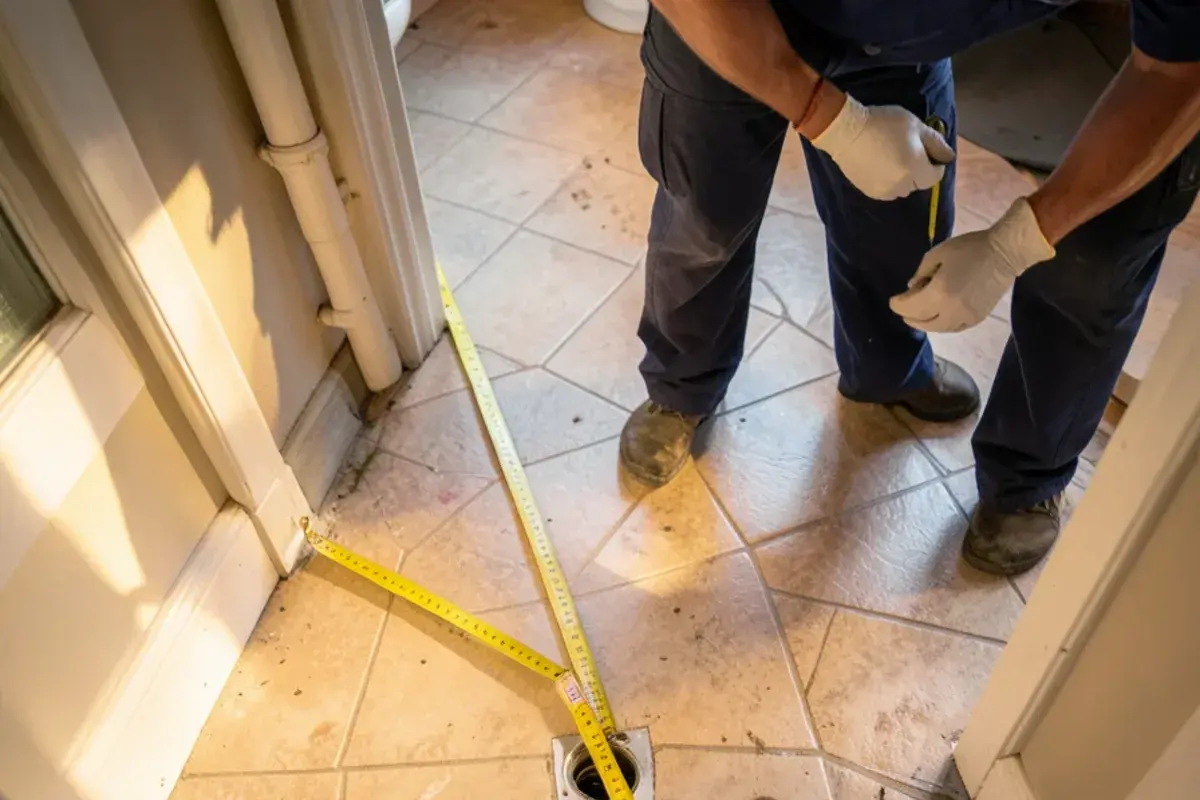
Before buying a new toilet, measure the rough-in: the distance from the finished wall (not the baseboard) to the center of the closet bolts. Most homes are 12 inches. Some older bathrooms are 10 or 14, and a toilet built for the wrong rough-in either won't fit or leaves a gap behind the tank.
Round bowls save space in a tight half-bath; elongated bowls are more comfortable. Comfort-height bowls sit a few inches taller, which helps knees. New toilets sold in the US flush 1.6 gallons or less, and WaterSense models use 1.28 or less. One-piece and skirted toilets take longer to set because the bolts and supply connection are harder to reach.
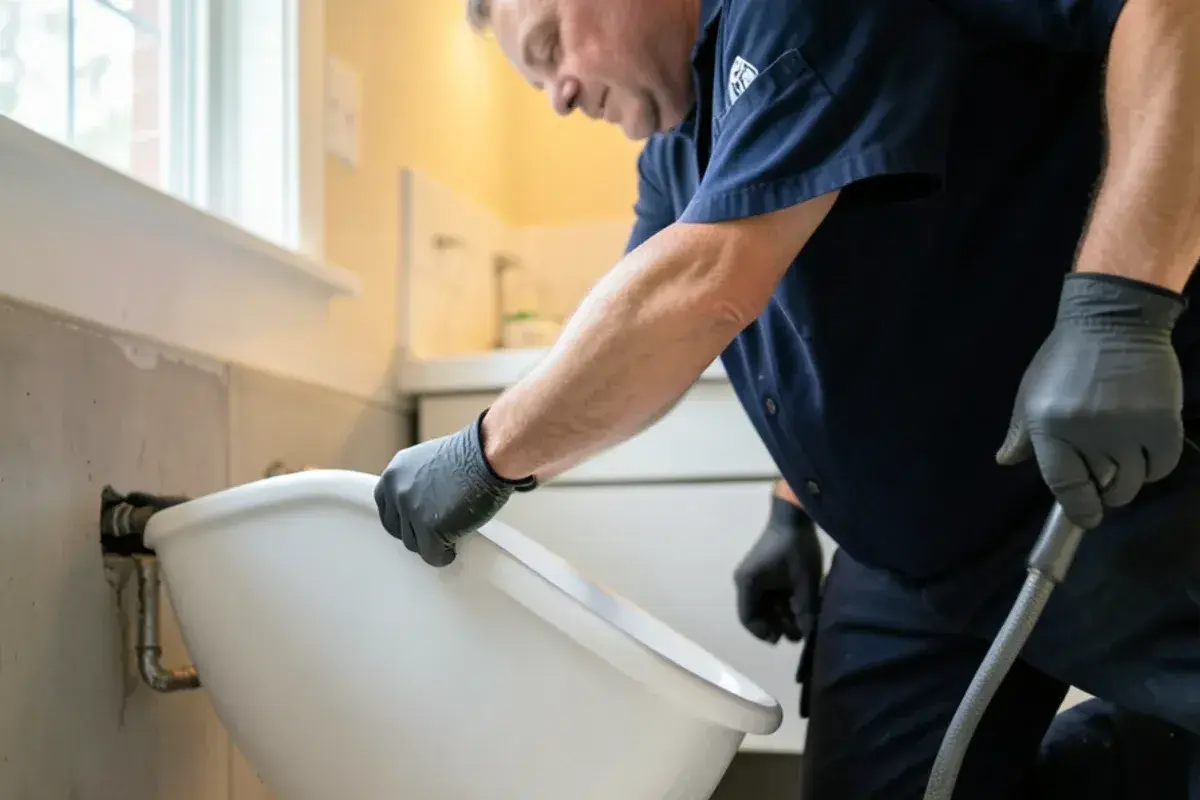
A replacement includes a new seal, bolts and supply line, plus a new stop valve if the old one is seized or weeps.
On permits, Michigan exempts only repairs to faucet and valve working parts, plus clearing stoppages. Tank parts and clogs fall inside that; setting a new toilet doesn't. Macomb Township's permit application lists water closets among its per-fixture items, and other communities differ, so check with your building department. State rules let a licensed plumbing contractor pull the permit, or a homeowner doing the work on the single-family home they live in. When a permit is pulled, the building department inspects the finished install. Get the contractor's license number from the plumber and confirm it's current on LARA's public lookup before the old toilet comes out.
What drives the cost of a toilet repair or swap
A tank part costs less than a reset, and a reset costs less than a new toilet. Past that, the flange and floor decide it: a sound plastic flange needs nothing, a cracked cast iron one needs a repair ring or replacement, and a soft subfloor needs carpentry first. An odd rough-in narrows your choices. A seized stop valve adds parts. Tight half-baths and skirted models add time. Tell the plumber if you've already bought the toilet.
Keeping a toilet quiet and dry after the fix
Skip in-tank bleach tablets, which break down flappers and seals. Flush only toilet paper, since "flushable" wipes don't fall apart the way paper does. Check the bowl for movement a few weeks after it's set. Twice a year, turn the stop valve off and on so it doesn't seize. For a vanity drip or weak shower in the same room, see bathroom plumbing repair.
Why call Plumbers in Macomb, MI when a toilet won't behave?
A running tank wastes water every hour it runs. Plumbers in Macomb, MI gives you a single line for any plumbing problem, from a hissing fill valve to a basement backup. Call (207) 419-2600, describe what the toilet is doing, and we'll match you with an independent plumber who works in your neighborhood. That plumber looks at the toilet, explains the fix and gives you the price before starting. This page walks through the usual causes, what changes the price and when a permit is needed, so the conversation starts on solid ground. There's no web form; a phone call does it.
Toilet repair and installation: questions we hear
How do I get a plumber for toilet repair in Macomb Township and nearby towns?
Call (207) 419-2600. We'll pass you to a plumber who works in your part of the county, whether that's Macomb Township, Fraser, Harrison Township or Sterling Heights. Say whether the toilet runs, rocks, leaks or clogs, and the plumber can tell you their soonest opening.
When is a toilet worth repairing instead of replacing?
Repair it when the china is sound and the problem is a flapper, fill valve, seal or flange. Replace it when the bowl or tank is cracked, parts keep failing every year, or you want a taller bowl or a lower flush volume. A cracked tank can let go without warning, so that one isn't worth patching.
How long does a toilet installation take?
Swapping one toilet for another on a good flange usually takes a couple of hours, including the new seal, supply line and testing. A rusted flange or rotted subfloor adds time, and you'll hear about either before the new toilet goes down.
Can I reuse the wax ring when a toilet is reset?
No. A wax ring takes the shape of the flange and the bowl outlet the first time it's compressed, and it won't reseal after the toilet has been lifted. Any time a toilet comes off the floor, it goes back down on a new ring or a new waxless seal and new closet bolts.