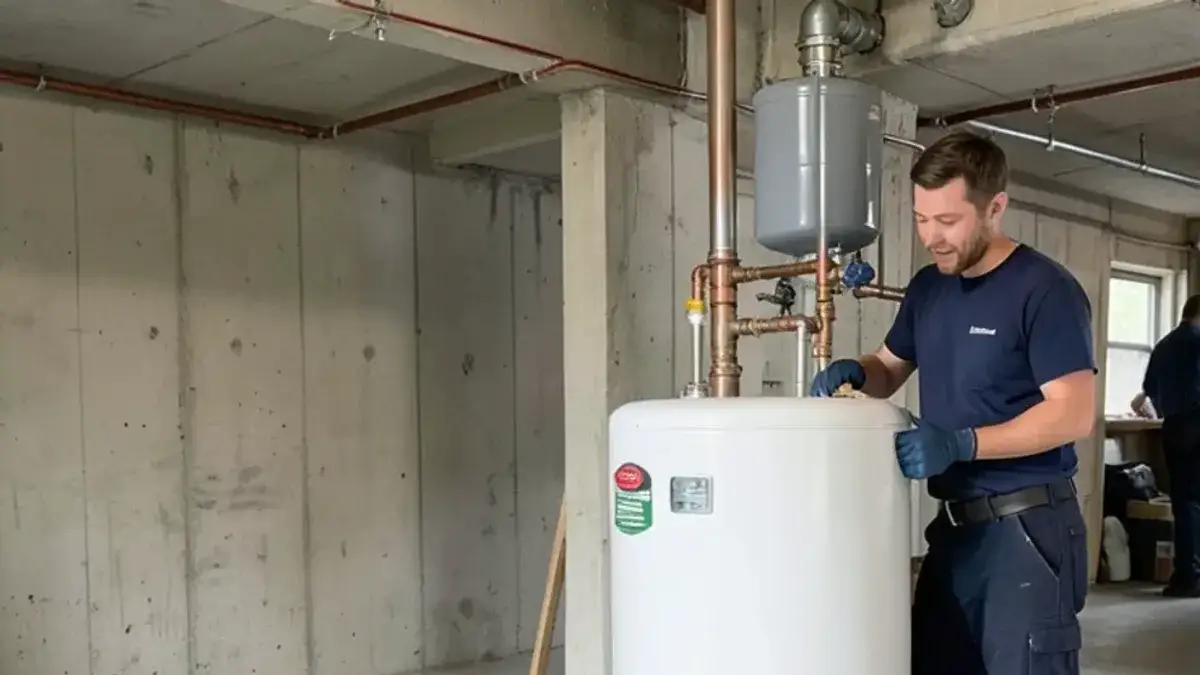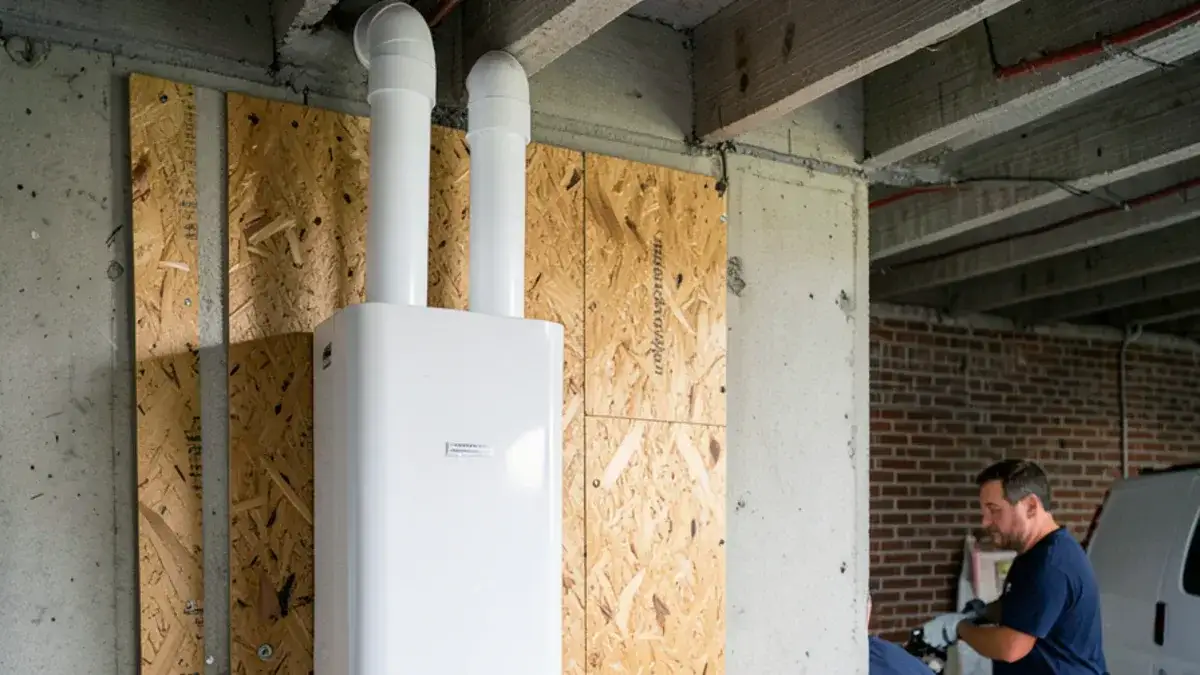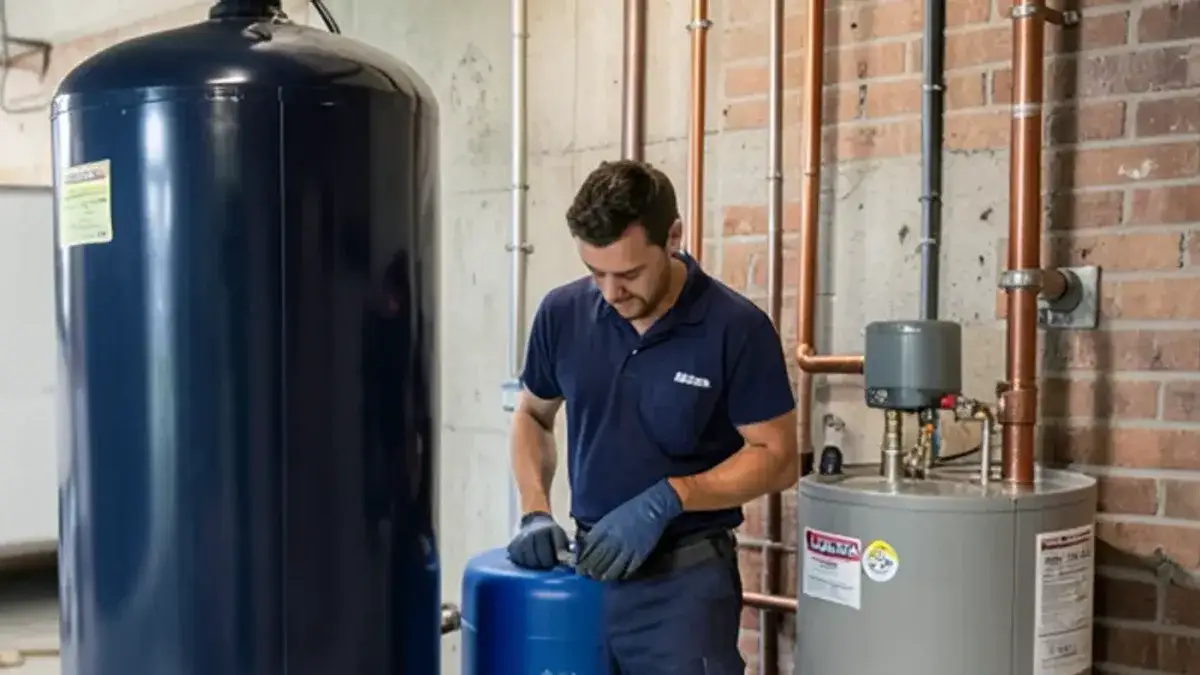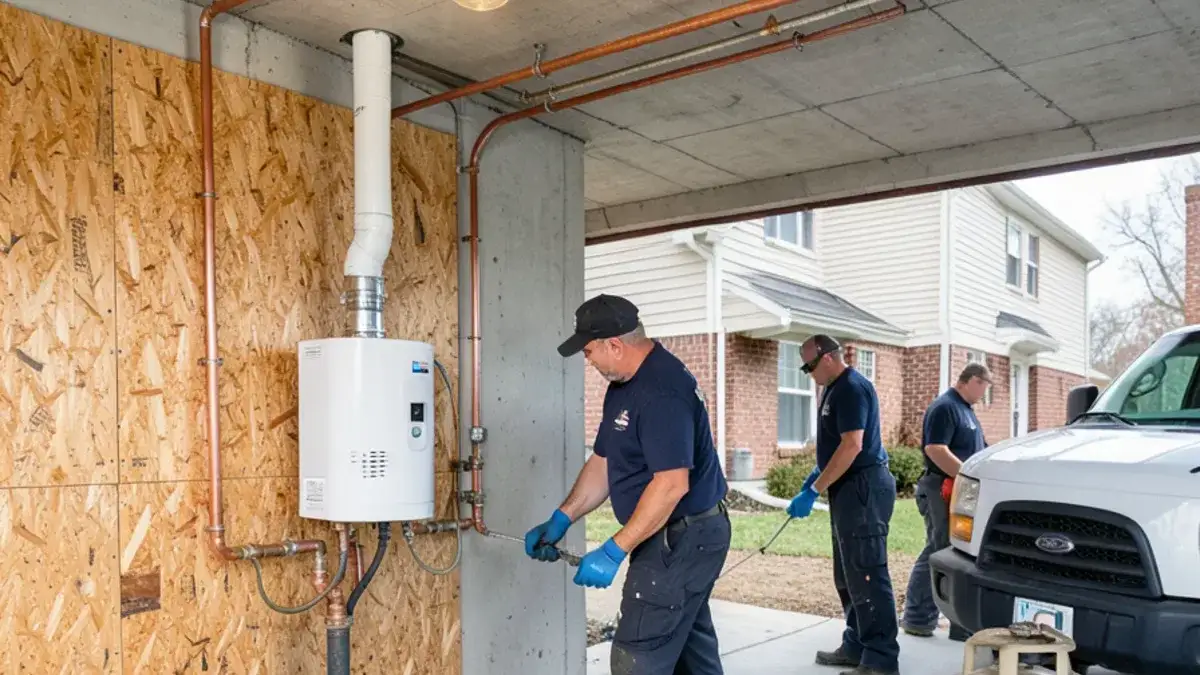
No hot water, or hot water runs out fast? What each symptom points to
Most water heater calls start with one of five complaints, and each points to a different set of parts depending on the fuel type.
| What you notice | Gas heater, likely cause | Electric heater, likely cause |
|---|---|---|
| No hot water at all | Pilot out, thermocouple or flame sensor, igniter, gas control valve | Tripped high-limit reset, upper element, upper thermostat, breaker |
| Hot water runs out fast | Sediment filling the tank, broken dip tube | Lower element or lower thermostat failed |
| Water on the floor | Supply fittings, relief valve, drain valve, tank shell | Same, plus a leaking element gasket |
| Rumbling or popping | Sediment on the tank bottom | Scale crusted on the lower element |
| Rusty or rotten-egg hot water | Anode rod used up or reacting with the water | Same |
When an electric heater gives a few minutes of hot water and then goes lukewarm, the lower element has usually quit. The guide to no hot water checks covers the safe things to rule out before you call.
Cold shower or a puddle under the heater? Call (207) 419-2600
- Your call goes to an independent local plumbing company that does the work.
Why do water heaters break down in Macomb County homes?
Macomb Township's water comes from the Great Lakes Water Authority's Lake Huron plant, and the township's 2024 water quality report put average hardness at 99 ppm, roughly 5.8 grains per gallon. That's moderate, but some calcium drops out of every batch a tank heats. In a gas tank it settles on the bottom, so the burner has to push heat through a mineral layer. In an electric tank it crusts the lower element until the element overheats and burns out.
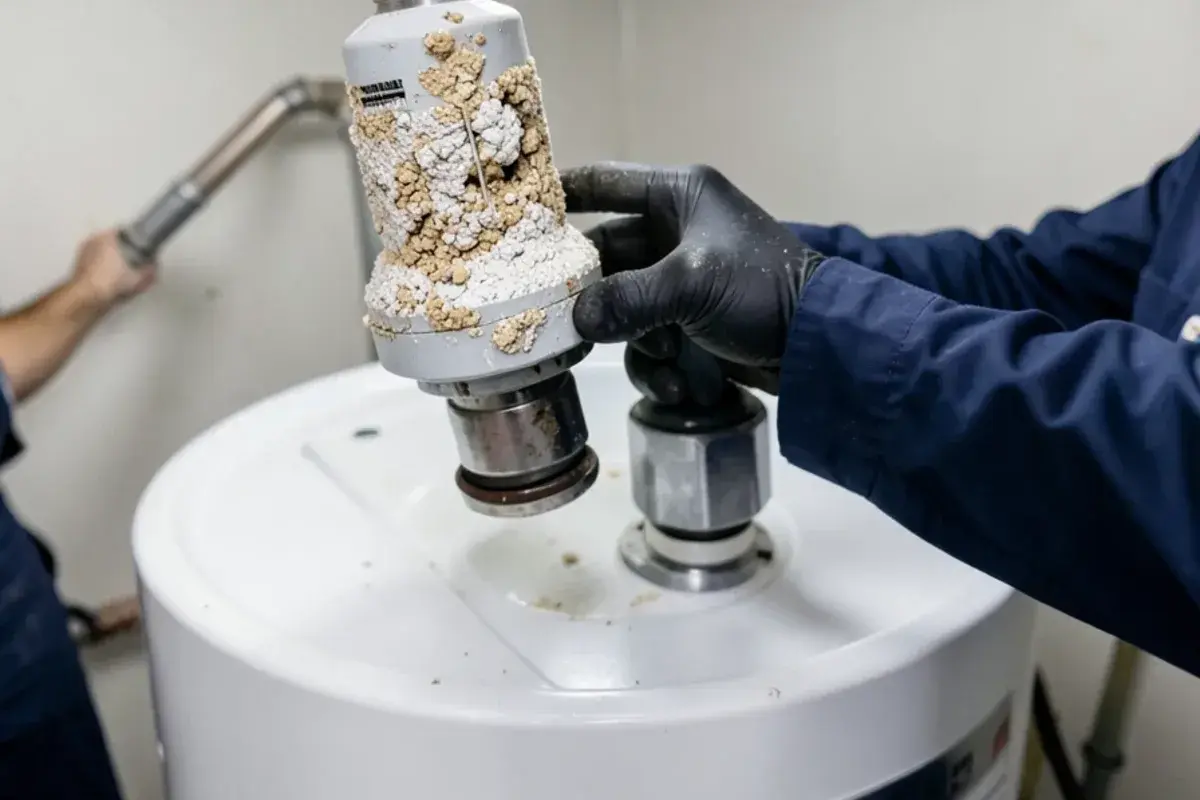
Winter adds load. Water entering the house is far colder in February than in August, so the burner or elements run longer to reach the same setting. A thermocouple or element that was barely hanging on in fall tends to give up during the first cold stretch.
Other common causes are an anode rod eaten away, leaving the steel tank to rust; a relief valve that drips because pressure climbs in a closed system; and corroded nipples at the top of the tank.
Water heater repair checks for gas and electric tanks
A water heater repair visit is diagnosis first and parts second. The plumber works through fuel or power, ignition or elements, controls, safety devices, water connections and venting. Repair covers parts that wear out on a tank that still holds water; changing the piping, venting or heater itself is installation work. Typical repair scope:
- relighting a pilot, or replacing a thermocouple, flame sensor or hot-surface igniter
- testing and replacing upper and lower elements and thermostats on electric tanks
- replacing a dripping temperature and pressure relief valve or a leaking drain valve
- pulling the anode rod to check it, and flushing loose sediment
- checking the vent connector and draft on gas units, and the blower on power-vent models
Gas control valves and power-vent boards are brand-specific, so the model number on the label matters.
Gas heaters and a pilot light that's out
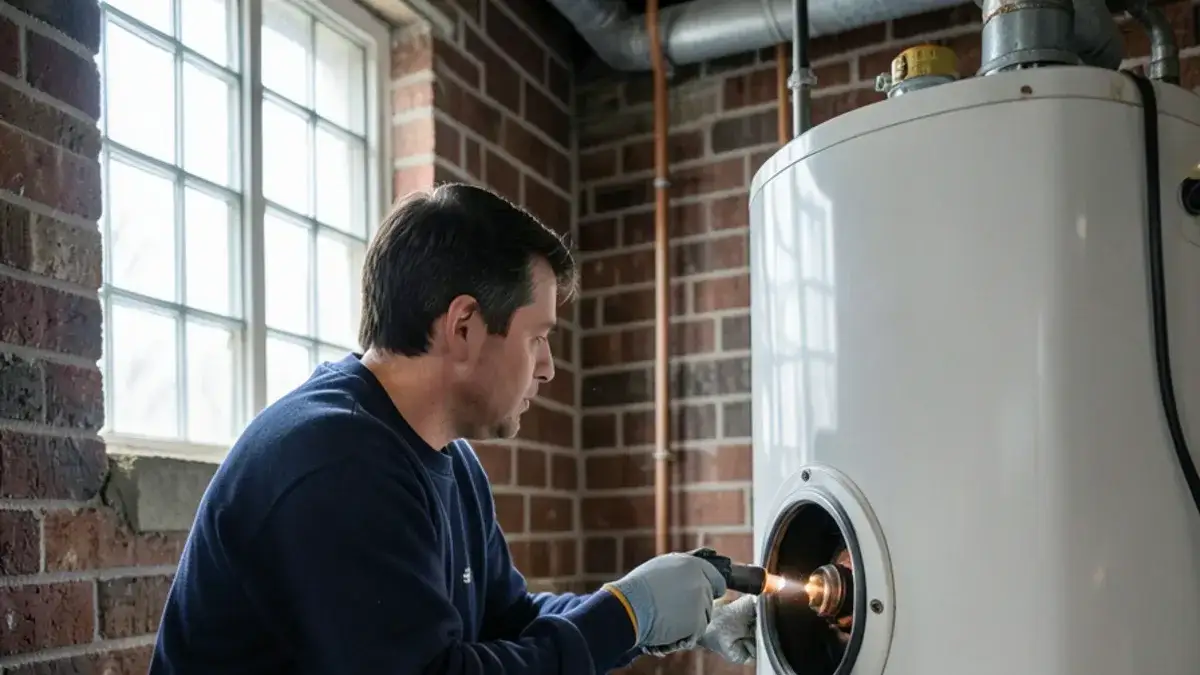
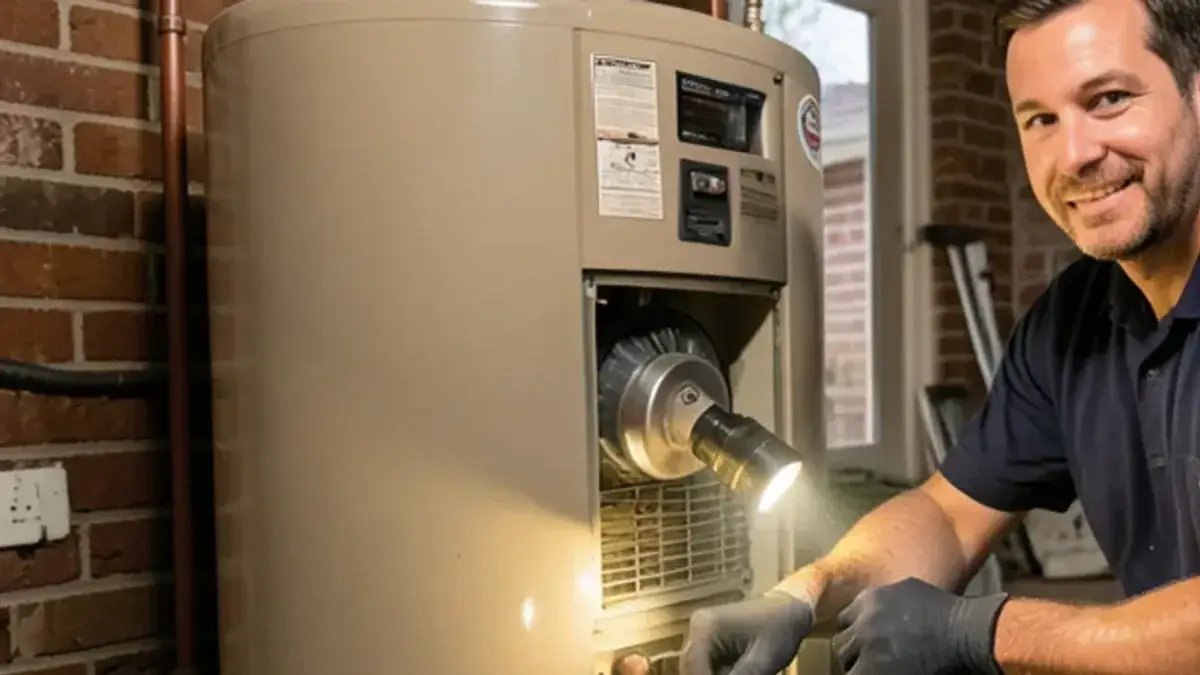
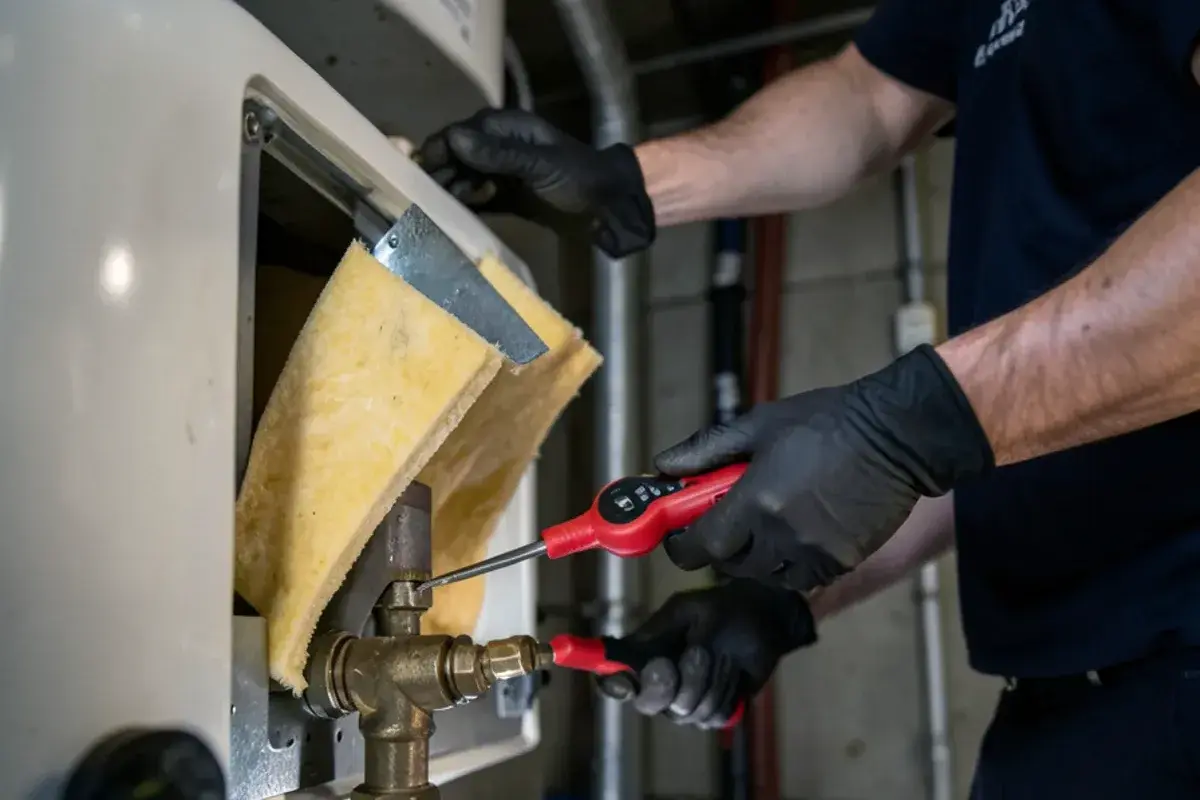
The plumber confirms the gas supply valve is open, looks at the pilot and burner through the sight glass, and tests the thermocouple or flame sensor output with a meter. Newer gas tanks have a sealed chamber with a flammable-vapor sensor that can lock the burner out and needs its own reset. On power-vent units, the blower and pressure switch get checked too, and flame color and draft at the vent hood show whether it burns and vents properly.
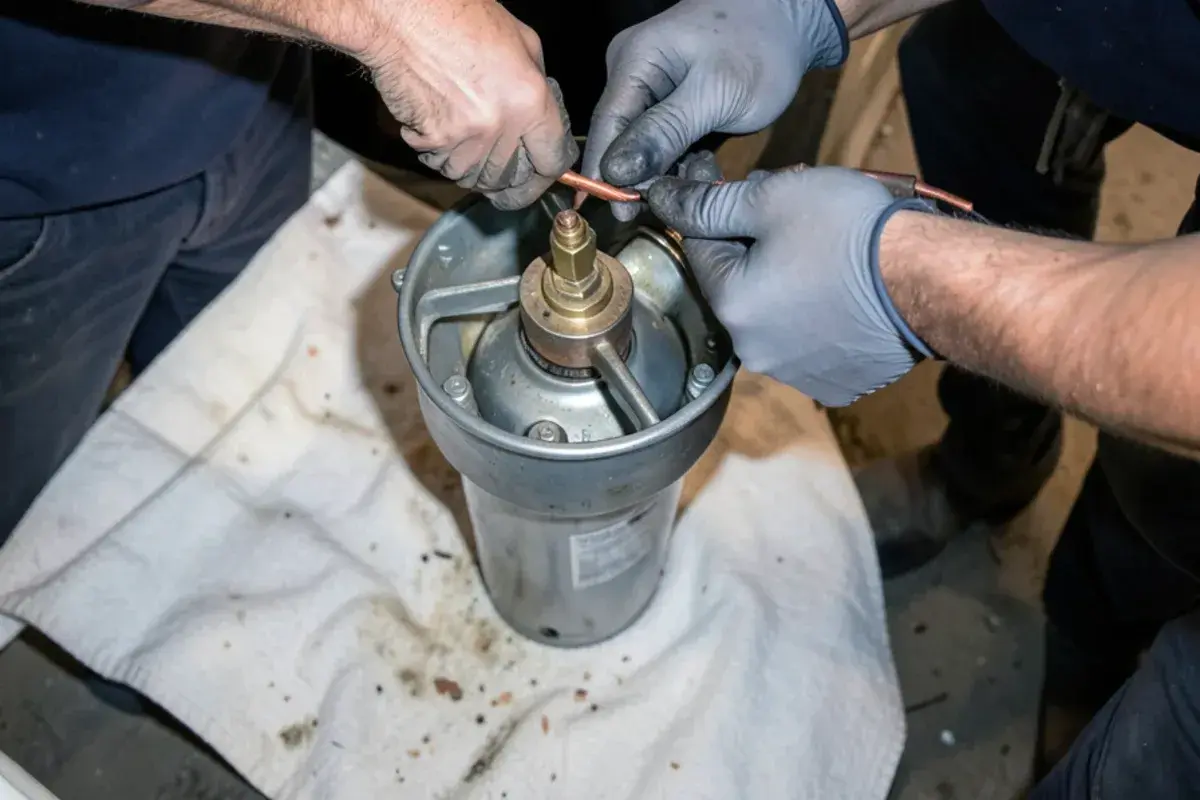
Electric heaters that run cold or run out
Power is shut off at the breaker and confirmed dead with a tester before any panel comes off. Then the high-limit reset gets checked, each element is measured for resistance, and each thermostat is tested for whether it closes and sends power where it should.
When the water heater is leaking
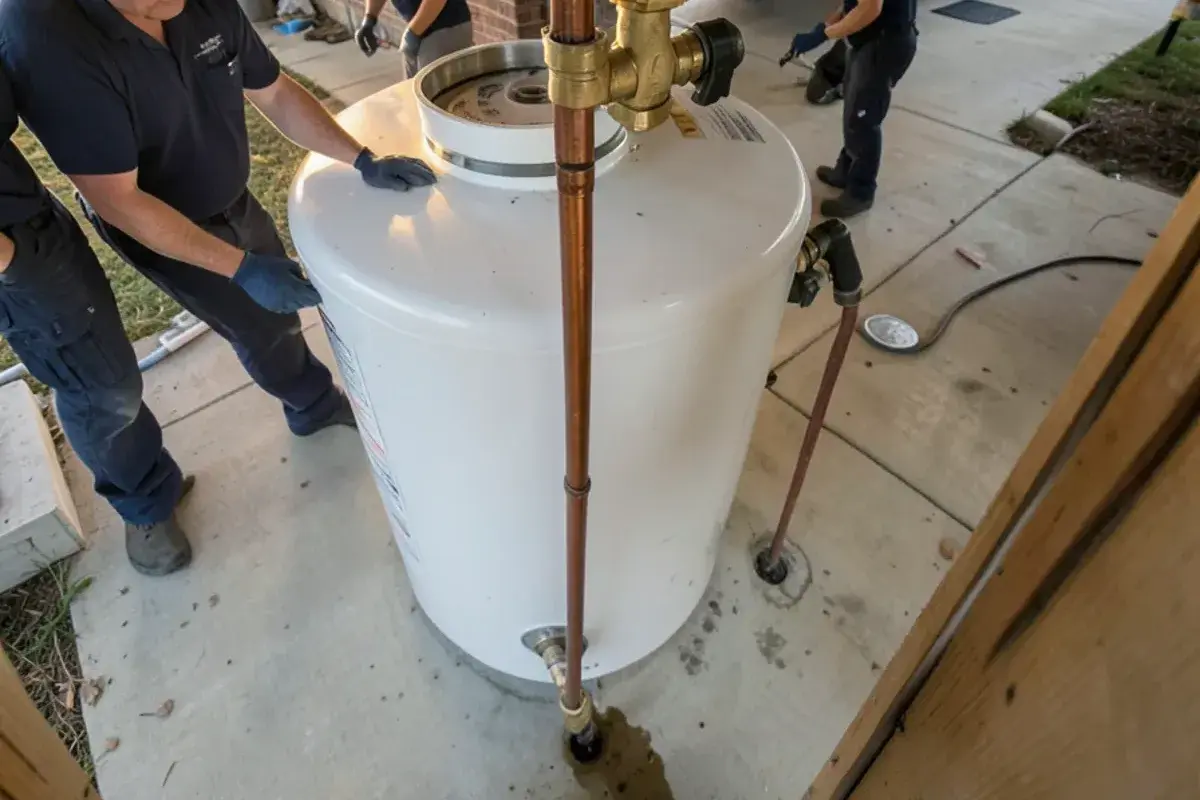
Everything gets wiped dry and the source traced from the top down: supply connections, the relief valve and discharge pipe, the drain valve, element gaskets. A gauge on a hose bib shows the house pressure and whether it spikes as the heater runs. Water seeping from under the jacket with no other source means the inner tank has failed, and no part fixes that.
Repair or replace: the signals that decide it
Repairs make sense for thermocouples, igniters, elements, thermostats, relief valves, drain valves and anode rods, and for a gas control valve on a heater with years left in it. Replacement makes more sense when the tank itself leaks, when hardened sediment won't flush, when rust shows up in the hot water, or when the heater is past its warranty term and needs a major part. The serial number on the label encodes the manufacture date.
If replacement is the better call, see water heater installation for sizing and permit steps, or tankless water heater installation if you've been weighing the switch.
Permits and licensing for water heater work in Michigan
LARA's rule is that plumbing work doesn't begin until the enforcing agency issues a permit. Its exemption covers only repairs that touch a faucet's or valve's working parts, or clearing a stoppage, when existing piping and fixtures aren't altered. A full replacement is permitted work; Macomb Township's fee table lists a residential water heater and an expansion tank as separate items. A licensed plumbing contractor pulls that permit, or a homeowner doing the work in the single-family house where they live. Gas piping and venting sit under Michigan's mechanical license classifications. Ask the plumber for the contractor license number and check it on LARA's online lookup. Whether a repair counts as an alteration is the building department's call.
What happens during a water heater repair visit
- You call and describe the symptom, the fuel type and the brand and model from the label. A photo of the rating plate helps.
- The plumber checks for a gas smell, water near electrical equipment, and how the heater is vented before touching anything.
- Diagnosis follows the steps above until the failed part is found.
- You hear what failed, the repair and replacement options, and what drives the cost of each before any work starts.
- The approved repair is made. Element swaps mean draining the tank first.
- The heater runs a full heating cycle while the plumber watches the burner or checks amperage and looks again for leaks, then cleans up and tells you what to watch for over the next few days.
Standard parts like thermocouples, elements and relief valves usually mean a one-visit repair; brand-specific gas controls sometimes have to be ordered. A gas tank reheats faster than an electric one.
Keeping the heater running after a repair
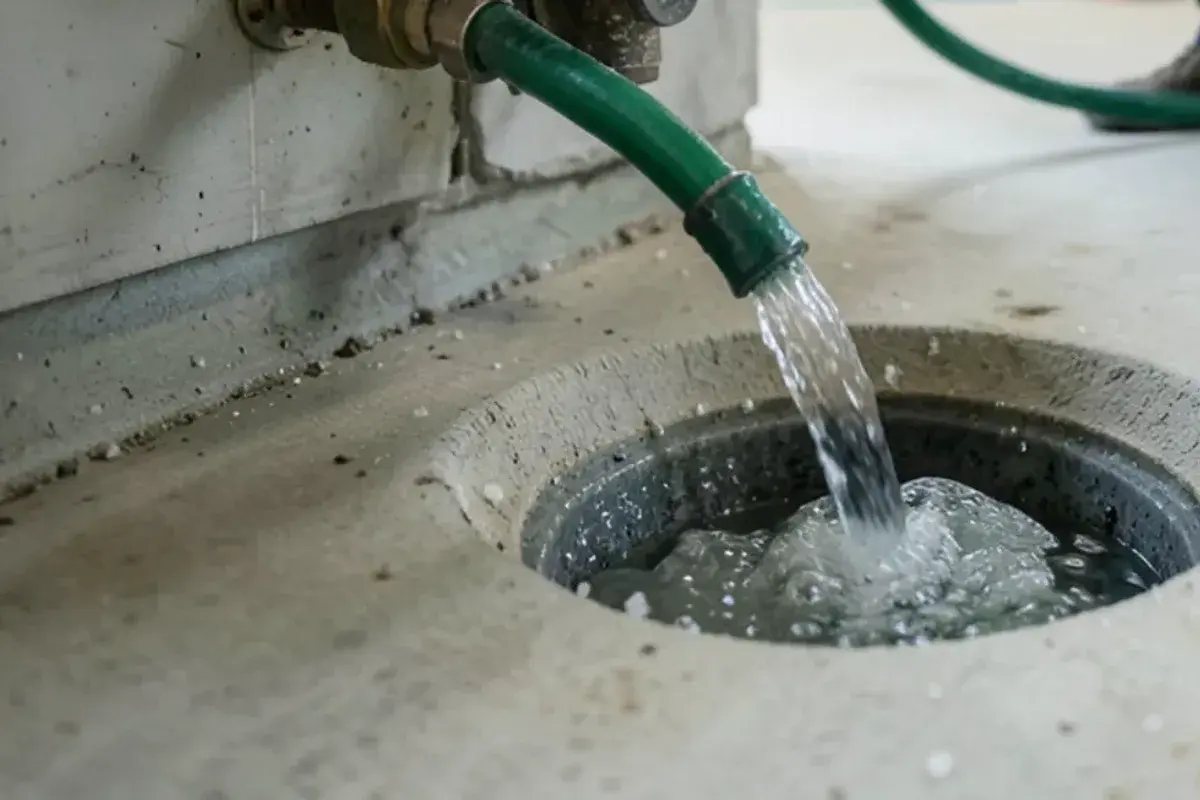
Drain a few gallons from the drain valve once a year until the water runs clear. Have the anode rod checked every few years, more often if your hot water smells. A setting near 120°F limits scale buildup and scald risk. Keep storage boxes away from a gas burner's air intake. If scale keeps coming back on elements and fixtures, ask about water softener and filtration options for your supply.
What moves the cost of a water heater repair
Nobody can price a repair until the failed part is found. These are the variables:
- Fuel and ignition type. A thermocouple is a simpler job than a power-vent control board.
- Whether the part is stocked locally or has to be ordered for that brand.
- Draining and refilling, which element and anode work require.
- Access, such as a tight closet, a crawl space or a finished basement with a drop ceiling.
- Code problems found along the way, like a missing relief discharge pipe or a vent connector with the wrong slope.
- Timing, if you need someone outside normal hours.
Two more come up often in Macomb County. A heater that needs replacing brings in the permit, charged as an application fee plus per-item fees, and sometimes an expansion tank. A tank in a finished basement or condo closet may need a drain pan where a leak would do damage. Ask for the repair price and the replacement alternative in writing and compare them.
Why call Plumbers in Macomb, MI about water heater repair?
One number covers every plumbing problem, from a cold shower to a puddle under the tank. When you call, we ask a few questions (gas or electric, the age on the label, whether water is on the floor) and connect you with an independent local plumber who covers your area. That plumber does the diagnosis, quotes the work and makes the repair. These pages explain what a part swap involves, what moves the cost and when a permit applies, so you can ask good questions first. There are no forms to fill out. Call (207) 419-2600, describe what the heater is doing, and you'll hear the next step.
Water heater repair: questions we hear
Can both gas and electric water heaters be repaired in Macomb, MI?
Yes. Gas tanks with standing pilots, electronic ignition or power venting, and electric tanks with one or two elements are all part of water heater repair. Tell us the fuel type and the brand and model from the label when you call so the plumber arrives prepared, and say whether there's water on the floor.
Is it worth repairing my water heater, or should I replace it?
Yes, when the failure is a part. A failed thermocouple, igniter, element, thermostat or relief valve is usually worth fixing. A leak from the tank itself can't be repaired. If the heater is past its manufacturer's warranty term and needs an expensive control, compare that repair against a new heater before deciding.
Why does my water heater rumble or pop?
Sediment on the tank bottom traps small pockets of water under the mineral layer. When the burner fires, those pockets flash to steam and pop. Flushing helps if the sediment is still loose; a thick, hardened layer usually means the tank has lost efficiency for good.
Why is water coming out of the pipe on the side of my water heater?
That pipe is the discharge from the temperature and pressure relief valve. It opens when tank pressure or temperature climbs too high, often from thermal expansion in a closed system, or when the valve itself wears out. Don't cap or plug it. Have the pressure and the valve checked.