Dripping faucet? Cartridge or compression stem decides the fix
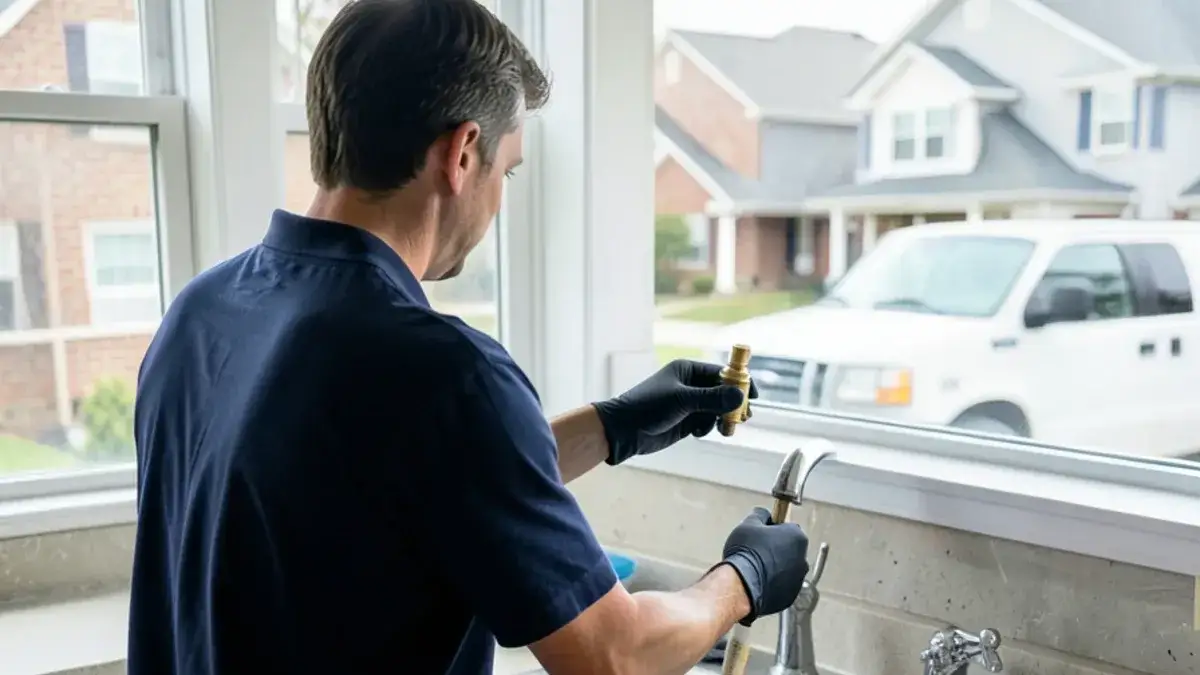
The first question is what kind of faucet you have. Most single-handle kitchen and bathroom faucets from the last few decades use a cartridge, a plastic or brass insert with O-rings, sometimes holding a pair of ceramic discs. When it wears, you get a drip from the spout, water around the handle, or a handle that grinds and won't quite close.
Older two-handle faucets are usually compression type. Each handle turns a stem that presses a rubber washer down onto a brass seat. The washer hardens, the seat pits, and people crank the handle tighter to stop the drip, which wears both faster.
Local water adds to the wear. Macomb Township's Lake Huron water averaged 99 milligrams per liter of hardness in its 2024 report. That's moderate, yet it still scales aerators and cartridge discs over a few years, and a scaled cartridge feels stiff long before it drips.
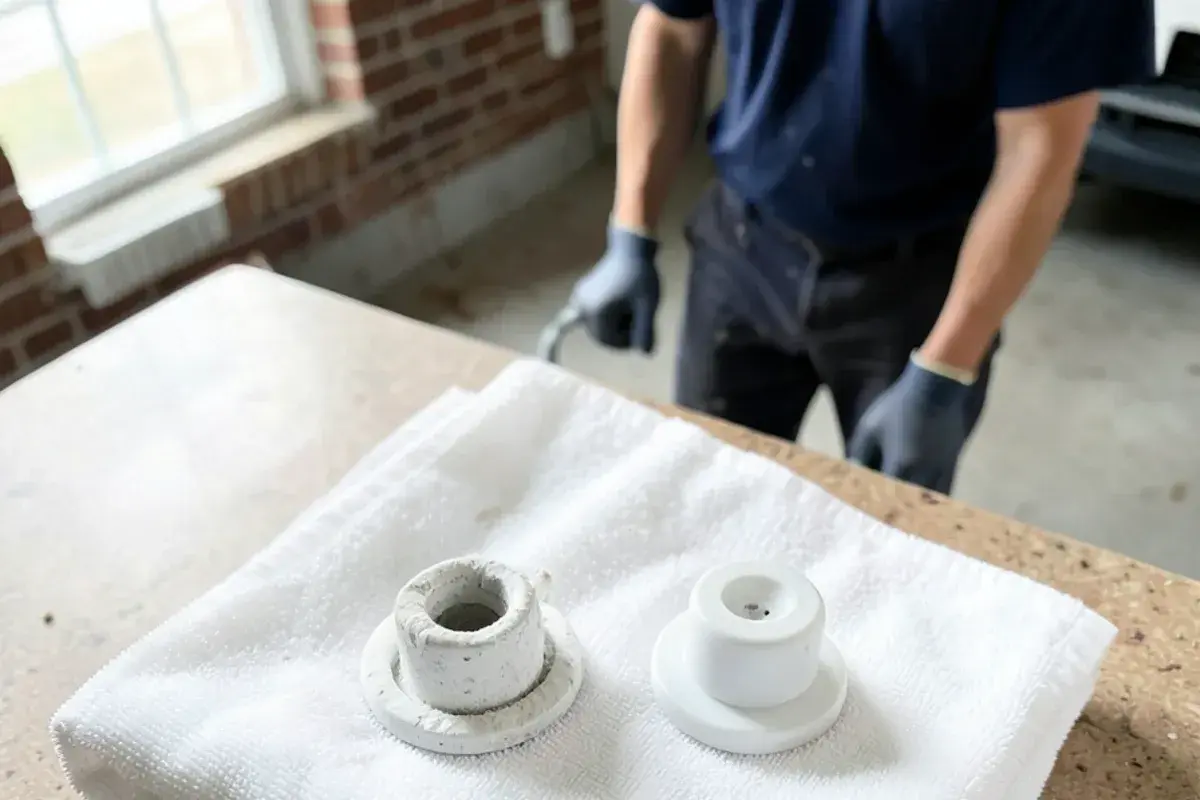
On a compression faucet, the fix is new washers and either a new seat or a seat that's dressed smooth. If the faucet is a decades-old model with no parts available, that pushes you toward replacement.
Faucet still dripping? Get the cartridge or stem checked
- Your call goes to an independent local plumbing company that does the work.
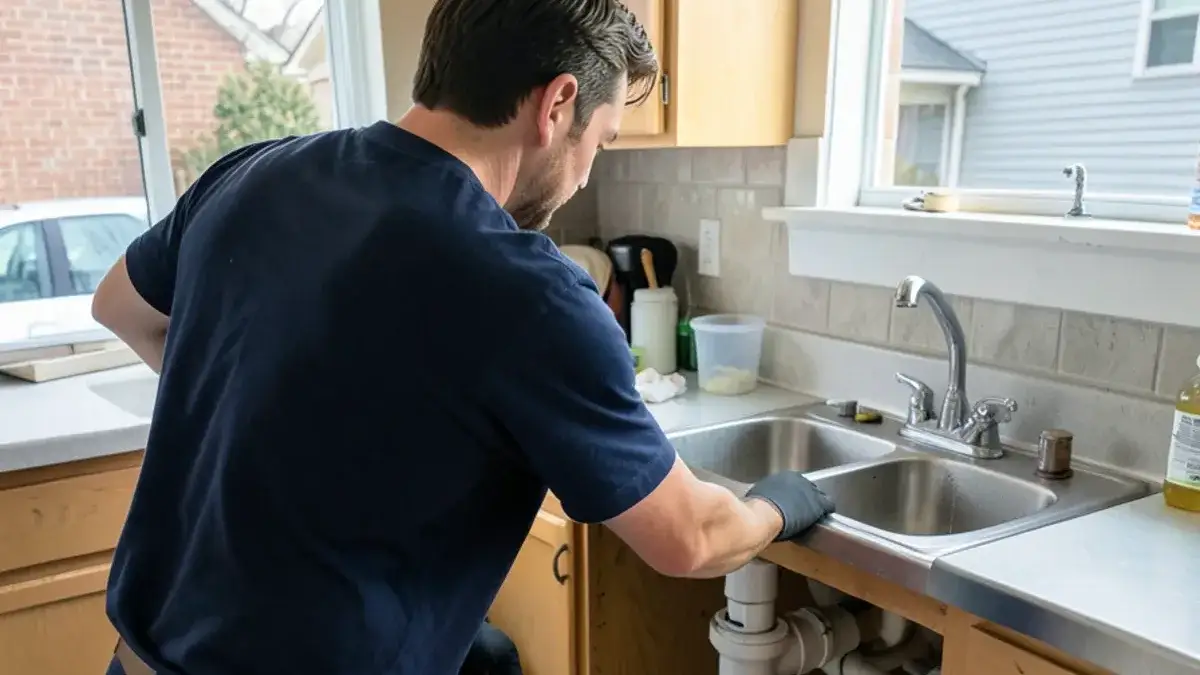
Leaking under the sink: supply lines, stops and the faucet body
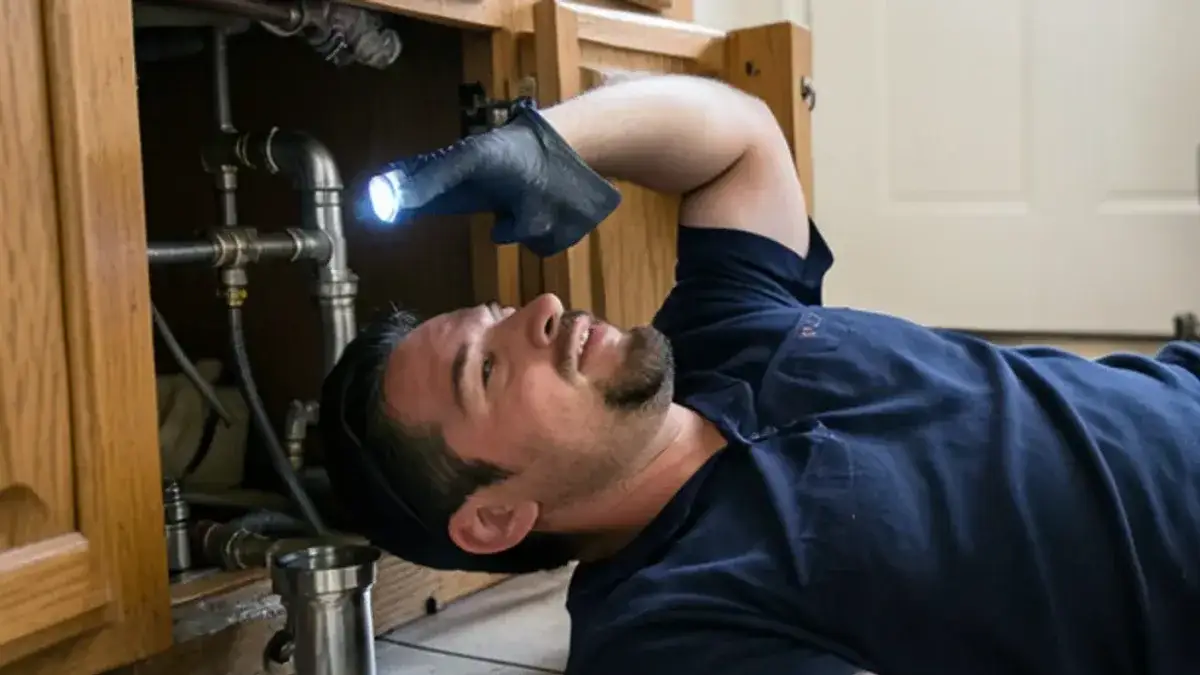
A puddle in the sink cabinet has more possible sources than a spout drip. The plumber dries everything, runs hot and cold one at a time, and watches with a light. Common culprits:
- A supply line nut or ferrule that weeps at the stop valve or the faucet shank.
- An old multi-turn stop valve leaking at its packing nut, often after being turned for the first time in years.
- A sprayer or side hose rubbing a hole against the drain.
- A cracked faucet body or worn base gasket letting water run down the shank.
- The drain itself, which isn't a faucet problem at all.
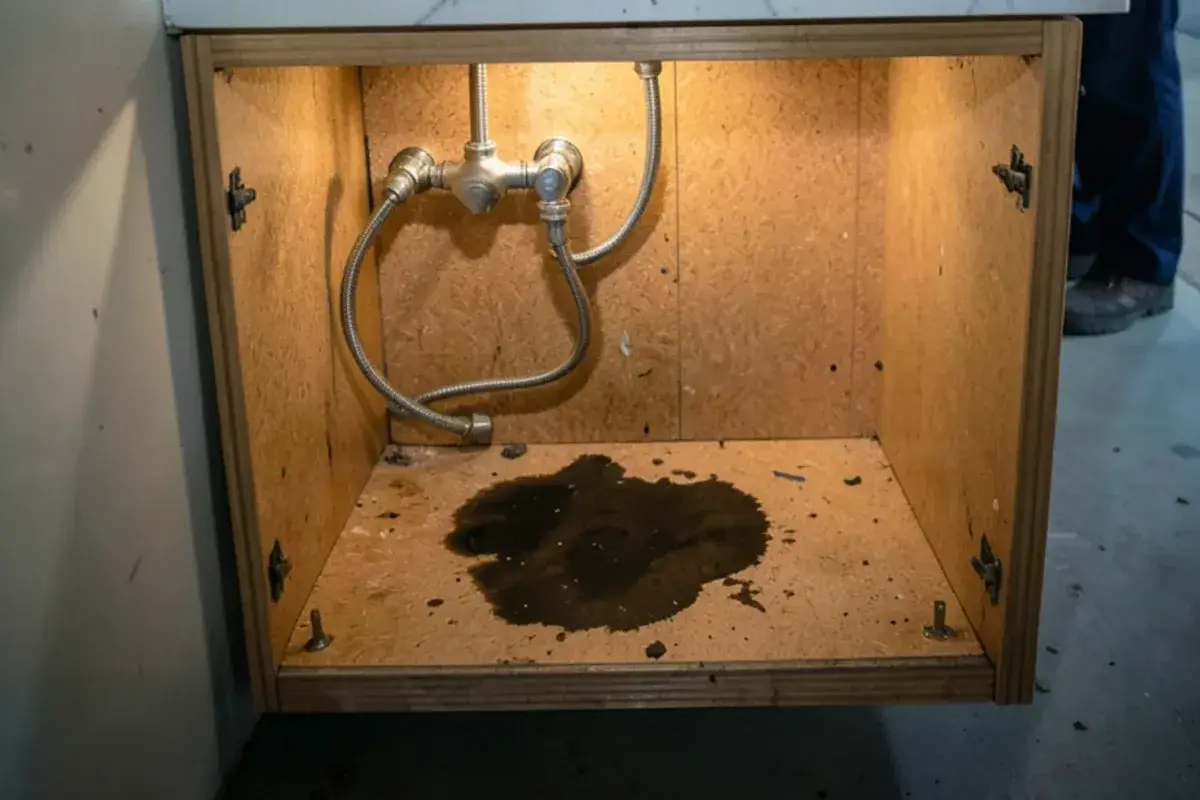
If the leak is the drain or trap, it belongs with kitchen plumbing repair or bathroom plumbing repair. If it's a stop valve, swapping old multi-turn stops for quarter-turn ones while the water is off saves trouble the next time anything under that sink needs work. You'll need to know where your main water shutoff is if a stop won't close.
What faucet repair and replacement covers
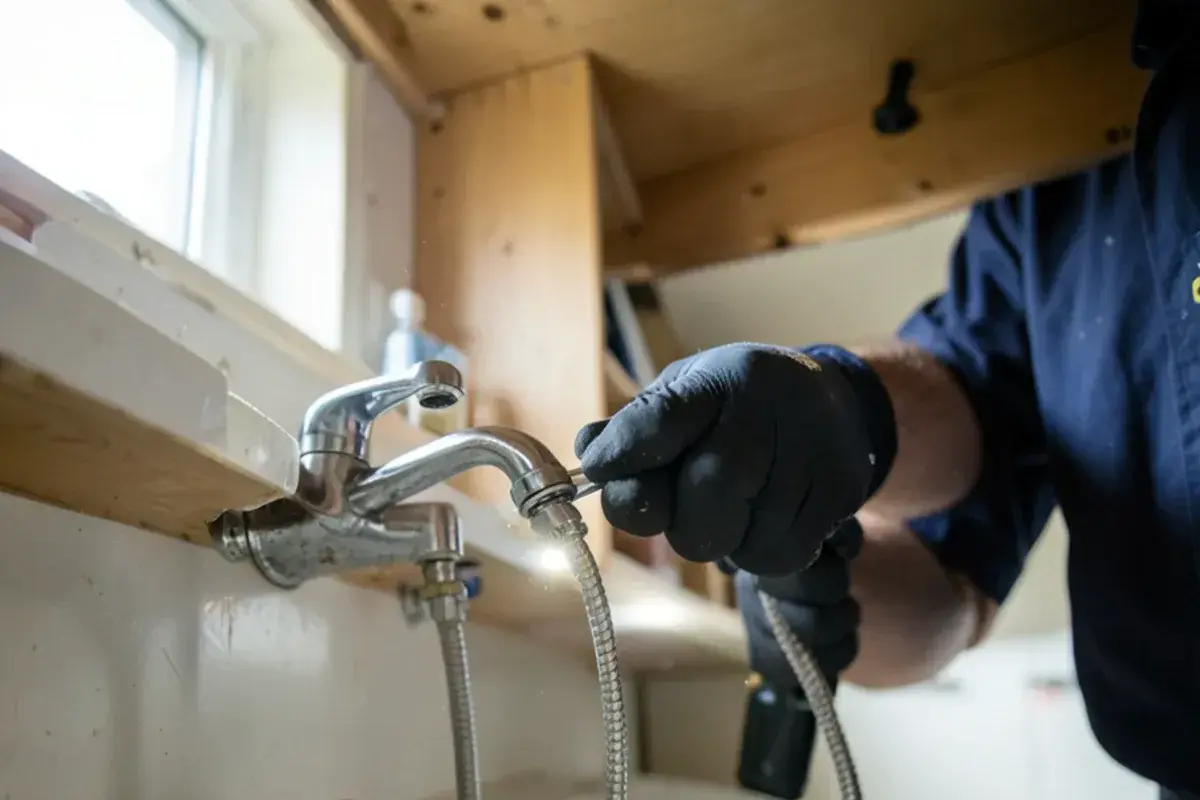
A faucet call is rarely just the spout. The visit looks at everything from the stop valves to the aerator, since a drip at the handle and a puddle in the cabinet can share a cause. The work can cover:
- a new cartridge, stem, washer, seat or O-ring matched to the faucet's brand and model
- quarter-turn stop valves and braided supply lines in place of old multi-turn stops and chrome risers
- a new kitchen or bathroom faucet sized to the sink's holes, with a deck plate where needed
- side sprayers, pull-down hoses and their weights and connectors
- outdoor spigots, from a new washer to a full frost-free sillcock and vacuum breaker
Drains, traps and disposals under the same sink are separate work, covered on the kitchen and bathroom repair pages.
Repair or replace the faucet?
Repair wins when the body is sound, the finish is fine and parts are easy to get. Replace when the body is corroded or cracked, the spout leaks at its base on a faucet with no parts, the chrome is flaking, or you were planning an upgrade anyway.
A faucet replacement has to match the sink. Count the holes and measure the spread: single-hole, 4-inch centerset and 8-inch widespread cover most sinks. Mounting nuts on an old faucet are often corroded in place behind the bowl, which is slow work in a tight cabinet. New supply lines go in with a new faucet as a matter of course.
Outdoor faucet repair and frost-free hose bibs
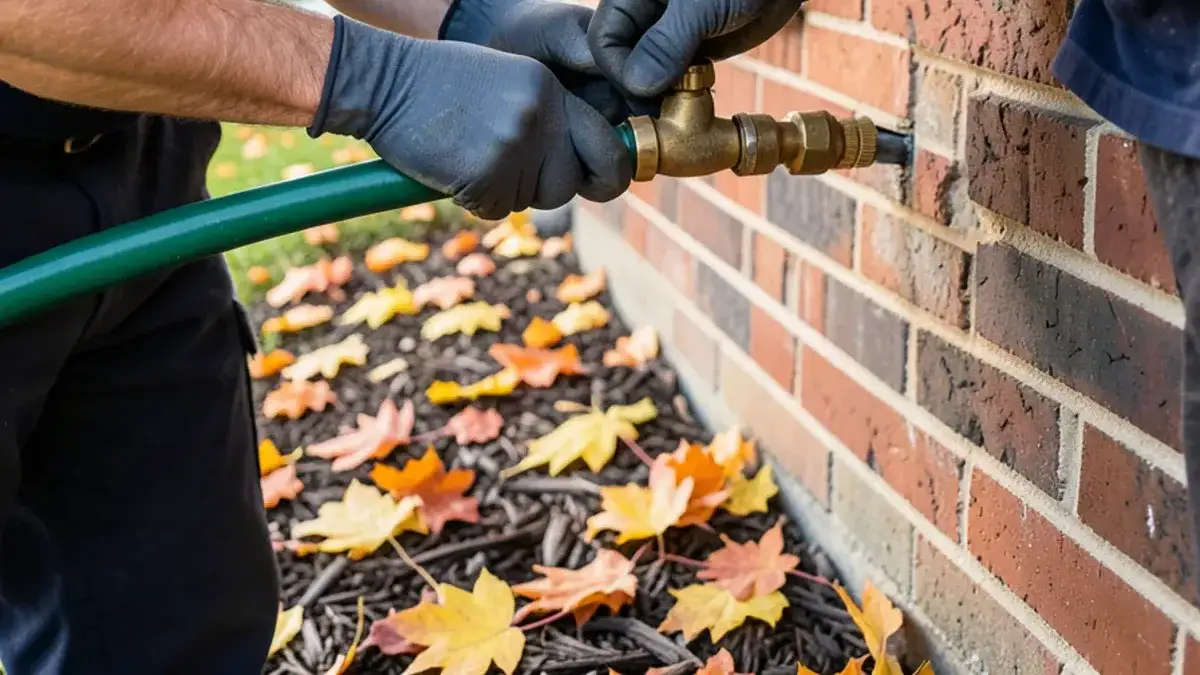
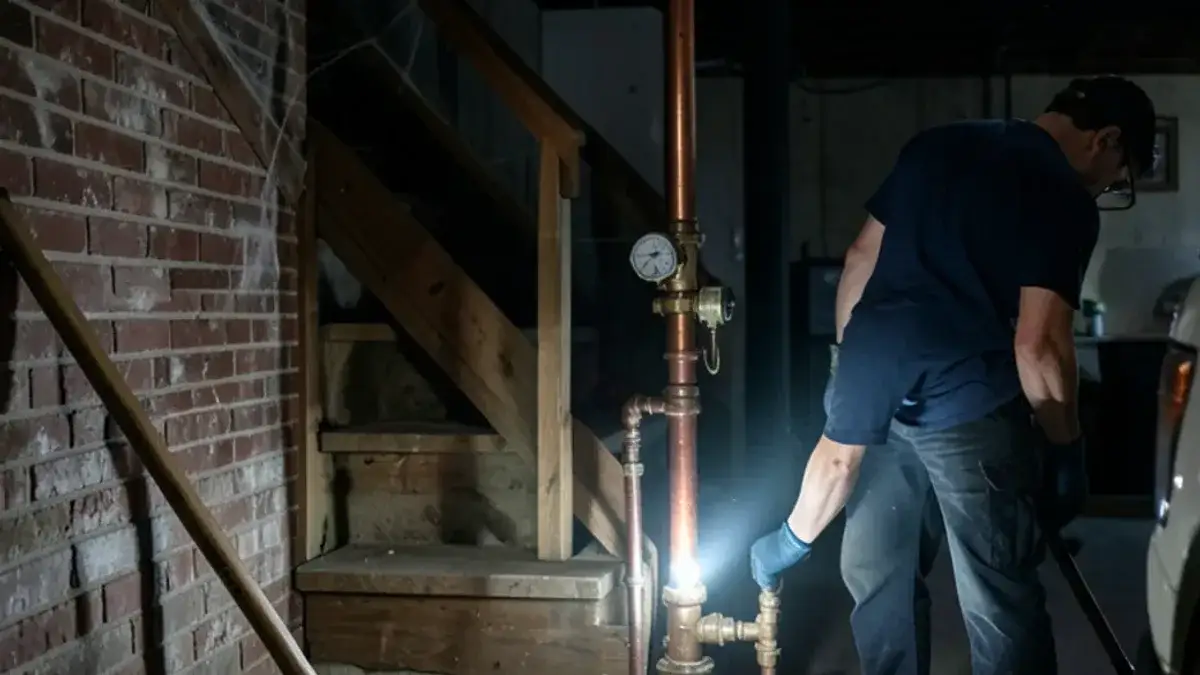
Michigan winters cause most outdoor spigot failures. A frost-free sillcock has a long barrel that runs through the wall, with the actual shutoff at the inside end where the house keeps it warm. It only stays frost-free if it can drain. Leave a hose attached into November and water sits trapped in the barrel, freezes, and splits it. Nothing shows until spring, when you open the spigot and water runs down the rim joist.
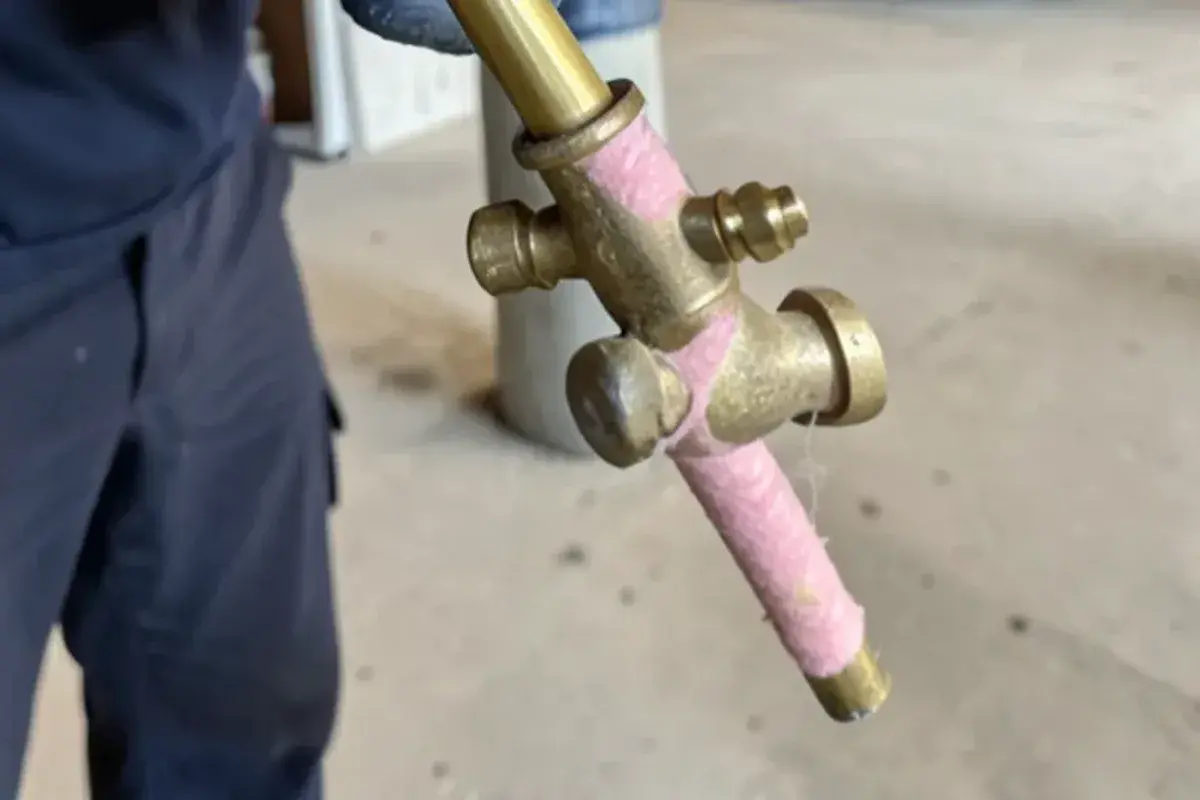
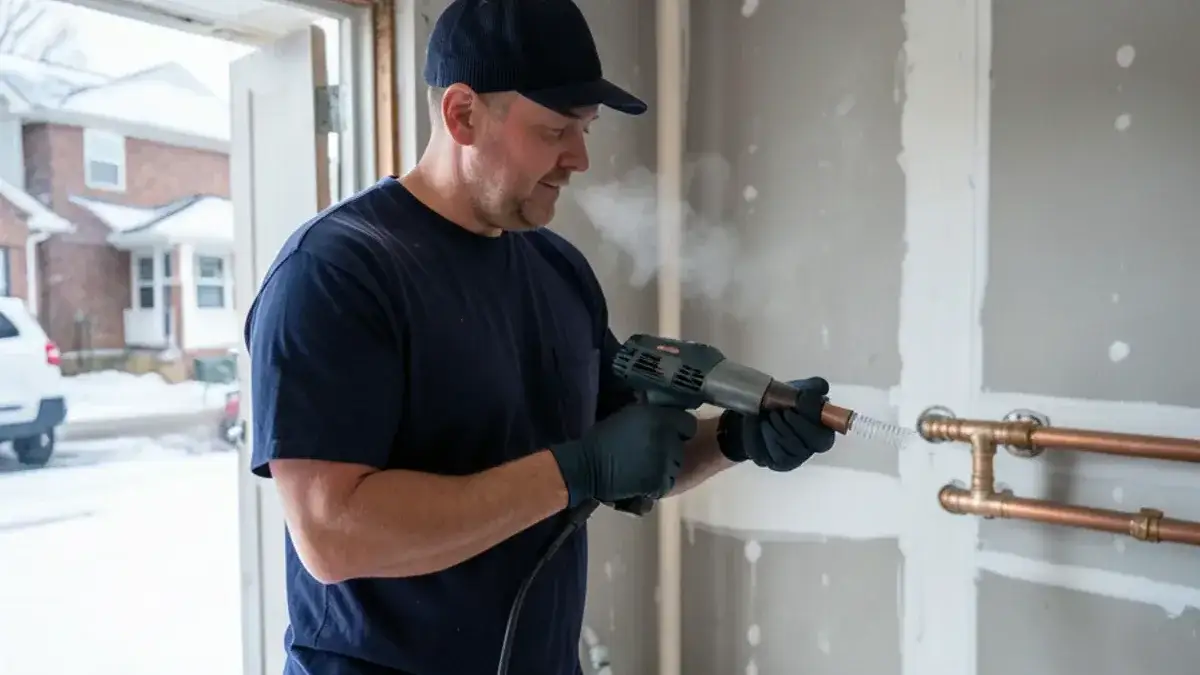
The repair is a new sillcock of the correct length, pitched slightly down toward the outside so it drains. Older standard hose bibs that aren't frost-free need an inside shutoff valve and draining every fall. If the line feeding the spigot froze too, that's work for frozen pipe repair.
Spigots also need backflow protection. A vacuum breaker on the outlet keeps hose water, and whatever the hose is lying in, from being pulled back into the house lines. Local news coverage of Macomb Township's cross-connection program, approved in March 2026, says its exterior walkthroughs look for hose bibs without vacuum breakers.
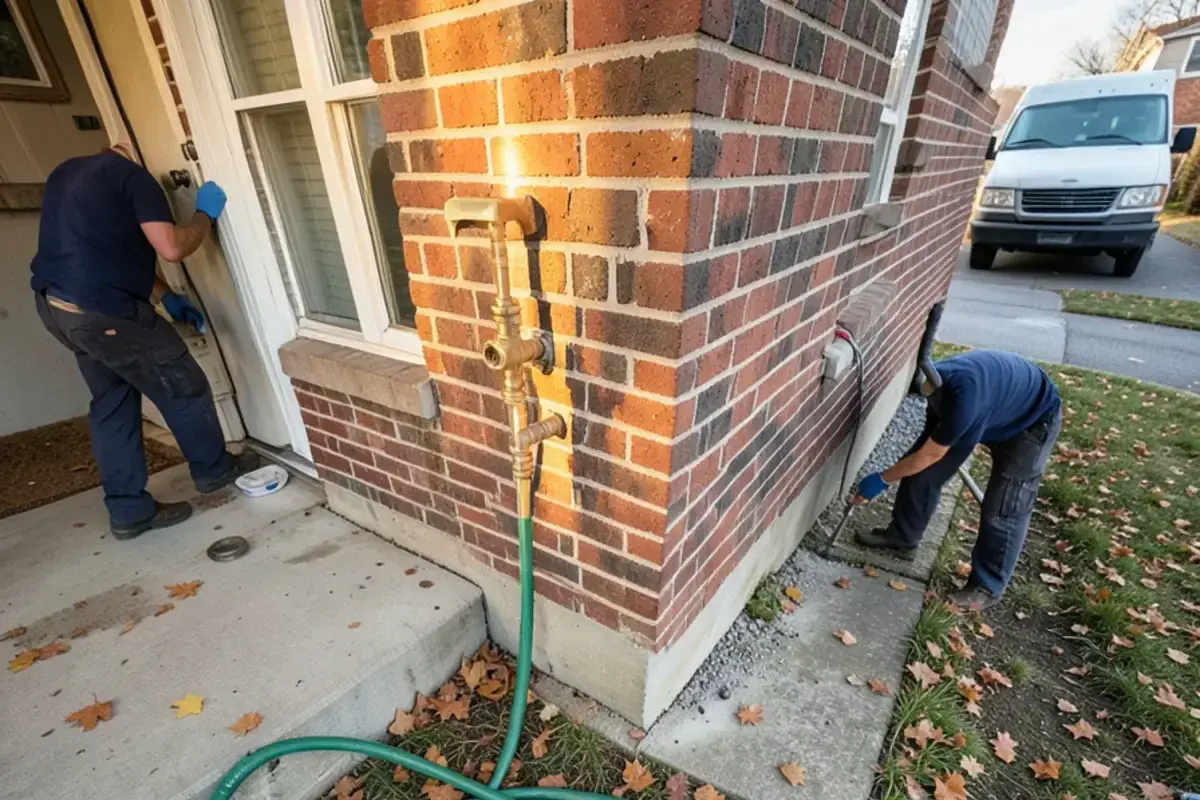
Each fall, disconnect hoses, close and drain any spigot with an inside valve, and check that frost-free models drain. The fall plumbing checklist covers the rest of the house.
What happens on a faucet visit, and which jobs need a permit
- Your call to (207) 419-2600 covers the faucet, the room and where the water appears, and you're connected with a plumber who works in your area.
- The plumber identifies the faucet type and brand, then dries everything and runs each side with a light on it to find the real source.
- Before any work, the plumber explains whether a rebuild or a new faucet makes more sense and what drives the cost of each.
- The approved repair or swap goes in, with stops closed and the cabinet protected.
- Both sides run again, a dry towel checks under the deck, the aerator gets flushed and you're shown the stops.
A cartridge or washer job is usually short; a full faucet swap takes an hour or two.
Michigan's permit exemption fits most faucet repairs. LARA's wording: "A permit is not required for repairs which involve only the working parts of a faucet or valve or clearance of stoppages provided alterations are not made in the existing piping or fixtures." A cartridge, stem or washer is a working part. Adding a spigot where there wasn't one, or rerouting supply piping, is an alteration and needs a permit first. Michigan lets a licensed plumbing contractor apply for it, or an owner doing the work on the single-family house they occupy, through the local building department. Macomb Township's plumbing permit application lists hose bibs among its per-fixture items. For permitted work, confirm the contractor's license through LARA's license search.
Cost factors for faucet repair in Macomb
The faucet itself matters most. Common brands have cartridges and stems on supply-house shelves, while a discontinued or imported model may need a special order or may have no parts at all, which turns a repair into a replacement. Some makers send cartridges free to original owners, so keep the paperwork.
Who supplies a new faucet changes the total, and so does the style. A pull-down kitchen faucet with a sprayer has more connections than a basic single-hole lavatory faucet. Conditions under the sink count next: seized stops that must be replaced first, mounting nuts rusted solid behind a deep bowl, or a cramped cabinet with a disposal in the way.
For an outdoor spigot, access to the inside end decides it. An open basement rim joist is quick; a finished ceiling may need an access panel. Brick takes more care than vinyl siding when the old sillcock comes out. The plumber goes over these before starting.
Why call Plumbers in Macomb, MI for a dripping faucet?
A faucet is a small job that still calls for someone who knows cartridges from compression stems. The same number handles the drip, the split spigot and anything bigger. When you call (207) 419-2600, the call goes to an independent local plumber in your part of Macomb County, who quotes and does the work. These pages walk through faucet types, leak sources, permit rules and cost factors so you can ask the right questions, like whether parts exist for your model or whether the stops should be replaced while the water is off. There's no form to submit. Mention the brand if you know it.
Faucet repair and replacement: questions we hear
Can a leaky faucet be repaired instead of replaced?
Yes, usually. If the body and finish are in good shape and the maker still sells the cartridge or stem parts, a rebuild stops the drip for far less than a new faucet. Replacement makes sense when the body is corroded or cracked, parts are discontinued, or you wanted a new style anyway.
How do I find a plumber for faucet repair in Sterling Heights, Utica or Clinton Township?
Call (207) 419-2600 and we'll match you with a local plumber who covers your city, and the same goes for St. Clair Shores and the rest of Macomb County. Have the brand ready if you know it, plus where the water shows up, and ask the plumber about their soonest opening.
Why did my outdoor faucet leak inside the wall after winter?
A frost-free spigot shuts off at the far end of a long barrel, inside the heated house. If a hose stays attached, water can't drain out of that barrel, it freezes and splits the brass, and nothing shows until you open it in spring. The fix is a new sillcock of the right length.
How do I know which new faucet will fit my sink?
Count the holes in the sink or counter and measure the spread between the outer ones. Single-hole, 4-inch centerset and 8-inch widespread are the common layouts. A single-hole faucet can cover three holes with a deck plate, but a widespread faucet can't fit a centerset sink.
Why does a faucet still drip after a new cartridge goes in?
The cartridge often wasn't the only worn part. Scale or pitting on the seat inside the faucet body, a torn O-ring, a cartridge from the wrong model or one not seated fully will keep it dripping. On Macomb County's moderately hard water, scale in the body gets cleaned first; a body too pitted to seal means replacement.