What bathroom plumbing repair covers in Macomb County homes
Bathroom plumbing repair covers whatever carries water into the room or drains it away. Most calls fall into these groups:
- vanity drains, pop-ups, traps, stop valves and supply lines
- leaks that show up as a stain on the ceiling below
- slow sink and tub drains, including corroded older drain pipe
- weak flow at one faucet or the shower
- rough-in plumbing when a remodel moves or adds fixtures
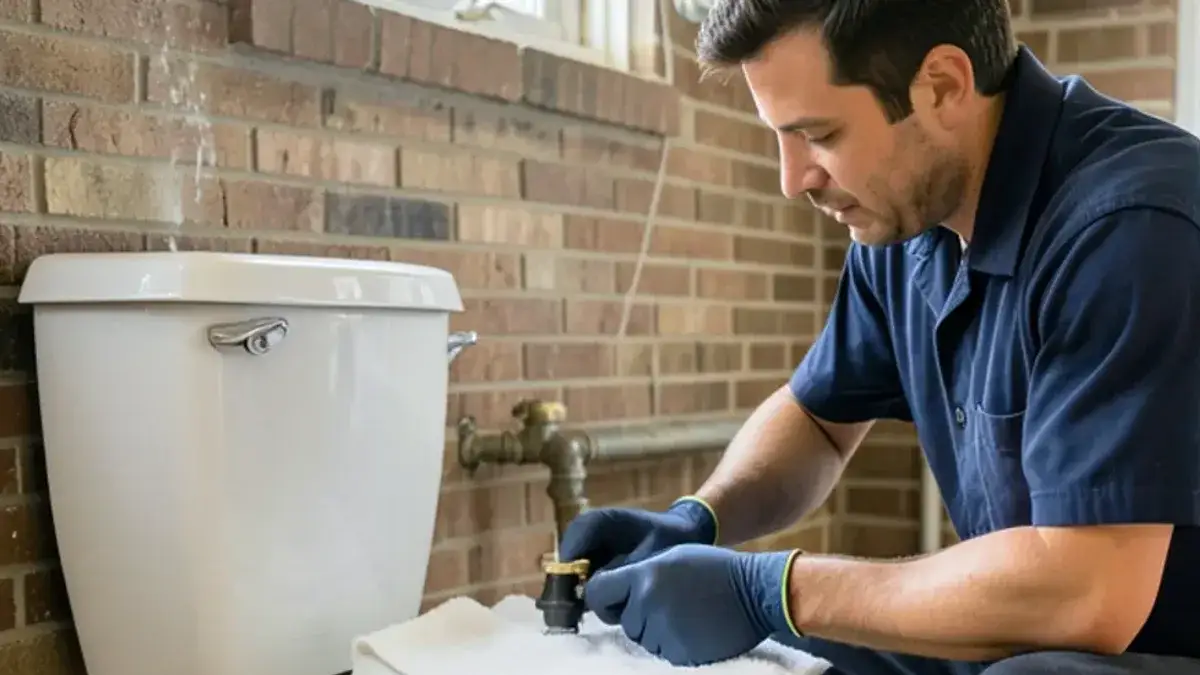
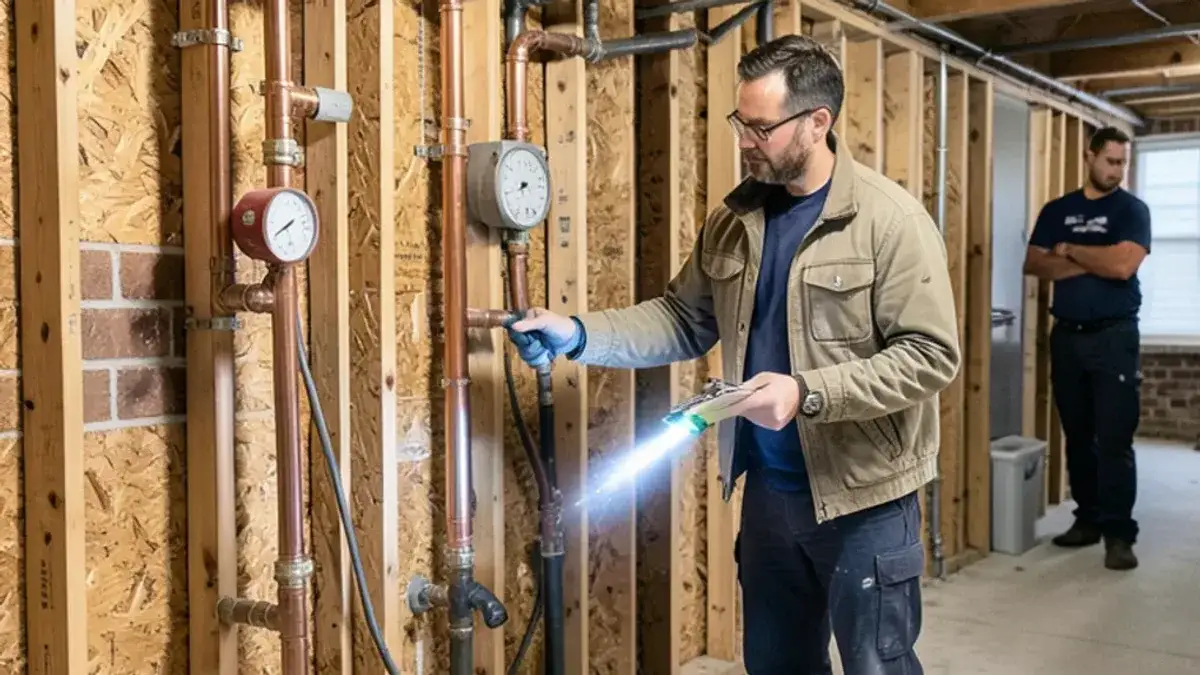
The work starts with finding the source, since a bathroom leak often surfaces somewhere other than where it starts. In older south-county houses that can mean galvanized branches or cast-iron drains behind the tile. In newer subdivisions it's more often a loose slip joint, a worn seal or hard-water scale. If water is actively dripping, close the stop valves under the sink or toilet first.
Bathroom sink leak or vanity plumbing drip? Where to look
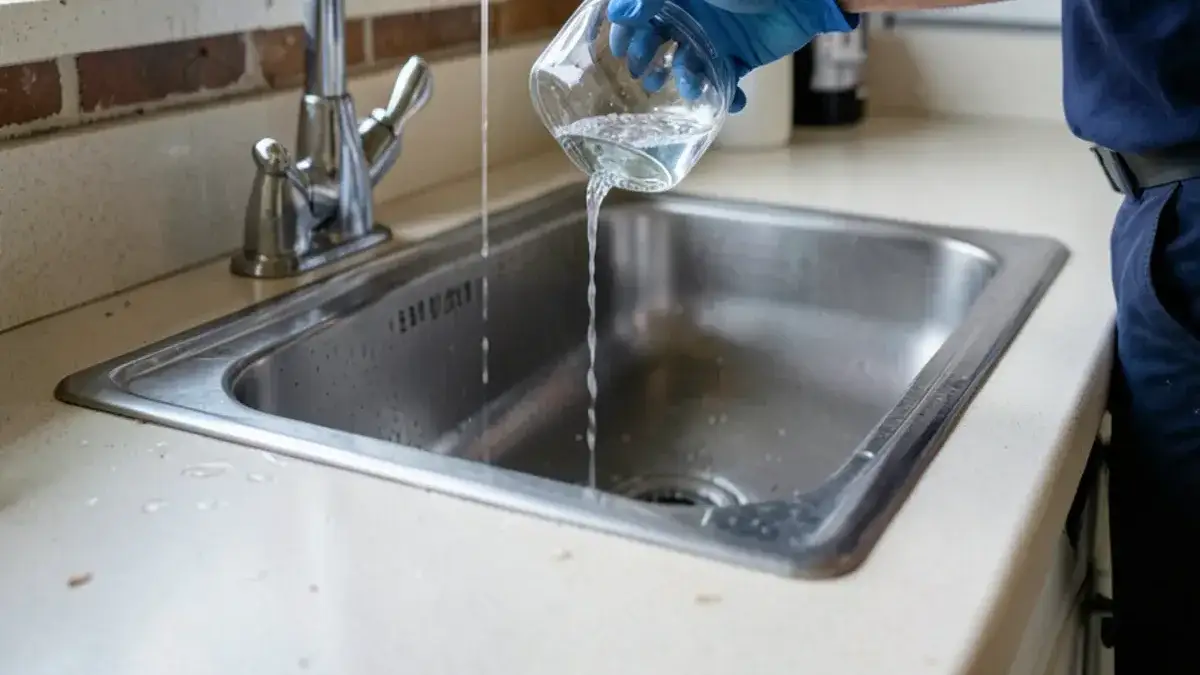
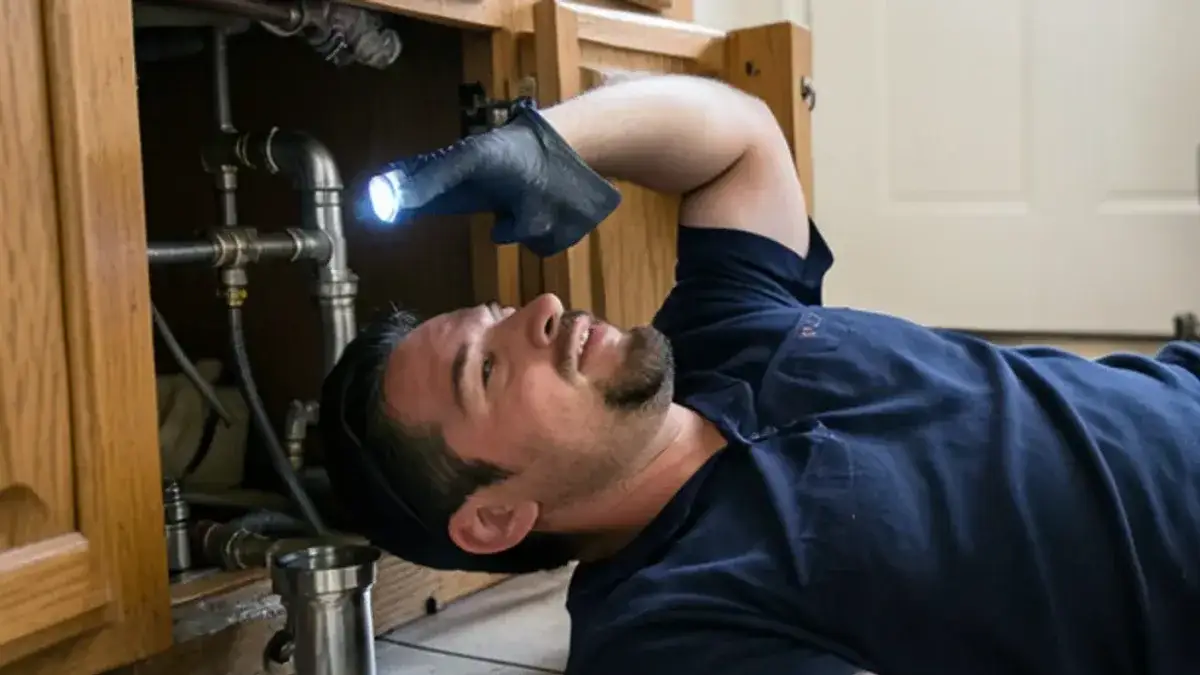
Water in a vanity usually shows up as a swollen, crumbly cabinet floor, long after the drip started. Clear the cabinet, dry everything, and run the sink with the stopper open, then closed and filled. A bathroom sink leak shows up in one of a few places.
The pop-up assembly is the most common. The horizontal rod that lifts the stopper passes through the drain body with a small nut and gasket, and that pivot nut weeps when the gasket wears. The drain flange under the bowl can lose its seal, so water runs down the outside of the tailpiece. Slip joints on the trap loosen. On the supply side, look at the stop valves and the lines running up to the faucet. If the drip comes from the faucet itself, see faucet repair and replacement.
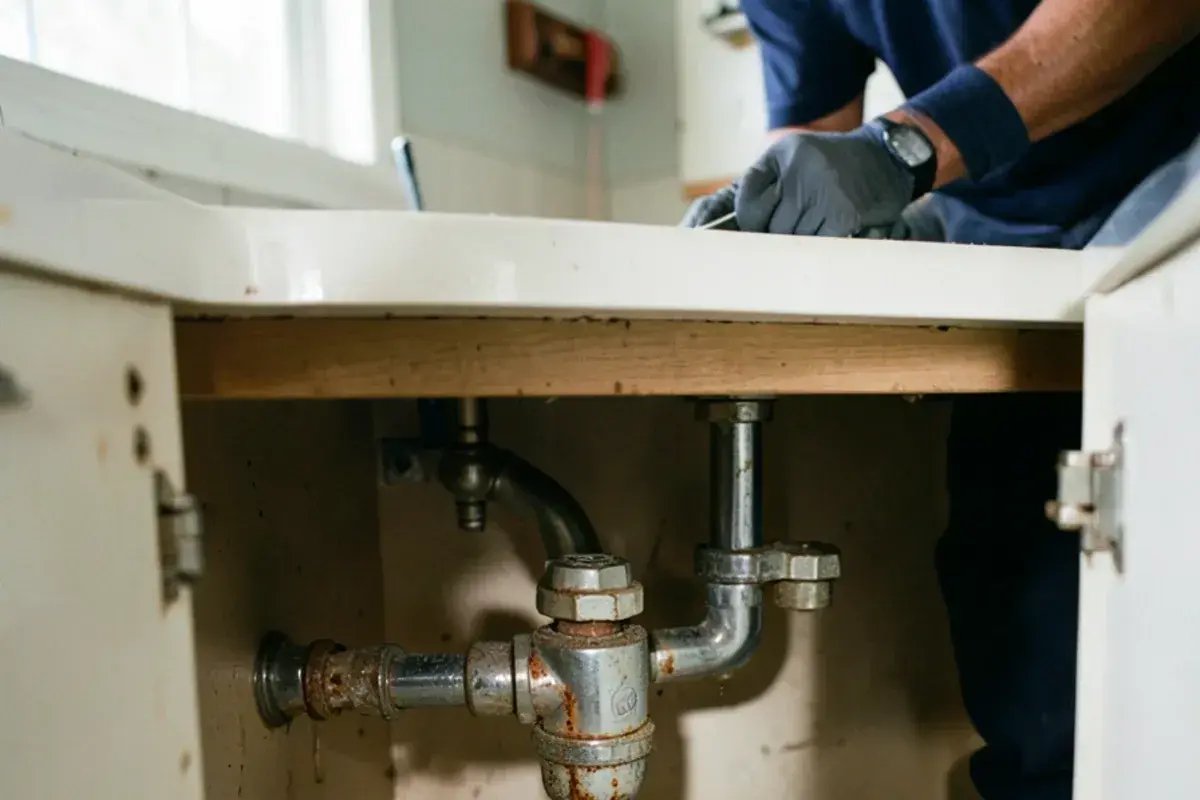
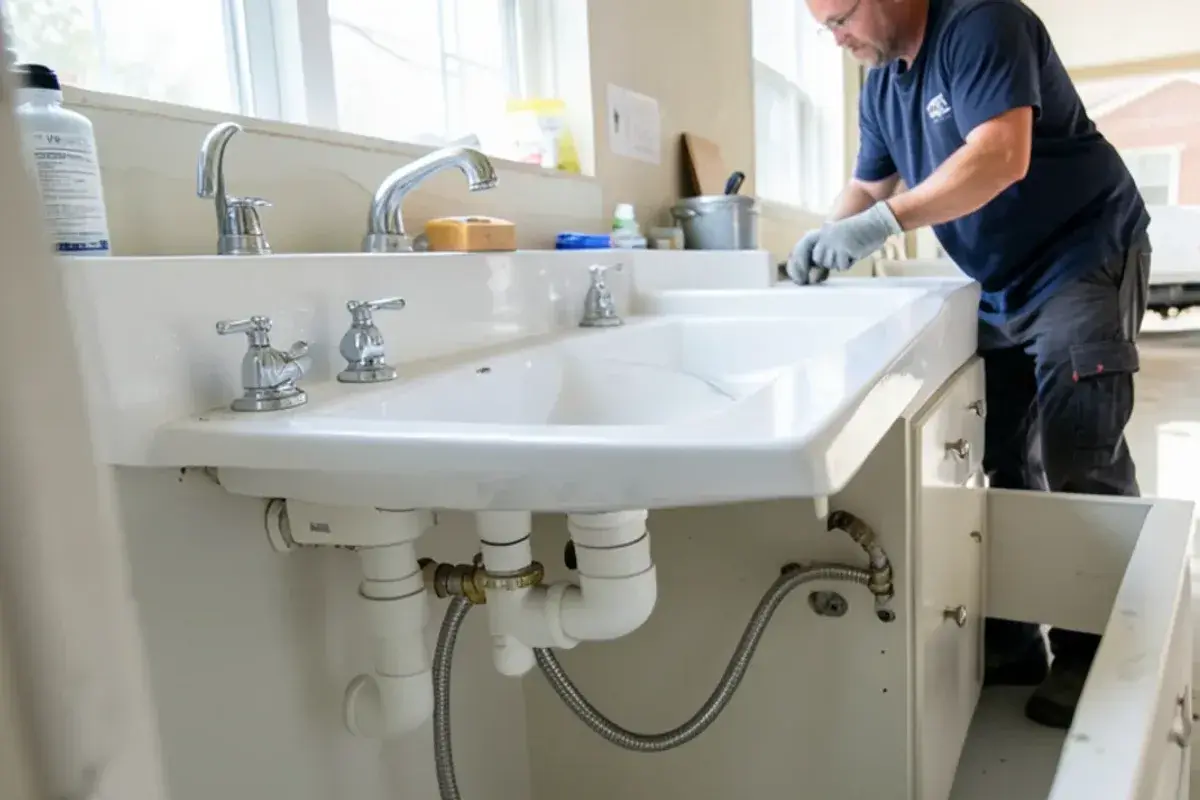
In older homes, a rusting chrome trap and stops that won't fully close are worth replacing together while the cabinet is empty.
Before
After
Stain on the ceiling below? Talk to a local plumber about the bathroom leak
- Your call goes to an independent local plumbing company that does the work.
Ceiling stain under a bathroom: tracing which fixture leaks
A brown ring on the ceiling under a bathroom tells you water is getting out. It doesn't tell you where. The plumber works through the room one fixture at a time while someone watches the stain or a moisture meter below.
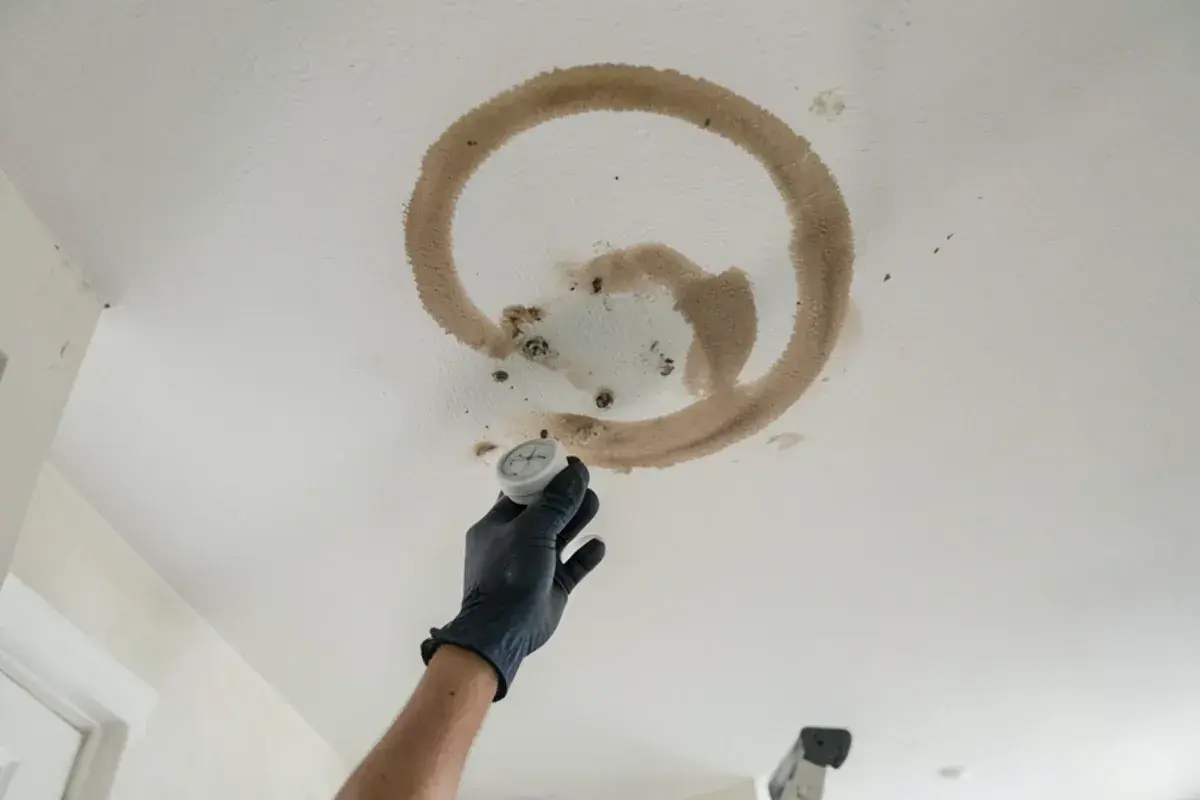
The suspects, roughly in order of how often they turn out guilty: the seal under the toilet, which leaks only when it's flushed (our toilet repair page covers that); the tub drain and overflow gaskets, which leak only when the tub fills high or drains; a shower pan or drain in a tiled stall; water splashing past worn caulk at the tub edge, which is a caulking job rather than plumbing; and a supply pipe in the wall, which leaks whether anything is running or not.
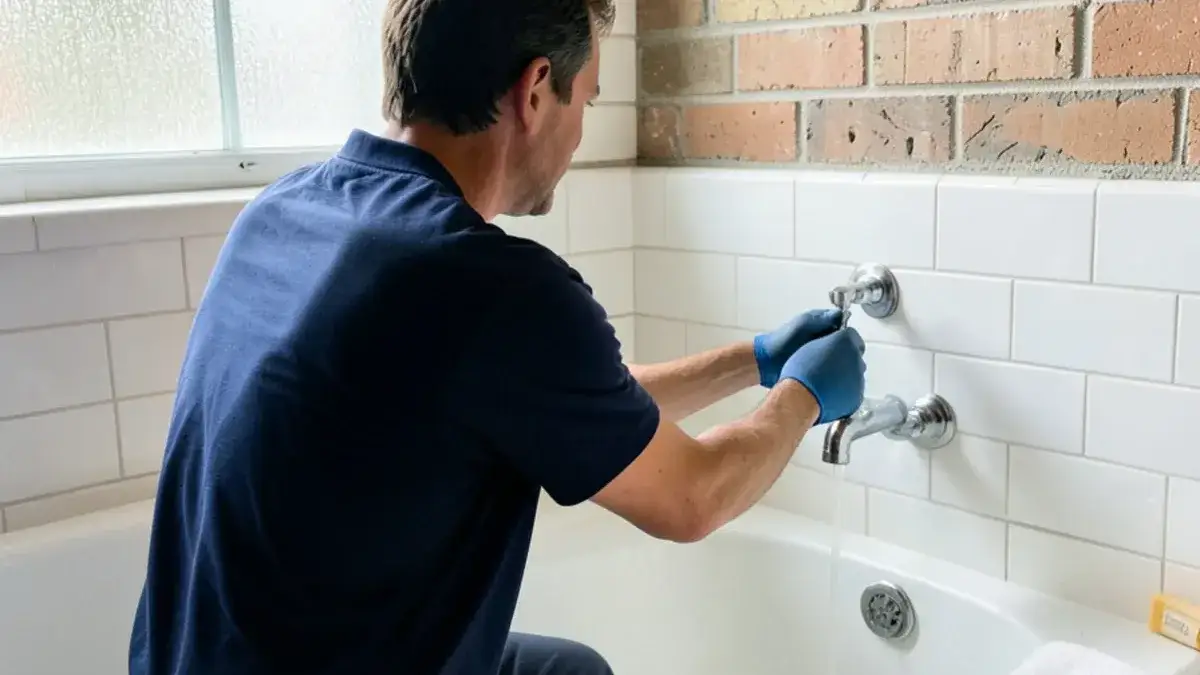
Running water down the tub overflow on purpose, then filling the tub below it, separates the overflow from the drain. If testing narrows it to a wall or floor cavity, a small inspection opening in the ceiling below is often less damage than guessing from the tile side. Once the leak stops, dry the area quickly. EPA guidance is to dry wet materials within 24 to 48 hours to limit mold growth.
Slow drains and weak flow in one bathroom
Why is the bathroom drain slow?
Bathroom sinks clog with hair and soap, and most of it collects on the pop-up stopper and the rod beneath it. Pulling the stopper and cleaning it fixes a surprising number of slow sinks. If it's still slow, the clog sits in the trap or the drain arm behind the wall, and a small cable clears it.
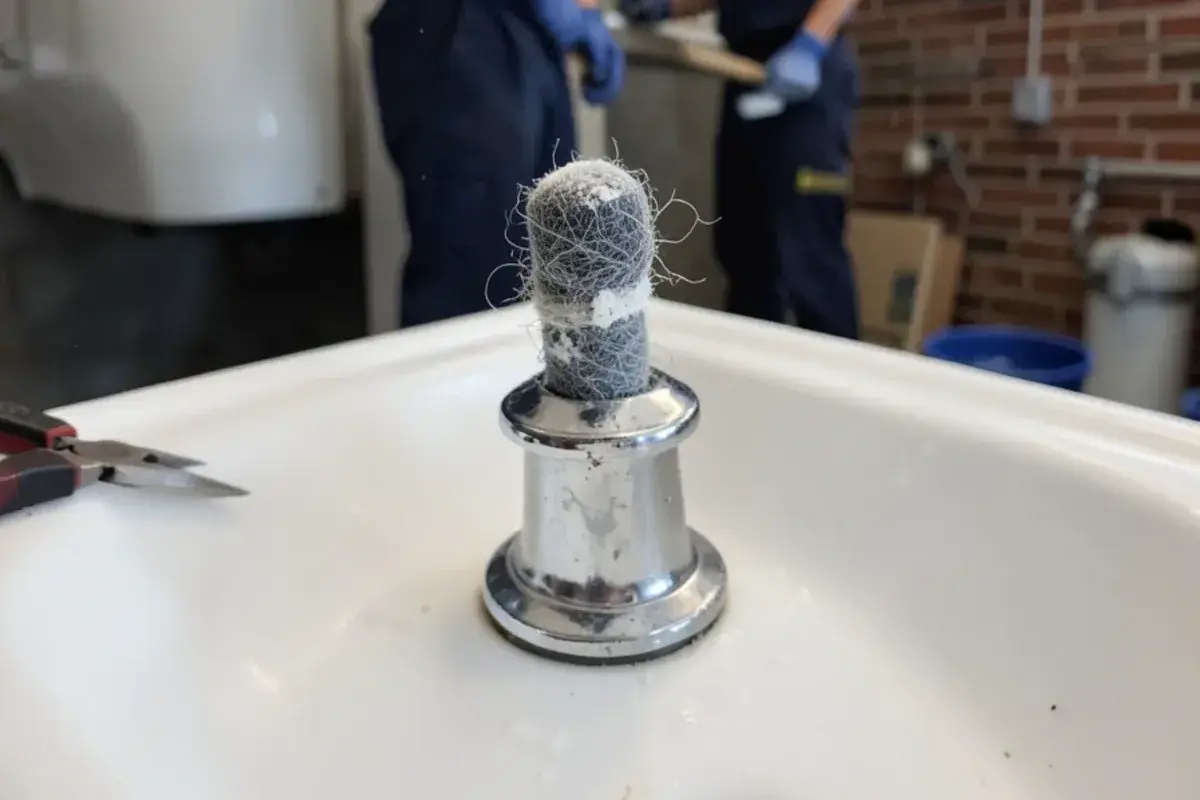
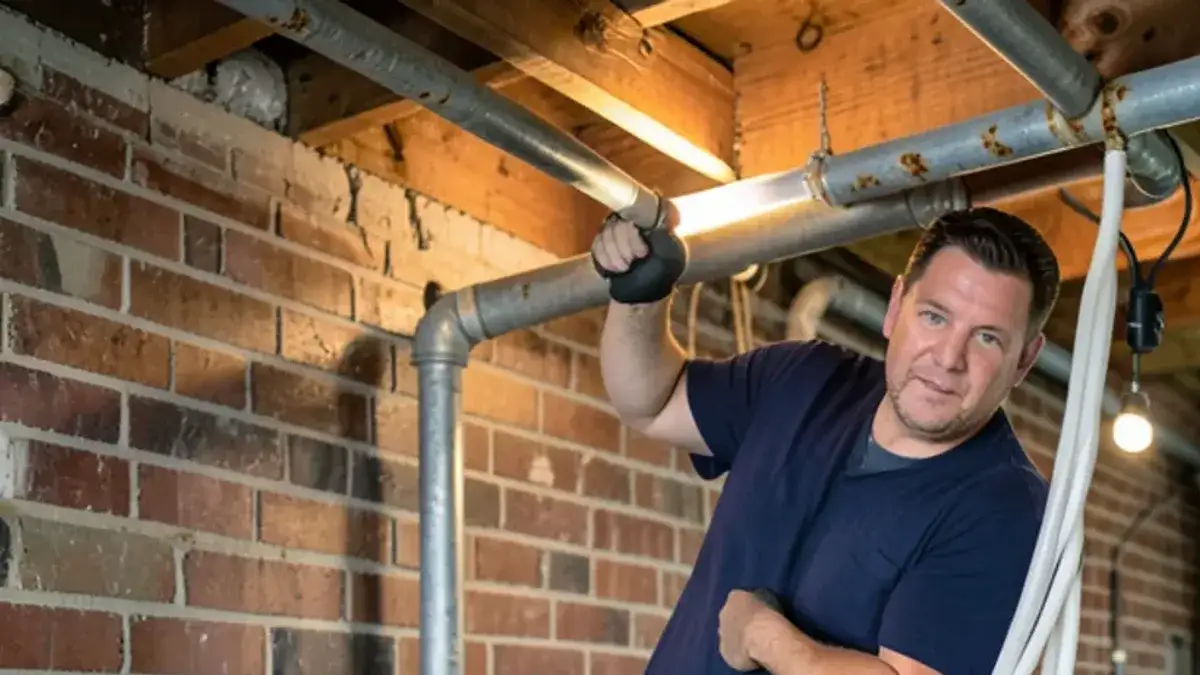
When a bathroom drain is slow in a house built before 1960, the drain itself may be narrowing. Pipes of that era were commonly galvanized steel or cast iron, and they build up rust and scale on the inside. That's typical of much of Mount Clemens, where most homes went up before 1960, and of older canal-side homes in Harrison Township. Cabling helps for a while, but a drain that keeps slowing back down needs a section replaced.
A tub that drains slowly has its own stopper mechanism and drain shoe; the details are on our bathtub and shower plumbing page. Chemical openers are a poor fit for both: they rarely dissolve hair and they're hard on older metal drains.
Low water pressure in the shower or one bathroom
If the kitchen is strong and only the bathroom is weak, the cause is in that room or the pipe feeding it. If every faucet in the house is weak, read our guide to low water pressure in the whole house.
For one room, check the cheap things first. Unscrew the faucet aerators and the shower head and look for grit or white scale. Macomb Township's water averaged 99 ppm of hardness in 2024, enough to crust over a shower head's small holes in a few years. Make sure the stop valves under the sink are fully open. If only the shower is weak, or it swings between weak and scalding, the valve cartridge may be failing.
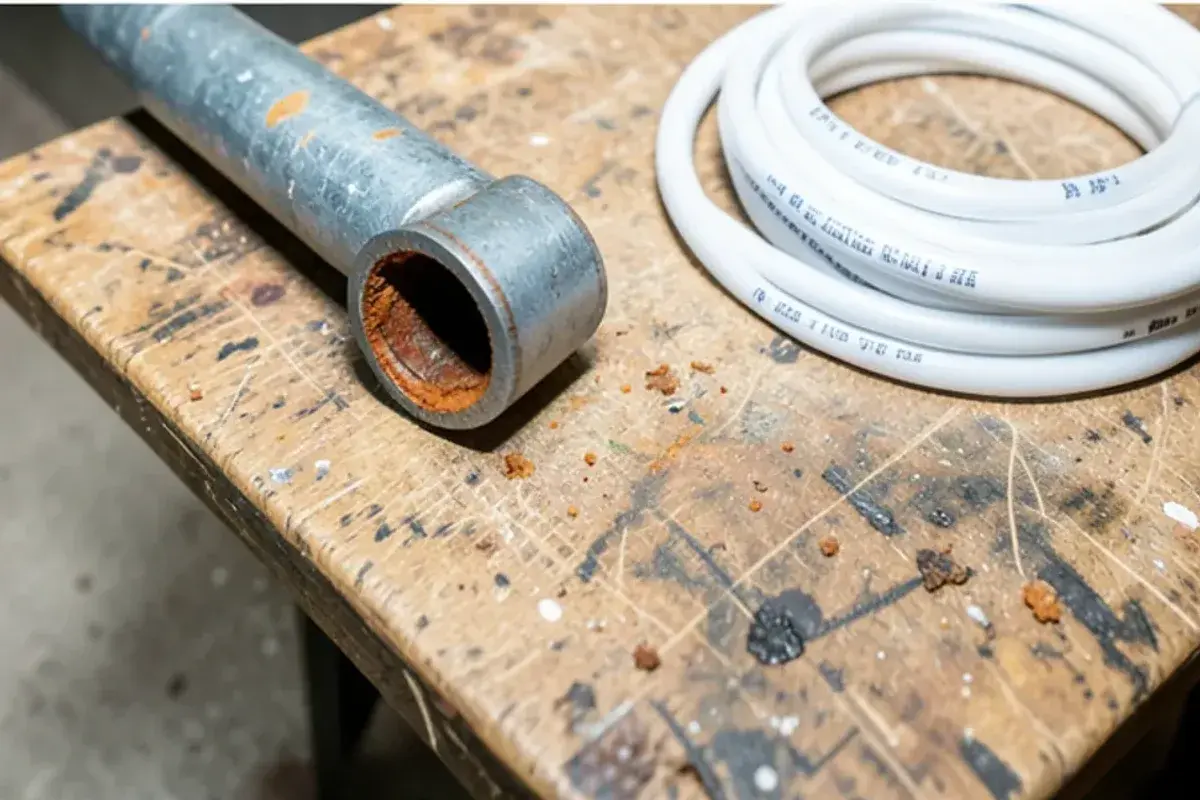
If the bathroom is fed by old galvanized pipe, rust buildup inside the branch may have closed most of the opening, and no aerator cleaning will fix that. The answer is replacing that branch, or, if the whole house is galvanized, planning a repiping project.
Bathroom remodel plumbing: moving fixtures means a permit
A remodel that keeps everything in place mostly needs new fixtures set on existing connections. Moving the toilet, turning a tub into a walk-in shower, adding a second sink or shifting the vanity across the room changes drains, vents and supply lines. Under Michigan's permit rules, that's new piping, and it needs a permit before work starts.
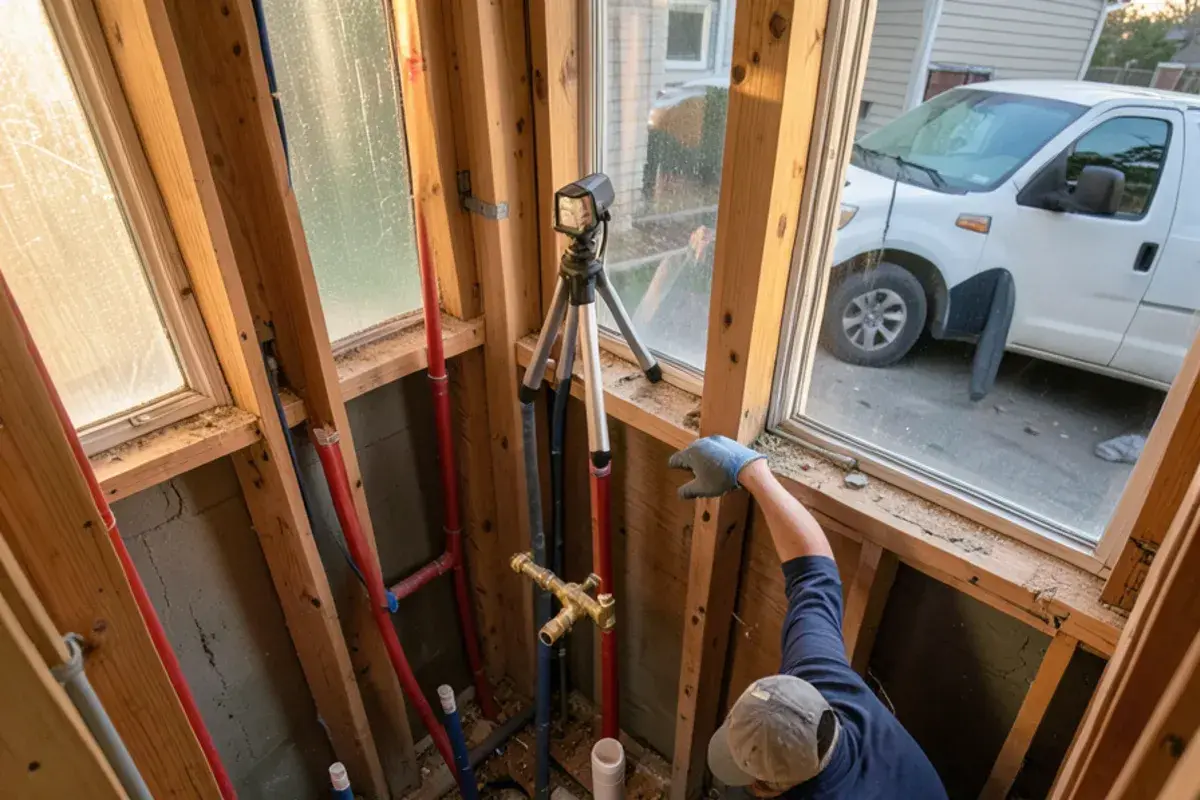
In Macomb Township, a homeowner may pull a plumbing permit for work they do themselves in the single-family home they live in or are about to move into, by signing an affidavit on the application. Otherwise the plumbing contractor pulls it. The work can't be covered with drywall or tile until it passes inspection, and a permit lapses if work doesn't start within six months. One- and two-family homes are governed by the Michigan Residential Code. Our Michigan plumbing permits guide covers the process in more depth.
Rough-in decisions that are hard to change later: the toilet's distance from the finished wall and from anything beside it, the height of the vanity drain and supply stubs to suit the vanity you've chosen, the shower valve's height and depth for your tile thickness, and where the new drain will tie into a vent.
Bathroom plumbing repair in Macomb County: the visit and cost factors
- You call (207) 419-2600 and describe what you're seeing, including any stain downstairs and which fixtures you suspect, and we'll connect you with a plumber who covers your area.
- The plumber runs each fixture on its own while the stain, the cabinet or a moisture meter is watched.
- Once the source is traced, you hear what's wrong, the options and the cost drivers before work starts.
- The repair is made, or on a remodel the rough-in is set and left open for inspection.
- Every fixture is run again and the area under the leak is checked dry.
- The plumber cleans up and explains how to dry anything that got wet.
A vanity leak or slow sink is usually a short visit. Tracing a ceiling leak takes longer when walls and floors are tiled. Remodel rough-in work is measured in days, with an inspection between rough and finish.
What moves the cost: access, above all. Tiled walls, finished ceilings below and cramped vanities all add time. Pipe material matters too, since galvanized and cast iron are slower to cut and adapt than copper or PEX. On a remodel, the number of fixtures moved, how far drains have to travel to reach a vent, and permit and inspection scheduling set the scope.
Opening a ceiling or wall to reach a leak adds cost, and drywall and tile patching are often separate trades. Replacing seized stops or a rusted trap in the same visit adds parts but can save a second trip, and calls outside regular hours usually cost more. A permit adds the township's application fee plus a per-fixture fee for each lavatory, tub, shower or toilet involved.
Why call Plumbers in Macomb, MI about bathroom plumbing?
Bathroom problems rarely stay in the bathroom; they show up on the ceiling below or in the water bill. One number covers them and every other plumbing problem in the house. Tell us what you're seeing and which fixtures you suspect, and we'll pass the details to an independent plumber who covers your community. That plumber traces the source, quotes the repair and does the work, or the rough-in on a remodel. These pages explain the tracing, the permit rules and what moves the cost, so you can ask good questions before approving anything. There are no forms. Call (207) 419-2600.
Bathroom plumbing repair: questions we hear
What does bathroom plumbing repair cover?
Anything wet or slow in the room. That includes vanity drains and supply lines, sink pop-ups, toilet leaks, tub and shower drains, shower valves, low flow at one fixture, leaks showing on the ceiling below, and new rough-in plumbing when a remodel moves fixtures.
Is a bathroom leak urgent if the ceiling stain is dry?
Yes. It still needs finding. A stain that dries between showers means water reaches the ceiling every time that fixture runs, and the framing and drywall are getting wet on a schedule. Mold gets a foothold when materials stay damp, and a leak that repeats never lets them dry out.
Do I need a permit for bathroom plumbing in Michigan?
Yes, for new or moved fixtures and piping. Repairs to faucet and valve parts and clearing clogs don't need one. In Macomb Township a homeowner can pull the permit only for the single-family home they live in, by signing an affidavit. Otherwise the plumbing contractor pulls it.
When should the plumber come in during a bathroom remodel?
Twice. First after demolition, to rough in drains, vents, supply lines and the shower valve while the walls are open, followed by the inspection. Then again after tile and the vanity are in, to set fixtures, trim the valve and test everything.