
Problem solving
Low water pressure in the whole house: common causes
Low water pressure in the whole house, as opposed to one weak faucet, means something upstream of every fixture is restricting flow: the main valve, the meter, a pressure-reducing valve, the service line or old pipe inside the walls.
By Plumbers in Macomb, MI · Published · Last updated
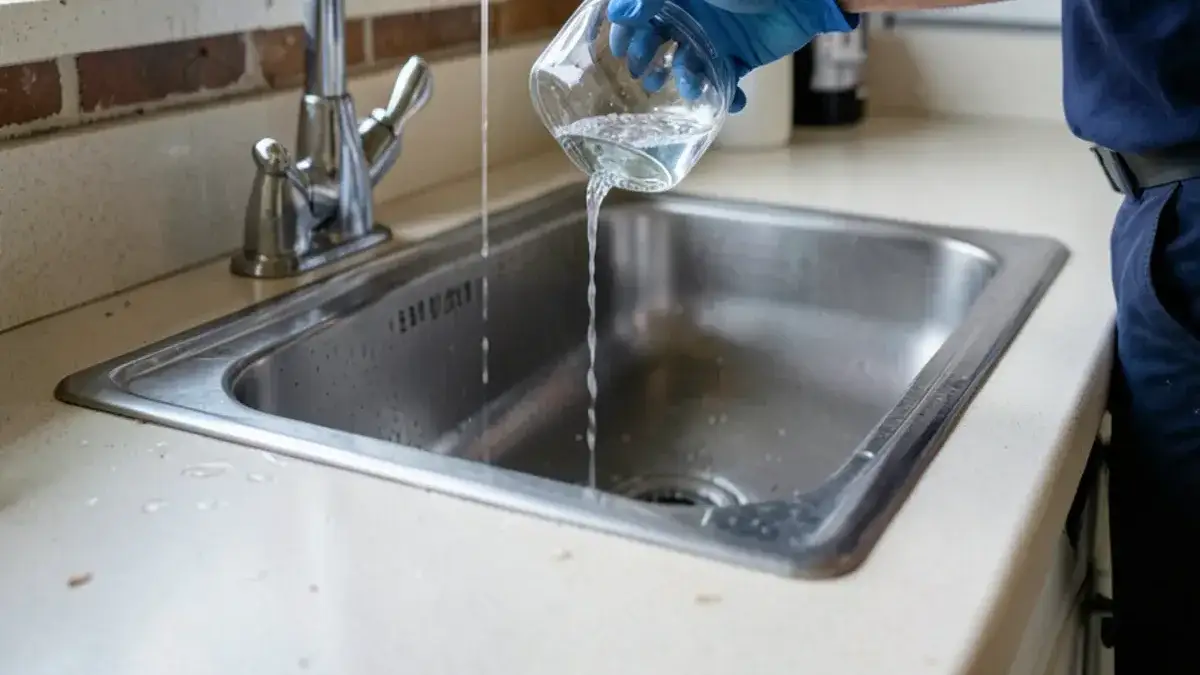
Low water pressure in the whole house usually traces to something every fixture shares: a main valve left partly closed, a worn pressure-reducing valve, a damaged or narrowed service line, rusted galvanized pipe inside the walls, or a hidden leak. A hose-bib gauge and a meter check tell you which to chase first.
First, test the pressure with a gauge
Before testing, make sure it really is the whole house. Unscrew the aerator on a weak faucet and run it. If that one tap suddenly flows well, a clogged aerator was the problem. If every fixture is weak, hot and cold, upstairs and down, get a gauge.
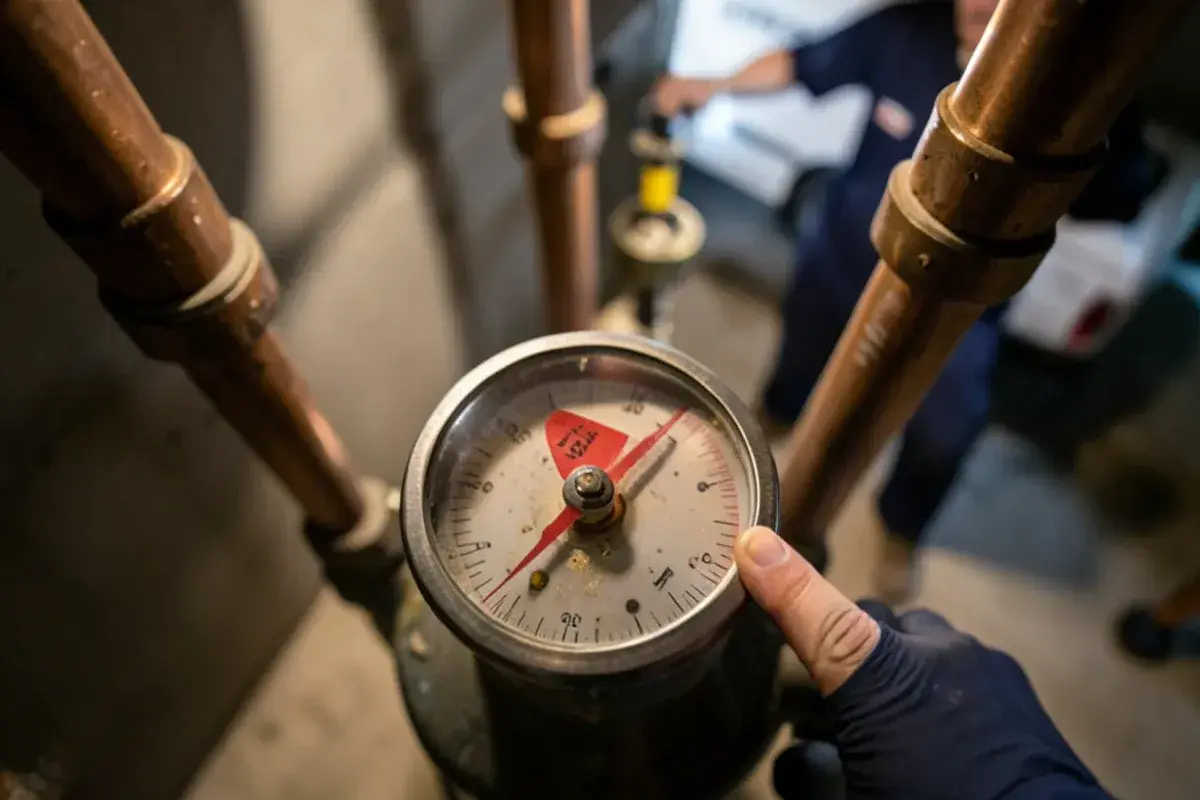
A water pressure gauge that threads onto a hose bib is inexpensive at any hardware store and turns guesswork into a number. Here's how to use it:
- Turn off every faucet, the washer, the dishwasher and any irrigation inside and out.
- Thread the gauge onto the hose bib closest to where the water line enters the house, usually the one near the meter.
- Open the hose bib fully and read the gauge. That's your static pressure.
- Have someone open a bathtub faucet all the way and watch the needle. That drop shows how well the line delivers flow.
A static reading in a normal range with a large drop under flow suggests a restriction, like a partly closed valve or a narrowed pipe. A low static reading points toward the PRV, the service line or the city supply. If you can, check the gauge at different times of day too.

Pressure low at every tap in the house?
- Your call goes to an independent local plumbing company that does the work.
Reading the results
| What the gauge and taps show | Most likely cause | Who handles it |
|---|---|---|
| Normal static, big drop when a tub runs | Partly closed main valve or narrowed pipe | You (valve) or a plumber |
| Low static, steady all day | Failing or misadjusted pressure-reducing valve | Plumber |
| Pressure fell right after street or yard work | Curb stop partly closed or a damaged service line | Water department or plumber |
| Neighbors have low pressure too | Main break, hydrant flushing or a supply issue | Water department |
| Low upstairs, better in the basement | Rusted galvanized pipe inside the house | Plumber, often repiping |
| Only hot water is weak | Water heater valve or sediment | Plumber |
| Pressure drops and the meter moves with taps off | A leak somewhere on the line | Plumber with leak detection |
A main shutoff left partly closed
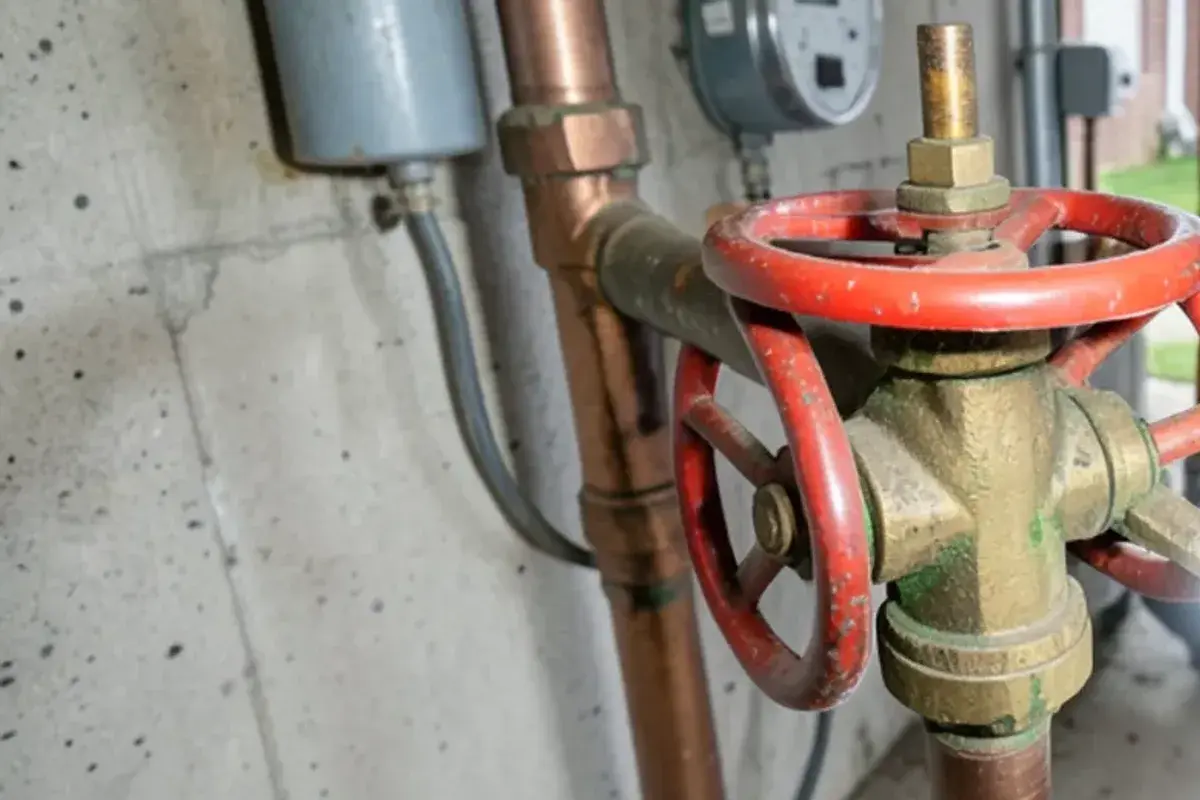
This is the easiest fix and the most common one after any plumbing work. Someone closes the main, finishes a repair and opens it only part of the way. Check your main shutoff in the basement and open it fully. On an old gate valve, turning the wheel may not help, because the gate inside can break off its stem and hang partly closed. If the wheel spins freely or stops short, that valve needs replacing.
A pressure-reducing valve that has drifted
Not every home has one, but many do. A PRV is a bell-shaped valve on the main line just after the meter, and it knocks high street pressure down to a safe household level. The spring and diaphragm inside wear over the years, and the outlet pressure slowly sinks. An adjustment bolt on top can bring it back up a little, but a valve that won't hold a setting has to be replaced. If you aren't sure what you're looking at, leave the bolt alone. One pattern points to a PRV more than any other: a strong first burst when a tap opens that fades within a few seconds, because the worn valve can't keep up once water starts moving.
The meter, the curb stop and the service line
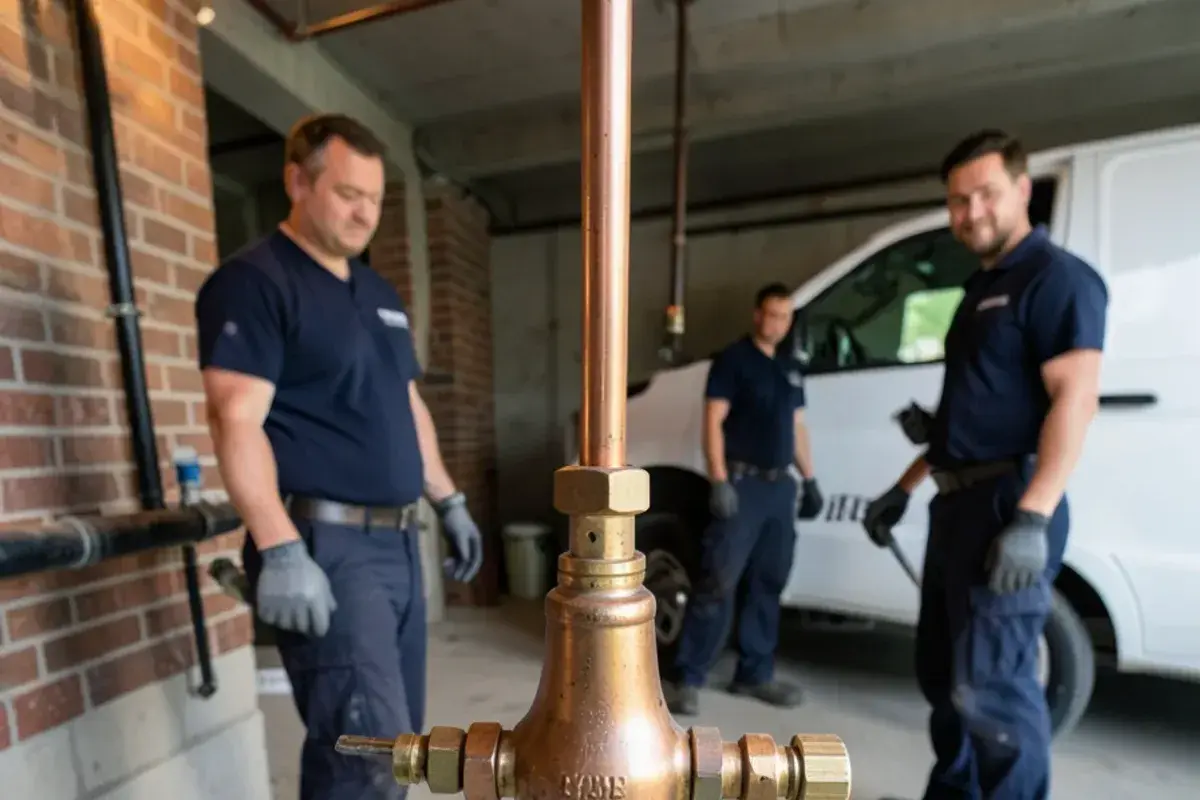
The meter and the curb stop near the street belong to the water utility in most communities. If pressure dropped right after a meter swap or work near the street, call your water department and ask them to check that the curb stop is fully open.
The service line between the curb stop and your house is usually the owner's responsibility. In Mount Clemens, for example, the city owns the line through the curb stop and the owner owns it from there into the building. That line can be crushed or kinked by excavation, partly frozen during a hard cold snap if it's shallow, or narrowed inside by corrosion. Clinton Township's code calls for water service pipe at least five feet below grade, deep enough to stay out of the frost, and older lines elsewhere don't always sit that deep.
Material matters too. State rules make water systems pay to replace lead service lines, along with galvanized lines once connected to lead, over a 20-year span that began in 2021. At the end of 2025, Mount Clemens counted 213 lines confirmed as lead, with another 2,363 still unidentified. Sterling Heights reports none. Galvanized service lines rust shut from the inside the same way old interior pipe does. When the service line is the problem, main water line repair covers replacing it.
Galvanized pipe inside the house
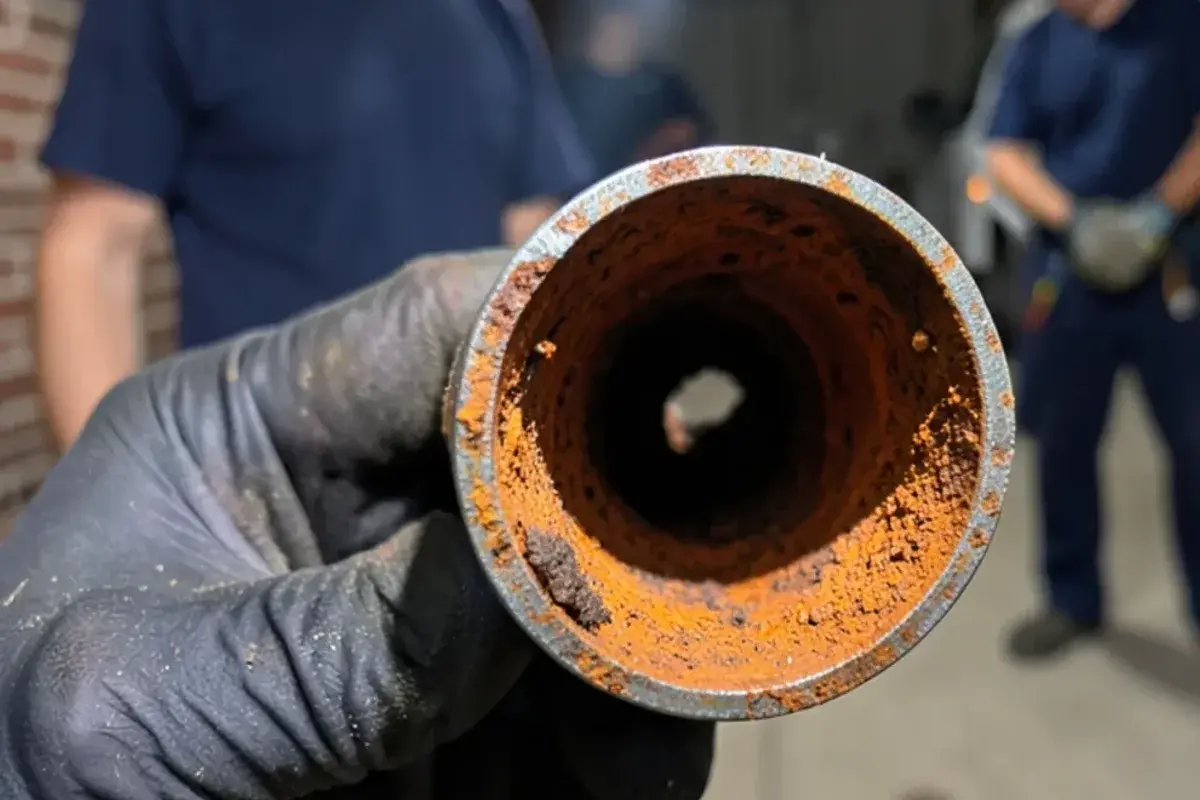
Homes built before about 1960 commonly had galvanized steel supply pipe. Over decades, rust and mineral deposits build up inside until a pipe meant to carry a full flow carries a fraction of it. Upstairs fixtures and the ones farthest from the main suffer first. Flakes of rust also break loose and clog aerators and valve cartridges, which is often the first clue.
You can't descale buried galvanized pipe in place. The fix is replacing it, usually with copper or PEX, and that's what repiping involves. Because it's a whole-house project, confirm with a gauge that the pressure at the main is good before committing.
When the low pressure isn't yours
If your neighbors notice the same thing, the cause is probably on the public side: a water main break, hydrant flushing, or heavy demand during summer evenings when lawn sprinklers run. Your water department can tell you whether work is underway in your area.
Rule out a leak
A leak on the service line or under the floor can steal pressure without showing water anywhere. Turn off every fixture and watch the meter for a few minutes. If the low-flow indicator moves, water is leaving the system somewhere, and leak detection can find it without opening walls blindly.
Homes on private wells in north Macomb County
Everything above assumes township or city water. Farther north, in Ray Township and other rural parts of the county, many homes draw from private wells, and the pressure comes from the well system itself. A pressure switch starts the pump when the tank falls to a set point and stops it at a higher one, and the house never sees more than that top number.
Low pressure on a well usually means the switch setting, a pressure tank that has lost its air charge, a clogged sediment filter, or a pump that's wearing out. A waterlogged tank makes the pump click on and off every few seconds while a tap runs. Check the gauge on the tank, which sits near the pressure switch, and change the filter before blaming anything bigger. The county health department permits wells, and a pump or tank replacement is a job for a well contractor or a plumber who works on well systems.
What plumbers usually find, and what each fix can't do
Low pressure often has more than one cause stacked together, and that's where homeowners get frustrated. A post-war house can have a tired PRV and galvanized pipe upstairs. Replace the PRV and the basement improves while the upstairs bathroom stays weak. That's why a plumber who tests pressure at the main and again at a far fixture before quoting is worth listening to.
Each repair also has limits. Adjusting a PRV can raise the number, but it can't give back flow that's lost to a narrow service line. A new service line restores flow to the house, but rusted interior branches still starve the fixtures at their ends. Repiping the house fixes the inside, and does nothing for a curb stop left half closed at the street.
A new PRV brings one more item along. Where cold water reaches a storage water heater through a PRV or check valve, the plumbing code calls for thermal expansion control, usually a small expansion tank near the heater. Ask whether your quote includes one, since a home that never had it may see the relief valve drip once the new PRV holds pressure tightly.
Getting full pressure back
Work from the street inward: neighbors and the water department, the main valve, the PRV, the service line, then the pipes inside. Write down each gauge reading, because a plumber can use those numbers to skip straight to the right test. If the gauge points to the PRV, the service line or the old pipe in your walls, call (207) 419-2600 and we'll connect you with a local plumber who covers your area.
Common questions
What is normal water pressure for a house?
Most homes run comfortably somewhere around 40 to 80 psi at a hose bib near the meter. Below about 40, showers and upstairs fixtures start to feel weak, especially when two taps run at once. Above 80, plumbing codes generally call for a pressure-reducing valve to protect pipes, fittings, water heaters and appliance valves.
Can a water softener or whole-house filter cause low pressure?
Yes. A clogged sediment cartridge or a softener with a fouled resin bed restricts flow for the whole house, and on well water with iron it happens faster. Put the unit in bypass and test again with the gauge. If pressure jumps back, the treatment equipment is the cause, and a cartridge change or service visit usually fixes it.
Will replacing galvanized pipe fix low water pressure?
Yes, when the galvanized pipe is the restriction. If the gauge reads normal at the main and the weak flow comes from rusted pipe inside the house, copper or PEX restores the full opening. If the service line or a PRV is the choke point, new interior pipe won't help, which is why the gauge test comes first.
Where we can help
Pressure low at every tap in the house?
- Your call goes to an independent local plumbing company that does the work.