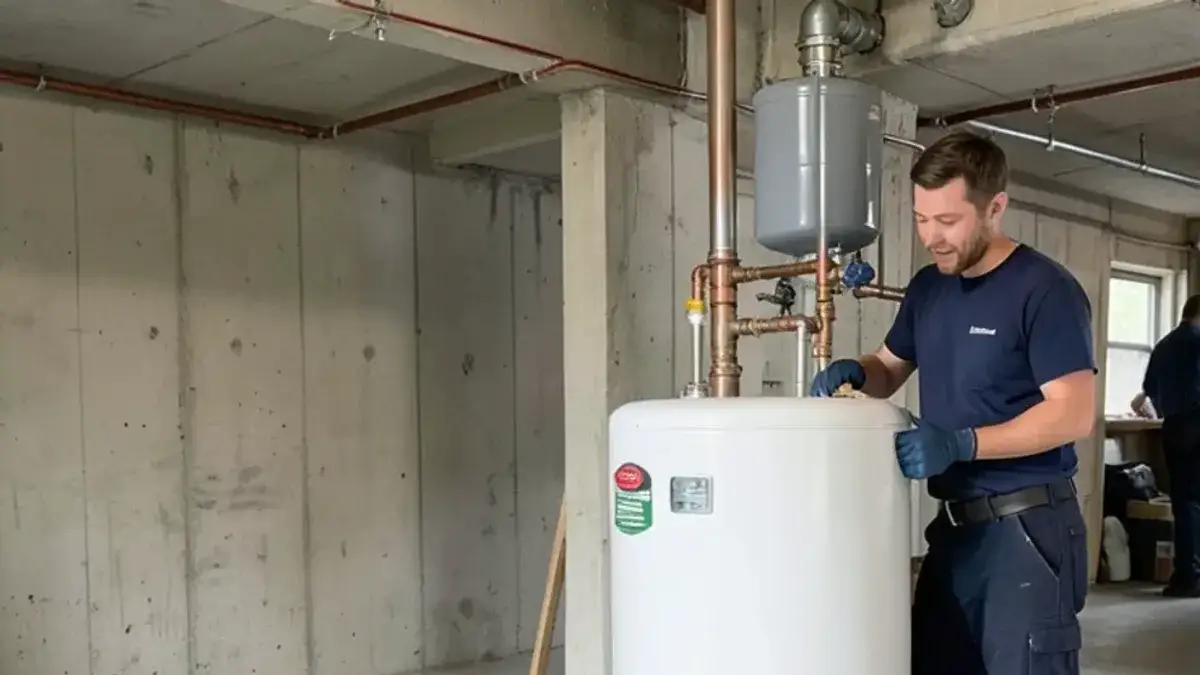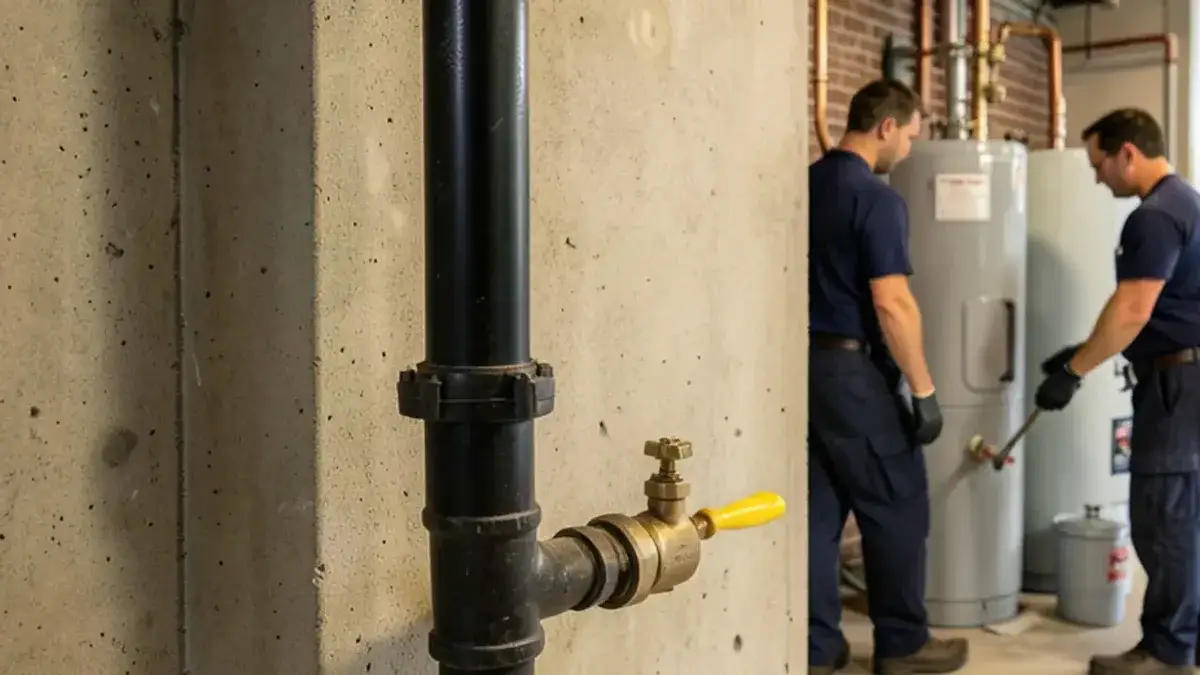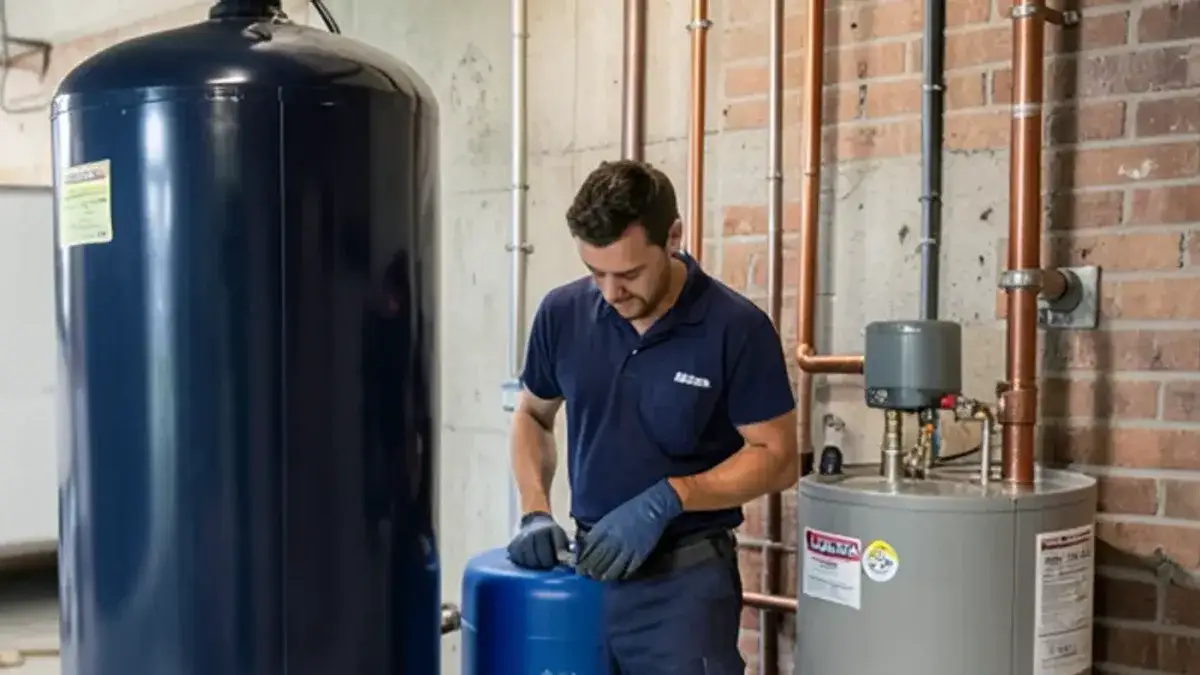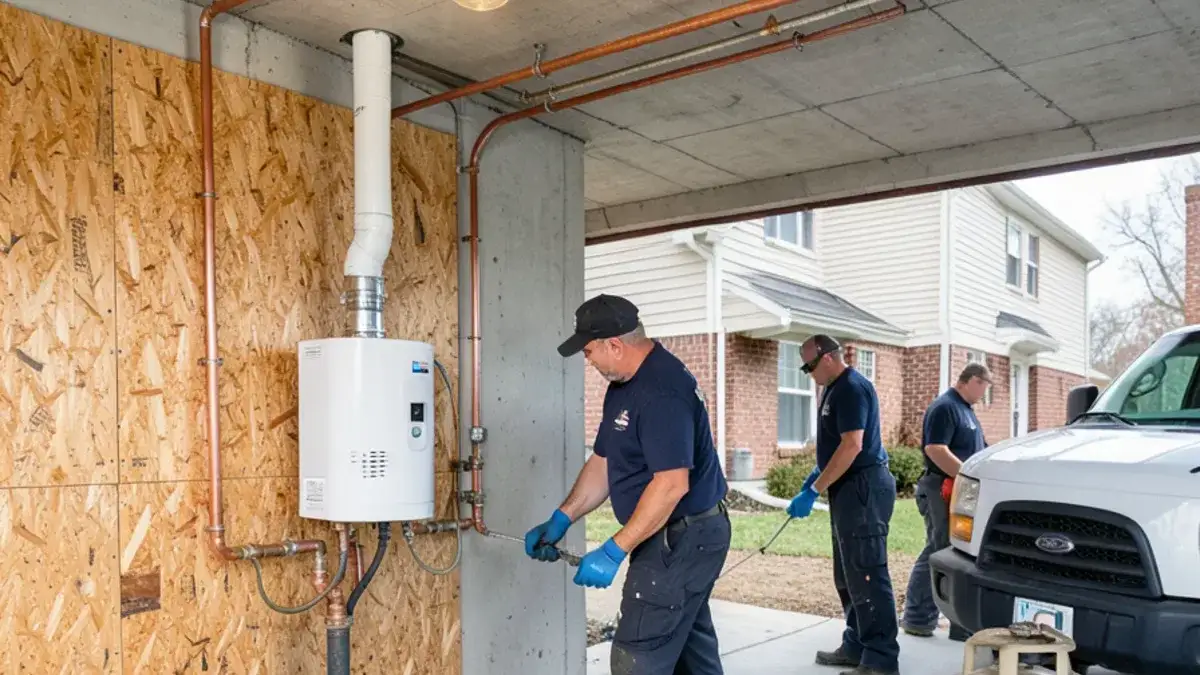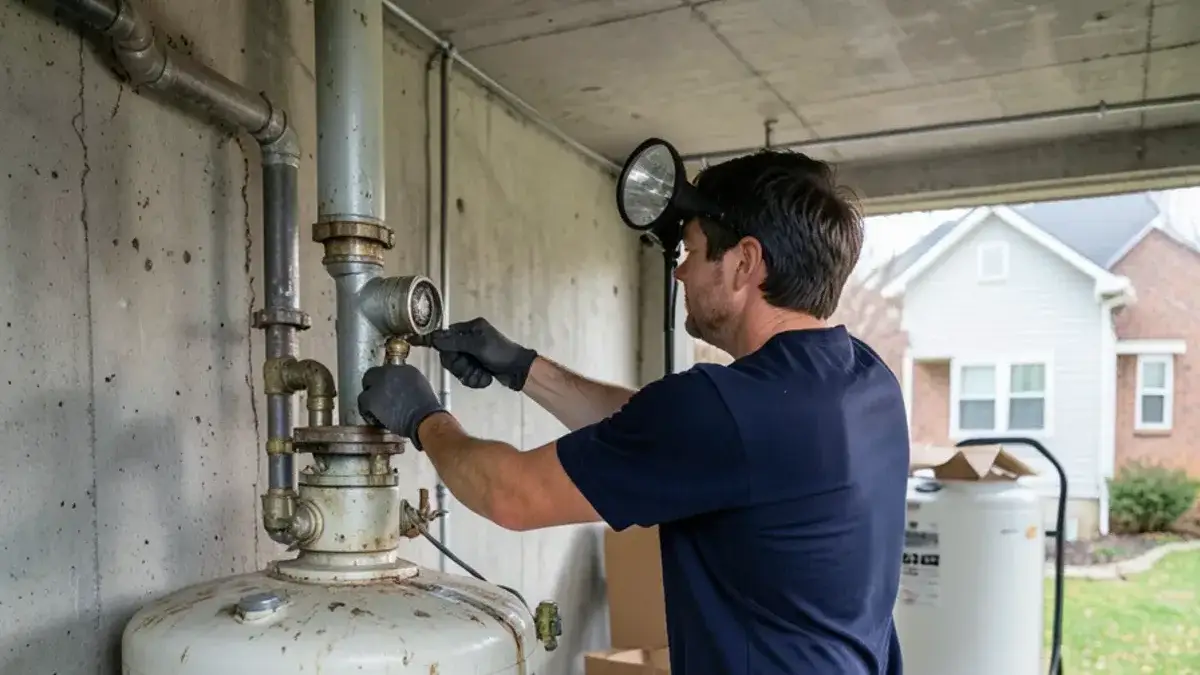
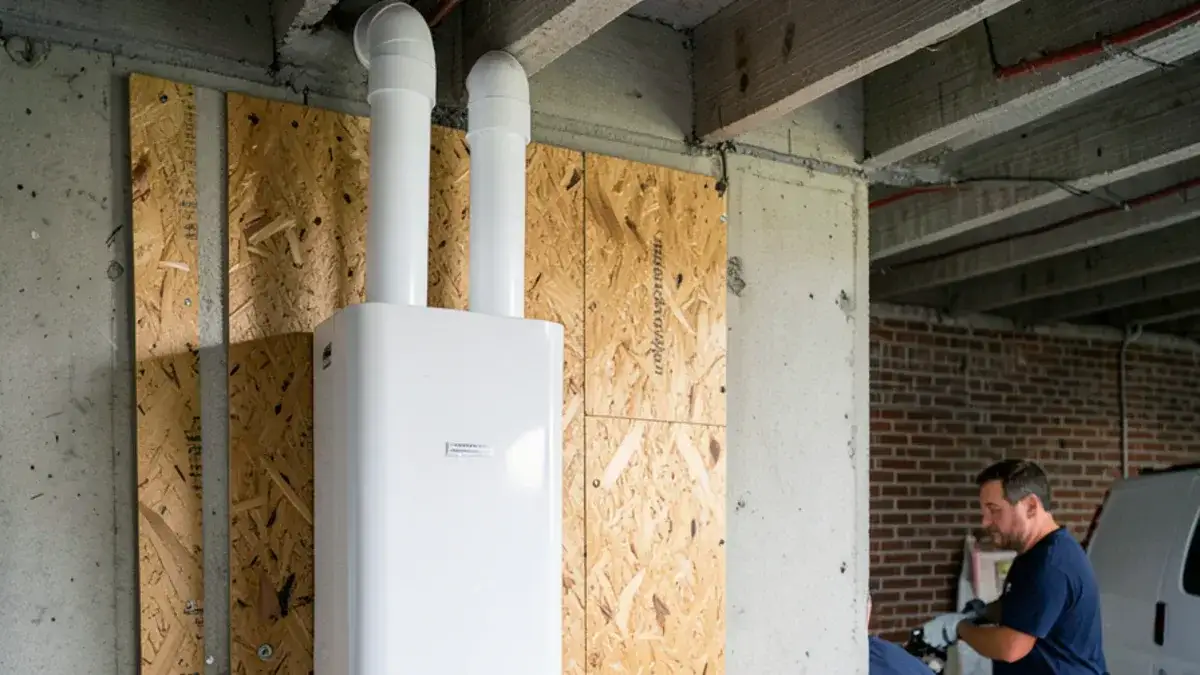
Here's how a plumber checks each one in a Macomb County house before the old tank comes out.
Is a tankless water heater a fit for your house?
A tankless water heater makes hot water as you use it instead of keeping a tank warm all day. It runs out only when demand passes its flow rating, it hangs on the wall, and it frees up floor space in a basement or utility room. In exchange, it needs far more gas while it runs, a dedicated vent, a 120-volt outlet, a condensate drain on condensing models, and regular descaling.
If those conditions are easy to meet in your house, tankless is worth a close look. If the gas line, vent route or budget makes it hard, a well-sized tank may be the better buy. Our article on tank vs tankless water heaters lays out that decision, and water heater installation covers the tank route.
When Macomb County homeowners start asking about tankless
Most of these calls start with a tank that has to go anyway: water at the base, rust at the seams or a burner that won't stay lit. Others come from households that run out of hot water during the second shower, or from owners finishing a basement who want the floor space back.
A furnace upgrade is a common trigger in older Sterling Heights and Clinton Township ranches. The new furnace vents through the wall in plastic pipe, leaving the gas tank alone in a chimney sized for two appliances. A sealed-vent tankless gets it out of that flue.
Existing tankless owners see different signs: an error code, water that goes lukewarm when two fixtures run, or a burner that cycles. Scale and a clogged inlet screen cause most of those.
What a tankless installation covers
The plumber you're connected with plans and installs everything around the unit:
- a heater sized to your winter temperature rise and your busiest-hour fixture count
- a gas line checked, and upsized if needed, from the meter to the heater
- a sealed vent and intake to a terminal clear of snow, windows and the meter
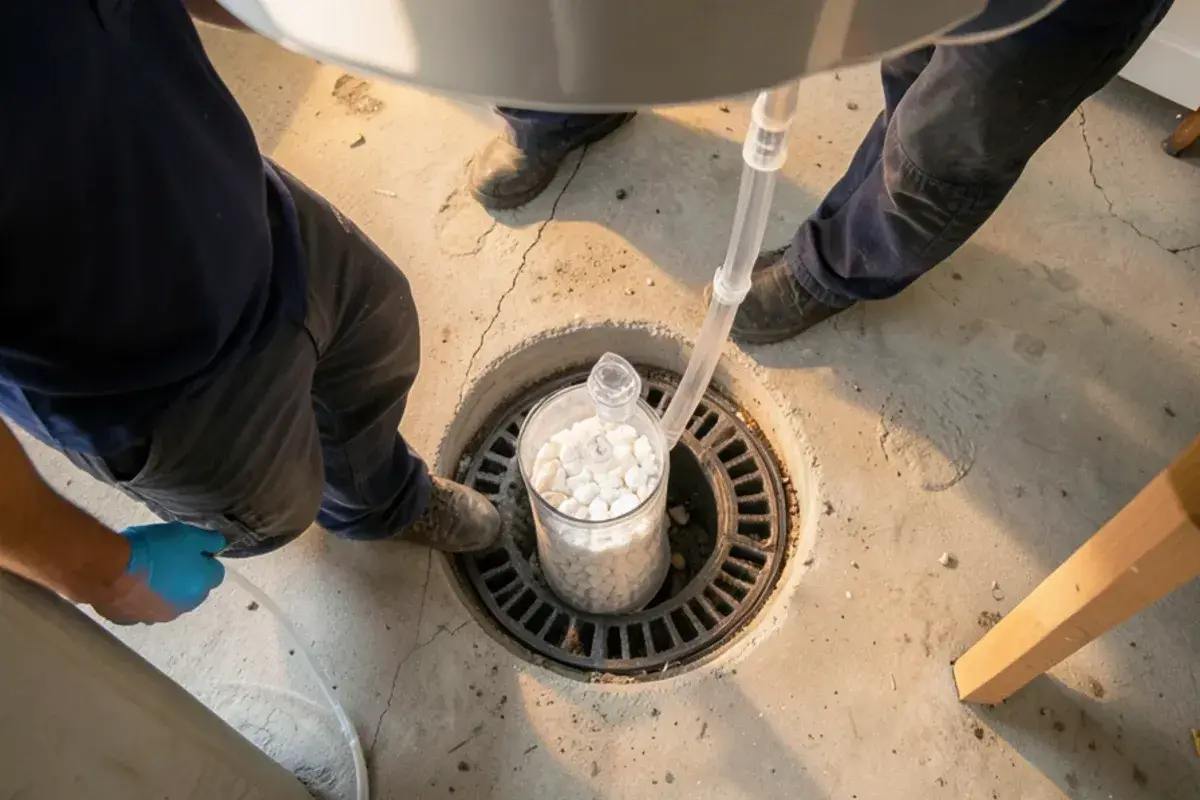
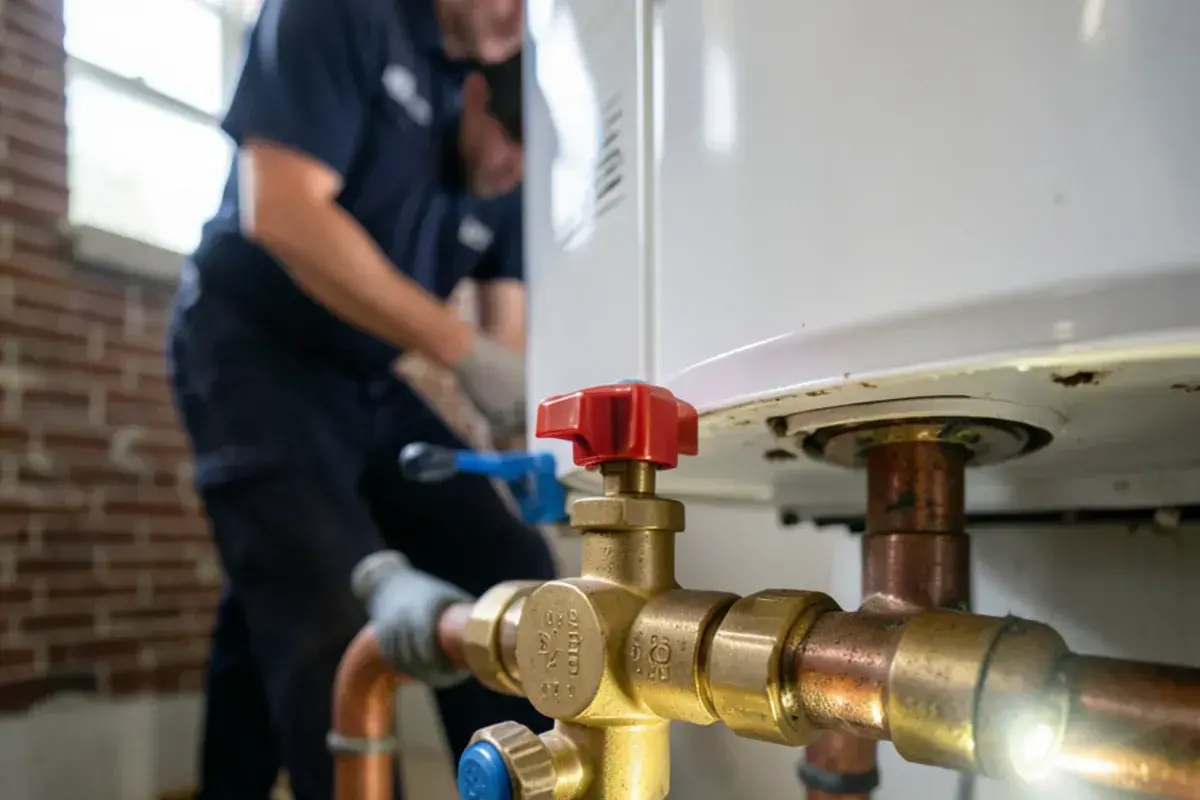
- isolation valves with service ports, a relief valve and, on condensing models, a condensate line with a neutralizer
- a 120-volt outlet, removal of the old tank, the permit and the final inspection
Want to know if your gas line can carry a tankless? Call (207) 419-2600
- Your call goes to an independent local plumbing company that does the work.
Gas line size and meter capacity for a gas tankless install
This is the question that decides most tankless jobs. Many whole-house gas units fire at close to 199,000 BTU per hour, several times what a typical 40-gallon tank burns. The gas pipe has to deliver that while the furnace, range and dryer run too.
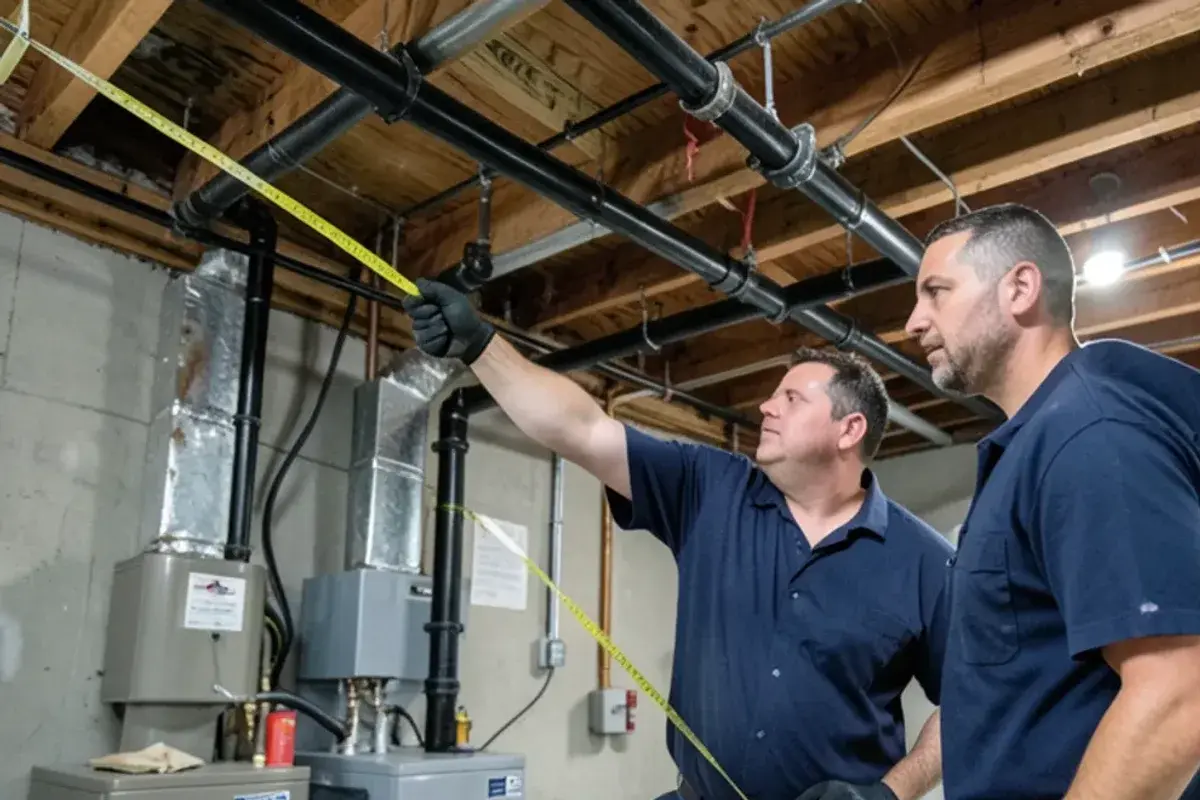
Sizing starts at the meter. The plumber lists every gas appliance and its input, measures the pipe size and length to each branch, and compares the total to what the pipe and meter can carry. A half-inch line that fed the old tank is often too small. Sometimes a new, larger line from the meter manifold solves it; sometimes the meter itself has to be upgraded by your gas utility, Consumers Energy or DTE Gas, whichever serves your street. Gas piping in Michigan falls under the mechanical license, and our page on gas line plumbing support explains that side.
How much hot water will a tankless deliver in a Michigan winter?
A tankless unit's flow rating depends on how far it has to raise the water temperature. Say you want 120°F at the shower. If the water comes into the house at 40°F in a cold February, the heater needs an 80-degree rise, and the gallons per minute it can deliver at that rise are lower than the number in the summer ads.
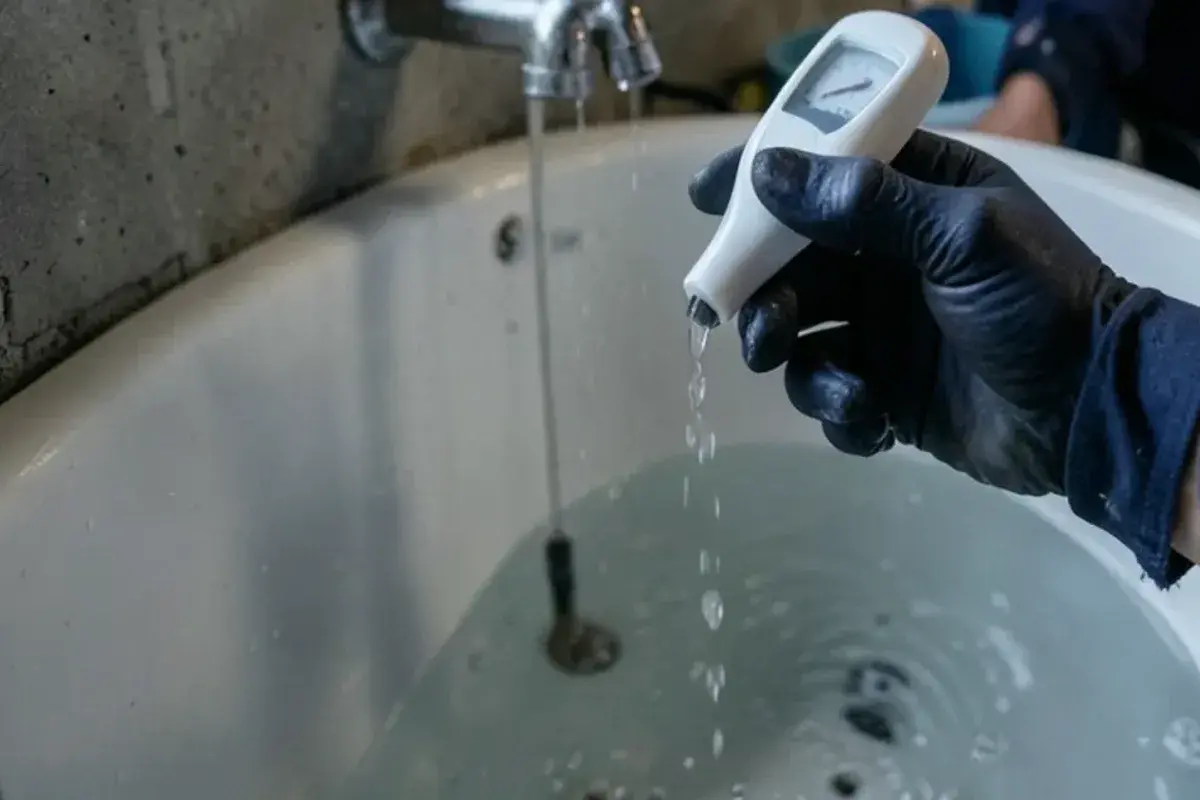
So size for winter. Count the fixtures that run at once on a busy morning, such as two showers and the kitchen sink, and check the manufacturer's flow chart at your winter temperature rise. Also note the minimum flow needed to fire the burner, because a very low trickle at a bathroom faucet may not turn the unit on.
Tankless venting: non-condensing or condensing
Non-condensing units run hot exhaust through stainless vent pipe. Condensing units pull more heat out of the exhaust, vent in plastic pipe of the type the manual names, and produce acidic condensate that drains through a neutralizer. Either way the vent is sealed and dedicated, and the termination has to meet the manual's clearances from windows, doors, the gas meter and grade.
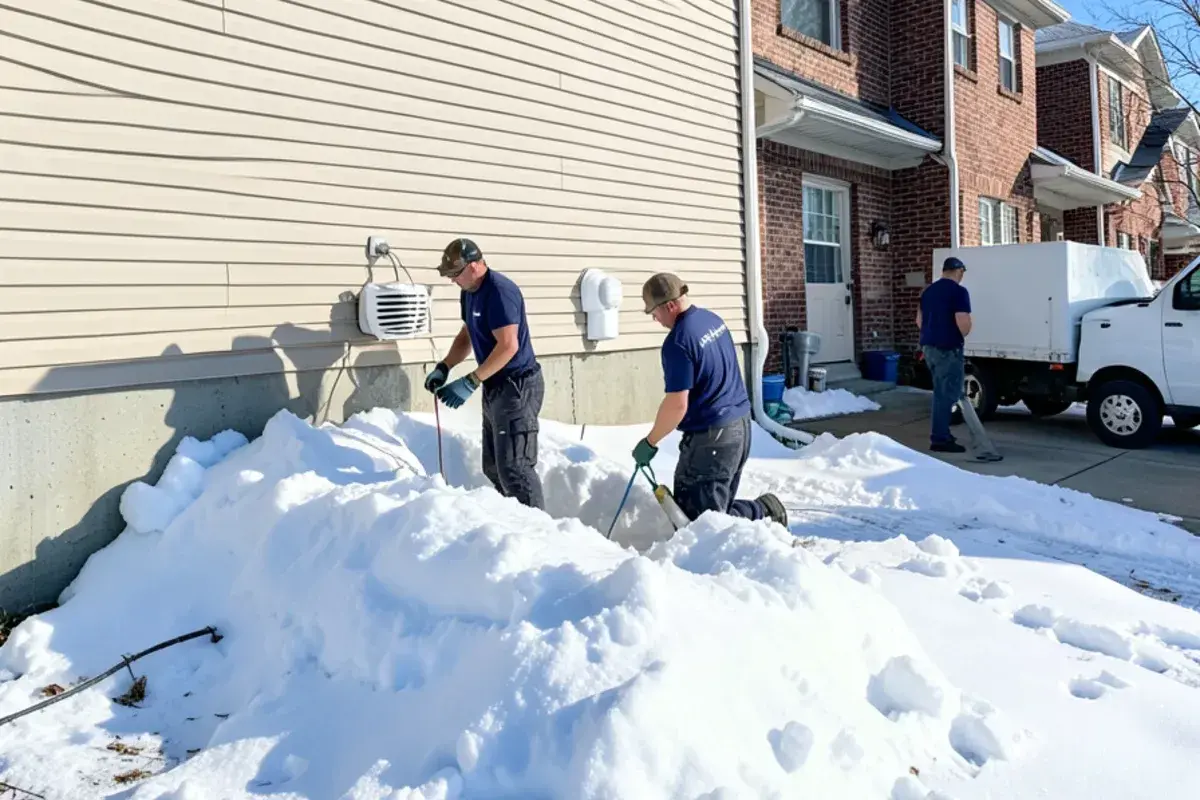
In a Michigan winter, grade isn't the only height that matters. Drifted snow can block a low sidewall vent or intake, so the terminal goes high enough to stay clear. When the old tank shared a masonry chimney with an older furnace, removing the tank changes how that chimney drafts for the furnace, and that needs a check before the job is done.
Tankless descaling with about 5.8 grains per gallon
Hardness in Macomb Township's tap water averaged 99 ppm in its 2024 report, roughly 5.8 grains to the gallon. That's moderate water, but a tankless heat exchanger has narrow passages running at high temperature, and calcium deposits there faster than in a tank. Scale cuts output, triggers error codes and, left alone, can damage the exchanger.
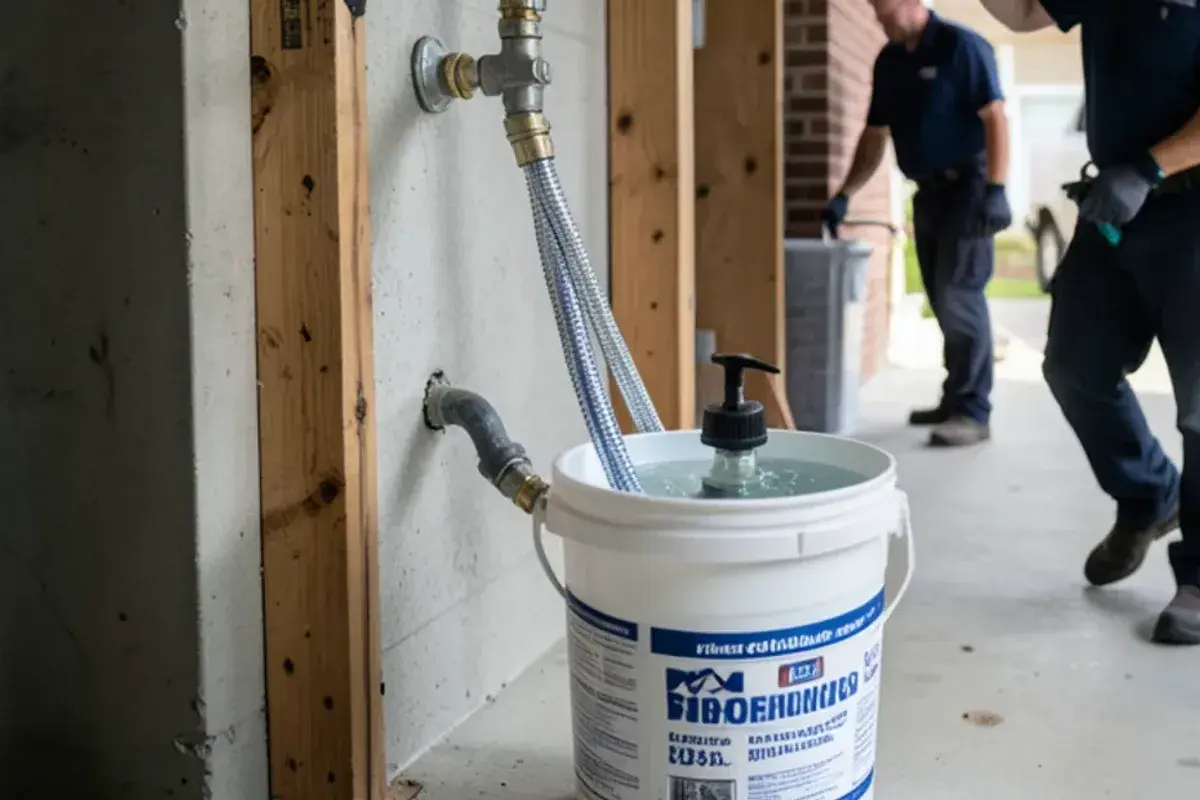
The fix is access. Isolation valves with service ports go in during installation, so descaling means closing two valves, hooking up a small pump and a bucket of solution, and circulating it for the time the manual specifies. A water softener or scale-control system stretches the interval between cleanings.
Permits and the installation process
A tankless replacement is permitted plumbing work in Michigan; Macomb Township's fee table lists the residential water heater as its own item. LARA's rules say plumbing work may not begin before the permit is issued, and the applicant has to be a licensed plumbing contractor or a homeowner doing the work in a house they occupy. The gas piping and venting fall under mechanical license categories, so ask the building department whether a mechanical permit is also needed. The gas line is pressure tested before it goes into service, and the inspector sees the finished work.
Before work starts, ask the plumber for the plumbing contractor license number and the mechanical license covering the gas line, and check both on LARA's online lookup.
The plumber you're connected with will usually work through these steps:
- Plan the gas load, vent route, condensate drain, outlet and mounting wall.
- Pull the permit, then drain and remove the old tank.
- Mount the unit on a backer board and pipe the water side with isolation valves and a relief valve.
- Run or upsize the gas line, pressure test it and connect it.
- Install the vent and intake, the condensate line and neutralizer, and the outlet if needed.
- Fire the unit, set the temperature, run several fixtures at once to confirm output, show you the descaling valves and inlet screen, and schedule the inspection.
A tankless conversion takes longer than a tank swap, often a full day or more, depending on how much gas pipe and vent work is involved. A meter upgrade runs on the gas utility's schedule.
What drives tankless cost, and the manufacturer warranty
The unit itself (condensing or not, and its capacity) is one part. Gas pipe upsizing and any meter upgrade, vent length and material, wall mounting and relocating the heater, a new outlet, a condensate neutralizer, isolation valves, scale protection, a chimney liner for a furnace left alone in the flue, the permit and removing the old tank all add up. The water heater replacement cost factors guide covers these in more depth.
House layout moves the number as much as the unit does. Where the meter, old tank and an outside wall sit a few feet apart in the basement, gas and vent runs stay short; a first-floor closet, a long vent run or a meter swap by the utility pushes it up.
Manufacturers usually cover the heat exchanger and the other parts for different terms. Many require registration, installation that follows the manual, and maintenance within their water-quality limits, and some exclude damage caused by scale. Read those terms before you buy.
Why call Plumbers in Macomb, MI before you go tankless?
A tankless conversion touches the gas line, the vent, the water piping and the permit, so it pays to talk it through first. Plumbers in Macomb, MI runs one referral number for every plumbing problem, from a tankless install to a dripping valve. Call (207) 419-2600 and we'll ask about the current heater, your other gas appliances and where the meter sits, then put you in touch with an independent plumber who works in your community. That plumber sees the house, explains the options and quotes the job. This page covers the steps, what moves the cost and which permits apply, so you arrive at that visit with good questions. Nothing to fill in online; just call.
Tankless water heaters: questions we hear
Can my existing gas line run a tankless water heater?
No, often not as it stands. A typical tank heater needs a fraction of the gas a whole-house tankless unit draws at full fire. The plumber adds up every gas appliance on the meter, checks pipe sizes and lengths, and tells you whether the line needs upsizing or the meter needs an upgrade from the gas utility.
What if my tankless water heater already needs repair?
Say on the call that it's an existing tankless unit, and we'll put you in touch with a plumber who works on them. Mention any error code, water that goes lukewarm at higher flow, or a burner that won't fire, and have the brand and model handy so the plumber brings the right parts.
How often does a tankless heater need descaling on Macomb County water?
Follow the interval in your unit's manual, and lean toward the shorter end if your water isn't softened and the household uses a lot of hot water. GLWA water in Macomb Township averaged about 5.8 grains per gallon in 2024, which is enough to build scale over time.
Can a tankless heater vent into my old chimney?
No, usually not. Tankless units use sealed vent systems in the exact materials their manual lists, run to a sidewall or roof. Some manufacturers approve chimney liner kits, but an open masonry flue isn't one of them. Check what's left venting into the chimney once the tank is gone.