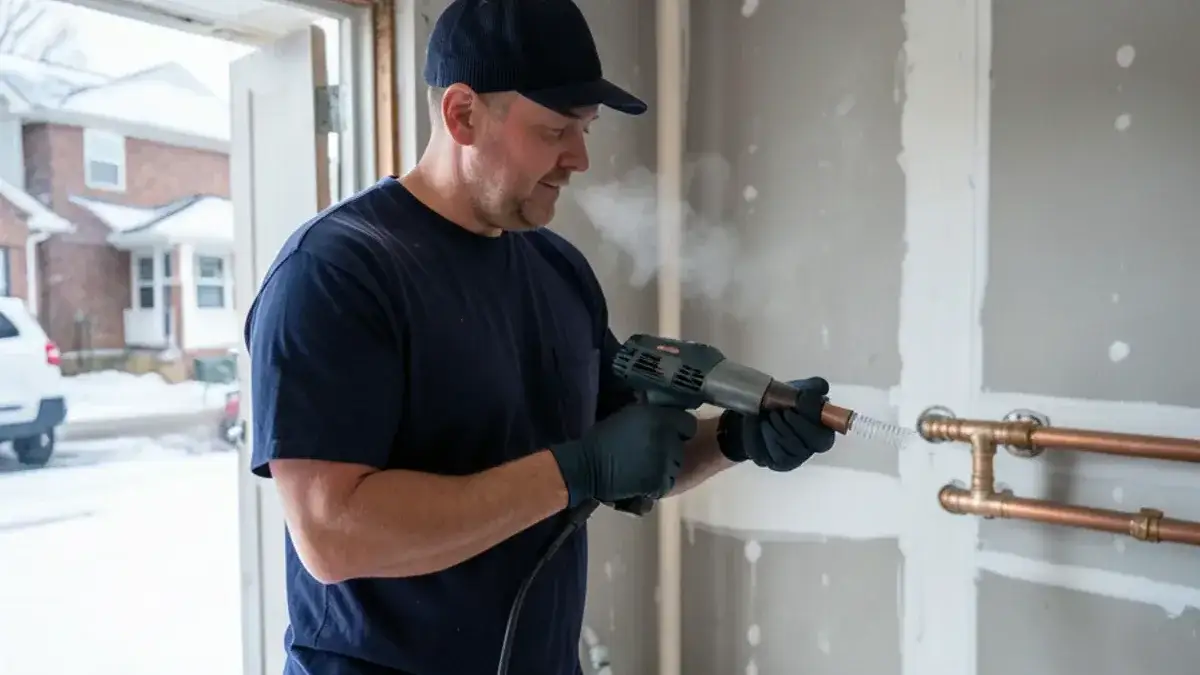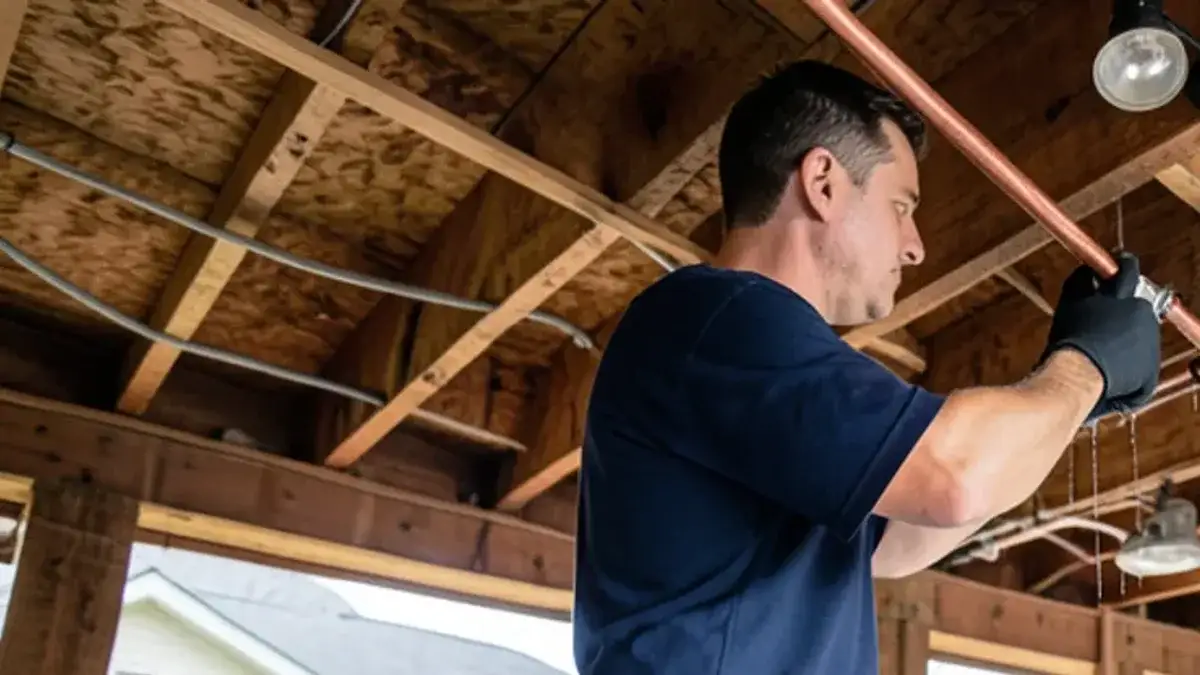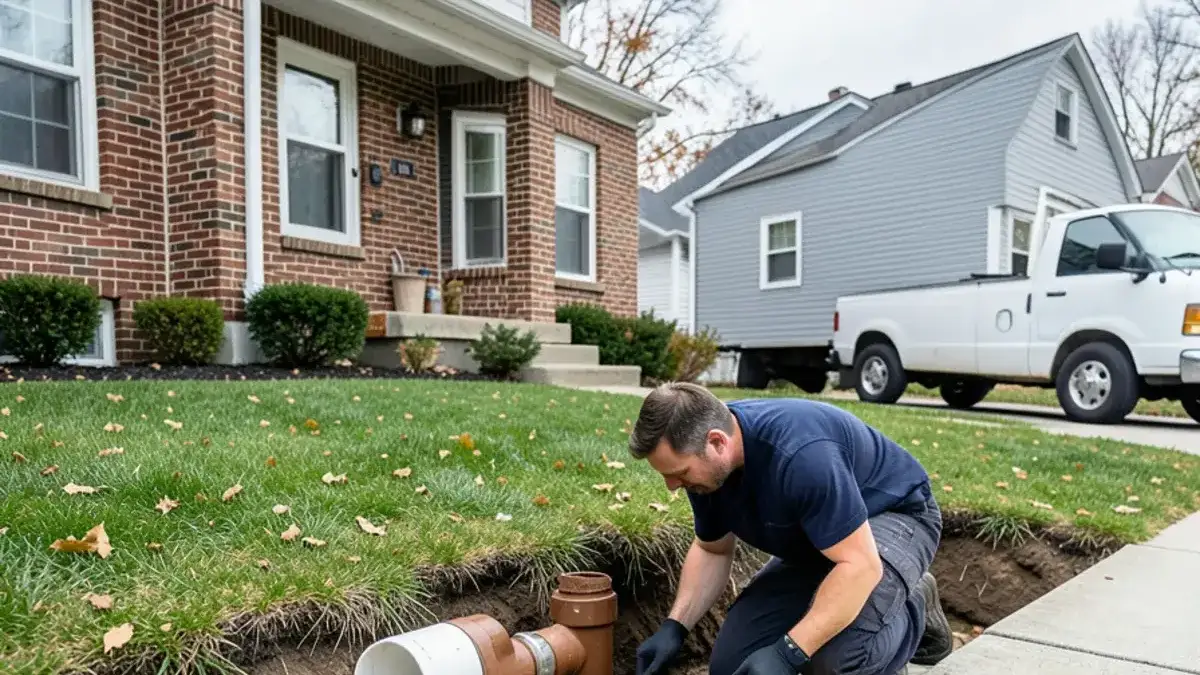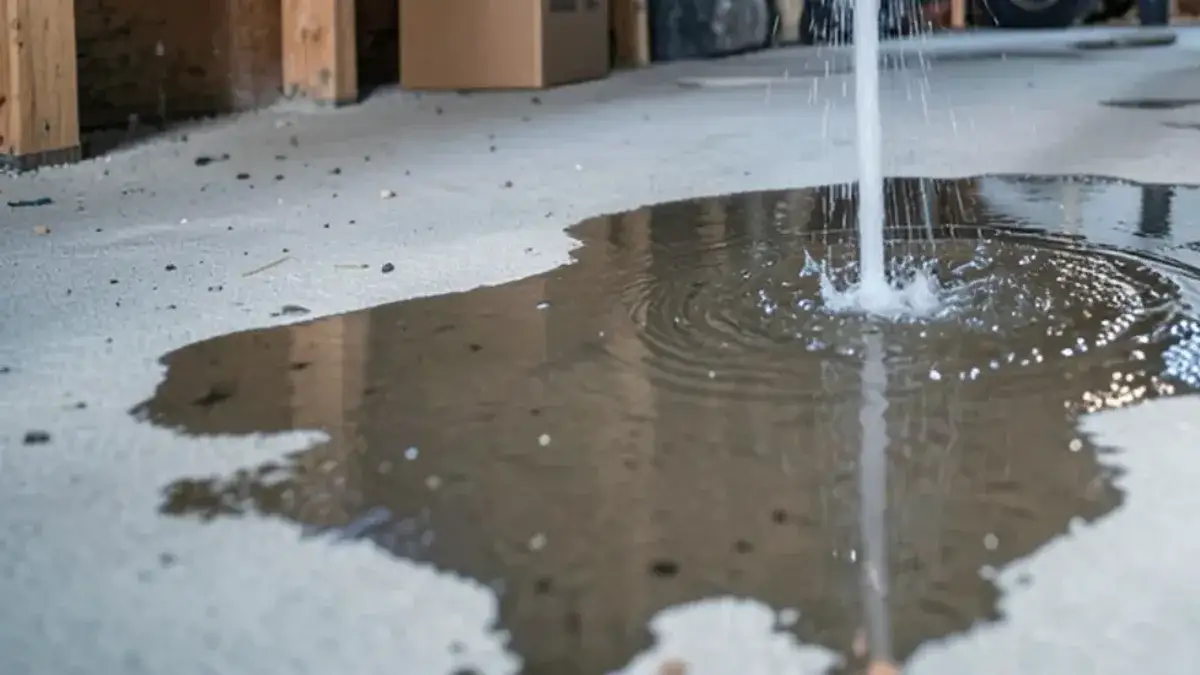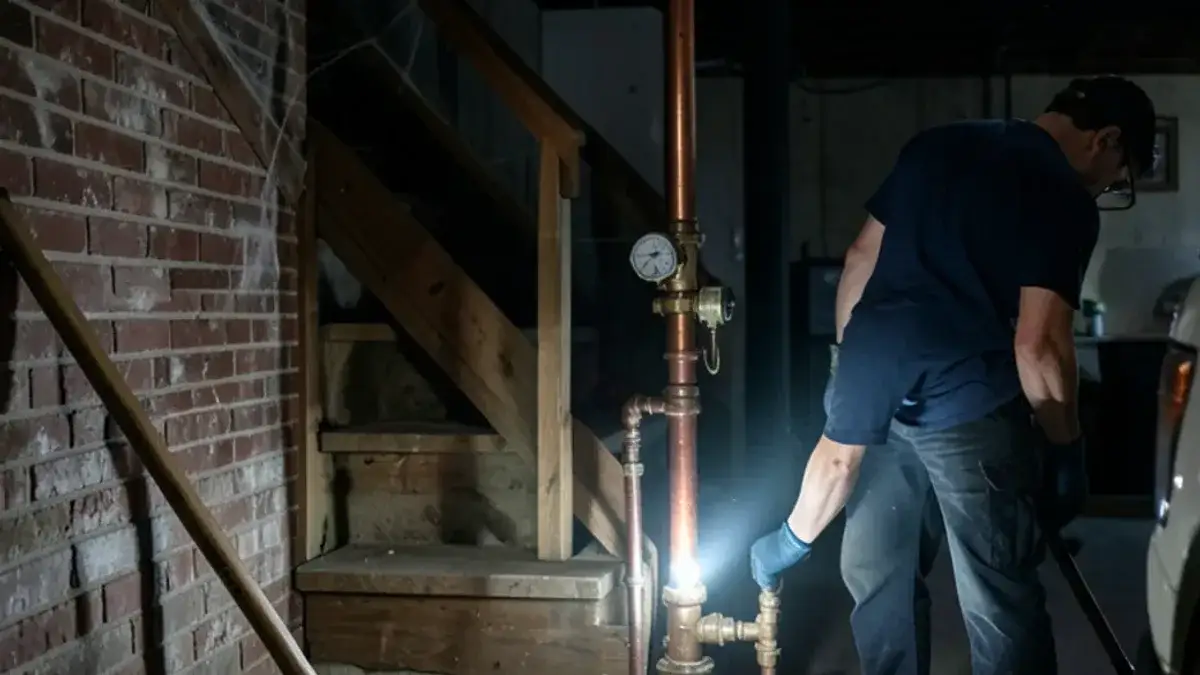
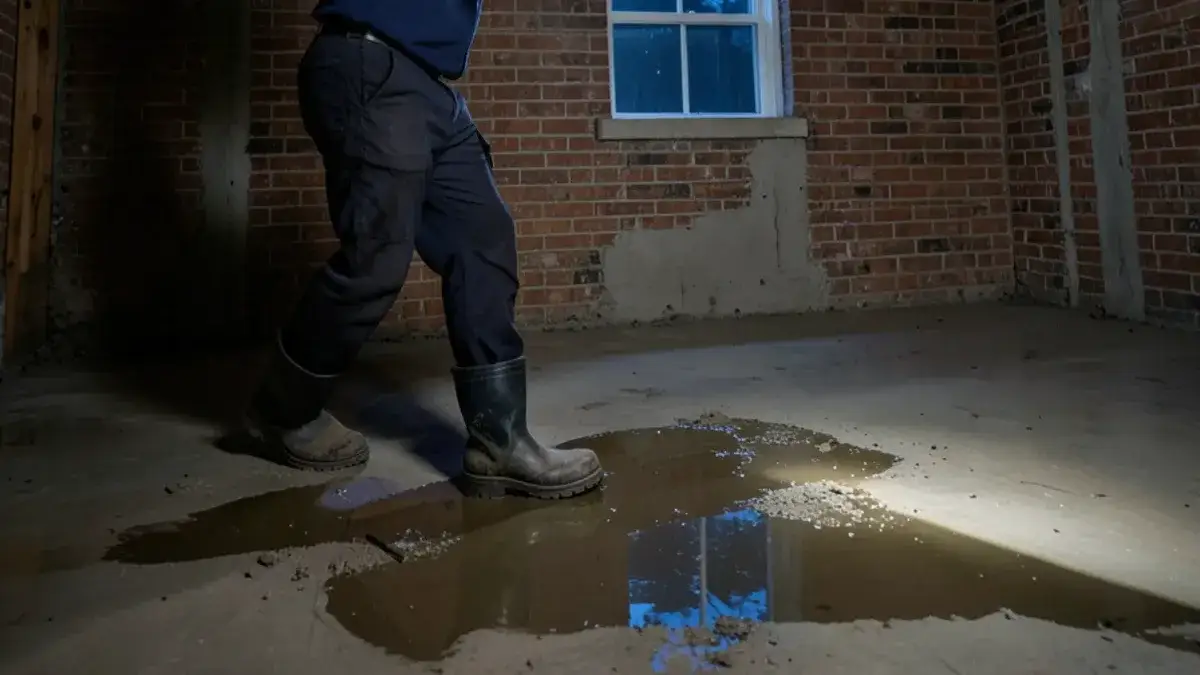
Around Macomb County, the usual emergencies are pipes split by a hard freeze and sewer laterals backing up into basement floor drains.
Is it a plumbing emergency, or can it wait?
Treat it as an emergency when:
- a pipe has burst or split and water is spraying or pouring out
- sewage or gray water is coming up through a floor drain, tub or toilet
- the water heater tank is leaking, or water is pooling around its base
- water is rising in the basement and the sump pump can't keep up
- the house has no water at all during a hard freeze, which usually means a frozen line
- you smell gas (that goes to 911 or the gas utility first, covered below)
A dripping faucet, one slow drain, a running toilet (close the small valve behind it) or a drip a bucket can catch can usually wait for a regular appointment.
The local pattern follows the weather. Cold snaps split lines in exterior walls and over attached garages, often showing only on the thaw. Spring snowmelt wears out sump pumps. Summer cloudbursts are the other big one: in August 2014, 4 to 6 inches of rain fell on southern Macomb County in about four hours, and county Public Works says the older sewers in St. Clair Shores and Eastpointe become overwhelmed in storms like that.
Water or sewage spreading right now?
- Your call goes to an independent local plumbing company that does the work.
What to do right now: main water shutoff, heater, power and gas
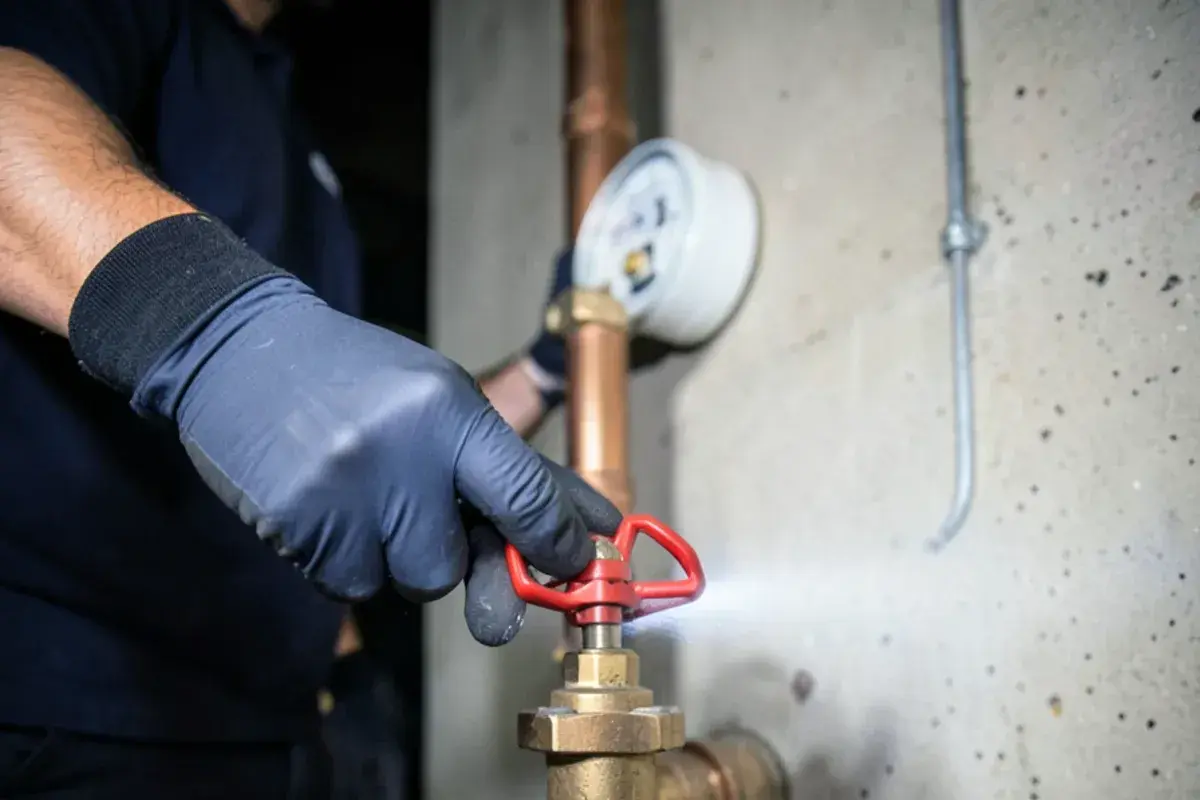
Close the main water shutoff
In most Macomb County basements, the main shutoff sits where the water service comes through the foundation wall or floor, next to the meter. A lever handle closes with a quarter turn, ending up across the pipe. A round wheel turns clockwise until it stops; don't force a seized one. Then open a faucet on the lowest floor to let pressure out of the lines, and set a gas water heater to pilot or switch an electric one off at the breaker. Our guide on how to find your main water shutoff shows the common setups. If the main won't close, the shutoff at the curb belongs to the water utility in many communities, so call them before touching it.
Stay clear of water near electricity
Don't step into a basement where water may reach outlets, cords, the furnace or the panel. Shut off the basement circuits only if you can reach the panel from dry floor.
If you smell gas, leave first
A rotten-egg smell means natural gas. Get everyone out without flipping switches or using a phone inside. Once outside, call 911 or your gas utility's emergency line (Consumers Energy or DTE Gas, depending on your address). Let them clear the house before anyone goes back in.
Then lift boxes off the floor and photograph the damage before cleanup, because insurers usually ask for those pictures.
Burst pipes, sewage backups, tank leaks and basement water
An emergency call is control first and the full repair second. The first visit stops the damage, finds the source and leaves the rest of the house usable. The permanent fix may come later if a water heater has to be ordered, a wall has to come open or a lateral needs digging after MISS DIG locates. An emergency visit typically covers:
- making the area safe and confirming the main, the heater and the power are off
- tracing the leak or backup to its source
- a temporary cap, clamp or bypass so the rest of the house has water
- clearing a blocked main drain and running a camera to see why it stopped
- isolating a leaking water heater and judging repair against replacement
- a written note of what failed, for your insurer and for the follow-up repair
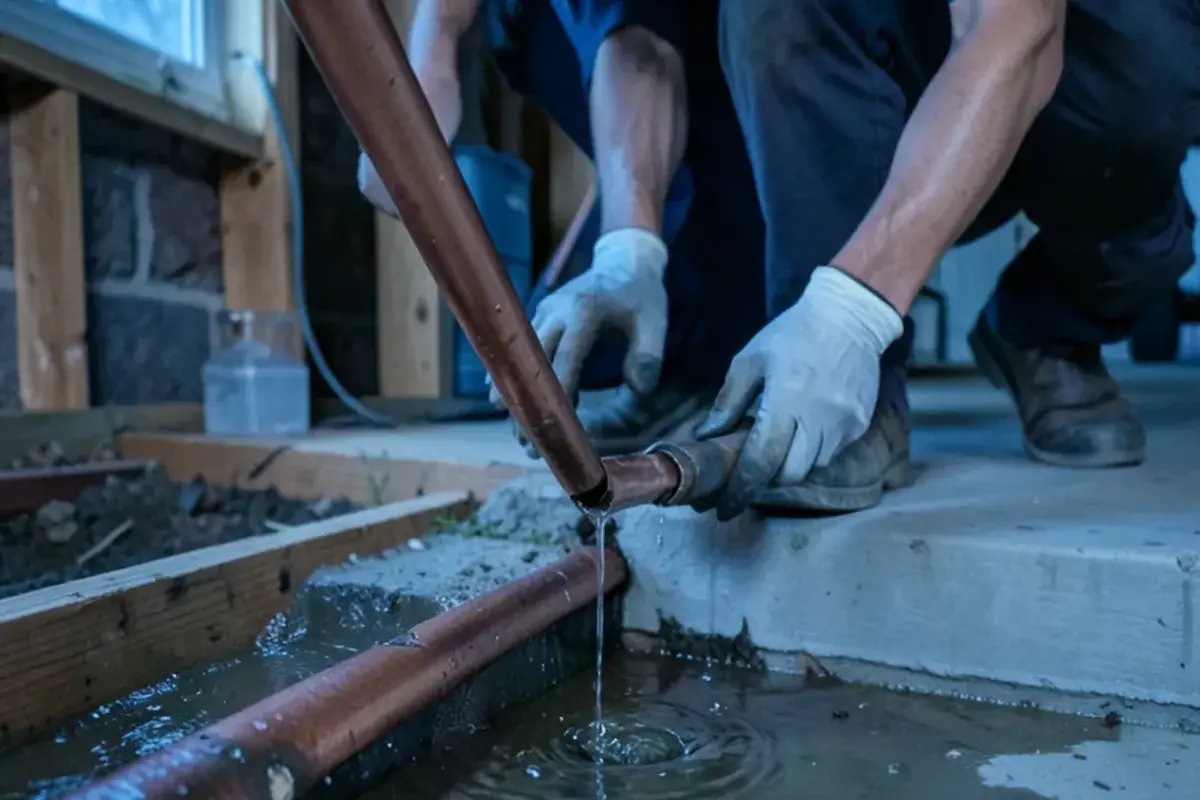
Burst or split pipe
Closing the main stops the flow; the repair means cutting out the split section and joining in new pipe. See pipe repair for the options, or frozen pipe repair if lines are still iced up. Our post on what to do when a pipe bursts covers cleanup.
Sewage backup
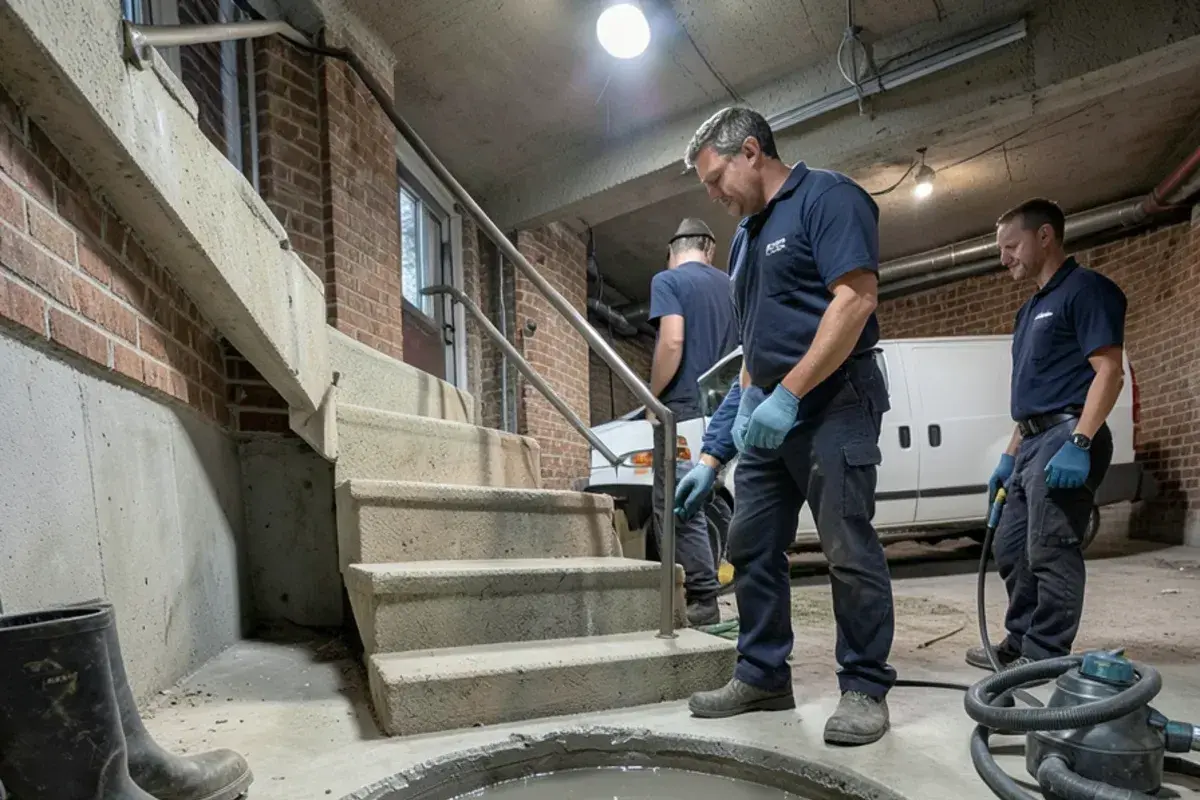
If dirty water comes up a floor drain, stop using water everywhere in the house; cleanup needs gloves, boots and disinfectant. The plumber finds whether the blockage is in your lateral or the public sewer, clears it and runs a camera to see why. Repeat backups usually point to roots or a broken pipe, which is a sewer line repair job.
Water heater leak
Water around a heater comes from a connection, the relief valve or the tank. Fittings and valves can usually be repaired; a tank leaking from its body needs replacing.
Basement water
Seepage along walls after rain or snowmelt is groundwater, usually behind a dead or overwhelmed sump pump. Clean water from above is a supply leak. Water that smells is the sewer. Tell us which you see.
Why call Plumbers in Macomb, MI when you need an after-hours plumber?
Because one number covers every plumbing problem, and nobody wants to search a list while the basement floods. Plumbers in Macomb, MI is a referral service: your call goes to an independent local plumber who covers your part of Macomb County, with no forms to fill in. We won't promise an arrival time, since a deep freeze brings burst pipes all over the county at once. Call (207) 419-2600 and the plumber who answers can say how soon they can come. Say whether the main is closed and whether the house is on city water or a well, so the plumber arrives prepared. These pages explain the work, cost factors and permits so you can ask good questions.
What the emergency plumber does after arriving
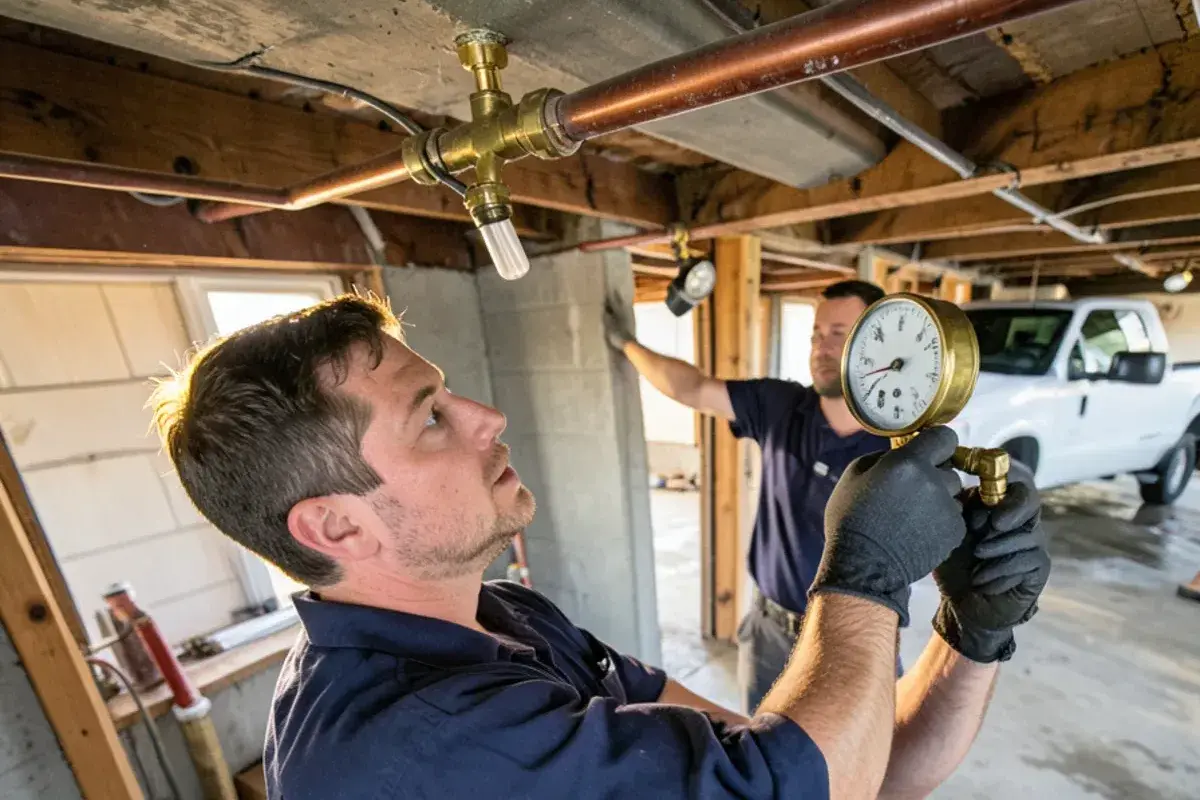
- Checks that it's safe to work: water off, no live power in standing water, no gas smell.
- Finds the source, whether that's a stain to trace across a ceiling or a drain to camera.
- Stops the damage, sometimes with the permanent fix, sometimes with a temporary cap so the rest of the house has water.
- Explains what failed, the repair options and what drives the cost before doing anything you haven't approved.
- Makes the approved repair, brings the water back slowly and checks every joint under pressure.
- Explains drying out and what to watch for.
Permits and licenses after an emergency repair
An emergency doesn't suspend the permit rules. LARA's exemption is narrow: repairs to the working parts of a faucet or valve and clearing stoppages, as long as existing piping and fixtures aren't altered. Cutting in new pipe or replacing a water heater falls outside it, so a permit comes from your township or city building department, and Macomb Township's form says permitted work can't be covered up until it passes inspection. Only a licensed plumbing contractor, or a homeowner working on the single-family home they live in, can pull a plumbing permit. Ask the plumber for the contractor license number and check it on LARA's online lookup. Gas piping falls under Michigan's mechanical license classifications, not the plumbing license.
After the water stops: drying, insurance and sewer claims
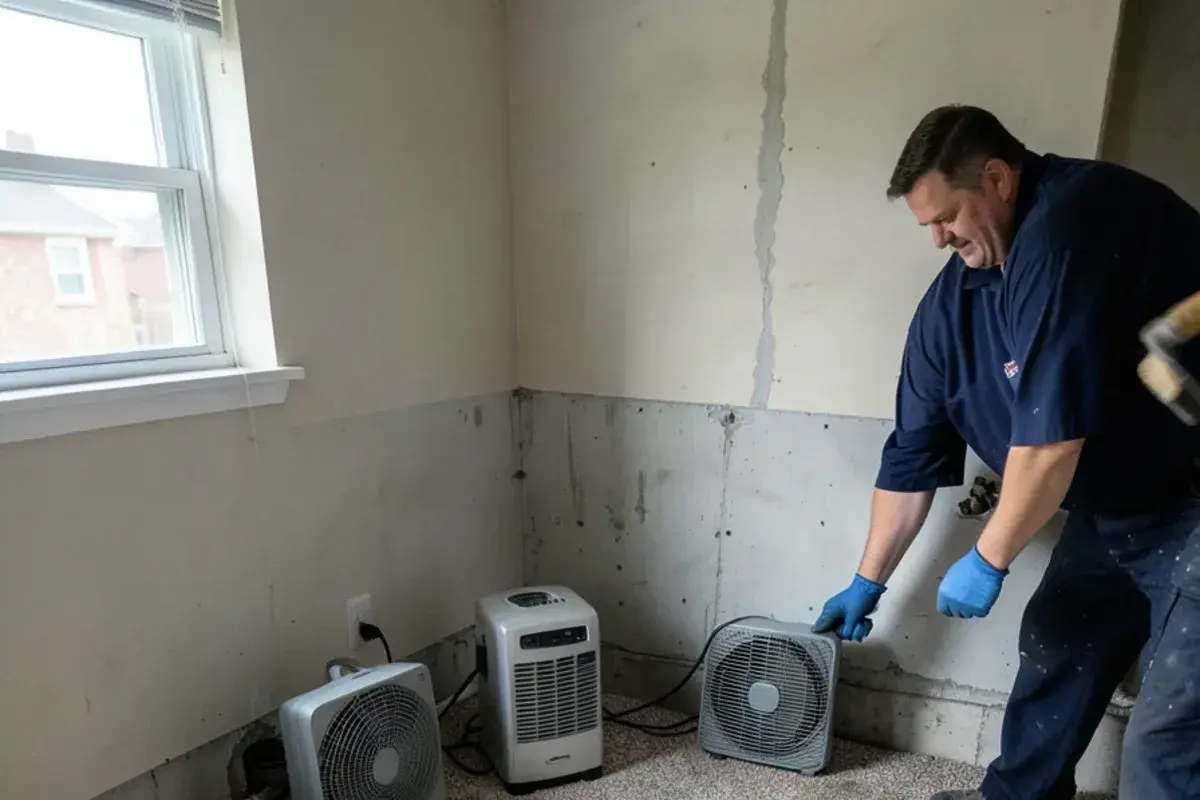
EPA guidance is to dry wet building materials within 24 to 48 hours to limit mold. Run fans and a dehumidifier and pull up soaked carpet pad. Carpet and drywall soaked by sewage usually have to go.
Two Michigan details matter. The Department of Insurance and Financial Services says sewer backup and sump overflow damage typically isn't covered by a standard homeowners policy without an endorsement. And if the public sewer caused a backup, Macomb Township requires a written claim within 45 days of discovery under PA 222.
What changes the cost of an emergency plumbing call
The same symptom can be a quick fix or a day of work, so this page doesn't list prices. These things move the number:
- when the call happens, since nights, weekends and holidays cost more than a weekday visit
- what failed and how much of it: one split versus a whole run of corroded pipe
- access: an open basement ceiling, finished drywall, a crawl space or concrete
- whether a temporary repair comes first and a permanent one on a second visit
- parts on the truck versus parts that must be ordered
- a permit and inspection when the work requires them
- camera inspection or line clearing for a sewer backup
Two local variables come up often. A lateral that needs digging adds MISS DIG locates with at least three business days' notice, so the emergency visit clears the line and the excavation is priced separately. A winter split in a finished basement often costs more in access than in pipe. Ask for the emergency stop and the permanent repair as separate lines on the paperwork, since an insurer may treat them differently.
Emergency plumbing: questions we hear
Can I call an emergency plumber at night or on a weekend?
Yes. Call (207) 419-2600 whenever the problem starts. The call goes to an independent local plumbing company that covers your area, and they'll say when they can come. If that isn't soon enough, ask them to talk you through shutting the water off and keeping the house safe until then. Calls outside regular hours usually cost more than a weekday visit.
Do emergency plumbers give an estimate before starting work?
Yes, for anything past stopping the water. The plumber closes valves or caps the break, then explains what failed, the options and what drives the cost, and nothing more goes ahead until you approve it. If the repair alters piping, ask whether the township permit is included.
What should I do first when a pipe bursts?
Close the main water shutoff, which in most Macomb County basements sits on the front wall beside the meter, and open a faucet on the lowest floor to drain the lines. Then turn off the water heater, stay clear of wet outlets and photograph the damage before cleanup.
Is a sewage backup in the basement an emergency?
Yes. Stop using water everywhere in the house, keep children and pets away from it, and call. Sewage carries bacteria, and every flush or laundry load upstairs adds to what ends up on the floor drain, the lowest opening in most Macomb County basements.
Should I turn off the water heater when the main water is shut off?
Yes. With the main closed, a gas burner or electric element can keep heating while no fresh water comes in. Turn a gas control knob to pilot, or switch off an electric unit's breaker. If the heater itself leaks, also close the cold-water valve on top of the tank.