Shower valve types and when a cartridge swap is enough
Most shower problems trace back to the valve behind the handle.
Single-handle pressure-balance valves are what most homes built or remodeled in the last few decades have. A spool inside the cartridge shifts to keep the hot-to-cold ratio steady when pressure on one side drops. Thermostatic valves hold a set temperature, often with a separate volume control. Older bathrooms may still have two- or three-handle compression valves with rubber washers, which have no protection against sudden temperature changes.
Modern valves are pressure-balance or thermostatic with a stop capping the hottest setting, so an old three-handle valve that starts leaking is a good candidate for full shower valve replacement.
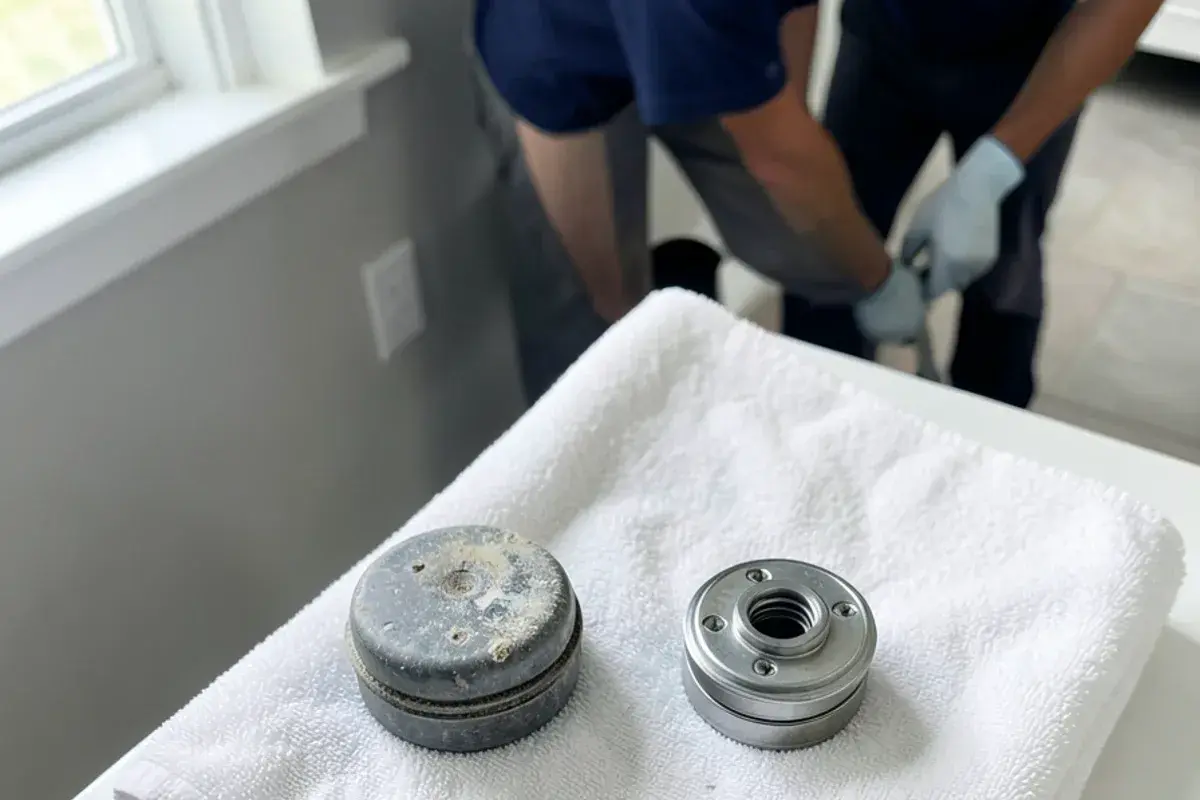
Most of the time, though, the body inside the wall is fine and the cartridge has worn. Scale plays a part. Hard minerals in Lake Huron water stick the small spool in a pressure-balance cartridge and stiffen its seals; Macomb Township measured an average of 99 ppm in 2024. A new cartridge, matched to the valve's brand and model, goes in through the handle opening without disturbing tile.
Shower valve acting up? Talk through the fix with a plumber
- Your call goes to an independent local plumbing company that does the work.
What shower and tub plumbing covers
Shower and tub plumbing is everything from the handle back to the drain: the valve in the wall, the pipes that feed the spout and head, and the waste fittings under the tub. Tile, glass and the tub itself belong to other trades. The plumbing side covers:
- cartridges, stems, seats and limit stops in the existing valve
- full valve body replacement, including a move to pressure-balance or thermostatic
- tub spouts, diverters and shower arms
- stoppers, trip levers, drum traps and the waste-and-overflow with its gaskets
- drain, valve and head rough-in for a tub-to-shower conversion
Most repairs happen from the front, through the opening behind the handle or the drain itself. Valve bodies, overflow gaskets and conversions need access from behind or below, so access comes up early on the call.
Why do shower temperature swings happen?
The first is a sticking pressure-balance spool. When someone flushes a toilet, cold pressure drops. A working spool cuts the hot side to match. A spool gummed with scale reacts late or not at all, and you get a blast of hot water. A new cartridge fixes it.
The second is the valve having no balancing at all. Older two- and three-handle valves can't react to a pressure change. The cure is replacing the valve body.
The third is seasonal. January's supply arrives much colder than August's, so the same handle position gives a cooler shower. If the valve's rotational limit stop was set in summer, it may not let the handle turn far enough toward hot in winter. Adjusting that stop takes minutes.
If showers run out of hot water quickly instead of swinging, the cause is probably the heater; see water heater repair. If the flow is weak everywhere, our article on low water pressure across the whole house is the place to start.
Tub spout leaks and tub drain problems
Tub spout leak: why does water pour from the spout during a shower?
A tub-shower uses a diverter, usually a gate inside the spout that sends water up to the head. When that gate wears, water keeps pouring from the spout during a shower. The fix is a new spout of the right type. Slip-on spouts clamp to a smooth copper stub with a set screw, while threaded spouts screw onto a threaded nipple, and the stub length has to suit the spout or it won't seal.
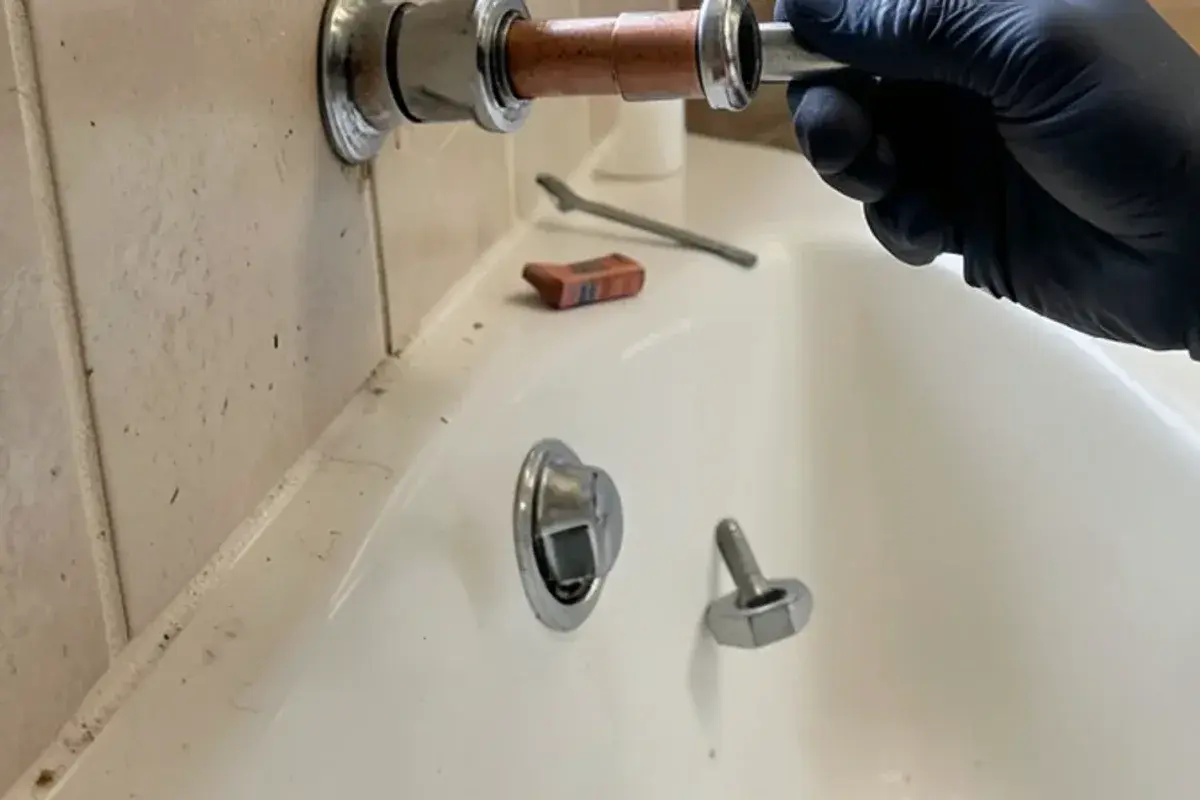
A spout that's loose on the wall, or a gap behind it that was never caulked, can send water into the wall every time the shower runs. That leak often shows as a stain in the room below first.
Tub drain clog, overflow gasket and drain shoe leaks
Hair wraps around every stopper style, from trip-lever plungers behind the overflow plate to toe-touch and lift-and-turn stoppers. Cleaning the stopper or linkage fixes most tub drain clogs. When the blockage sits further down, a cable through the overflow opening reaches the trap. A tub that backs up along with other drains points to a main line problem, which calls for drain cleaning.
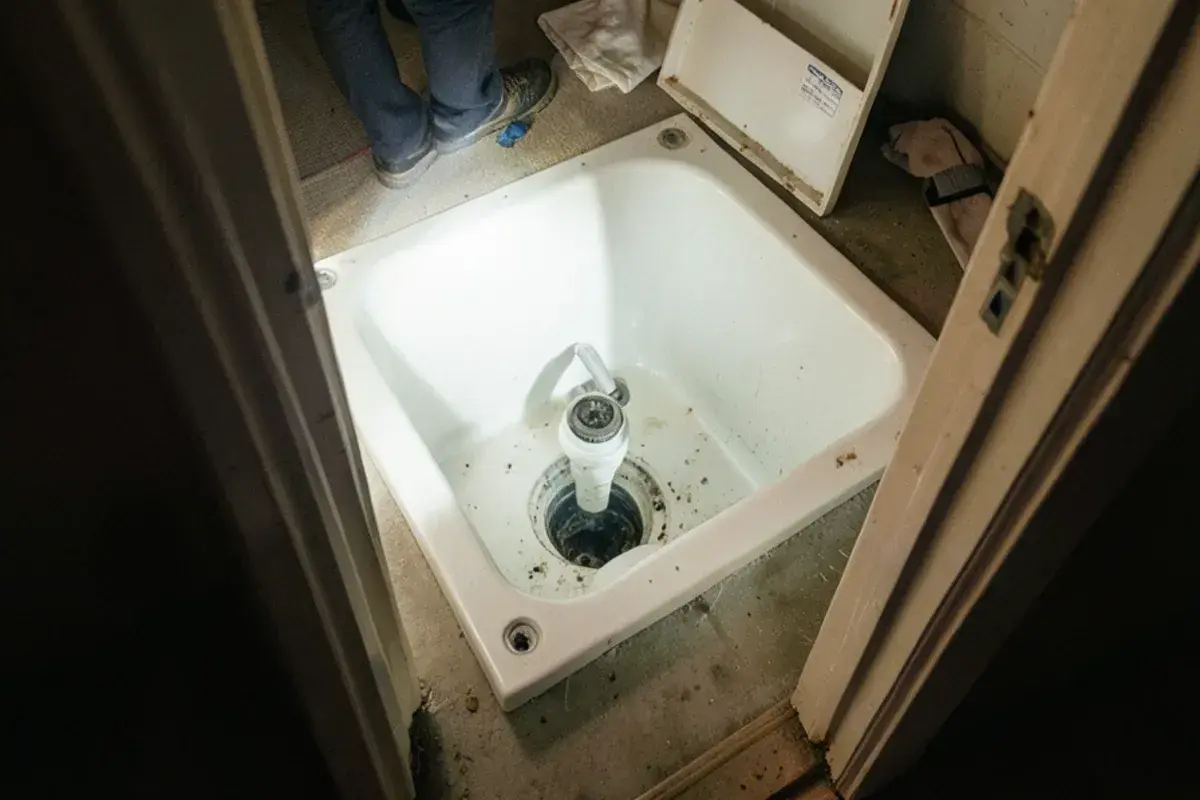
Some older bathrooms have a drum trap, a canister under the floor instead of a P-trap, which clogs easily and is worth replacing when the floor is open.
The overflow gasket leaks when the tub is filled high, so the stain appears after baths but not showers. The drain shoe gasket under the drain flange leaks when the tub drains. With no access panel behind the tub, a new panel in a closet wall or the ceiling below is usually less work than removing the tub.
Walk-in shower conversion plumbing and permits
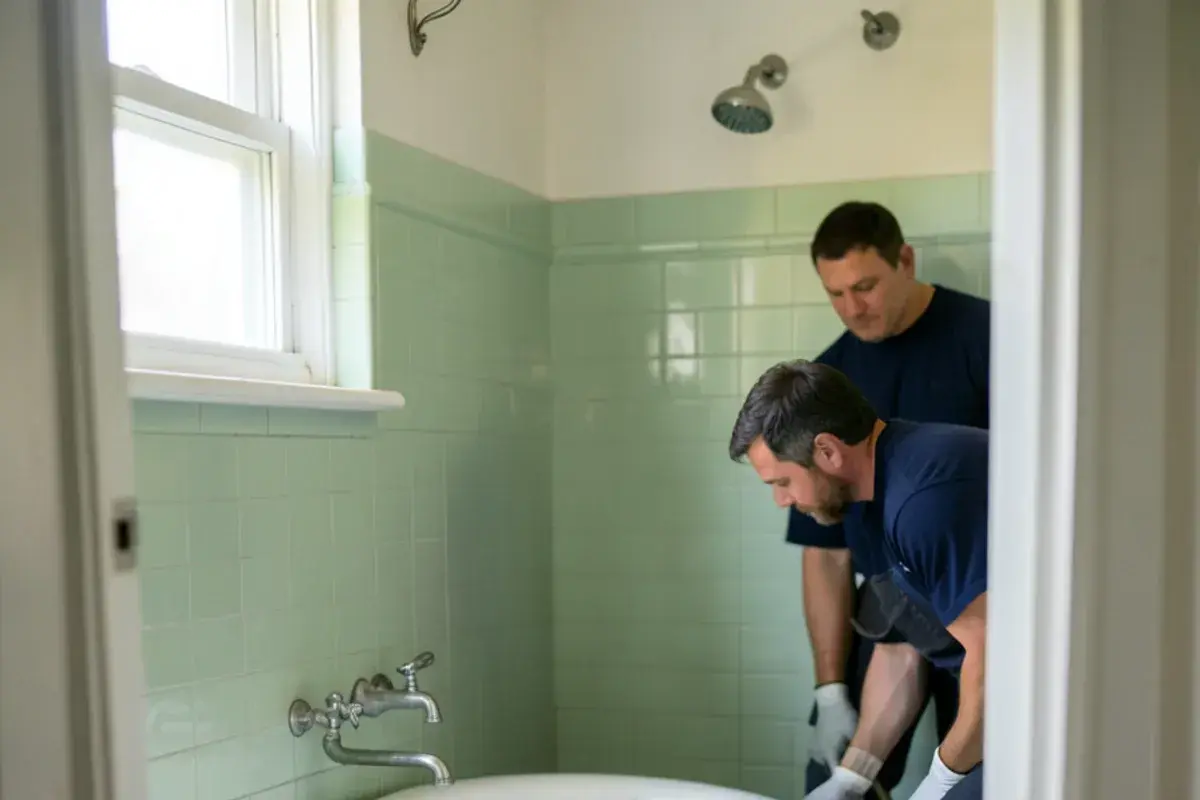
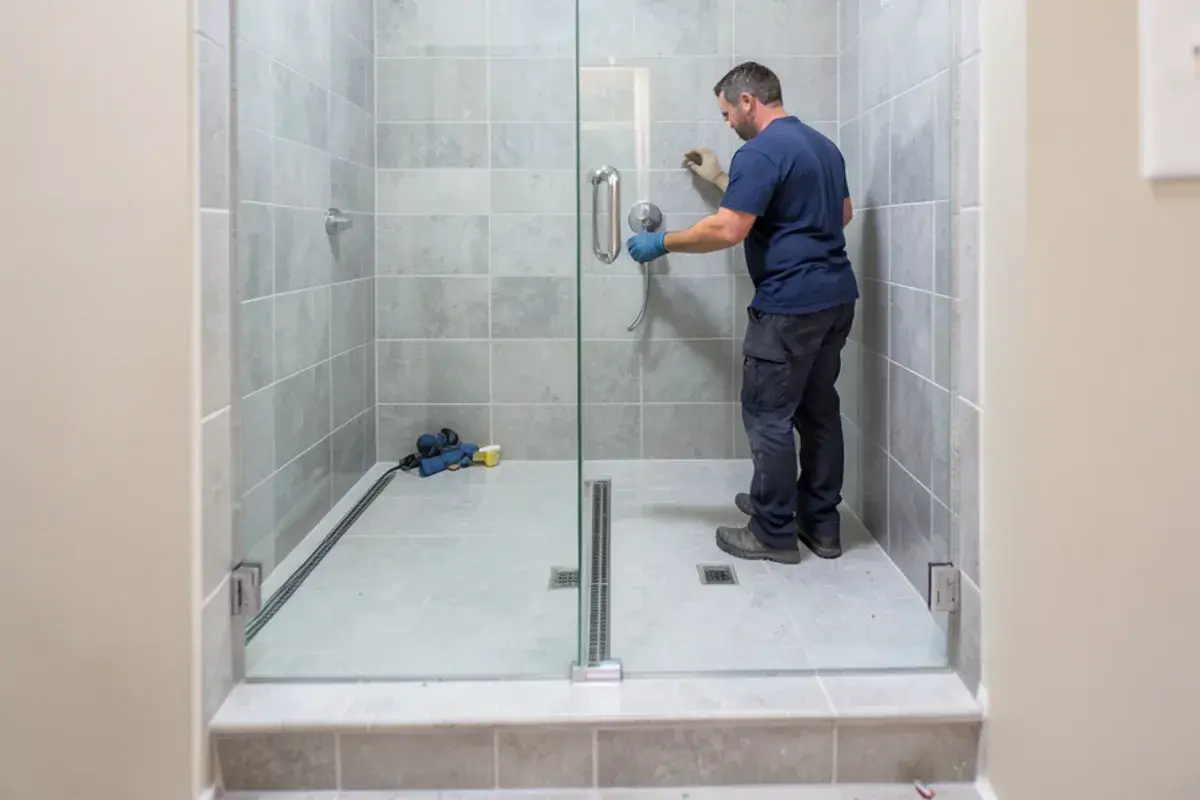
Taking out a tub for a walk-in shower is mostly a plumbing decision. The drain usually has to move to suit the new shower pan or a linear drain, and it may need to be upsized. The valve moves up to a comfortable height for a standing shower, and the shower head often goes higher. The new valve is set to the depth your tile and backer board need.
Before
After
All of that is new or altered piping. LARA's permit exemption reaches only a valve's working parts, such as a cartridge, and clearing clogs, so a conversion needs a permit before work starts. Macomb Township's application lists showers and bathtubs as fixture items and has a separate line for a tempering valve, and the rough-in must pass inspection before backer board and tile close the wall. Michigan reserves the permit for licensed plumbing contractors and for homeowners plumbing the house they live in. Check a contractor's license number on LARA's lookup, and keep the inspection card until trim-out. If the remodel goes beyond the tub alcove, our bathroom plumbing repair page covers moving other fixtures.
Shower plumbing in Macomb: the visit, timeline and cost factors
- On the call to (207) 419-2600, describe the symptom and read off the brand on the handle or trim if there is one; the details go to a plumber covering your area.
- The plumber identifies the valve and shuts off the water at the stops or the main.
- Testing covers temperature with a thermometer, a toilet flush mid-shower, the diverter, and the drain and overflow.
- Before any parts come out, you get the diagnosis, the repair options and what each one depends on for cost.
- The approved repair or rough-in is done, with the tub surface protected.
- The shower runs hot and cold, the spout and drain are checked for leaks, and the limit stop is set.
A cartridge or spout is usually a short visit. Replacing a valve body takes half a day or more, depending on access from behind. A conversion runs in stages: rough-in, inspection, tile by your contractor, then trim-out.
Cost factors
The valve sets the starting point. A common brand with cartridges on the shelf is a short job; a discontinued valve can turn a drip into a valve replacement. Choosing thermostatic over pressure-balance raises the parts cost. Access decides the labor on anything behind the wall: a closet or access panel behind the tub is far easier than tile that has to be cut and covered with a larger trim plate. A conversion is priced by its scope, meaning how far the drain moves, whether it's upsized, the new valve height, the pan or linear drain, and the wait between rough-in inspection and tile.
Manufacturer warranties and caring for a new valve
Many valve makers back cartridges and bodies with long limited warranties for the original owner, and some send cartridges on request, so keep the model number and register the product.
To keep a valve working well, soak the shower head in vinegar when the spray gets uneven; our hard water guide explains why it scales. Turn handles gently, reset the limit stop if winter showers feel cool, use a hair catcher, and re-caulk the spout and tub edge when the bead cracks.
Why call Plumbers in Macomb, MI about shower or tub plumbing?
A dripping shower head, a spout that won't divert and a tub you want gone can all start with one number. Calling (207) 419-2600 puts you through to an independent plumber who handles bathroom work in your community, and that plumber quotes and does the job. This page lays out valve types, the usual causes of temperature swings, the cost factors and the permit rules, so you can ask whether a cartridge will do or the valve body has to go. No online form comes first. Read off the brand on the trim if you can, and say what the water is doing.
Bathtub and shower plumbing: questions we hear
Can a plumber repair a shower valve without tearing out tile?
Yes, usually. Cartridges, stems and seats come out through the opening behind the handle, so most drips and temperature problems are fixed from the front. Replacing the valve body itself needs access from behind, through a closet or an access panel, or through a larger trim plate that covers a cut-out in the tile.
Who handles shower repair in Clinton Township, Roseville and Washington Township?
We connect homeowners in those communities, and across the rest of Macomb County, with local plumbers who take shower calls in their area. When you call (207) 419-2600, read us the brand from the handle or trim plate if you can see one, so the plumber you're connected with knows which parts to bring.
Why does my tub spout drip when everything is turned off?
Because the valve isn't fully shutting off. The spout is the lowest outlet, so water that slips past a worn cartridge or washer comes out there first. The fix is a new cartridge or washer in the valve behind the handle, not a new spout.
Do I need a permit to convert a tub to a walk-in shower?
Yes, in most cases. A conversion moves or resizes the drain and usually moves the valve and shower head, which is new piping. Macomb Township's permit application lists showers and bathtubs among its fixture items, and the rough-in has to pass inspection before the wall is tiled.