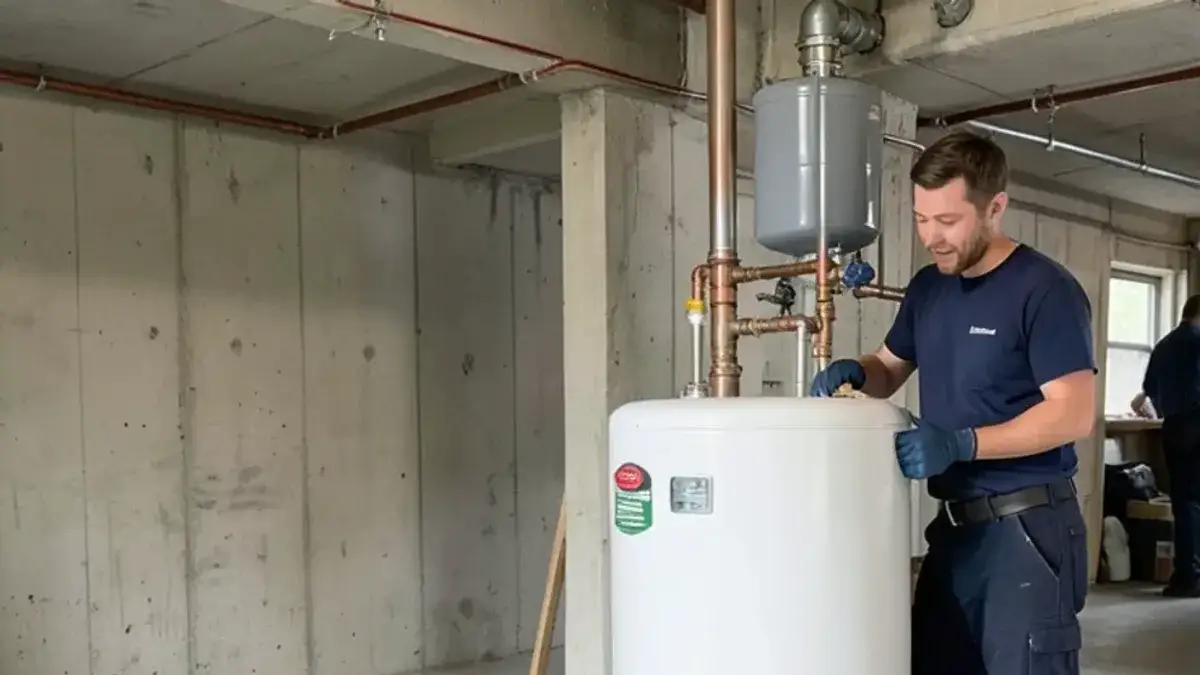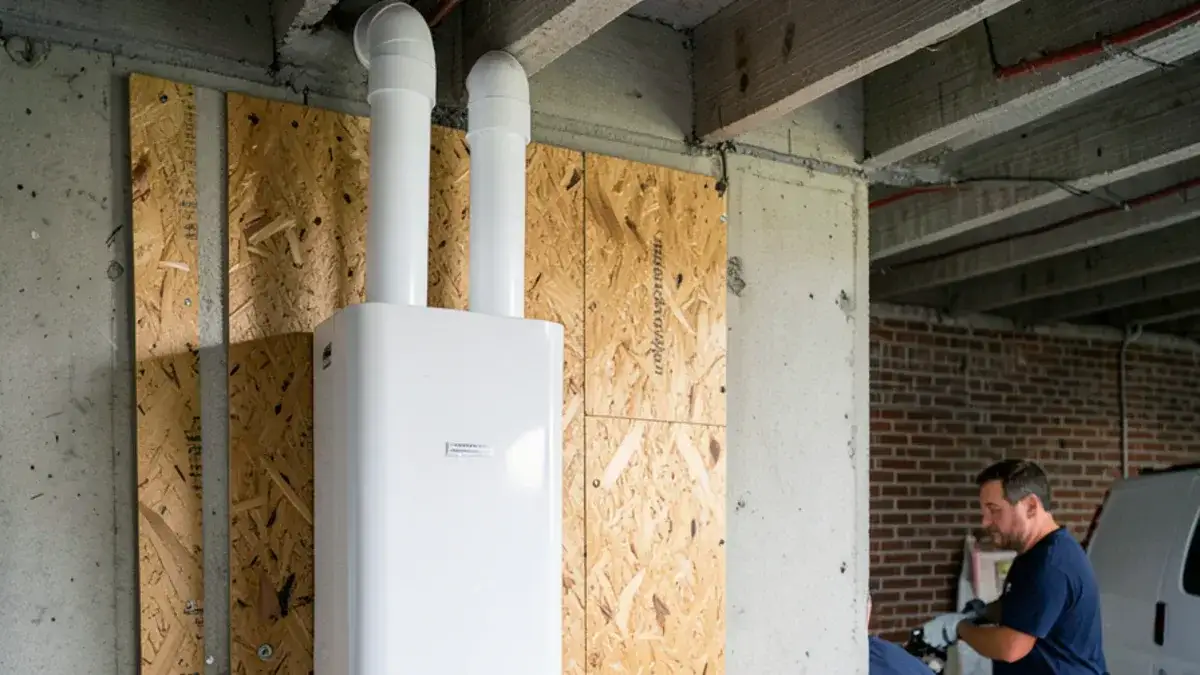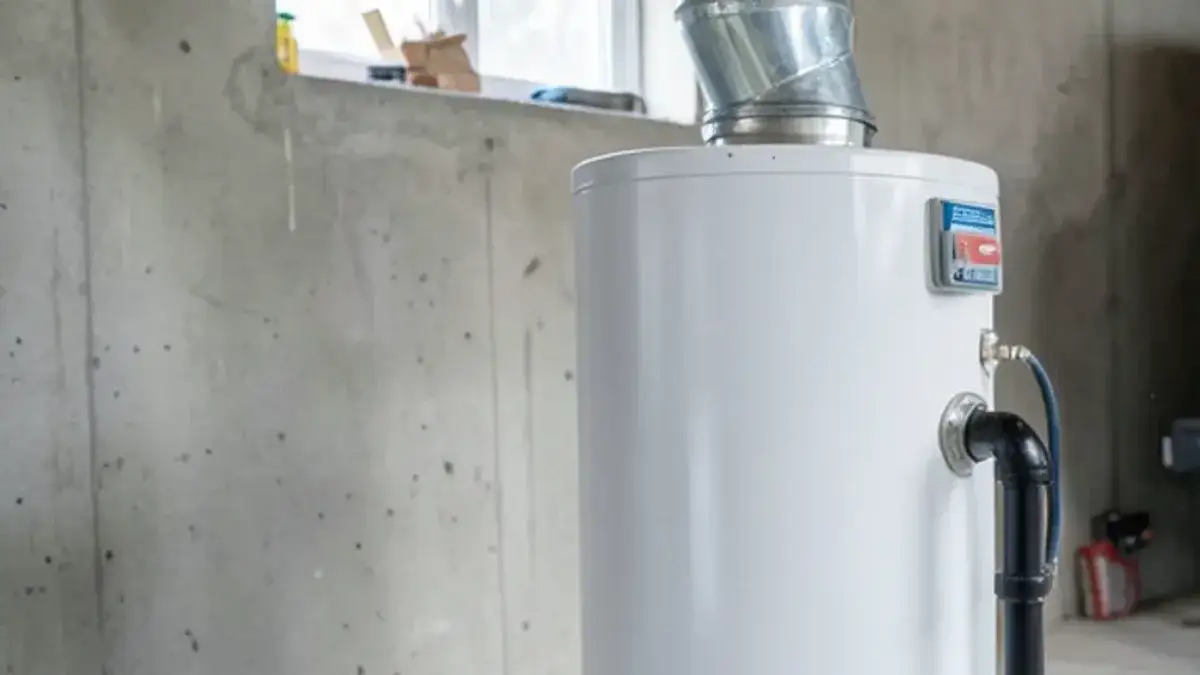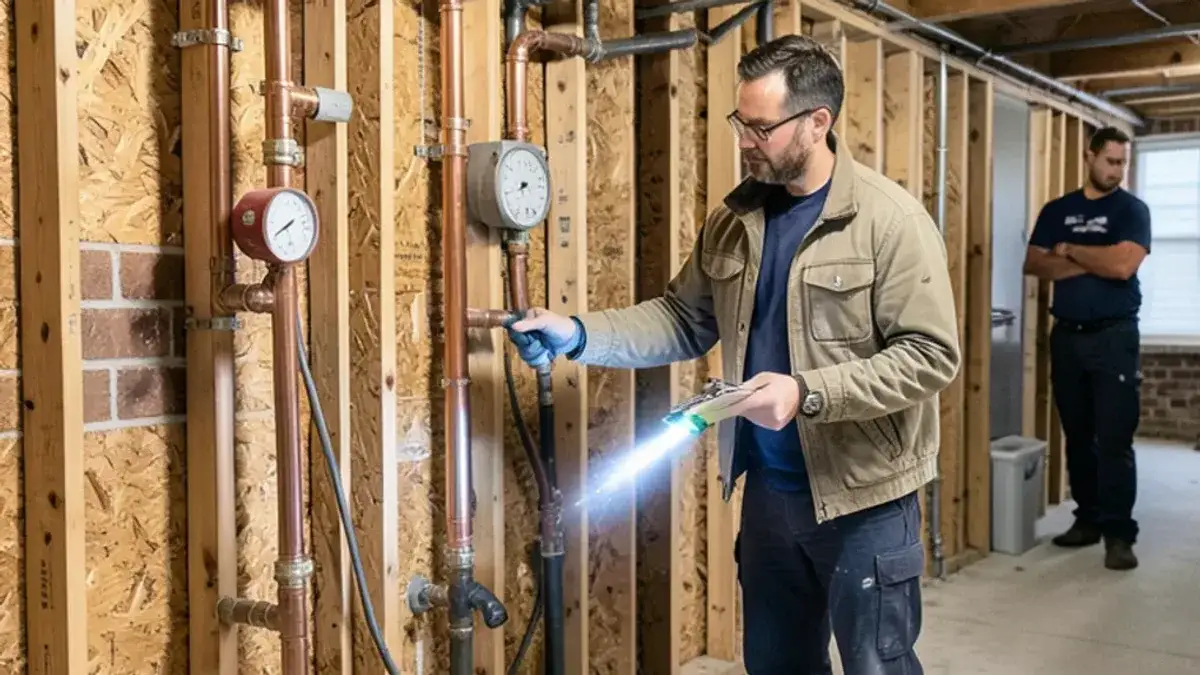
Around Macomb County the usual jobs are range and dryer lines, generator runs and water heater swaps.
Smell gas? Leave the house first, then call from outside
A rotten-egg smell in the house is a reason to leave, not to investigate. Get everyone out, pets included. Don't turn lights or appliances on or off, don't use a phone or anything that could spark inside, and don't light a match or lighter.
Once you're well away from the house, call 911 or your gas utility's emergency line. Depending on your address, that's Consumers Energy or DTE Gas. Stay out until the utility or fire department says the house is safe. If they shut off gas to an appliance or tag it, it stays off until the problem is repaired.
After the all-clear, the cause still has to be fixed. Our guide on what to do if you smell gas near a water heater covers the common culprits. If water is leaking too, see emergency plumbing.
No gas smell, just planning a new line? Call (207) 419-2600
- Your call goes to an independent local plumbing company that does the work.
What gas line plumbing covers in a Macomb County home
Under Michigan's administrative rules, fuel gas piping runs from the outlet of the utility's point of delivery, usually the meter, to the outlet of each appliance's shutoff valve. The meter, regulator and service line belong to the utility; everything after is the homeowner's. Common jobs include:
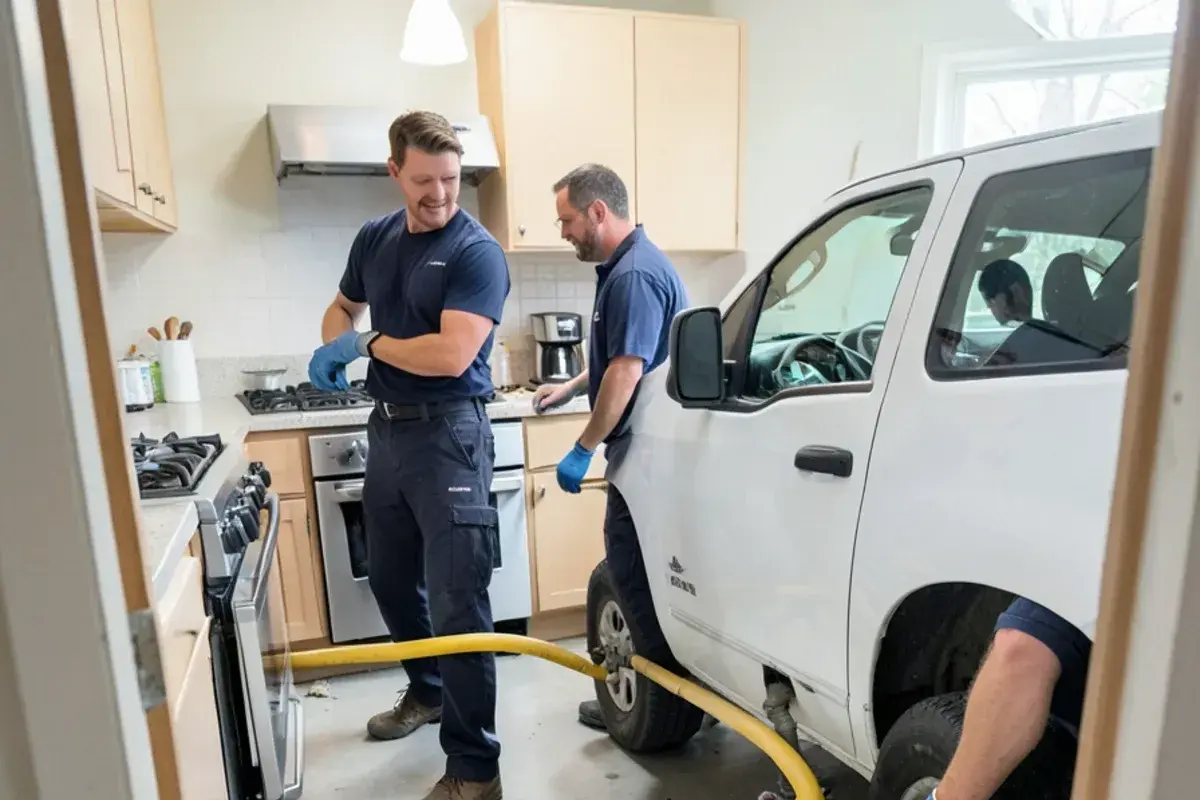
- A gas line for a range or dryer when switching from electric, or moving one during a kitchen or laundry remodel.
- Supplying a new water heater or tankless water heater installation, which can draw several times the gas of the old tank.
- A line to a standby generator, an outdoor grill or a fire pit.
- Capping a line left behind after an appliance was removed.
- Leak checks on old connectors and unions, often before a home sale.
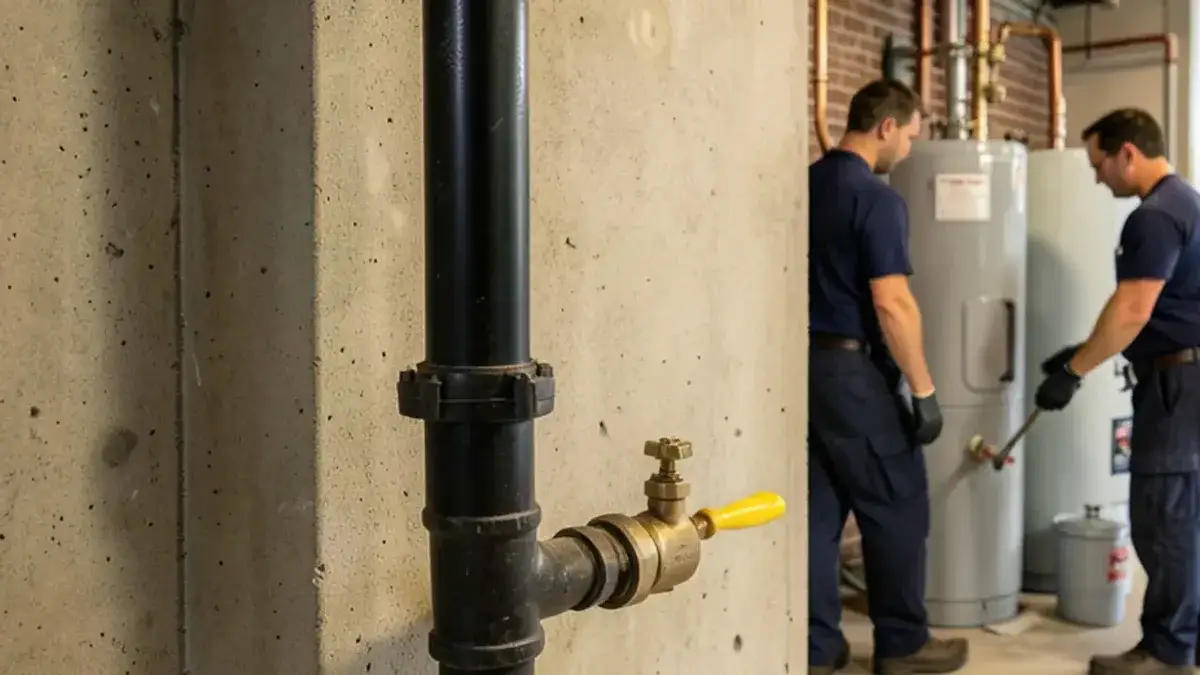
Black iron pipe is the long-standing material for runs through basements; corrugated stainless tubing needs fewer joints and must be bonded as its manufacturer and the code require.
Signs the gas piping in an older Macomb County house needs work
A faint smell that comes and goes near one appliance, a hiss at a connector, a burner flame that burns yellow and lazy instead of crisp blue, or soot around an appliance all deserve a look. A strong smell means leaving first, as above. Outside, a strip of dead grass over a buried line to a garage or grill is a clue. So is a utility red tag or a failed leak check at a home sale.
Older homes often still have uncoated brass flexible connectors behind ranges and dryers. Those are worth replacing with a current coated connector and an accessible shutoff. In south Macomb County, where much of the housing in Eastpointe and St. Clair Shores predates 1960, original basement piping has had decades of damp air working on its threads and unions. And adding a tankless heater or generator to pipe sized for a furnace and a tank can starve every appliance on the line.
Gas line installation and repair: permits and the pressure test
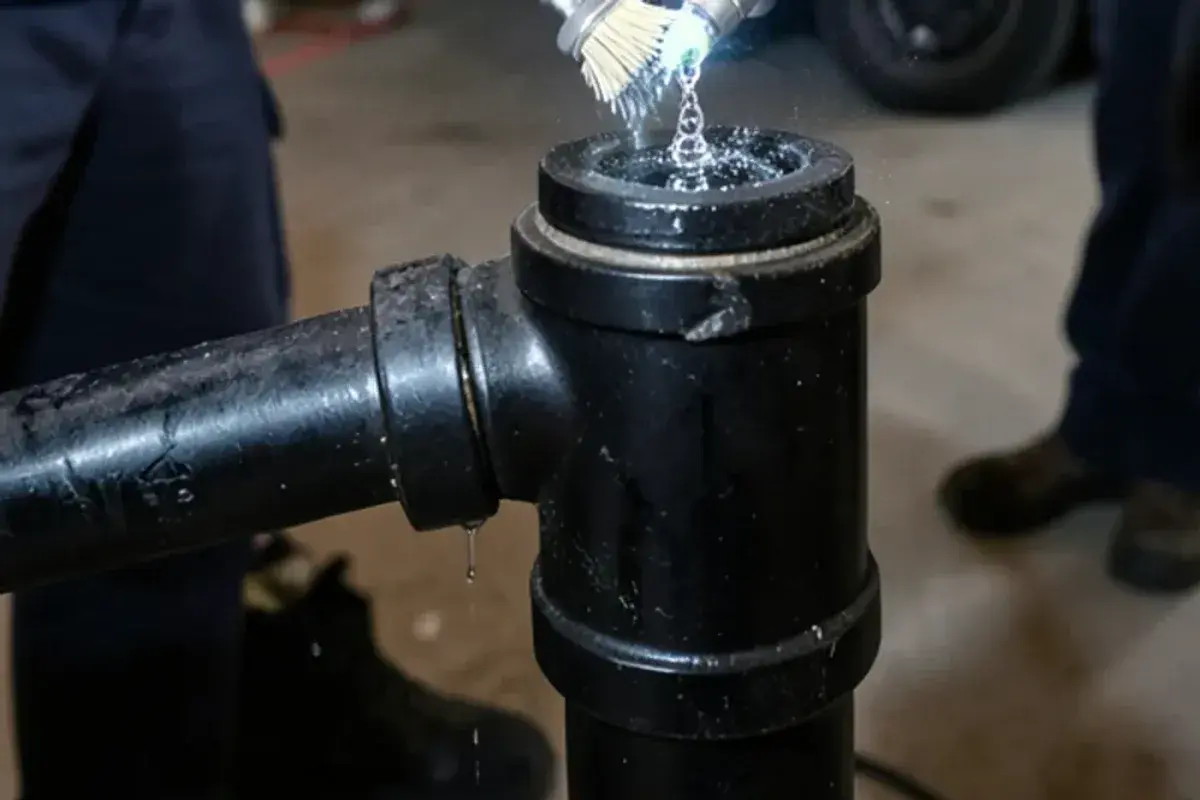
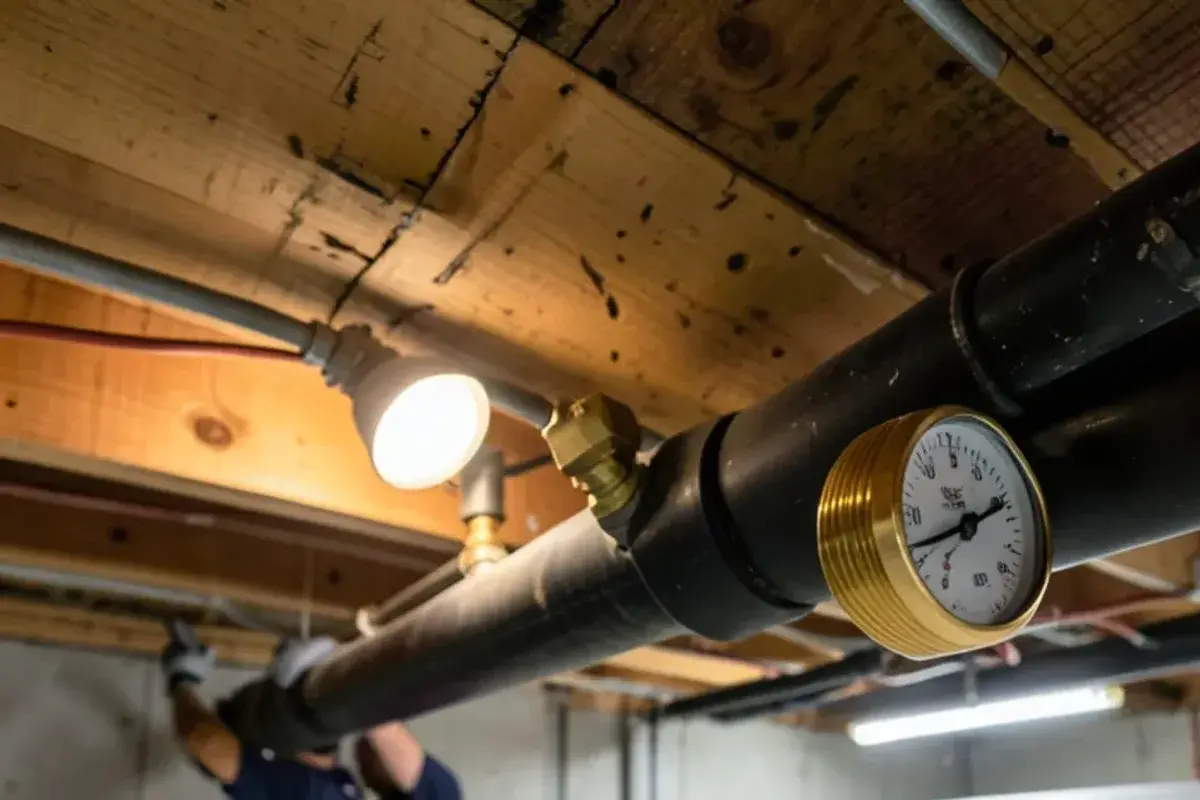
New or altered gas piping is permitted, tested and inspected work. Macomb Township lists the 2021 International Fuel Gas Code among the mechanical codes it enforces, and that code requires piping to pass a pressure test before it goes into service. The test pressure and how long the gauge has to hold come from the code and the inspector.
Bigger loads add steps. A standby generator or a whole-house tankless heater may need larger pipe from the meter, and sometimes a meter upgrade that only the utility can do. Any outdoor trench means contacting MISS DIG 811 at least three business days before digging, and utilities don't mark private lines, so a buried line to a detached garage or generator has to be located another way. Our article on plumbing permits in Michigan explains permits and inspections in general.
How a gas line job goes, step by step
- You call (207) 419-2600. Any gas smell means leaving and calling 911 or the utility first; for planned work, we connect you with a local contractor.
- The contractor checks the appliance, the route from the meter and the total gas load against pipe size and length.
- You hear which parts are plumbing and which are fuel gas piping, the options, and what drives the cost before work starts.
- The contractor pulls the permit and runs or repairs the pipe, with shutoffs and sediment traps where the code calls for them.
- The new piping is capped and pressure tested, then each joint is leak checked.
- The appliance is connected and lit, and the building department inspects the work.
Who can work on gas piping in Michigan?
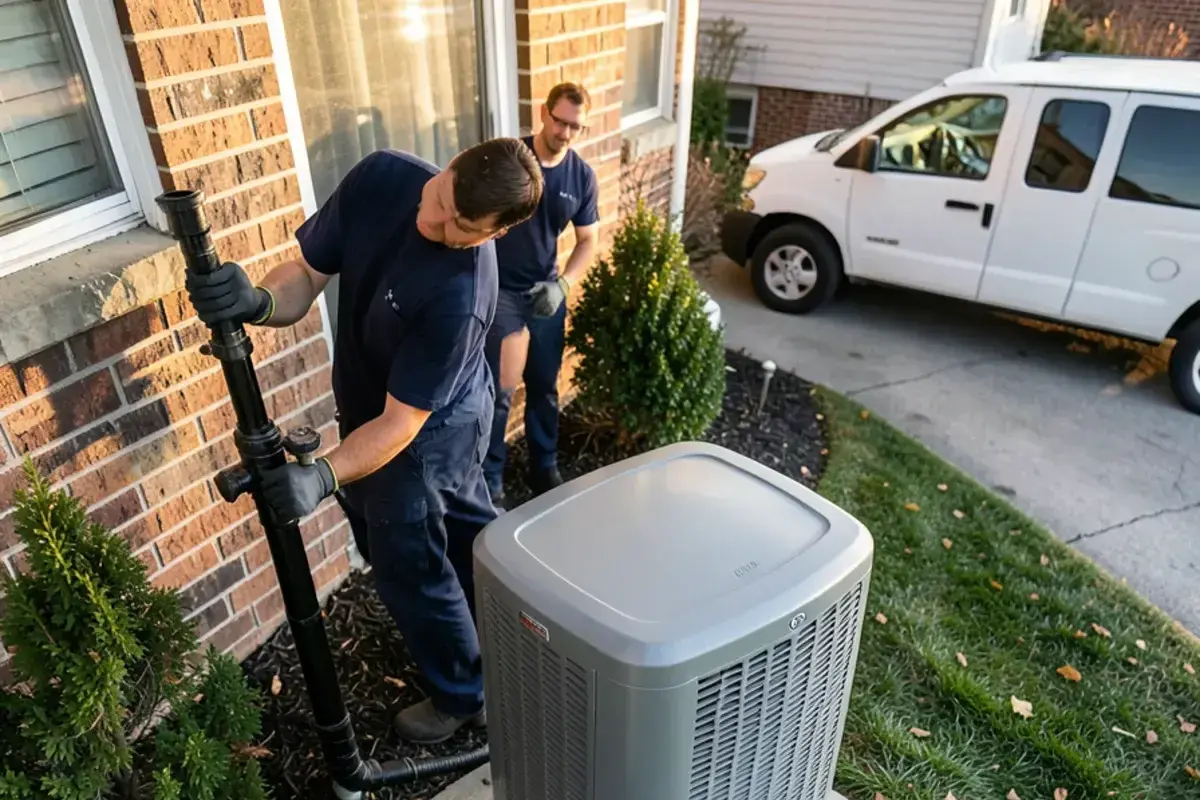
Michigan's definition of plumbing covers water supply, drainage and venting, not fuel gas. Gas piping falls under Michigan's mechanical contractor licensing, in the HVAC equipment classification or the specialty classifications Fuel Gas Piping, Fuel Gas Piping and Venting, and LP Distribution Piping. That license belongs to the contractor who does the work, never to this referral service.
Before anyone touches your gas piping, ask which classification they hold and check it on LARA's online license verification search. That goes for the contractor we connect you with and for whoever swaps your water heater.
On a water heater installation or tankless conversion, the water connections are plumbing while the gas connection and venting are mechanical work. Ask the contractor to spell out which part is which and what permits apply.
What affects the cost of gas line work
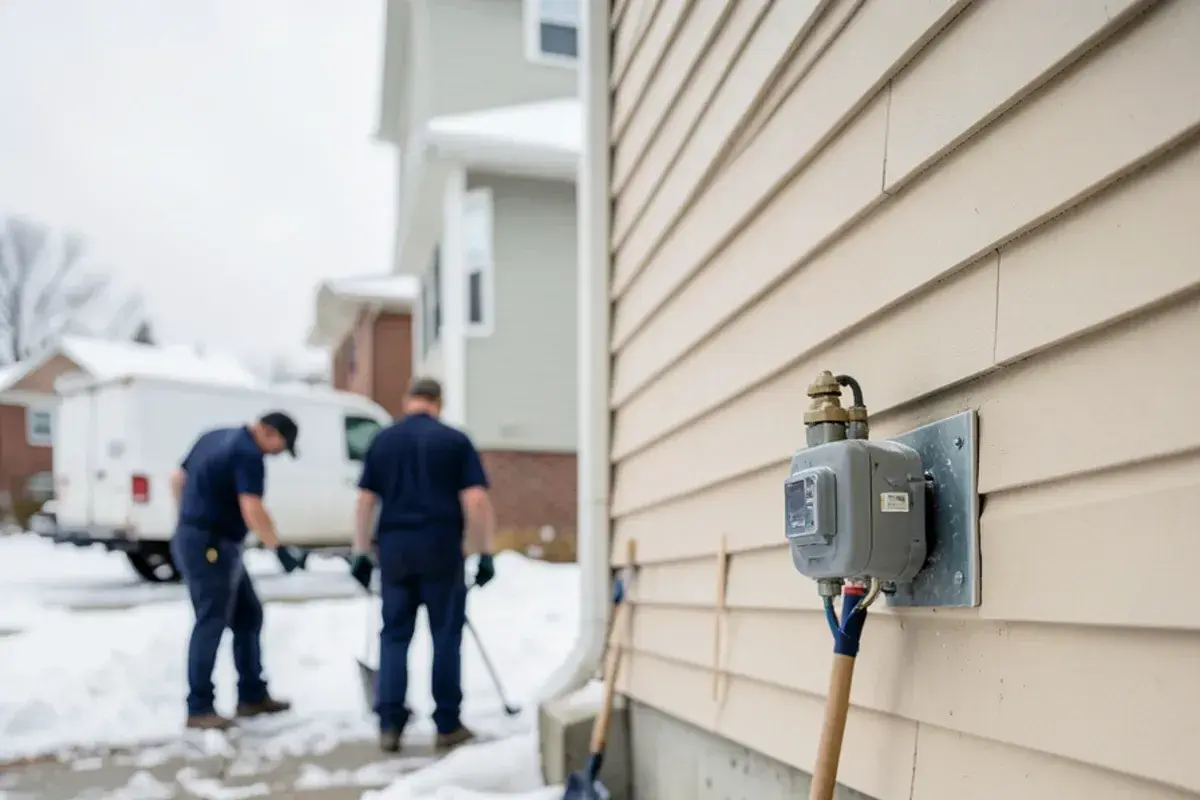
The length and route of the run come first, along with the number of fittings, wall and floor penetrations, and whether drywall or a finished ceiling has to be opened and patched. Pipe size depends on the load, so a generator or tankless unit costs more to supply than a dryer. A meter upgrade, outdoor trenching and the locate, the permit and inspection, and replacing old connectors at the same time all factor in. A leak repair depends mostly on where the leak is and how easy the pipe is to reach.
Swapping a brass connector behind a range is a small job. A new run across a finished basement to a generator on the far side of the house is a project with a permit, a trench and an inspection. Ask for the pipe size, route and test plan in writing before work starts.
Why call Plumbers in Macomb, MI about a gas line?
Because gas work usually sits next to other plumbing, and one number covers all of it. A range move often comes with a sink, and a tankless conversion has a water side and a gas side. Call (207) 419-2600 and describe the appliance, where it is and whether you smell gas. For planned work, we connect you with an independent local contractor who covers your area, and the gas piping is done under that contractor's Michigan mechanical license, not ours. This page lays out the permit, the pressure test and the cost factors so you can ask good questions first. No forms, just the call.
Gas line plumbing: questions we hear
Who can repair or replace a gas line in Macomb Township?
In Michigan, fuel gas piping falls under the mechanical contractor license, in classifications such as HVAC equipment, Fuel Gas Piping, or Fuel Gas Piping and Venting. Ask whoever does the work, including a contractor we connect you with, which classification they hold, and look it up on LARA's license verification search before work starts.
Does a new gas line for a range or dryer need a permit?
Yes, in general. New or altered gas piping is permitted work that is pressure tested and inspected before it goes into service. Macomb Township enforces the 2021 International Fuel Gas Code among its mechanical codes. Ask the building department which permit your job falls under and who pulls it.
How is a gas line pressure tested?
The new or changed piping is capped, filled with air or another approved test medium to the pressure the code sets, and watched on a gauge for the required time. If the gauge holds, the piping can be connected and put into service. If it drops, the leak is found and fixed first.
What should I do if I smell gas in the house?
Leave right away and take everyone with you. Don't flip switches, use a phone, start a car in an attached garage, or try to find the leak. Once you're outside and away from the house, call 911 or your gas utility's emergency line, and wait until they say it's safe to go back in.