
Emergency guides
Smell gas near your water heater? What to do right now
If you smell gas near the water heater, get everyone out of the house before you do anything else. Finding the cause can wait until the gas utility says the house is safe.
By Plumbers in Macomb, MI · Published · Last updated
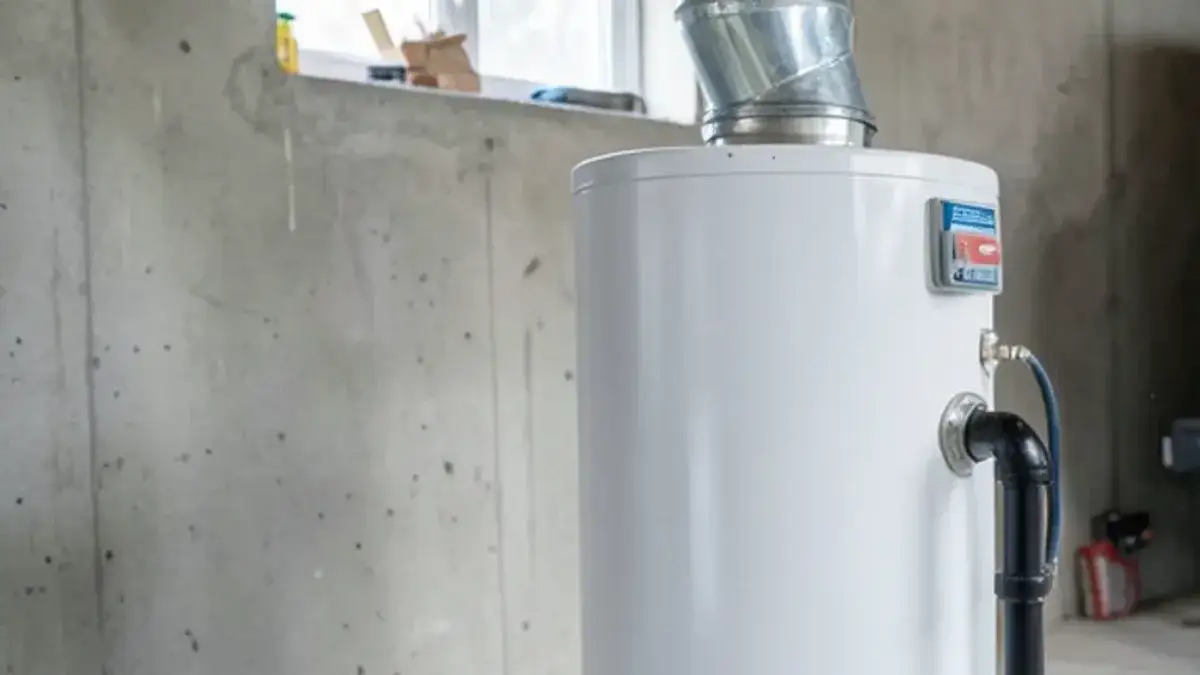
If you smell gas near the water heater, leave the house right away with everyone in it, don't touch switches or phones inside, and call 911 or your gas utility's emergency line once you're well outside. Stay out until the utility says it's safe. The cause can be found and fixed afterward.
Leave first, then call from outside
Natural gas has no smell of its own. Utilities add a sulfur odor, often described as rotten eggs, so people will notice a leak. The right move is the same whether the smell is faint or strong, and you don't need to be sure it's gas. Do these in order, and don't skip ahead to looking for the leak.
- Get everyone out, pets included. Leave the door open behind you if it's on your way out.
- Don't touch light switches, unplug anything, or use a phone, a flashlight or a garage door opener inside. A tiny spark is enough to light gas.
- Don't try to find the leak or turn any gas valves. The gas utility tells customers to leave the source alone.
- Once you're outside and well away from the house, call 911, or the emergency number for your gas company. In Macomb County the gas company is either Consumers Energy or DTE Gas, and which one serves you depends on the address. Both post the number on their websites.
- Stay out until the utility or the fire department tells you it's safe to go back in.
Don't start a car parked in an attached garage, and don't go back in to grab anything.

When the smell might be something else
A dry floor drain trap can let sewer gas into a basement, and it smells a lot like the odor added to natural gas. Leave that diagnosis to the people with detectors. Treat any gas-like smell as a leak until the utility rules it out. If they find no gas, fill the floor drain with a bucket of water and see whether the smell fades over a day.
Utility cleared the house? Get the water heater looked at next
- Your call goes to an independent local plumbing company that does the work.
What happens when the gas utility arrives
The utility technician checks the air with a gas detector and tests around the meter, the piping and each appliance. If they find a leak at the water heater, they'll typically shut the gas to that appliance or to the whole house and leave a tag on it. That tag means the appliance stays off until a qualified contractor fixes the problem. The utility's job ends at making the house safe. The repair is yours to arrange.
Common causes of a gas smell at a water heater
Once the house has been cleared, the cause usually turns out to be one of these.
| Source | What's going on | Type of work to fix it |
|---|---|---|
| Flexible gas connector | Old uncoated brass connector, a kink, or a loose flare nut leaking at the fitting | Gas piping work |
| Black iron fittings and the drip leg | Thread sealant dried out, or a joint moved when the heater was bumped | Gas piping work |
| Gas control valve on the heater | Internal leak or a valve that sticks open | Replace the control or the heater |
| Pilot that keeps going out | A worn thermocouple or a dirty pilot, with a delayed light that puffs odor | Water heater repair |
| Draft hood and vent | Exhaust spilling into the room instead of going up the flue | Venting repair |
| Floor drain nearby | Dry trap letting sewer gas in | Refill the trap or fix the drain |
Carbon monoxide is the danger you can't smell
A gas water heater burns fuel and sends the exhaust up a vent. When that vent is blocked, disconnected, rusted through, or overpowered by a kitchen exhaust fan or clothes dryer pulling air out of a tight house, the exhaust spills back into the basement. That exhaust contains carbon monoxide, which has no odor at all.
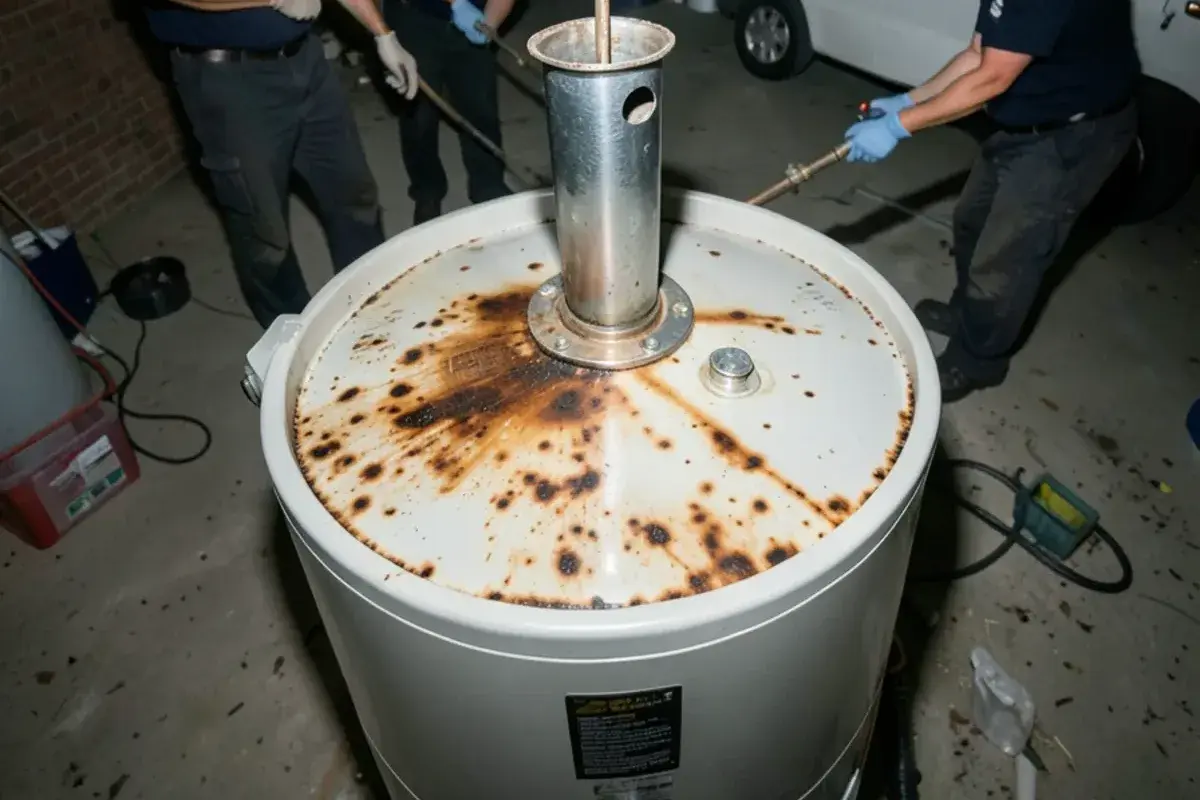
Look for the warning signs at the heater itself: scorch marks or melted plastic around the draft hood, rust streaks on the tank top, a vent pipe that's sagging or pulled apart at a joint, or soot near the burner opening. In people, CO poisoning feels like the flu. Headaches, dizziness and nausea that ease when you leave the house are a reason to get out and call 911.
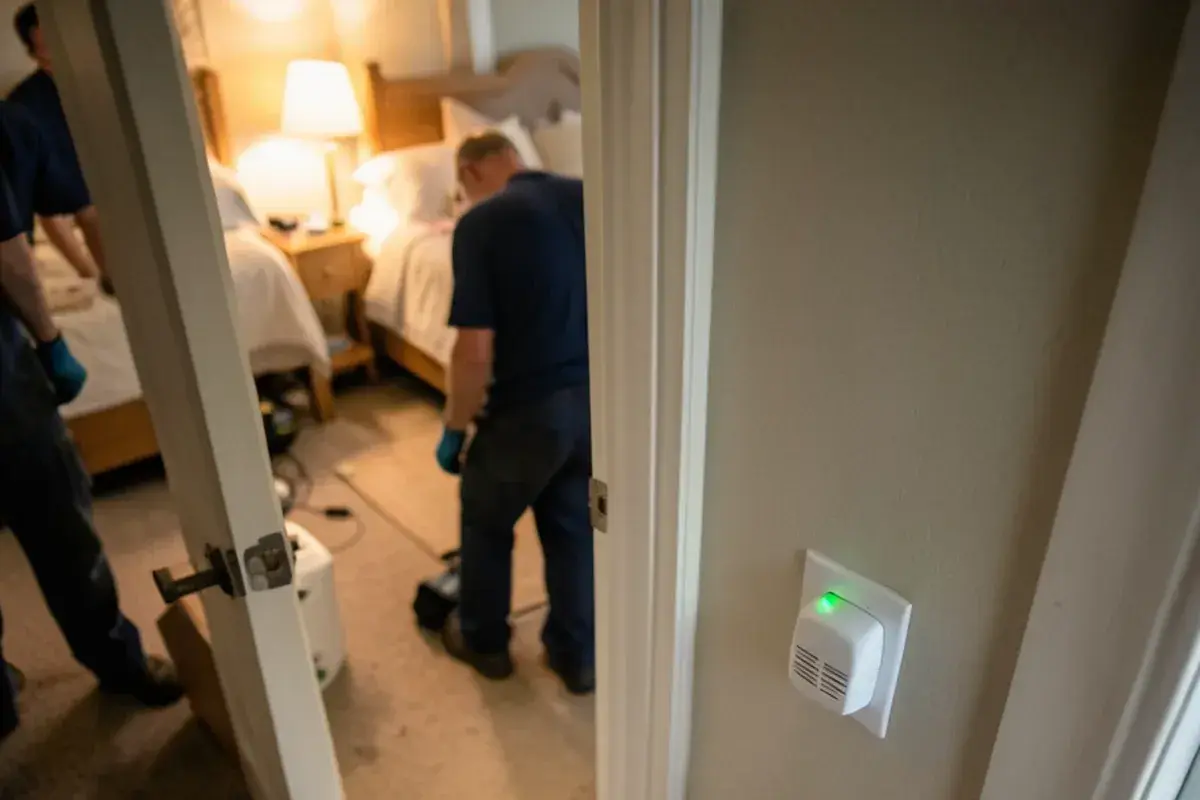
Carbon monoxide alarms are cheap protection. Put one on each level, including the basement, and one near every bedroom. If one sounds, leave the house first and sort out the cause afterward.
The repair after the all-clear
Fixing the problem may involve two trades, and Michigan licenses them separately. The water connections, the relief valve and the tank itself are plumbing. Michigan treats gas piping and venting as mechanical work, covered by license classifications such as HVAC equipment, Fuel Gas Piping, and Fuel Gas Piping and Venting. Before anyone touches the gas side, ask which mechanical license they hold and check it on LARA's online license lookup.
Gas piping that's repaired or replaced gets pressure tested before it goes back into service. If the heater itself has to go, plan on a permit. Macomb Township's plumbing permit fee table lists residential water heaters. Utica's building department requires a permit and inspection for a water heater or furnace replacement, and Chesterfield Township's Building & Code Enforcement office issues both the mechanical and the plumbing permits that a gas heater swap can involve.
For gas line work and pressure tests, see gas line plumbing support. If the burner, pilot or thermocouple is the problem, water heater repair explains what gets checked. When the tank or control valve has failed, water heater installation walks through sizing, venting and permits for a replacement.
What gas fitters commonly find, and what each fix can't do
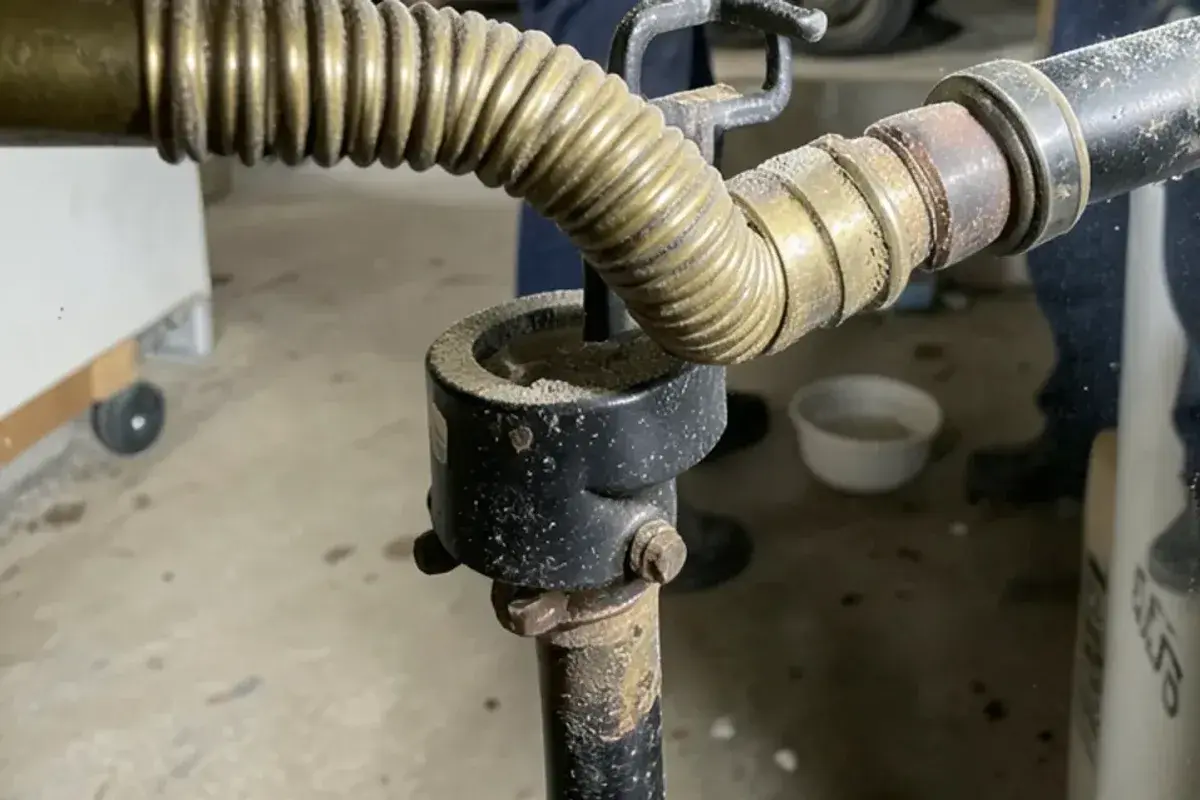
The most frequent find is an old uncoated brass connector, the dull gold corrugated tube between the gas valve and the heater. The Consumer Product Safety Commission has warned that some of those were made with fittings soldered to the tube, and that the joint can let go. Since you can't tell which ones by looking, its advice is to replace any uncoated brass connector with a coated or stainless one, and not to move the appliance to check. A close second is a connector reused when the heater was swapped years ago. Connectors are meant to be replaced with the appliance, not carried over.
A leak at the gas control itself is a different story. The control is part of the heater, so the choices are a new control or a new heater, and the age and condition of the tank usually decide which.
Venting turns up a problem that has nothing to do with a leak. When a house gets a high-efficiency furnace vented out the side wall, the old water heater is often left alone in a masonry chimney sized for two appliances. That "orphaned" heater can't keep the chimney warm enough to draft, and exhaust spills at the draft hood, which is where scorch marks come from.
Each fix has limits. Tightening a flare nut on an old brass connector may stop the smell today without making the connector safe. A new connector won't help a leaking gas control. A new vent pipe can't cure a chimney that's blocked or too big for the heater it serves. That usually takes a liner or a different venting plan, which is mechanical work with its own permit.
Getting hot water back safely
After the all-clear, the order is simple: the utility makes the house safe, a contractor with the right mechanical license handles anything on the gas or vent side, and the plumbing side follows. Write down what the utility technician told you and keep any tag they left. Homeowners in Chesterfield Township, Utica and nearby communities can call (207) 419-2600, and we'll connect you with a local plumber who covers your area.
Common questions
Is it safe to relight the water heater pilot after smelling gas?
No, not until the gas utility or fire department has checked the house and said it's safe. If they shut off or tagged the water heater, it stays off until a qualified contractor repairs the problem. Relighting a pilot on a leaking connection is how a small leak turns into a fire.
Can a plumber fix a gas leak in Michigan?
No, not on a plumbing license alone. Gas piping is mechanical work in Michigan, covered by the HVAC equipment class or one of the fuel gas piping specialties of the mechanical contractor license. A plumbing license by itself doesn't cover it. Before anyone works on your gas line, ask which mechanical license they hold and check it on LARA's online license lookup.
Where should carbon monoxide alarms go?
Put one on every level of the house, including the basement near the water heater and furnace, and one outside each sleeping area. Plug-in, battery and hardwired alarms all count. Follow the manufacturer's placement instructions, press the test button monthly, and replace the unit by the end-of-life date printed on it.
Where we can help
Utility cleared the house? Get the water heater looked at next
- Your call goes to an independent local plumbing company that does the work.