Garbage disposal not working? Start with the sound it makes
The noise, or lack of it, narrows things down quickly.
A steady hum with no grinding means the motor is getting power but the flywheel can't turn. Something is wedged between the flywheel lugs and the grind ring: a fruit pit, a chicken bone, a bottle cap, a spoon that slipped in. Leave it humming and the motor overheats and trips.
Silence when you flip the switch points to power. Either the thermal overload tripped, the wall switch or under-sink outlet failed, or the breaker is off.
Grinding, rattling or clanking while it spins means hard material is loose in the chamber. A disposal that runs fine while the sink still drains slowly has a clog past the unit, in the trap or the drain arm. That isn't a disposal fault, and running it longer won't push the blockage through.
Safe checks before you call: breaker, reset button and hex key
Never put a hand into the disposal, even with the switch off. Turn off the wall switch, and if you're going to work on it, switch the breaker off too.
Then try these in order:
- Press the red reset button on the bottom of the unit. If it pops back out right away, give the motor ten minutes to cool and try once more.
- Fit a hex key (usually a quarter inch, and many disposals come with one) into the socket in the center of the bottom. Work it back and forth until the flywheel turns freely.
- With a flashlight, look down the drain opening and lift out whatever freed up, using tongs or pliers.
- Restore power, run cold water and try the switch.
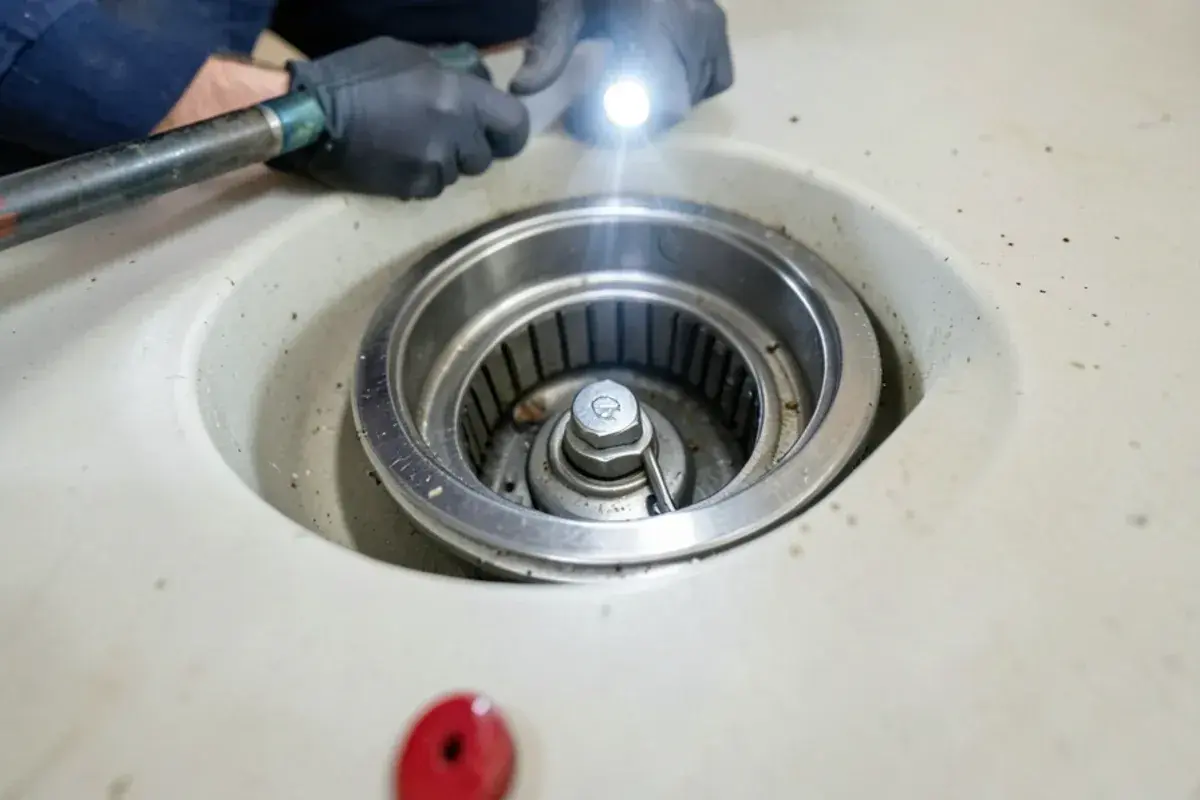
If the unit still hums after that, the jam is beyond the hex key or the bearings have seized. If it trips the reset every time, the motor is on its way out.
Disposal still humming? Have a plumber take a look
- Your call goes to an independent local plumbing company that does the work.
Disposal leaking from the sink flange, dishwasher inlet or body
Dry the whole unit with a towel, run water, and watch for where the first drop forms. Height matters.
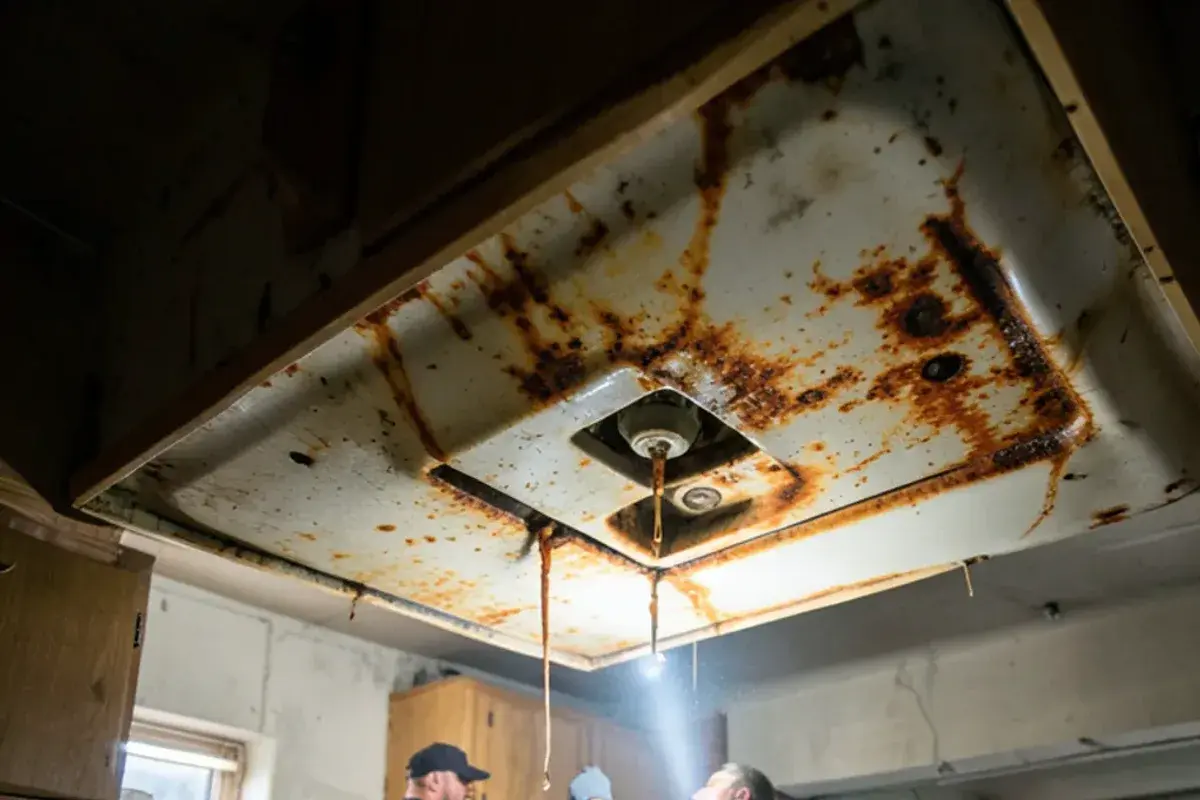
At the very top, where the disposal meets the sink, the plumber's putty under the sink flange has failed or the mounting ring has loosened. Fixing it means dropping the disposal, resetting the flange in fresh putty and remounting the unit.
At the side, the leak is usually the dishwasher hose clamp or the rubber gasket where the discharge elbow bolts on. Both are inexpensive parts.
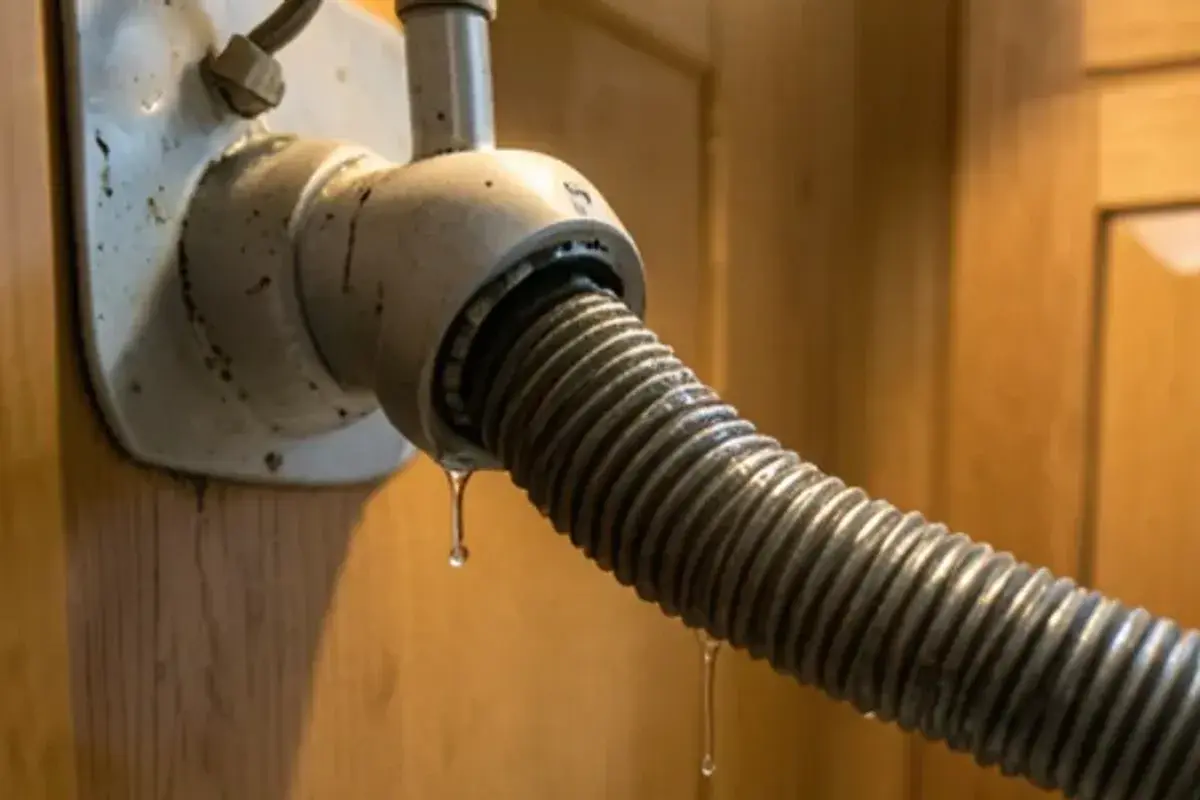
From the bottom or the housing itself, the inner seal has worn through and water is reaching the motor side. Nobody rebuilds that. The disposal needs replacing.
Garbage disposal repair or replacement: which one makes sense?
Most disposal repairs are one of a handful of jobs, and the plumber's first task is telling you which one you have. The service covers the disposal, its mounting, its drain connections and the dishwasher hookup:
- freeing a jam and resetting the thermal overload
- resealing the sink flange in fresh putty and tightening the mounting ring
- replacing a dishwasher hose clamp or the discharge elbow gasket
- clearing the trap and drain arm when the clog sits past the unit
- replacing a worn-out disposal and reconnecting the dishwasher drain
When the problem is inside the motor or the housing, replacement is the honest answer. A disposal that's past ten years old, rusty underneath and tripping its reset often is close to that point anyway. Before paying for any repair on a newer unit, check its manufacturer warranty; some makers replace a failed unit outright.
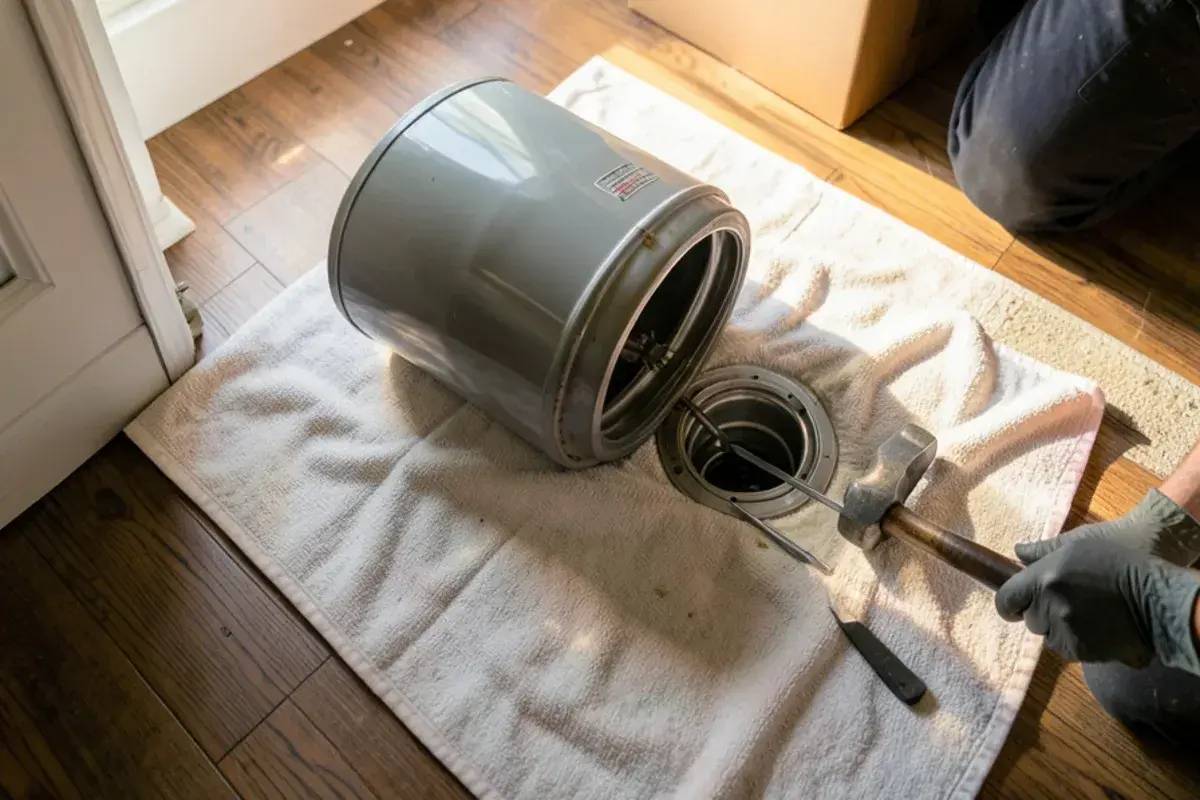
Choosing a replacement comes down to horsepower and fit. A 1/3 horsepower unit suits light use; a 1/2 or 3/4 horsepower model handles more and jams less. Staying with the same brand's mounting system can make the swap quicker. On a new disposal, the knockout plug in the dishwasher inlet must be removed before the dishwasher hose goes on, or the dishwasher won't drain. That's one of the most common mistakes on a DIY install.
Permits for a disposal swap or a first-time install
LARA's permit rule says plumbing work starts only after the enforcing agency issues a permit. Its one narrow exemption covers repairs that involve only the internal working parts of faucets and valves, plus clearing stoppages, as long as existing piping and fixtures aren't altered. Freeing a jammed disposal or a clogged trap counts as clearing a stoppage. Adding a disposal where there was none is different: Macomb Township's plumbing permit application lists food waste grinders among its per-fixture items. A like-for-like swap sits in between, so ask your township or city building department how it treats one. Permits go to a licensed plumbing contractor or to a homeowner working in their own single-family home, and LARA's online lookup confirms a contractor's license. A new outlet or wiring under the sink is electrical work.
What happens on a disposal service call in Macomb County
- You call (207) 419-2600 and say what the disposal sounds like, where any water shows up, and whether a dishwasher drains through it, and we'll connect you with a plumber who covers your area.
- The plumber switches the power off at the breaker and confirms the symptom.
- They try the reset and the flywheel, then dry the unit and run water to trace any leak to its height.
- You hear whether it's a fix or a replacement and what drives the cost of each, before anything is done.
- The approved repair or swap is made, with the dishwasher knockout removed on a new unit.
- The plumber runs water and the disposal, checks every joint with a dry towel, runs the dishwasher's drain cycle if it's connected, and cleans up.
Unjamming or a clamp is a short visit. A flange reseal or a straight swap is about an hour.
What changes the cost of garbage disposal repair
Freeing a jam costs far less than replacing the unit. On a replacement, the horsepower and features of the new disposal, and whether you're supplying it, set most of the price. A different mounting system, a drain arm that has to be lowered or raised to match the new outlet height, and a unit that needs a cord or hardwire connection all add time. If the trap or the kitchen line behind it is packed with grease, that clearing is separate work, covered under kitchen plumbing repair.
Timing counts as well, since a call outside regular hours usually costs more. A first-time install in Macomb County can bring in a permit, which townships charge as an application fee plus per-fixture fees. Ask for the repair figure and the replacement figure side by side so the choice is clear.
Food scraps, grease and septic tanks: keeping a disposal running
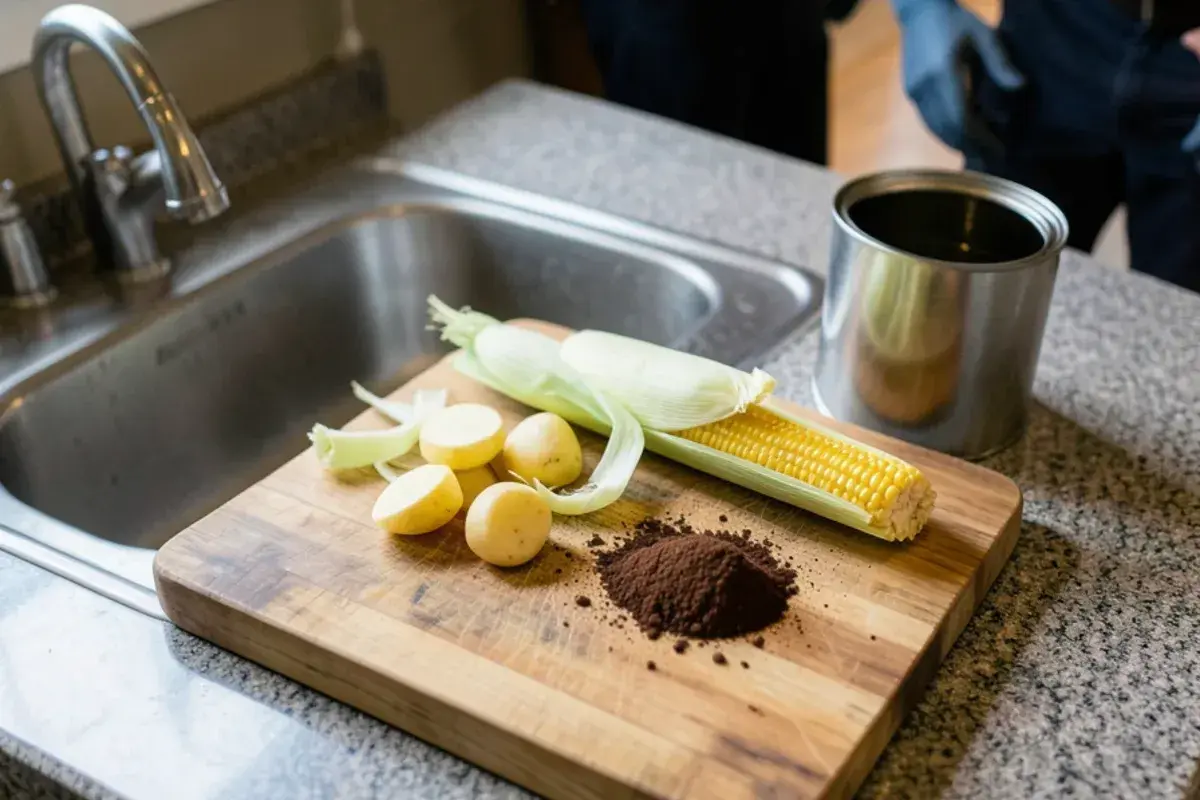
A disposal grinds food into small bits; it doesn't make that material disappear. Keep these out: grease and cooking oil, which coat the pipe and harden; stringy scraps like celery, corn husks and onion skins, which wrap around the flywheel; potato peels, pasta and rice, which turn to paste; coffee grounds, which settle in the trap like sand; and bones and pits.
Run cold water before, during and for a few seconds after grinding, and feed scraps in small batches. Use the disposal at least a few times a week so its parts don't corrode from sitting. Skip chemical drain openers, which are hard on the seals.
Older homes have one more reason to go easy. Many kitchen drains in Macomb County houses built in the 1960s and 70s still run through cast iron, which roughens inside with age and catches ground-up food. If your kitchen sink keeps backing up even with a working disposal, drain cleaning clears the line. The article on drains that clog again and again explains why.
Homes on a septic system need the most care. Macomb Township's public works department publishes septic maintenance guidance, and in the rural north of the county, septic systems are permitted through the Macomb County Health Department. Everything a disposal grinds settles in the tank as solids, so light use and regular pumping go together.
Why call Plumbers in Macomb, MI about a garbage disposal?
A disposal problem stays small until the cabinet floor is wet or the dishwasher won't drain. One number handles it, along with every other plumbing problem in the house. Say what the unit sounds like and where the water shows up, and we pass your call to an independent plumber who covers your neighborhood. That plumber works out whether it's a jam, a seal or a dead motor, quotes the work and does it. Pages like this one walk through the checks, the cost drivers and Michigan's permit exemption so you can ask good questions before approving anything. There are no forms; call (207) 419-2600.
Garbage disposal repair: questions we hear
Who fixes garbage disposals, a plumber or an electrician?
A plumber handles the disposal itself, its drain connections and the dishwasher hookup, and can swap a unit that plugs into an existing outlet or connects to existing wiring. If there's no outlet or switch under the sink, or the circuit itself has a problem, that part is an electrician's job.
How do I reset a garbage disposal?
Turn the switch off, let the motor cool for several minutes, then press the small red button on the bottom of the unit until it clicks. If it trips again right away, something is jammed or the motor is failing, so turn the power off at the breaker before going further.
How long does a garbage disposal installation take?
Replacing a disposal with one that uses the same mounting system is usually about an hour, including the dishwasher connection and a leak test. A different brand, a new sink flange, or a drain arm that has to be moved to suit the new unit's height adds time.
Can I have a garbage disposal on a septic system?
Yes, but every scrap it grinds ends up in the tank as solids, so the tank fills faster and may need pumping more often. If your home is on septic, as many in rural parts of Macomb County are, use the disposal lightly and follow the tank maintenance schedule your township or the county health department recommends.