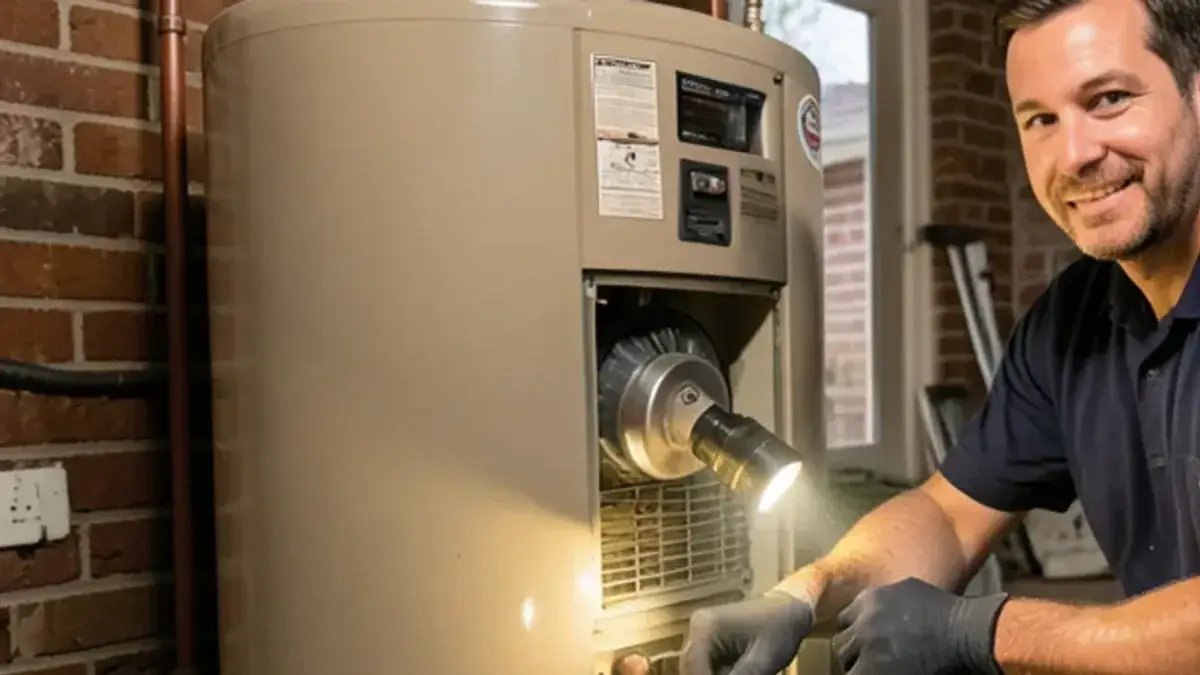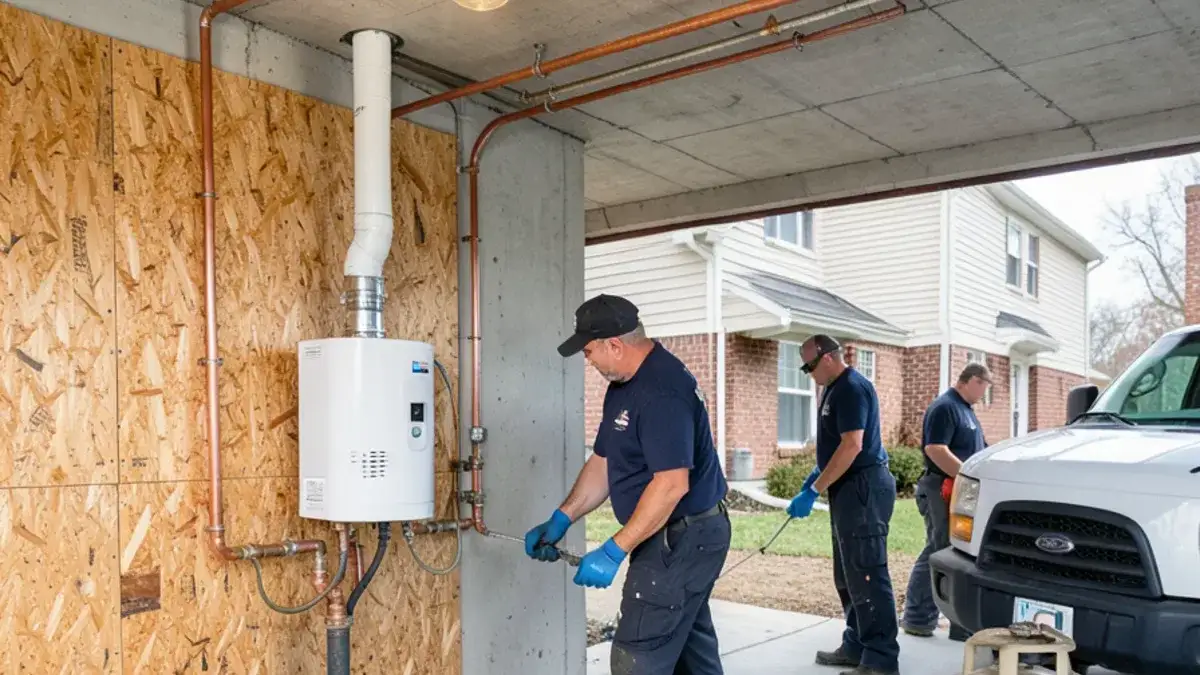
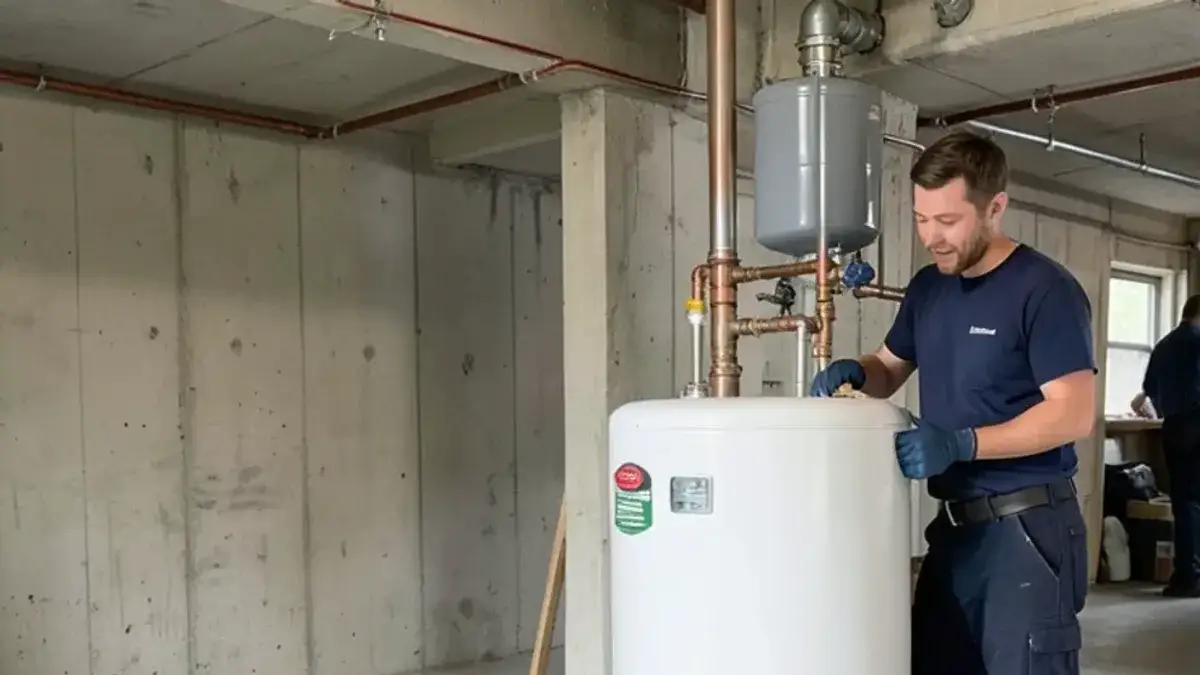
Most Macomb County replacements start with a tank leaking at the base or a household that has outgrown it.
What water heater installation includes in a Macomb County home
A replacement covers the appliance and the parts around it that current code expects. The plumber you're connected with typically handles:
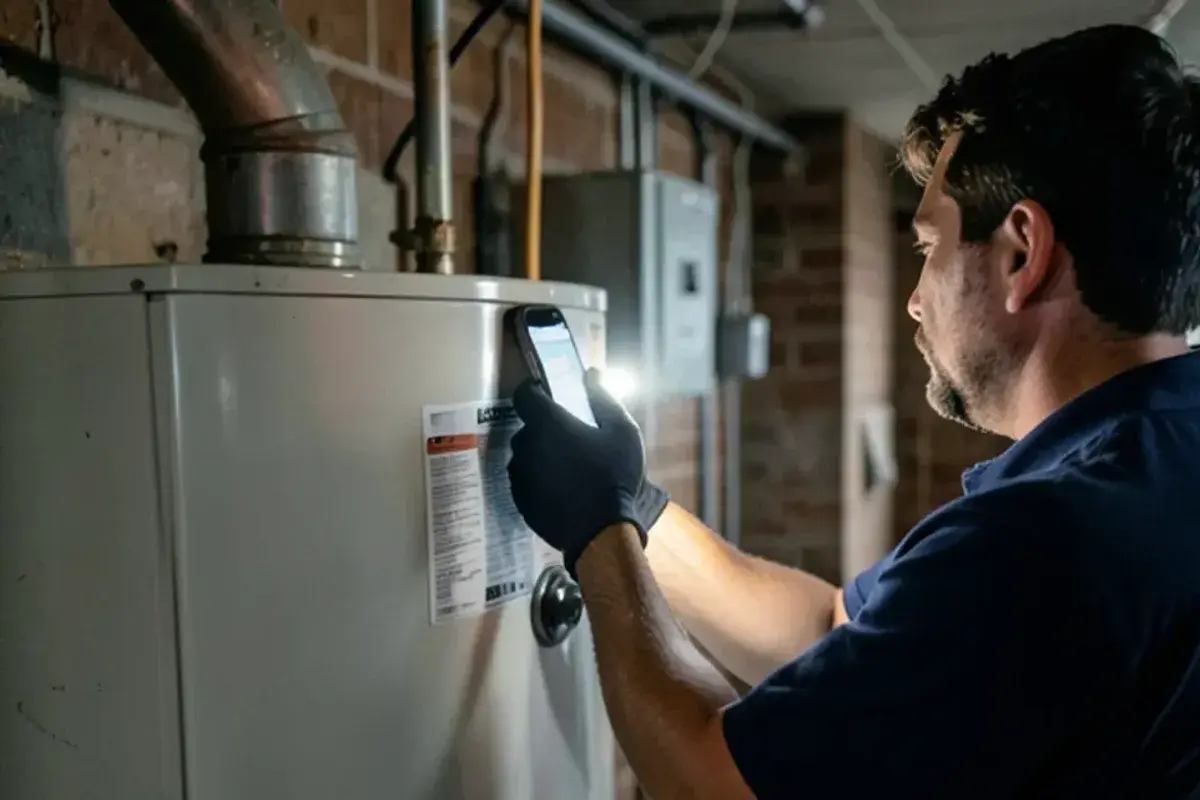
- reading the old rating plate and matching size, fuel and vent type to the house
- draining, disconnecting and carrying out the old tank
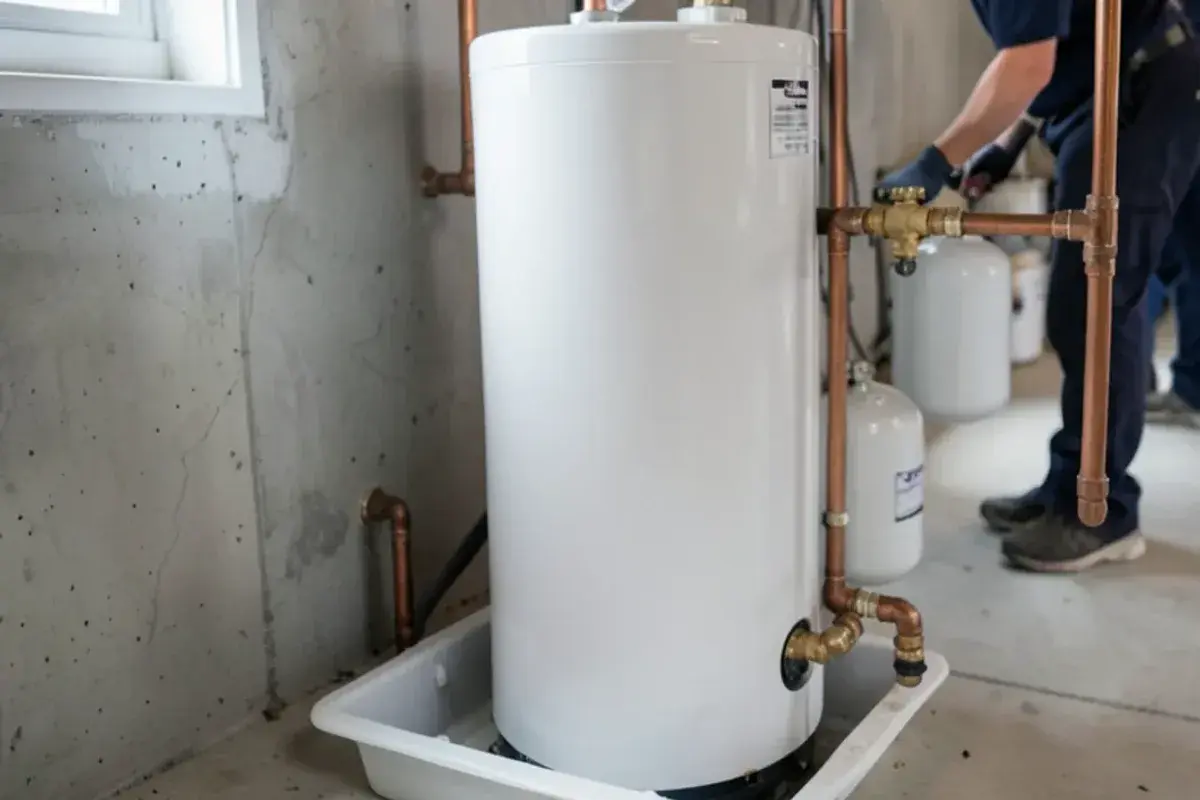
- setting the new heater, in a drain pan where a leak would reach finished space
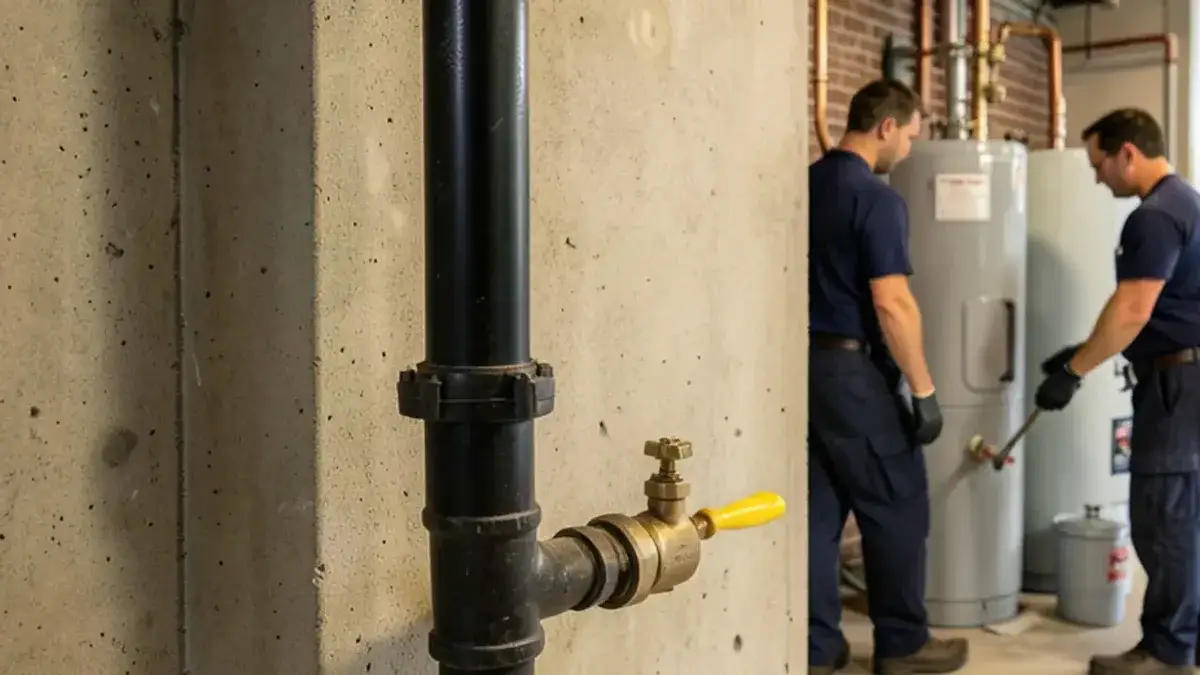
- water connections with a shutoff, an expansion tank where needed and a full-size relief discharge pipe
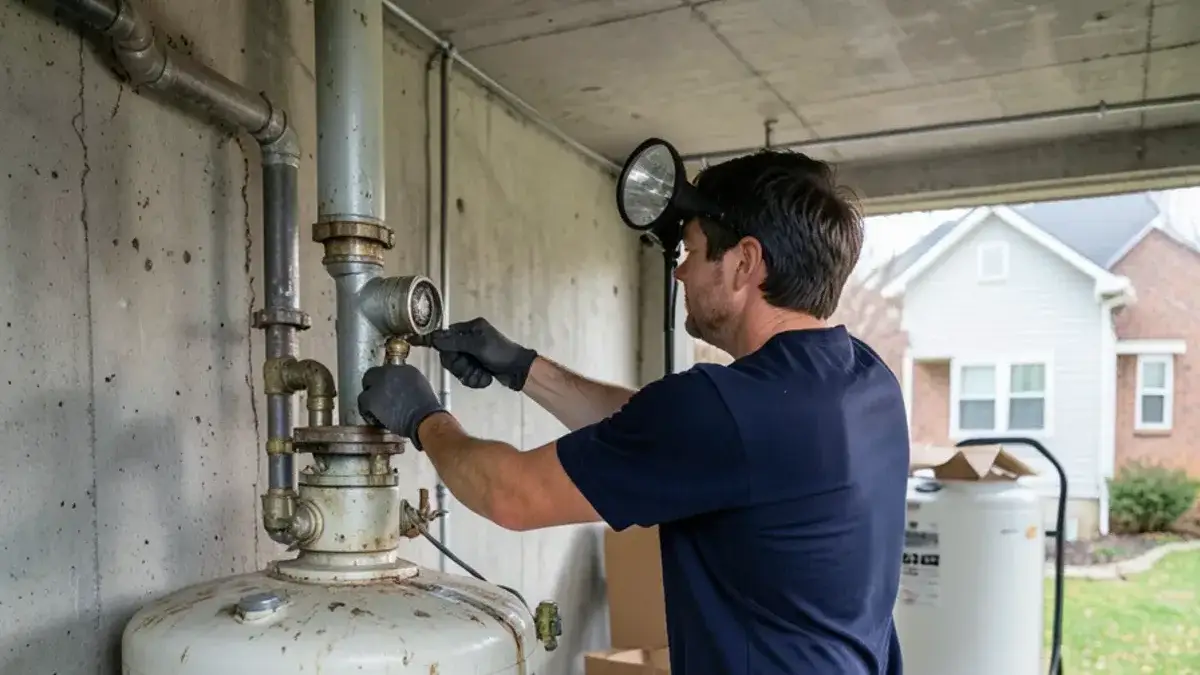
- the gas connection with a sediment trap, or the electrical hookup, plus the vent connector
- the permit and the inspection
The gas connection and venting count as mechanical work under Michigan licensing, so ask who on the job holds that license.
Signs it's time for a new water heater
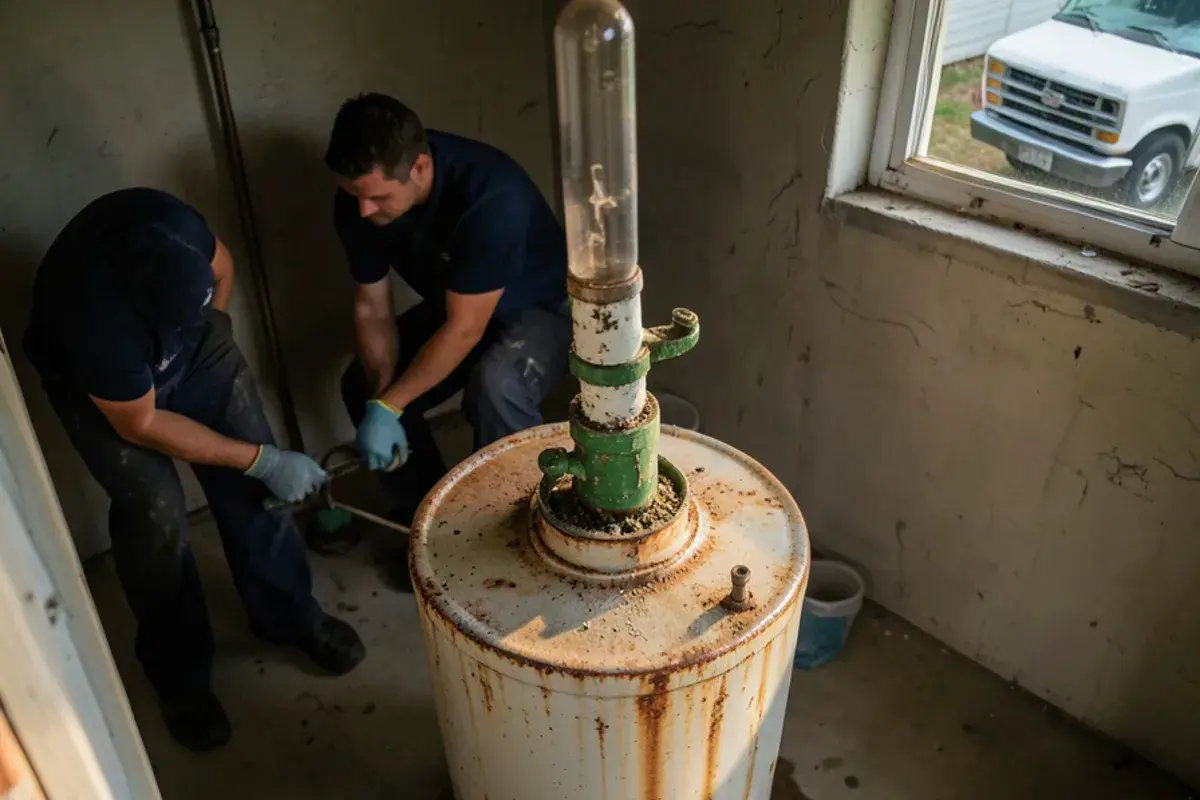
Some signs end the debate. Water seeping from the tank shell itself, not a fitting or valve, means the lining has failed, and no part swap fixes that. Rust-colored hot water while the cold runs clear, or flaking rust around the base, points the same way.
Other triggers have nothing to do with failure. A finished basement with a new bathroom, a bigger soaking tub or a growing household can outrun a tank that was fine for years. A furnace upgrade can force the issue too: when a high-efficiency furnace starts venting through the wall, the old water heater may be left alone in a masonry chimney that no longer drafts well for it.
Water quality speeds the clock. Lake Huron water from GLWA is moderately hard, and sediment in the tank bottom shortens its working life. Homes on wells see more: Richmond's city wells test around 207 mg/L, or 11.7 grains per gallon. If you're not sure the tank is done, water heater repair explains which parts can be replaced.
Which tank fits your basement: gas, power-vent or electric?
Most tank water heaters in Macomb County basements are one of four types, and the right replacement usually depends on how the old one vents and what your furnace is doing.
Atmospheric-vent gas
The classic gas tank has a draft hood on top and a metal vent connector to the chimney or a B-vent. It needs no electricity and has the fewest parts. The catch comes after a furnace swap to a high-efficiency model, when the water heater's small, cool exhaust may not draft well in a chimney sized for two appliances. That can mean a chimney liner or a different heater.
Power-vent gas
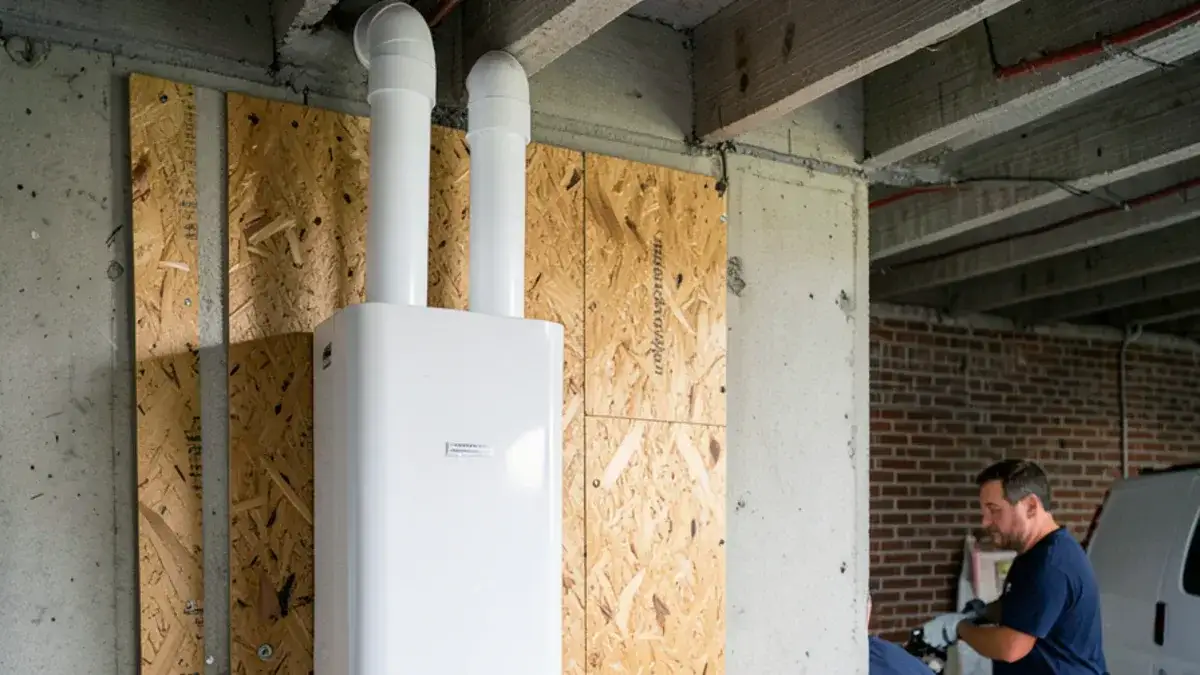
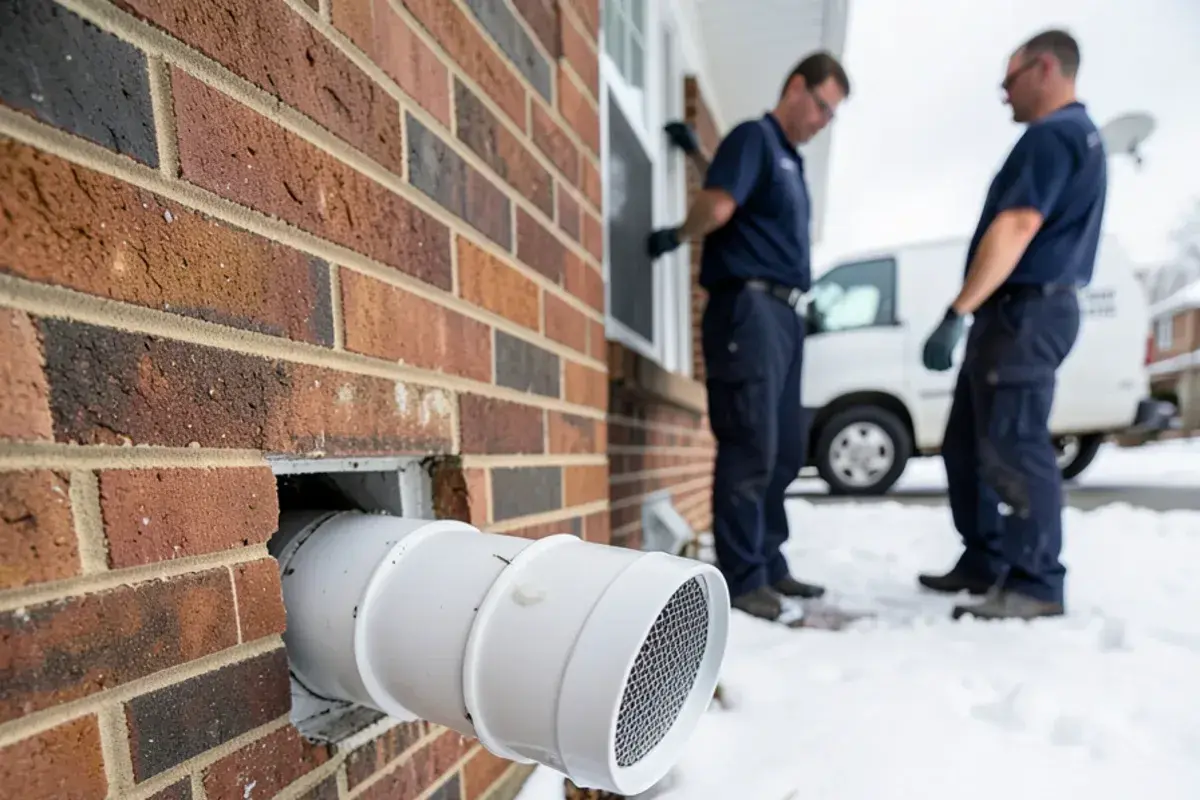
A blower pushes exhaust through PVC pipe out a sidewall, so no chimney is needed. It needs an outlet, makes some fan noise and has more parts that can fail, but it frees you from an old flue.
Electric and heat pump
A standard electric tank needs no vent and a 240-volt circuit sized for its elements, and it recovers more slowly than gas. A heat pump model uses far less electricity but needs open air around it and a condensate drain, and it cools the space it sits in. If you're weighing the end of tanks altogether, read tankless water heater installation and our comparison of tank vs tankless water heaters.
Ready to replace the tank? Talk sizing and permits at (207) 419-2600
- Your call goes to an independent local plumbing company that does the work.
40 vs 50 gallon water heater: what size does your household need?
Tank size alone is a poor guide. The number that matters is the first-hour rating on the label, which combines what the tank holds with how fast it reheats. A 40-gallon gas tank can match or beat a 50-gallon electric because the burner recovers much faster than electric elements.
Estimate your busiest hour. A 10-minute shower with a standard head uses around 20 gallons of mixed water. Michigan winters cut into that, because colder incoming water takes more energy to bring up to temperature, so a tank that keeps up in July can come up short in February. If the old heater ran out regularly, step up; if it never did, matching it is usually fine.
How a water heater replacement day goes
- Confirm size, fuel and vent type from the old rating plate and the space, and pull the permit.
- Shut off the gas or power and the cold supply, then drain the old tank; heavy sediment can slow this down.
- Disconnect and carry out the old heater, then set the new one, in a pan where needed.
- Connect the water lines with a shutoff, the expansion tank and the relief discharge pipe, then the gas line with a sediment trap and a leak test on every joint, or the wiring for an electric unit.
- Connect the vent, fill the tank completely before an electric unit gets power, then light or energize it, check draft and set it near 120°F.
- Haul away the old tank and arrange the inspection.
A straight swap of the same type usually takes a day. Venting changes, moving the heater or running a new circuit adds time, and the inspection happens on a date set by the building department.
What changes the cost of a water heater replacement
Size and fuel type set the base. Venting changes move it most: converting to power vent, lining a chimney after a furnace upgrade, or rerouting a vent connector. Code upgrades add parts and labor, including an expansion tank, a new relief discharge pipe, a pan, a gas shutoff or a sediment trap. Access counts too, as do tight stairways, closets and crawl spaces. Electrical work for a power-vent or electric unit, moving the heater, haul-away, and the township's permit (an application fee plus per-item fees) round it out. Our guide to water heater replacement cost factors goes deeper.
Two quotes for "a 50-gallon gas heater" can describe different jobs. One assumes the old chimney still works; the other includes a liner or a power-vent conversion. Ask each to list the vent plan, code items and permit.
Manufacturer warranty and care after the install
Water heater warranties come from the manufacturer, and tank and parts coverage often run for different lengths. Many brands ask you to register the heater and expect installation to follow their manual and local code. Keep the receipt and permit record together. Flush a few gallons each year, have the anode rod looked at every few years, and check the expansion tank's air charge now and then.
Before
After
Michigan permits and inspection for a new water heater install
Michigan requires a permit before plumbing work starts, and its exemption is narrow: repairs to the working parts of a faucet or valve and clearing stoppages, with no change to piping or fixtures. A water heater replacement needs a permit. Under state rules, the permit is pulled by a licensed plumbing contractor or by a homeowner doing work on the single-family home they live in. Macomb Township's fee schedule lists a residential water heater and an expansion tank as separate permit items, and a permit lapses if work doesn't begin within six months.
Gas piping and venting fall under Michigan's mechanical license categories, not the plumbing license. Ask the building department whether your gas swap needs a separate mechanical permit, and see gas line plumbing support for how that side is handled. The inspector checks the installed heater after the work is done.
Expansion tanks, relief valves and other code items on a water heater replacement
When water heats, it expands. In a house with a check valve, pressure-reducing valve or backflow preventer on the cold supply, that extra volume has nowhere to go, and pressure spikes every time the heater runs. The plumbing code requires thermal expansion control in that situation. An expansion tank on the cold line, with its air charge set to match house pressure, is the usual fix.
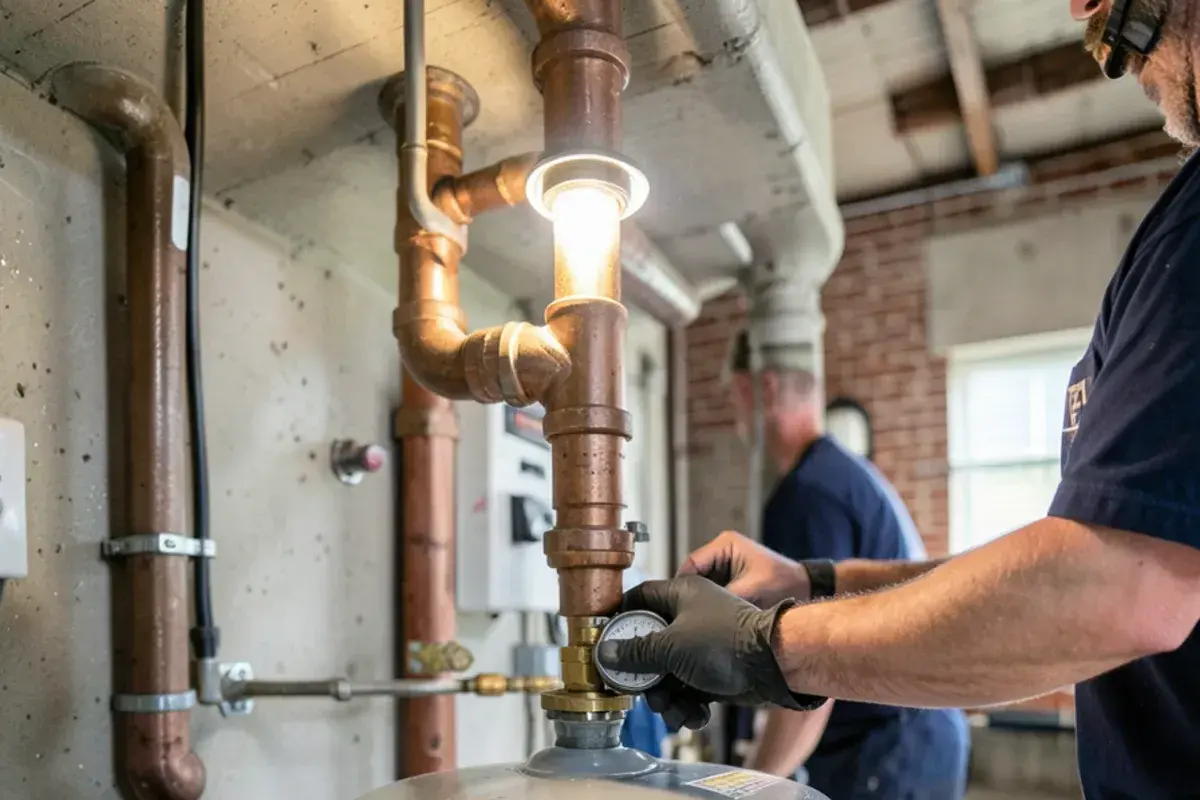
The temperature and pressure relief valve needs its own discharge pipe: full size, no valves or tees, no threaded end, no traps, and ending through an air gap low near the floor, into a pan, or at a drain where you can see it. Inspectors also look at the gas shutoff and sediment trap, the vent connector's slope and clearances, the electrical connection, and whether a drain pan is needed where a leak would damage finished space.
Why call Plumbers in Macomb, MI about a water heater installation?
Because a water heater swap touches water, gas, venting and a permit at once, and one number covers all of it. Call (207) 419-2600 with the old heater's size and fuel if you can read the label, and say whether it's leaking now. We connect you with an independent local plumber who covers your part of Macomb County. These pages explain sizing, venting, the code items and what moves the cost, so you can compare quotes and ask good questions. There's nothing to fill out online; the phone call is the whole process.
Water heater installation: questions we hear
Do I need a permit to replace a water heater in Macomb Township?
Yes. Michigan's permit exemption covers only the working parts of a faucet or valve and clearing stoppages, and a new water heater goes beyond that. Macomb Township's plumbing permit fee table lists a residential water heater and an expansion tank as separate items. The work is inspected before it's considered complete.
What size water heater do I need, 40 or 50 gallon?
Compare first-hour ratings, not only tank size. A 40-gallon gas tank can outperform a 50-gallon electric one at recovery. Households with three or more people showering back to back in the morning, or a large soaking tub, usually do better with 50 gallons or more.
Do I need an expansion tank with my new water heater?
Yes, if your cold supply passes through a check valve, pressure-reducing valve or backflow preventer, the plumbing code calls for thermal expansion control, and an expansion tank is the usual answer. The plumber looks at your meter setup and tests the house pressure to tell you.
What happens to my old water heater?
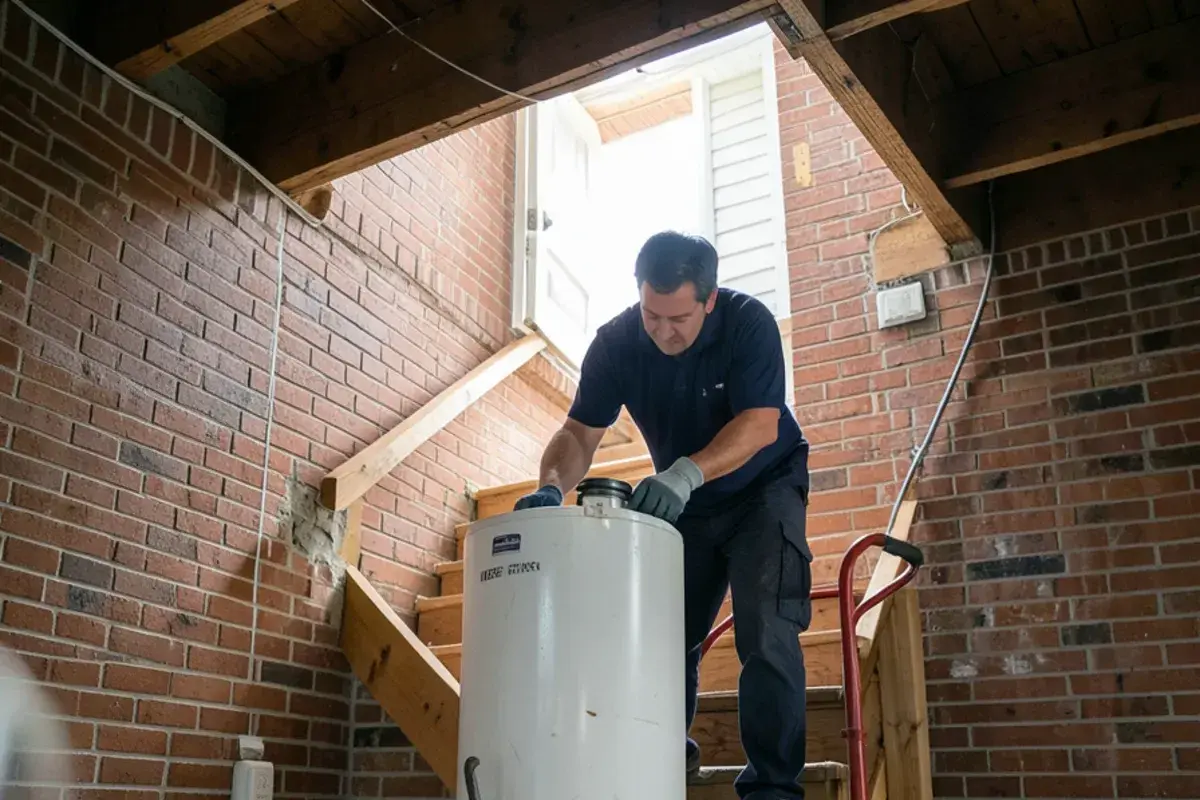
It's drained, disconnected and carried out as part of the job, usually on a hand truck up the basement stairs. Mention when you call if the path out is tight, such as a narrow stairway, a low landing or a crawl space, so the plumber brings the right equipment.