
Repair or replace
Tank vs tankless water heater for a Michigan basement
Tank vs tankless water heater is a house-by-house decision in Michigan, settled by how cold your incoming water gets, the gas line you already have, the vent route and the minerals in your water.
By Plumbers in Macomb, MI · Published · Last updated
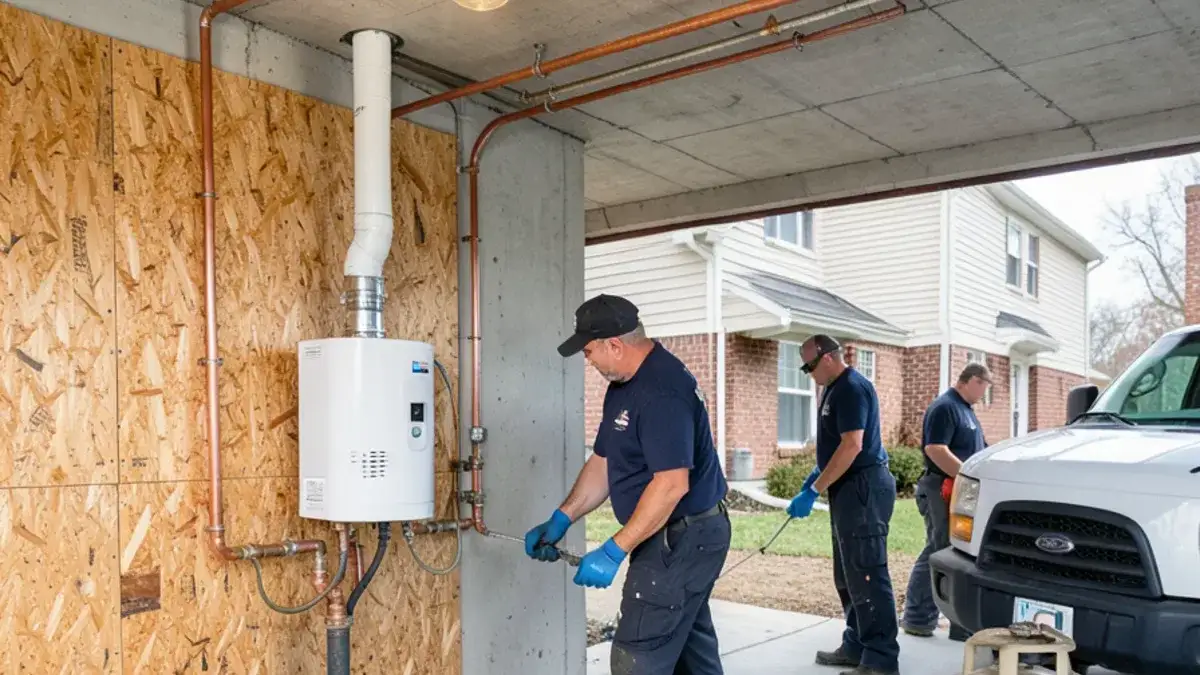
For most Michigan basements, a gas tank is the simpler, cheaper swap, and a tankless unit wins only when your gas line can be upsized, a vent can reach an outside wall, and the unit is sized for February's cold incoming water. Hard water descaling and floor space round out the choice.
The short version
A gas tank stores 40 or 50 gallons, keeps it hot, and hands it out until it runs low. A tankless unit heats water only while a tap is open, so it doesn't run out, but it can only heat so many gallons per minute.
Tankless tends to fit a household that values endless showers and floor space, has a gas line that can be upsized, and has a wall where the vent can exit cleanly. A tank tends to fit a house where several fixtures run at once, the vent route is awkward, or the budget points to a straight swap.
Want to know if tankless fits your gas line and vent route?
- Your call goes to an independent local plumbing company that does the work.
Cold incoming water sets the flow rate
This is the part brochures skip. A tankless unit's output depends on temperature rise, the difference between the water coming in and the temperature you want out.
Macomb Township's tap water is drawn from Lake Huron and treated at a GLWA plant near Port Huron, and that water arrives much colder in late winter than in late summer. Homes on wells in the north end of the county get groundwater that stays cool all year. Either way, a February shower might ask the heater to lift the water 70 degrees or more, where an August shower asks for far less.
How to size for a Michigan winter
Every tankless spec sheet lists gallons per minute at several temperature rises. Read the column for the winter rise, not the most flattering one. Then add up what runs at the same time in your house. Showerheads sold today are capped at 2.5 gallons per minute under federal rules, and many flow less. Two showers plus the dishwasher on a cold morning is a different load than one shower in July. If the unit is undersized for that, the water goes lukewarm when the second tap opens.
Gas line sizing
A typical residential gas tank burns somewhere around 40,000 BTU per hour. Whole-house gas tankless units commonly fire at up to about 199,000. The half-inch branch that fed your old tank usually wasn't sized for that, and the run from the meter has to carry the furnace, the range and the dryer at the same moment.
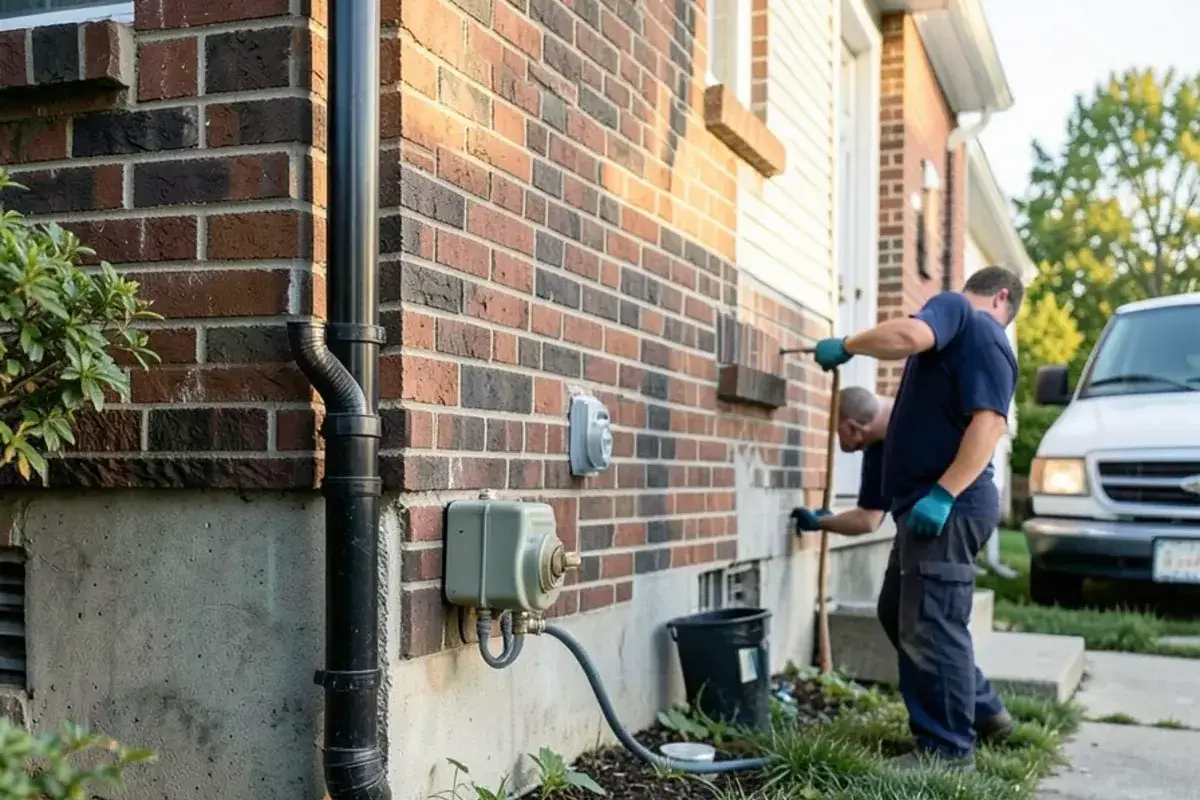
So many tankless conversions include a larger gas line, sized by the length of the run and the total load. In Michigan, gas piping falls under the mechanical contractor license (the HVAC equipment or fuel gas piping classifications), and the new line is permitted and pressure tested before it's put in service. Check the contractor's mechanical license on LARA's license lookup before gas work starts.
Venting and placement
Most basement gas tanks vent into the chimney by natural draft. A tankless unit can't use that flue. It needs its own vent, built only from the materials the manufacturer's manual lists. Non-condensing units typically use special stainless vent pipe. Condensing units run cooler exhaust through plastic pipe and produce condensate that needs a drain.
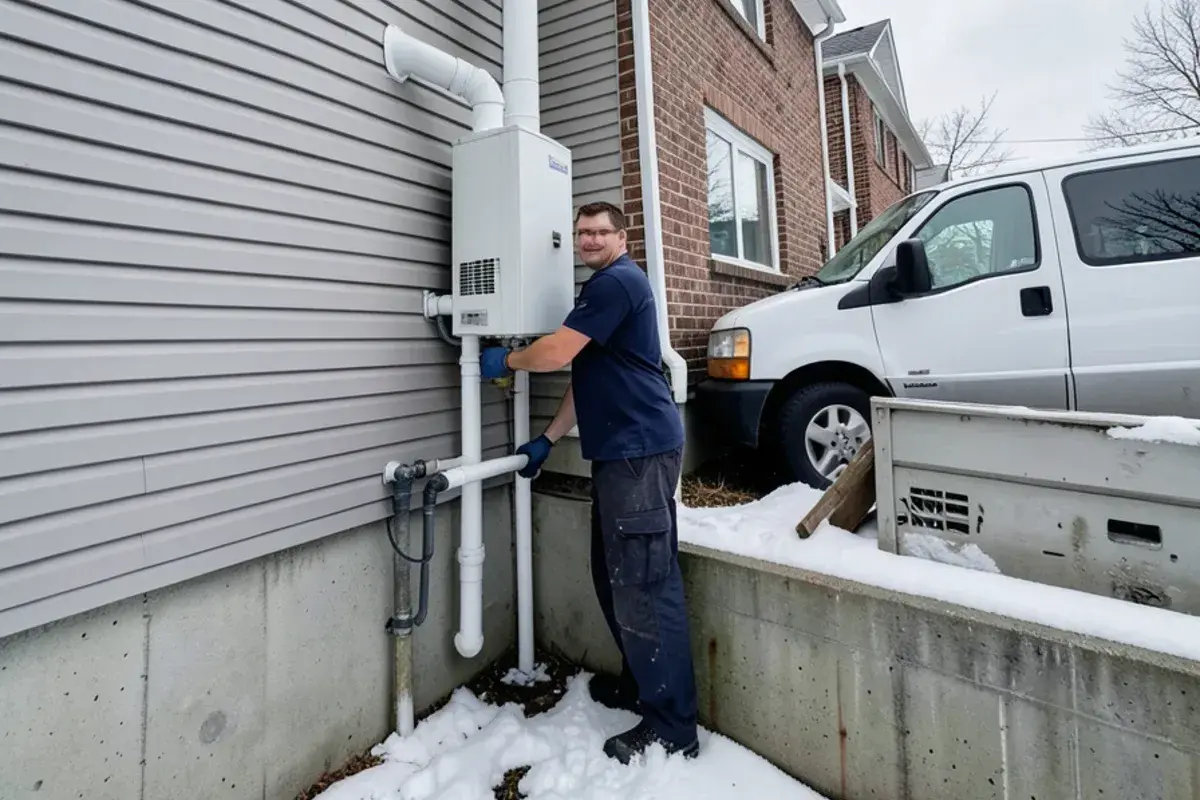
Where that vent exits matters in Michigan. The termination has to keep its required distance from windows, doors and the gas meter, and it should sit above the level snow drifts reach on that side of the house. A basement with the heater on an interior wall and a long, crooked route to the outside can turn a simple-sounding swap into a bigger project.
Hard water and descaling
Township water here averaged 99 ppm of hardness in 2024. Moderate by most measures. The trouble is that calcium leaves solution as water heats, and a tankless unit heats water quickly through small passages. Over time scale narrows those passages, flow falls, and the unit starts posting error codes.
The fix is routine descaling. Installers fit isolation valves so a small pump can circulate a descaling solution through the unit. Homes on harder well water, or homes that want to stretch the interval, sometimes add a scale-reduction cartridge or a softener ahead of the heater. Our water softener and filtration page covers those options.
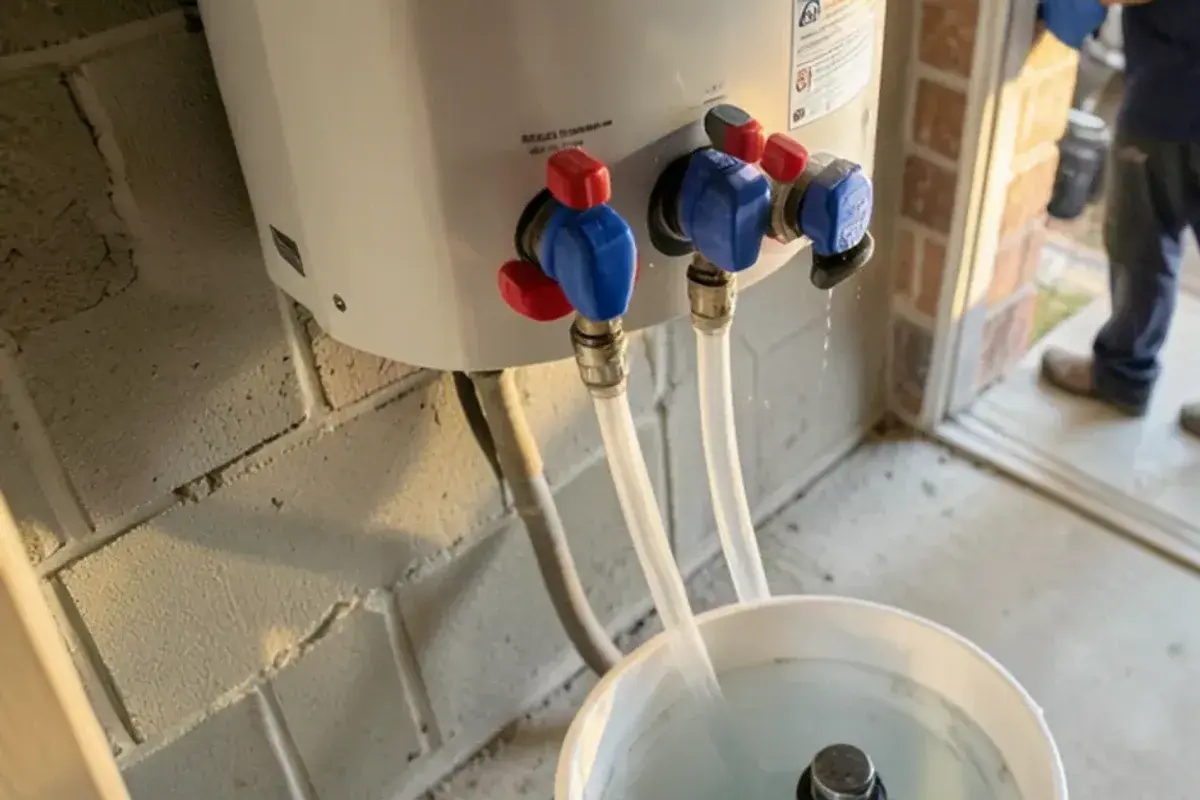
A tank isn't immune. Sediment collects on the bottom of a gas tank and on the lower element of an electric one. But a tank is more forgiving of neglect than a tankless heat exchanger.
Space, power and lifespan
A tankless unit hangs on the wall and frees the floor space a tank used, which helps in a finished basement. It does need a 120-volt outlet. In a power outage it stops making hot water, while many standing-pilot gas tanks keep working.
On lifespan, ENERGY STAR lists a life expectancy of about 20 years for tankless water heaters, assuming they're maintained. A storage tank's life depends heavily on its anode rod and how much sediment builds up. Once the tank shell leaks, it's done.
What plumbers see after a tank-to-tankless switch
The complaints that follow a conversion are rarely about the heater failing. They're about habits that worked with a tank and don't with a tankless unit.
A tankless burner fires only above a minimum flow. A trickle at the bathroom sink to rinse a razor may never wake it up, so you get cold water where a tank would have sent warm. Back-to-back showers can also produce a short burst of cold between two hot stretches, sometimes called a cold-water sandwich, while the burner relights. Neither is a defect, and both surprise people.
The wait for hot water at a far bathroom doesn't improve, and it can get a little longer, because the unit has to sense flow and light before it heats. A recirculation loop or a built-in recirculation pump shortens the wait, but it adds a pump, some plumbing and energy use of its own.
Condensing units drain acidic condensate. That line needs a floor drain or a condensate pump, and many installers add a neutralizer cartridge before it reaches the drain. In a finished basement with no floor drain nearby, that detail can drive the layout.
On cold mornings, an undersized gas line shows up as error codes or water that swings warm and cool when the furnace and the heater fire together. Upsizing the line fixes that; a bigger tankless unit won't.
The trade-offs run the other way too. A tank that fails can dump its full volume across the basement floor, while a tankless leak is usually a drip at a fitting. And neither type fixes low pressure from old galvanized pipe or scale that is already in the fixtures. If your hot water was weak before, check the pipes first, because a new heater will inherit them.
Permits and inspection for either choice
Swapping a tank for a tank and converting to tankless both need a permit in most of Macomb County. Macomb Township's plumbing permit application lists a residential water heater and an expansion tank as separate permit items. Harrison Township and Utica both state that a water heater replacement needs a permit. Under LARA's rules, a licensed plumbing contractor or a homeowner working on the single-family home they live in pulls the plumbing permit. The gas line and vent belong to the mechanical trade, so a conversion may involve a second license, and the building department can tell you whether it means a second permit. The inspector looks at the relief valve discharge pipe, the venting, the gas connection and, where a check valve or pressure-reducing valve sits on the cold line, thermal expansion control.
Tank vs tankless water heater compared
| Factor | Gas storage tank | Gas tankless |
|---|---|---|
| Hot water supply | Stored volume, then recovery time | Continuous, up to its flow limit |
| Winter performance | Recovery slows with colder inlet water | Gallons per minute drop with colder inlet water |
| Gas supply | Usually fine on the existing line | Often needs a larger line |
| Venting | Often the existing chimney | Dedicated vent to an exterior wall |
| Floor space | Takes floor space | Wall-mounted |
| Hard water upkeep | Flushing sediment, anode checks | Regular descaling of the heat exchanger |
| Power outage | Many models still heat | Stops heating |
| Life expectancy | Depends on anode and sediment | About 20 years per ENERGY STAR |
| Install scope | Often a like-for-like swap | Usually a conversion with gas, vent and drain work |
Making the call
If you're staying in the house a long time, want the floor space, and your gas line and vent route cooperate, a tankless unit makes a strong case. If your mornings put three fixtures on at once, or the vent route is a puzzle, a well-sized tank may serve you better.
See our tankless water heater installation page for how a conversion is planned, or water heater installation for a straight tank replacement. Whether you're in Shelby Township, Macomb Township or elsewhere in the county, we can connect you with a local plumber who will look at your gas line and vent route. Call (207) 419-2600 and describe the heater you have now.
Common questions
Will a tankless water heater give me endless hot water in a Michigan winter?
No, not unlimited flow. It never runs out the way a tank does, but it has a flow limit. In February, with colder lake water coming in, a unit delivers fewer gallons per minute at shower temperature than it does in August. Size it for the winter rise and for the fixtures you run at the same time.
Can a tankless heater use my existing gas line?
Yes, sometimes, but many homes need a larger line. A whole-house gas tankless unit can draw several times the gas of a typical tank. The pipe size, the length of the run and the other gas appliances on it decide whether the existing line can carry the load.
How often does a tankless unit need descaling in Macomb County?
Follow the manufacturer's schedule first. With water around 99 ppm hardness and an average household, many owners descale about once a year, and sooner if the unit throws scale-related codes or hot water flow drops. Isolation valves on the water lines make each descaling a short, tidy job.
Does switching from a tank to tankless need a permit in Macomb County?
Yes. Macomb Township's plumbing permit form lists a residential water heater as a permitted item, and Harrison Township and Utica say the same for replacements. A tankless conversion usually adds gas piping and venting, which fall under Michigan's mechanical licensing. Ask who pulls each permit and when the inspection happens before the old tank comes out.
Where we can help
Want to know if tankless fits your gas line and vent route?
- Your call goes to an independent local plumbing company that does the work.