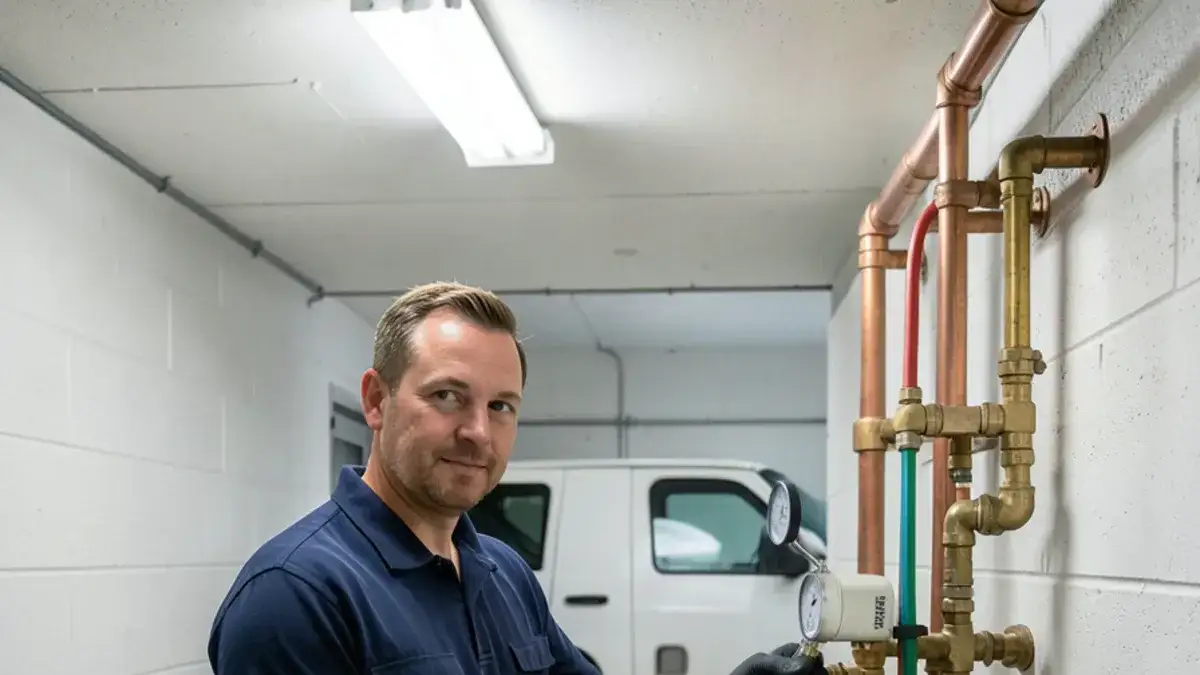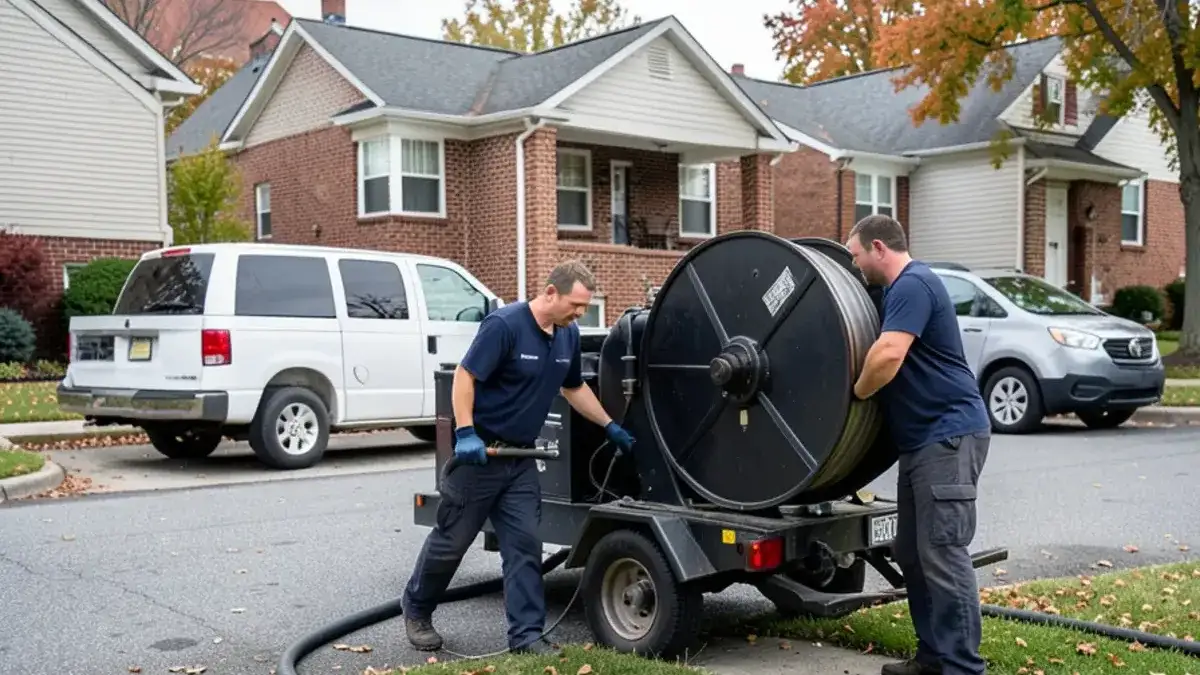
In Macomb Township the most common trigger is grease, with kitchen lines that coat up between the township's interceptor inspections.
Commercial plumbing obligations in Macomb Township and nearby cities
Businesses have the same broken pipes as homeowners, plus rules that come with an inspector.
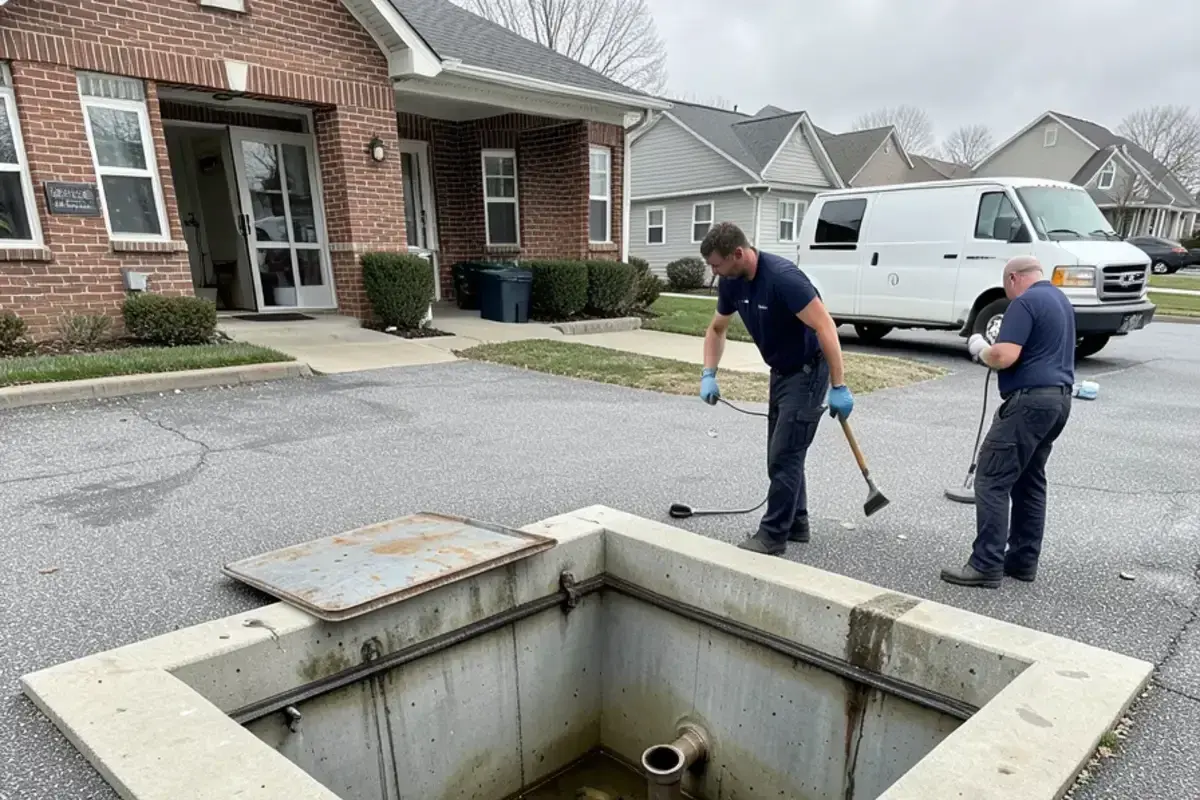
Grease comes first for anyone who cooks. Macomb Township's fats, oils and grease ordinance requires food service establishments and food processors to install and maintain grease interceptors, limits how much grease and organic load can leave the building, and has the water and sewer department or its contractor inspect at least once a year and set each interceptor's cleaning frequency. Businesses that violate the limits can face required sampling at their own cost. Grease buildup in county sewers is real: a 100-foot fatberg was pulled from the Lakeshore Interceptor in Clinton Township in 2018.
Backflow comes next. Every public water system in Michigan runs a cross-connection program, and commercial assemblies are tested more often than residential ones. Sterling Heights requires yearly tests for commercial devices.
The warning signs start small. A floor drain gurgles during the dish rush, the back door smells of grease, or the hauler says the interceptor filled faster than last time.
Need plumbing done without closing your doors?
- Your call goes to an independent local plumbing company that does the work.
What a commercial plumbing call can cover
Commercial plumbing means bigger pipe, heavier fixture traffic and more paperwork than a house. One call can cover:
- Kitchen drains, floor drains, branch lines and the building drain out to the street
- Grease interceptor piping, baffles, outlet tees and cleanouts (pumping goes to a hauler)
- Testable backflow assemblies on domestic, fire, boiler and irrigation lines
- Flushometers, urinals, sensor faucets and other restroom fixtures
- Commercial tank, tankless and booster water heaters
- Leaks, shutoff valves and fixture swaps across rental units
What does a restaurant grease trap need besides pumping?
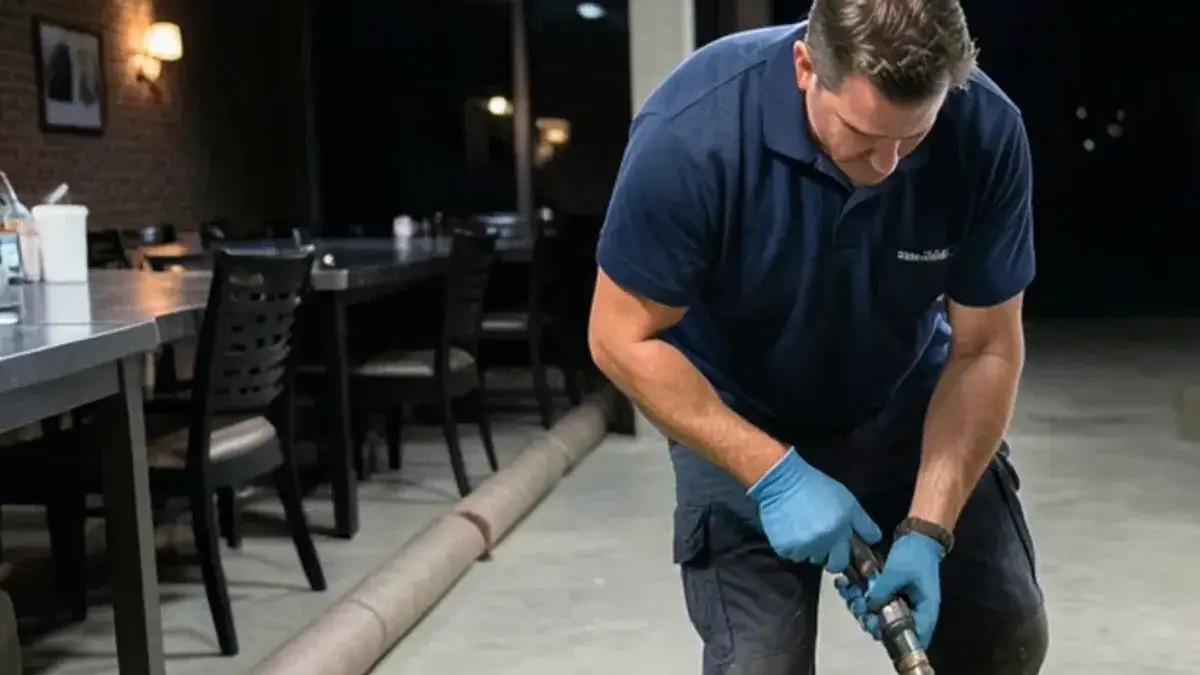
Pumping the interceptor is a hauler's job. The plumbing around it is a plumber's. Grease that slips past a broken baffle or a missing outlet tee hardens in the line to the street. A snake punches a hole through that blockage and the line closes again in weeks, while hydro jetting scours the pipe wall back to bare pipe. A plumber can also replace baffles and tees, add cleanouts and size a new interceptor for a kitchen that has outgrown the old one.
Commercial backflow testing and building water systems
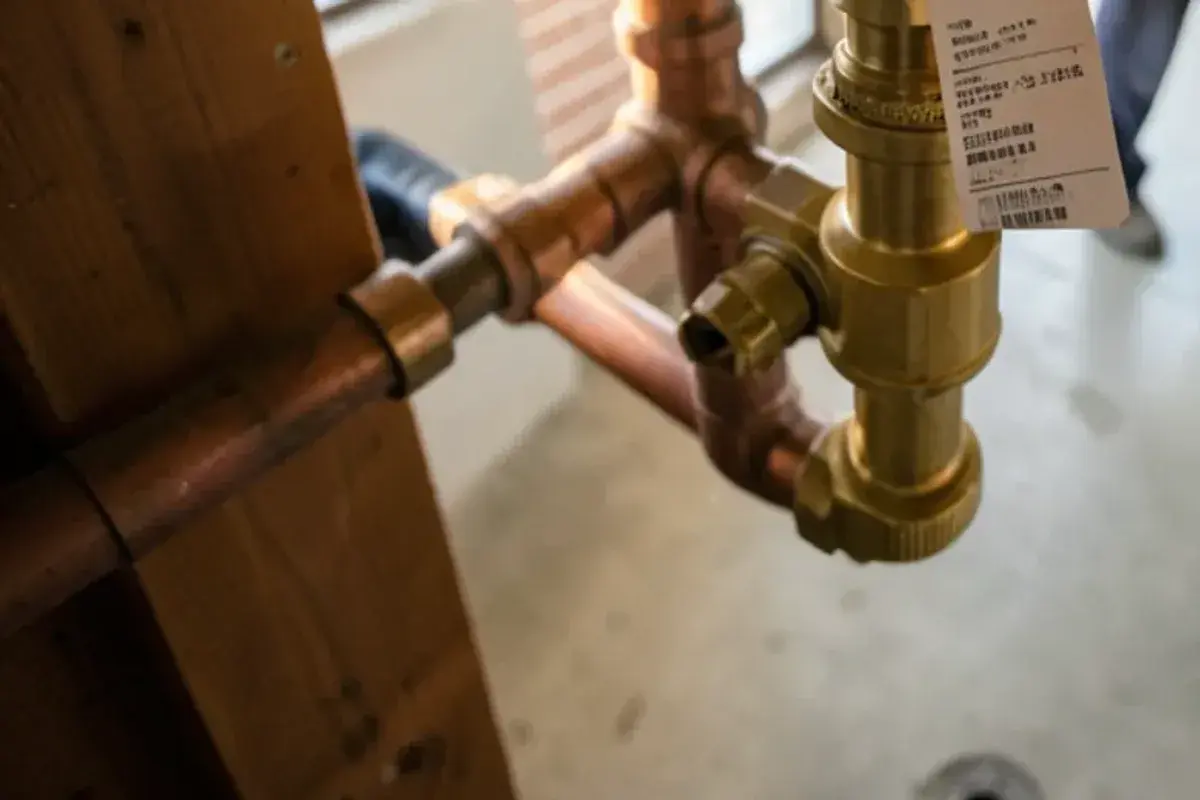
Restaurants, salons, medical offices and any building with a fire line, boiler or irrigation system usually have a testable assembly. The tester needs ASSE 5110 certification and, since 2023, a Michigan plumbing license or direct supervision by a licensed plumber. Our backflow testing page covers device types and what happens if one fails.
Office building and rental property plumbing
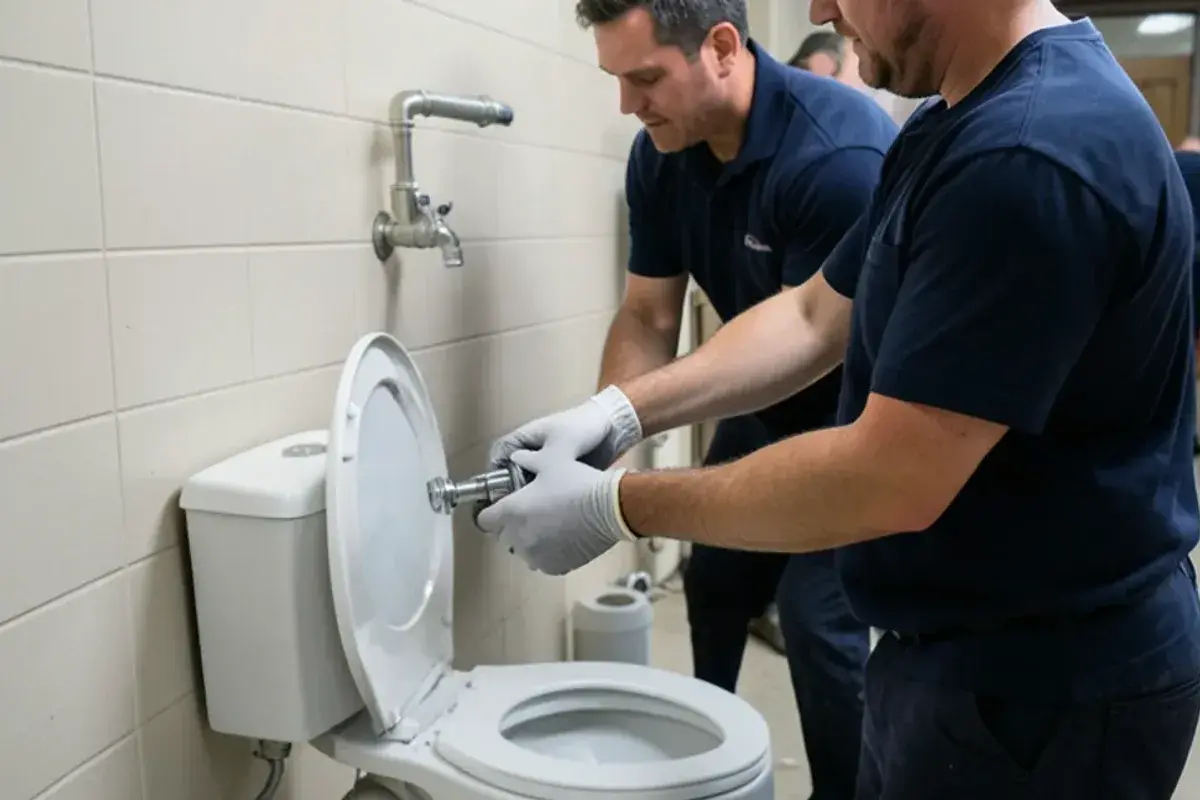
Office calls are mostly restrooms: flushometers that run on, sensor faucets that quit and urinals that clog. Most flush valves can be rebuilt in place.
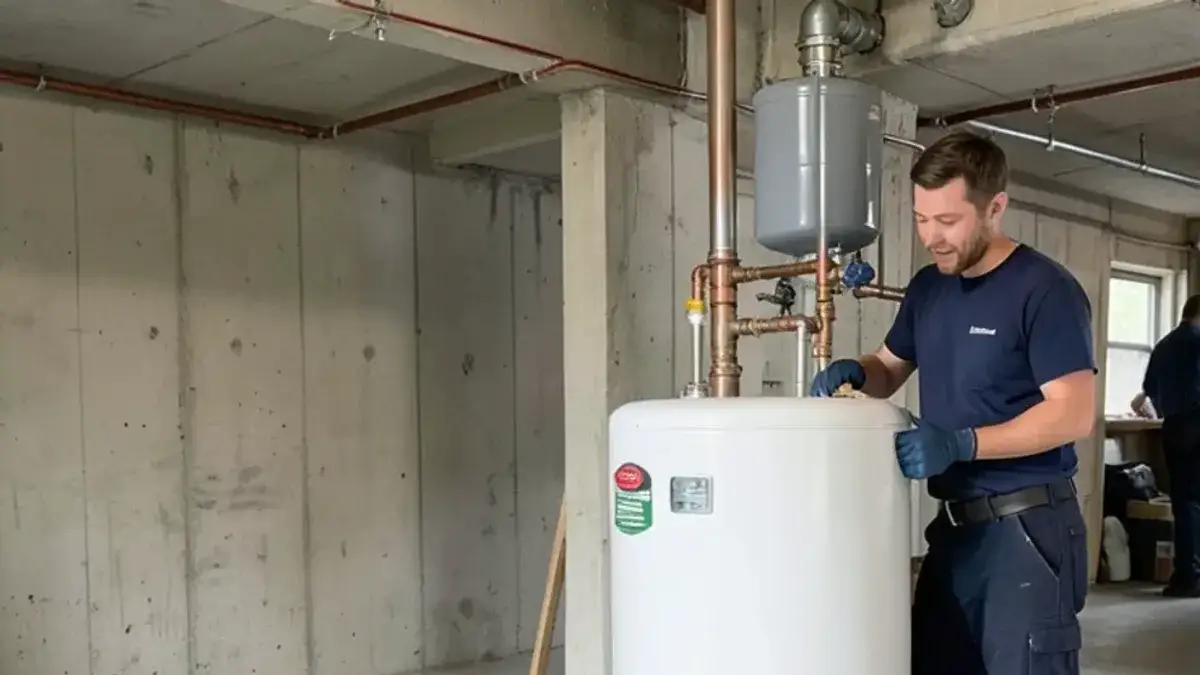
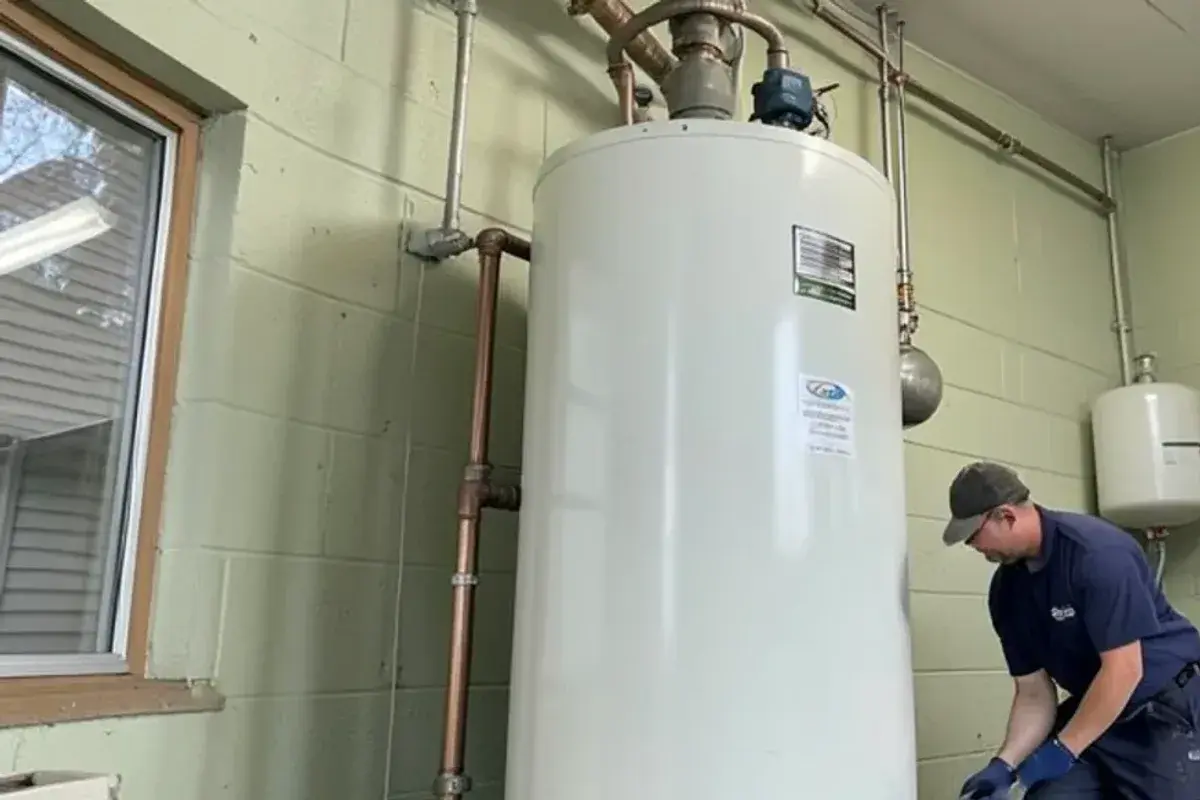
Water heater installation for a business means sizing to the peak, such as a dish machine or a salon's back-to-back shampoos, instead of copying the old tank's label.
For rentals, a property manager plumber should follow one set of approval rules, label shutoffs in every unit and note tenant damage separately from wear. Repeat drain calls from one building often trace to the main line.
How a commercial service visit runs
- You call, describe the building and the problem, and say what has to keep running. That goes to the plumber you're connected with.
- The plumber checks in with the manager on duty and isolates only the affected area so the rest of the building stays open.
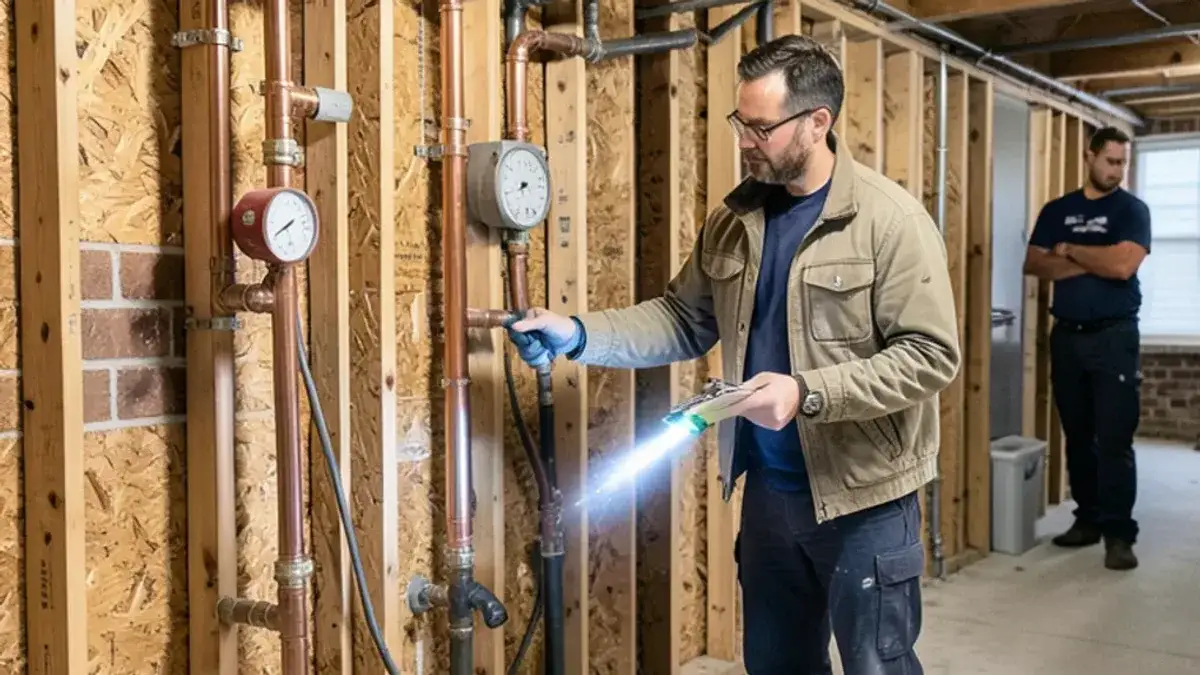
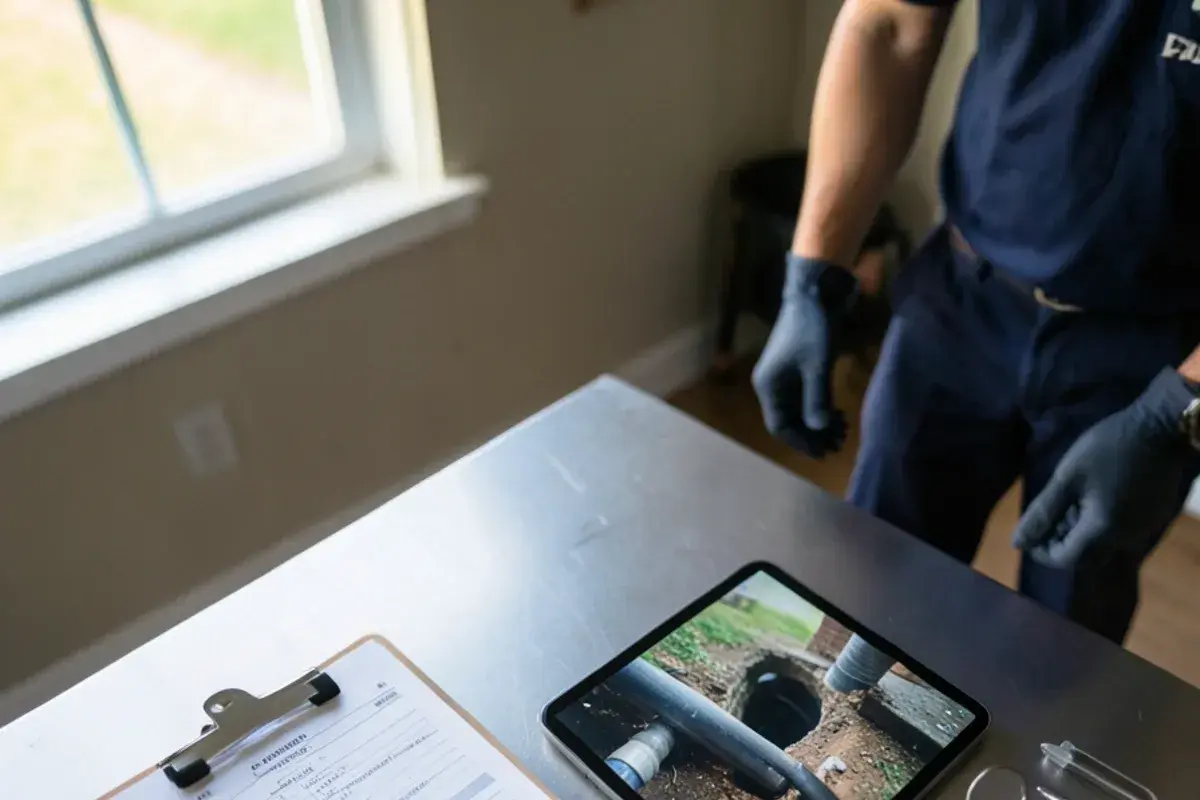
- Diagnosis covers the fixtures, cleanouts, interceptor, heater and backflow assemblies involved, with a drain camera when backups keep returning.
- Before starting, the plumber explains the findings, the options, the cost drivers and any permit the job needs.
- After the approved work, each fixture runs, the kitchen lines take a full flow and the heater temperature gets checked.
- The plumber cleans up and leaves written notes and photos for the building file.
Planned work can often fit before opening, after close or between lunch and dinner service.
Commercial plumbing permits and Michigan licensing
The 2021 Michigan Plumbing Code took effect March 12, 2024 and covers commercial buildings, and LARA doesn't allow plumbing work to begin before the permit is issued. A homeowner permit only covers someone's own single-family home, so a business needs a licensed plumbing contractor, which LARA requires to hold or employ a master plumber. Macomb Township lists grease traps, oil and sand interceptors, commercial water heaters and backflow preventers as separate permit items. Before work starts, get the contractor's license number and look it up on LARA's verification search, then confirm on the permit card that the same contractor pulled the permit. Our guide to Michigan plumbing permits covers the exemptions.
Records that make inspections easier
Inspectors ask for paperwork, and a building that keeps it ready gets through faster. Keep these together, with the plumber's notes and photos from each visit:
- Backflow test reports for every assembly, with device serial numbers
- Grease interceptor cleaning receipts, matched to the township's required frequency
- Permit cards and final inspection results
- Camera inspection videos of the building drain
- A shutoff map showing the main, each floor or unit, and the water heater
What changes the cost of commercial plumbing work
Timing moves the number first, before any part is chosen. Work before opening, after close or on a weekend usually costs more than a weekday slot, and an emergency during service costs more again. Access comes next: lines reached through a drop ceiling, a roof, a crawl space or an occupied unit take longer than a cleanout by the back door.
Scale is the third factor. Four restrooms, 30 rental units or three testable assemblies are priced by the count. For jetting, the length and size of the line and how much grease has built up decide the time. An interceptor's size, depth and condition shape any repair, and a new one adds excavation and restoration. Commercial heaters and flush valves are priced by type and capacity, and some parts carry a lead time. Permitted work adds the township's application fee plus per-item fees, and a failed inspection adds a re-inspection visit.
Why call Plumbers in Macomb, MI for commercial plumbing?
A kitchen line, a restroom valve and a backflow test notice all go to the same number. Your call reaches an independent plumber working in your part of the county, and you settle the job, the schedule and the price directly with that plumber. These pages lay out the work, the cost factors and the permit rules first, so you can ask good questions about the interceptor, assembly or heater in front of you. Nothing needs filling out online and no account is needed. Call (207) 419-2600, give the business address and your hours, and describe what you're seeing at the drain, valve or heater.
Commercial plumbing: questions we hear
What does a commercial plumber handle for a small business?
Most calls fall into drains and sewers, grease interceptor piping, water heaters, restroom fixtures, backflow assemblies and leaks. Larger jobs, like adding fixtures or a new interceptor, need permits and plans under the Michigan Plumbing Code. Call (207) 419-2600 and describe the building and the problem.
How often should a restaurant grease trap be cleaned in Macomb Township?
The township sets each interceptor's cleaning frequency for food service establishments and inspects them at least once a year. Follow the frequency you were given and keep the hauler's receipts. If grease is reaching the drain lines between cleanings, the interceptor or the kitchen's habits need a look.
Can plumbing work be scheduled before we open or after we close?
Yes, planned work often can. Give us your hours and the equipment that has to stay running, and that goes to the plumber you're connected with, who says which openings fit. A grease backup mid-service gets the plumber's soonest opening instead, and tenant buildings need posted shutoff notice.
Do you work with property managers who have many units?
Yes. We connect property managers and landlords with local plumbers, and you set the working rules with the plumber, including how work gets approved, who meets the plumber at each unit and how notes and photos come back. A shutoff map per unit saves time on every call.
How often should a business have its plumbing checked?
It depends on the part. Regulated pieces carry their own schedule, such as the yearly commercial backflow test in Sterling Heights or the cleaning frequency Macomb Township sets for each interceptor. Kitchens often book line jetting on a cycle set by how fast grease returns on camera.