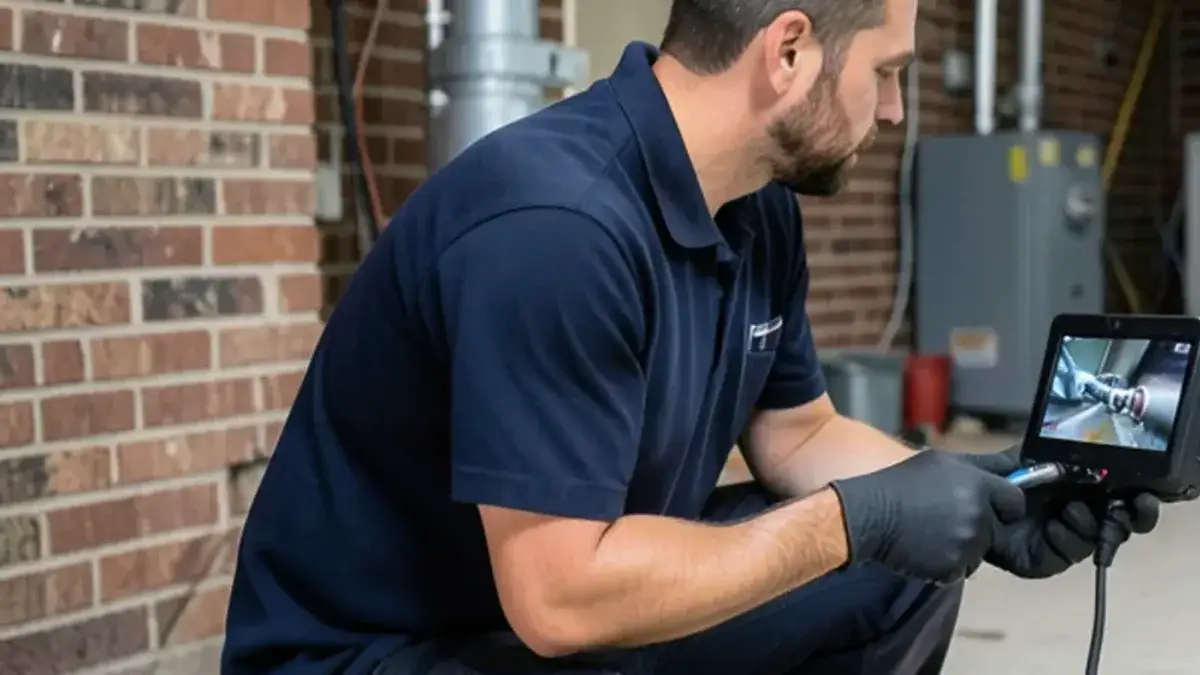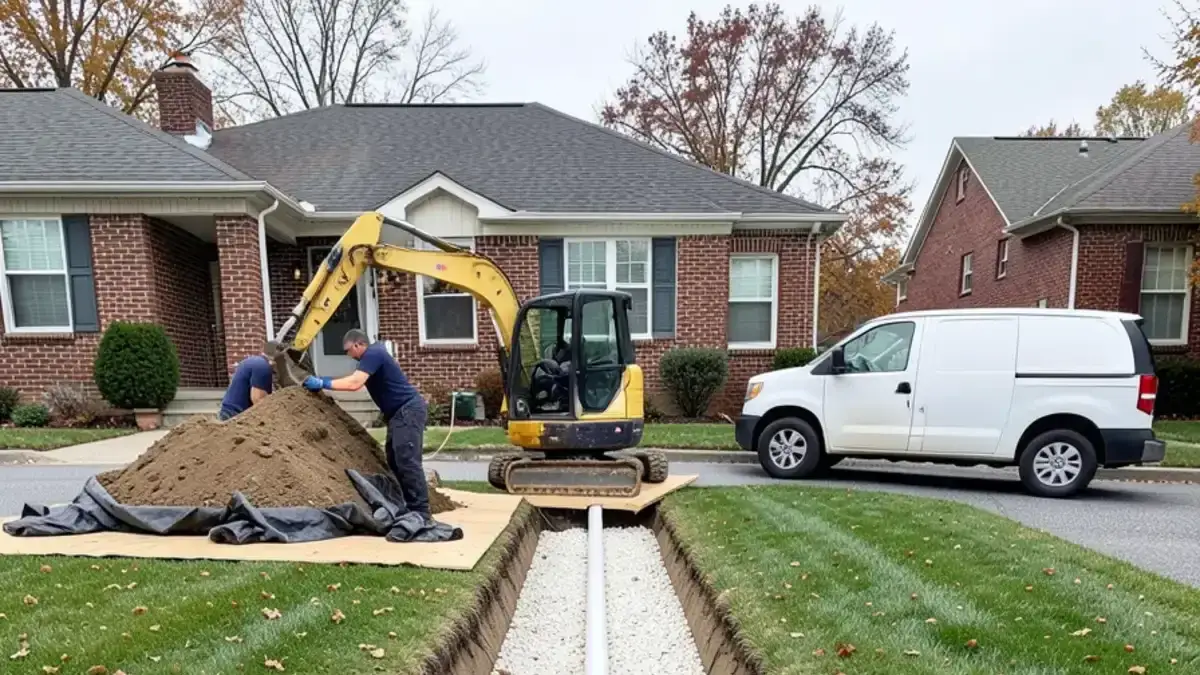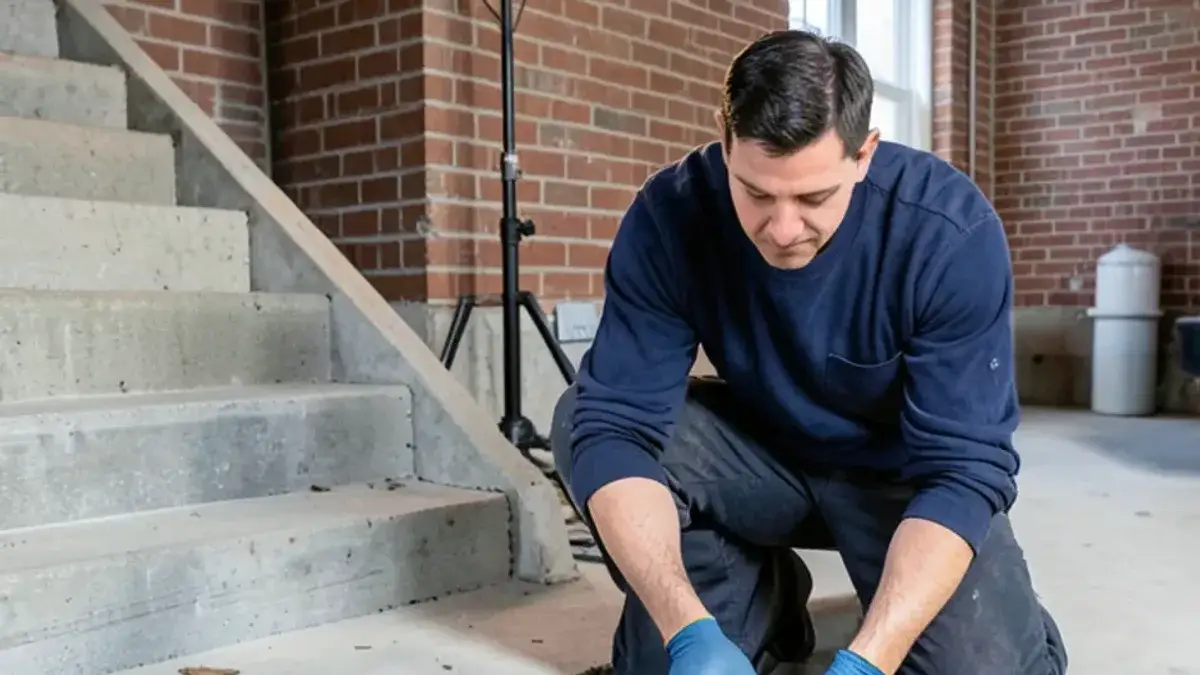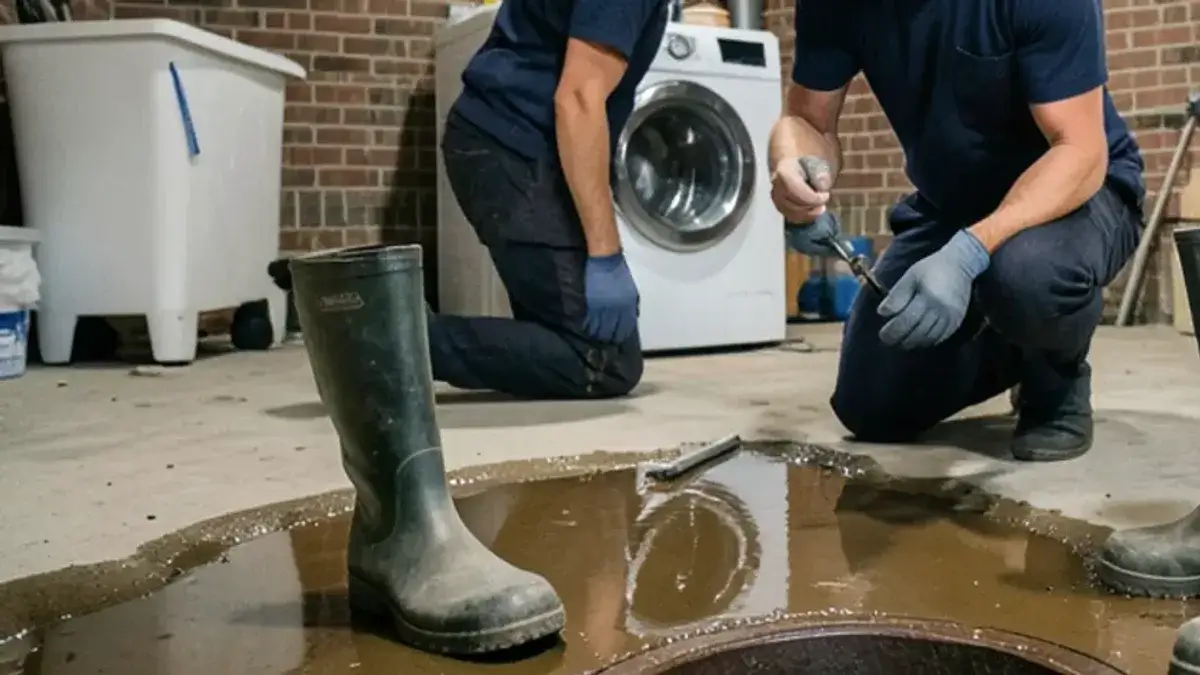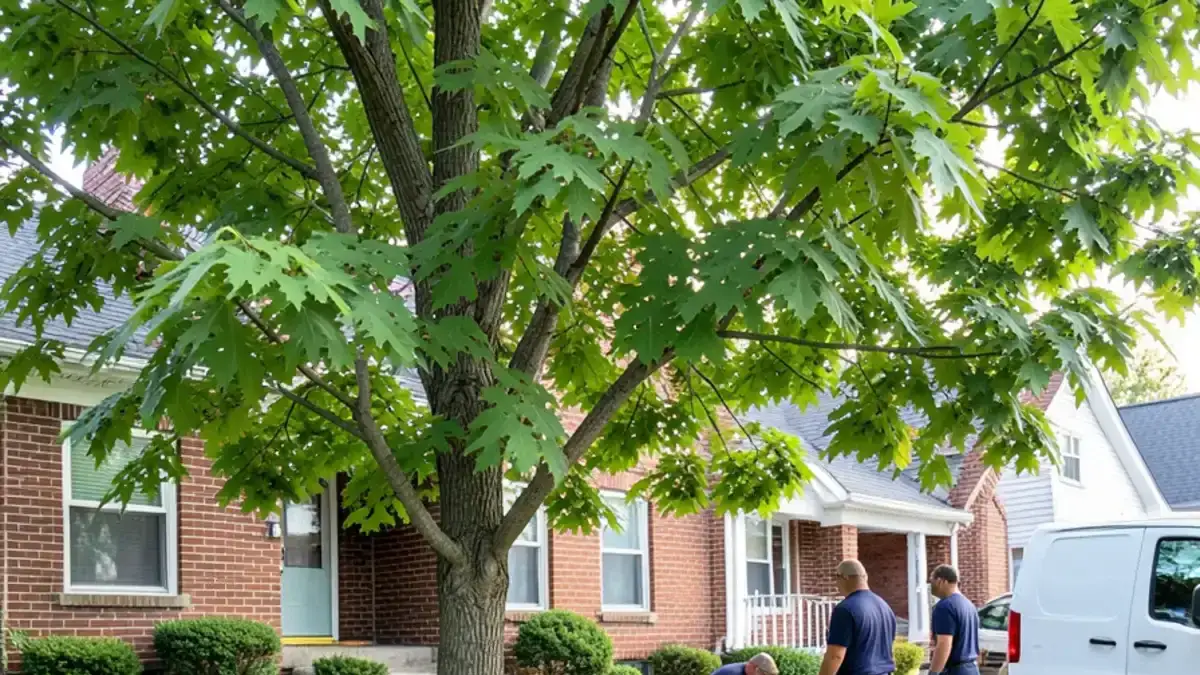
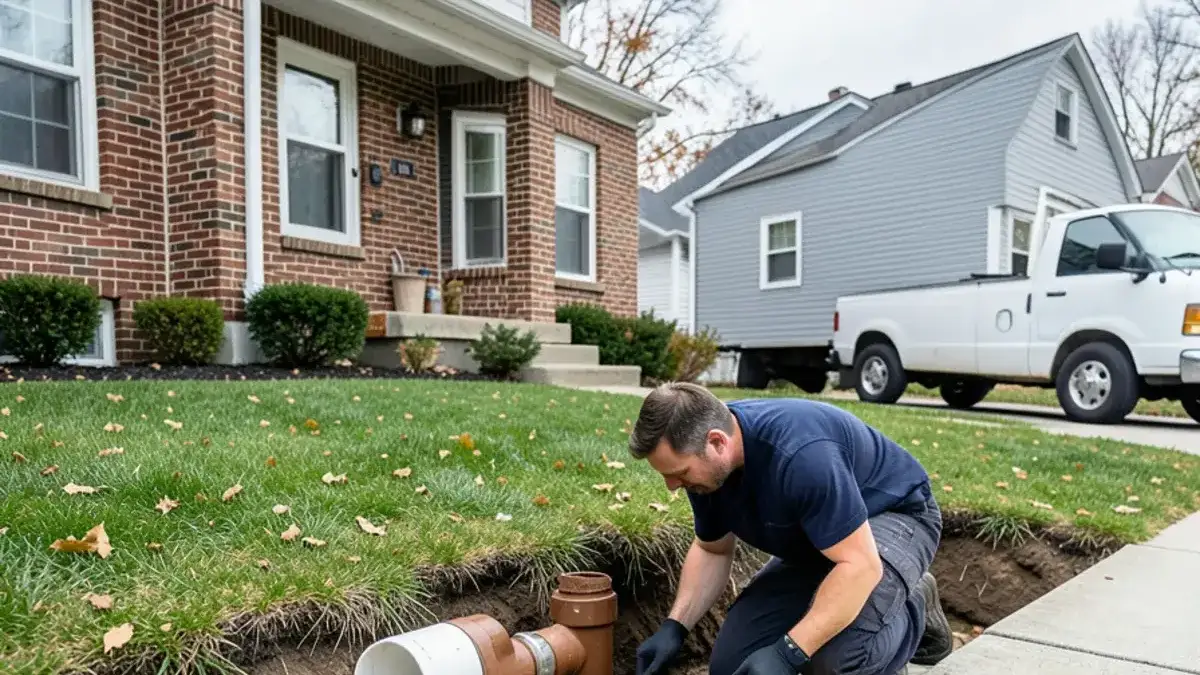
Around here the usual culprit is roots cracking the joints of older clay laterals, and the plumber finds that break on camera before anyone digs.
Signs of a broken sewer pipe under the yard
A broken sewer pipe rarely announces itself with one dramatic event. It shows up as a pattern. The basement floor drain backs up, or gets a dark ring around it. Toilets gurgle when the washer drains. The house smells like sewer after a heavy rain. A strip of lawn stays soggy, sinks a little, or grows greener than the rest. And the main line clogs again a few months after it was cleaned.
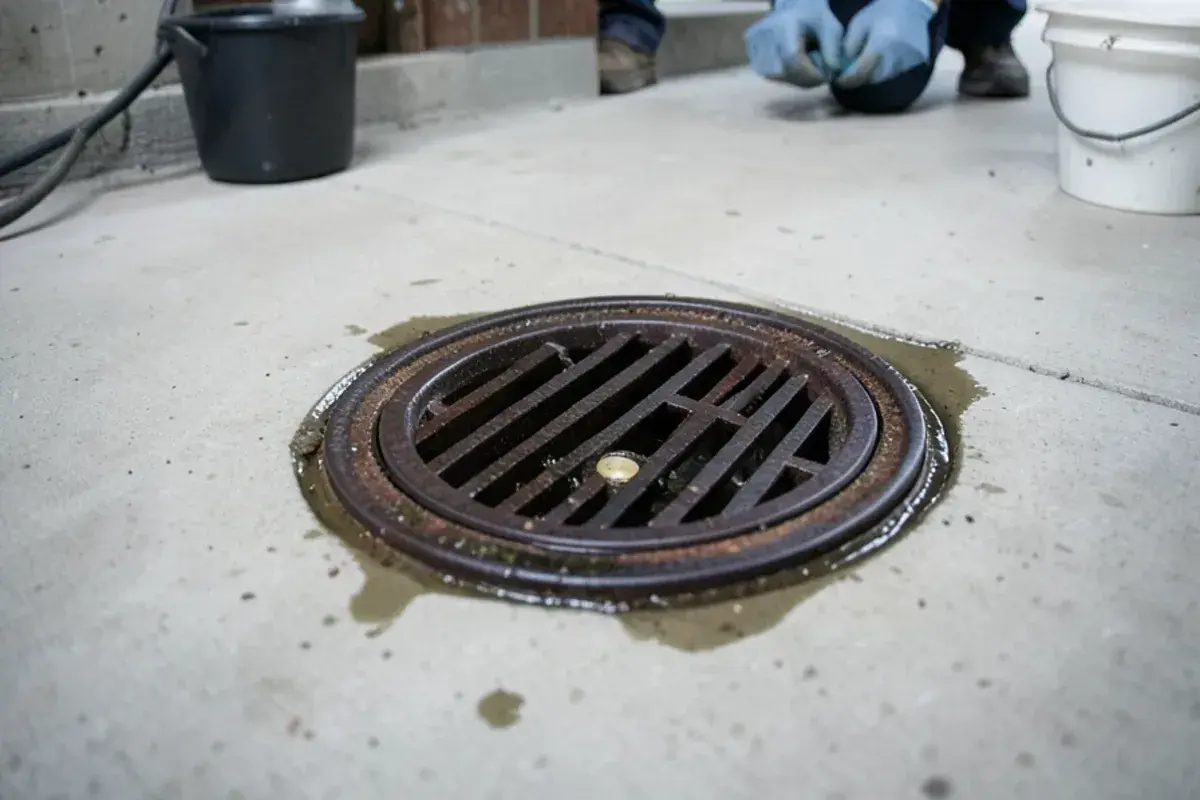
One of those signs alone may only be a clog. Two or more, especially a repeat backup, point to a defect in the lateral that cleaning can't fix.
Backups keep coming back? Call (207) 419-2600 about the lateral
- Your call goes to an independent local plumbing company that does the work.
Why sewer laterals fail in Macomb County
Most lateral failures here come down to the pipe's age and the ground around it.
Older homes commonly have vitrified clay laterals with joints every few feet. Tree roots find the moisture at those joints, slip in, and grow until they crack the bell. Clinton Township ran a pilot program to help owners of homes built in 1974 or earlier replace failed clay laterals, a sign of how widespread the problem is in that housing.
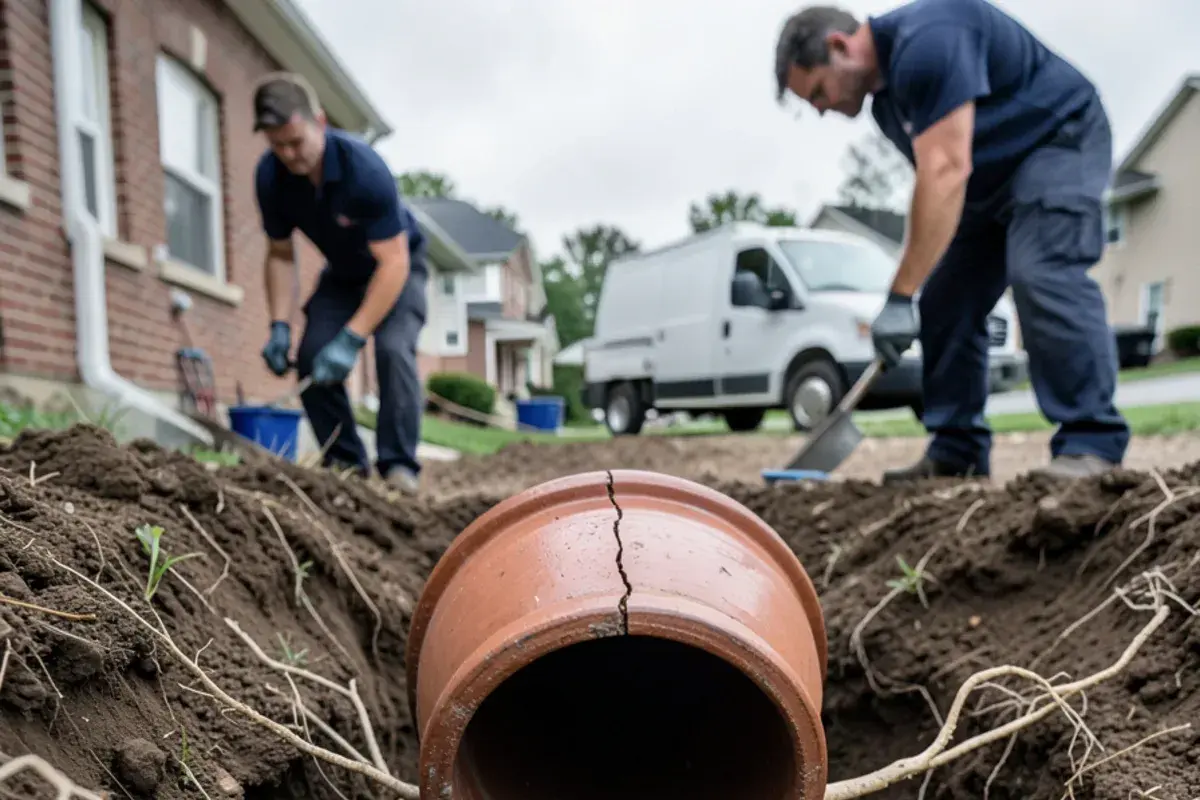
Cast iron is the other old material, usually under the basement floor and a few feet past the foundation. It corrodes from the inside, grows scale, and eventually splits along the bottom. Soil that settles after a house is built leaves low spots, called bellies, where the pipe holds water and solids. Michigan's freeze-thaw cycles move the ground near the surface, and that movement can push joints out of line. Heavy loads over a shallow pipe and older repairs made with mismatched fittings add to the list.
Spot repair, lining or more: choosing a sewer lateral repair
The plumber you're connected with repairs only what the footage shows has failed, and the rest of the lateral stays in the ground. A sewer lateral repair typically covers:
- clearing and filming the line, with each defect located and its depth estimated
- one excavation at the marked spot, or a sectional liner pulled in from a cleanout
- cutting out the failed section and joining new PVC to the old pipe with shielded couplings
- the permit, the MISS DIG ticket and the inspection before backfill
- a camera run after the repair to confirm the line flows
Driveway, sidewalk and landscaping restoration past rough grading is often quoted separately, so ask.
Cleaning on a schedule
Cutting roots or jetting is maintenance, not a repair. It's reasonable when the pipe is intact and you're planning a fix for later.
Spot repair by excavation
This is the standard spot repair for a sewer line: one hole, dug at the marked defect. The broken section is cut out and replaced with PVC, joined to the old pipe with shielded couplings. It corrects offsets and short bellies and puts you back on sound pipe.
Sectional lining
A short resin liner, pulled in from a cleanout and cured in place, seals a cracked or rooted joint without a hole. It needs a pipe that still holds its shape and a grade that's acceptable, because a liner follows the pipe it's in and can't lift a sag.
When a repair isn't enough
If the camera shows defects every few joints, patching one spot only moves the failure to the next. That's when sewer line replacement is the better spend.
How a sewer line repair in Macomb gets done
- The line is cleared if needed and filmed, and the defect is marked on the ground with its estimated depth. You see the footage and hear the choices, with the cost factors, before anything is dug.
- The permit is pulled, and utilities get at least three business days' notice through MISS DIG 811. Their marks don't cover private lines, so the sewer path is marked from the camera locate.
- The hole is dug at the mark, by hand close to any utility lines.
- The failed piece is cut out and new pipe goes in on firm bedding.
- The repair stays open until the inspector signs off.
- The trench is backfilled in layers and compacted, water is run through the line, the camera goes back in, and the lawn is rough-graded.
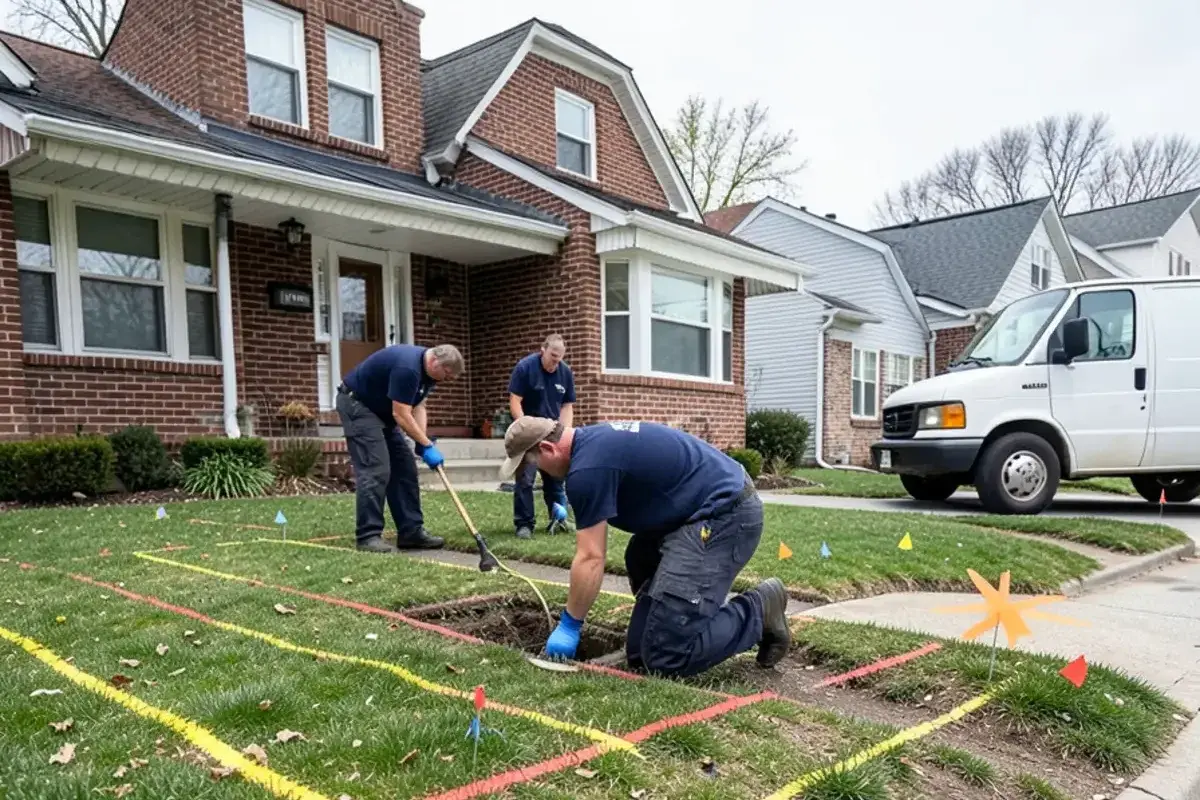
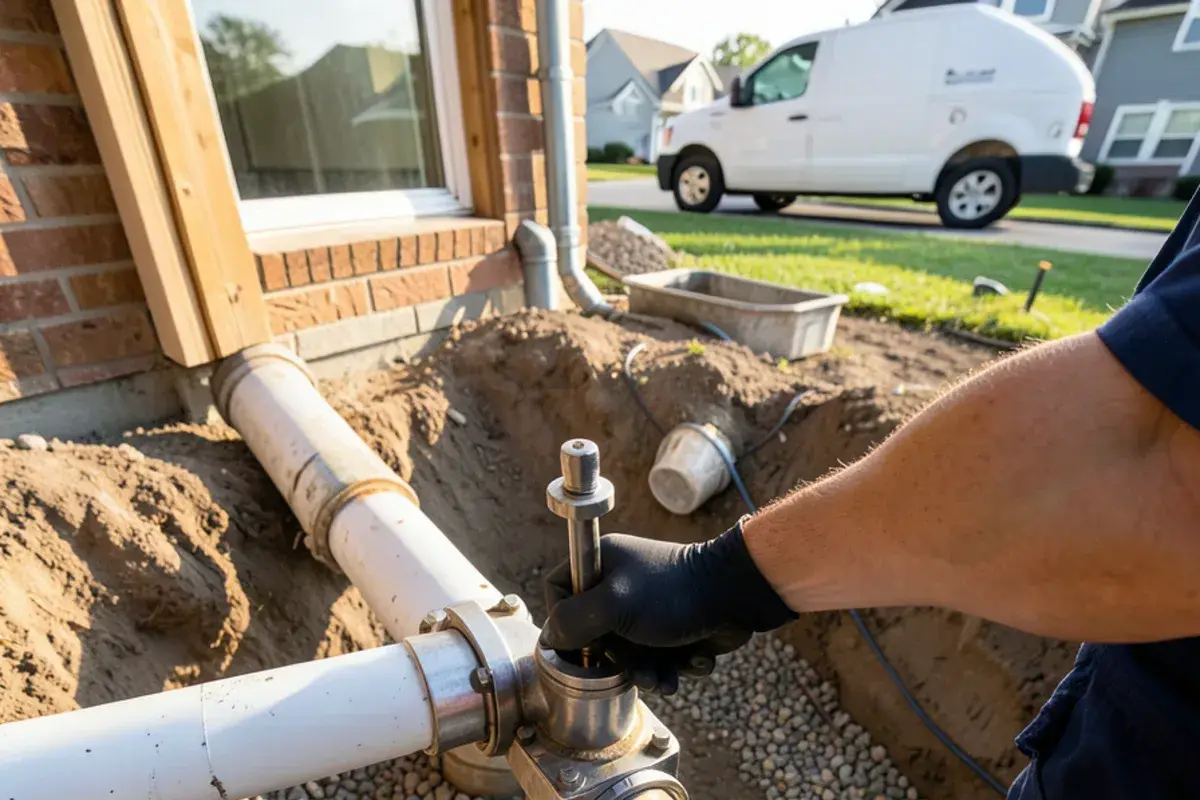
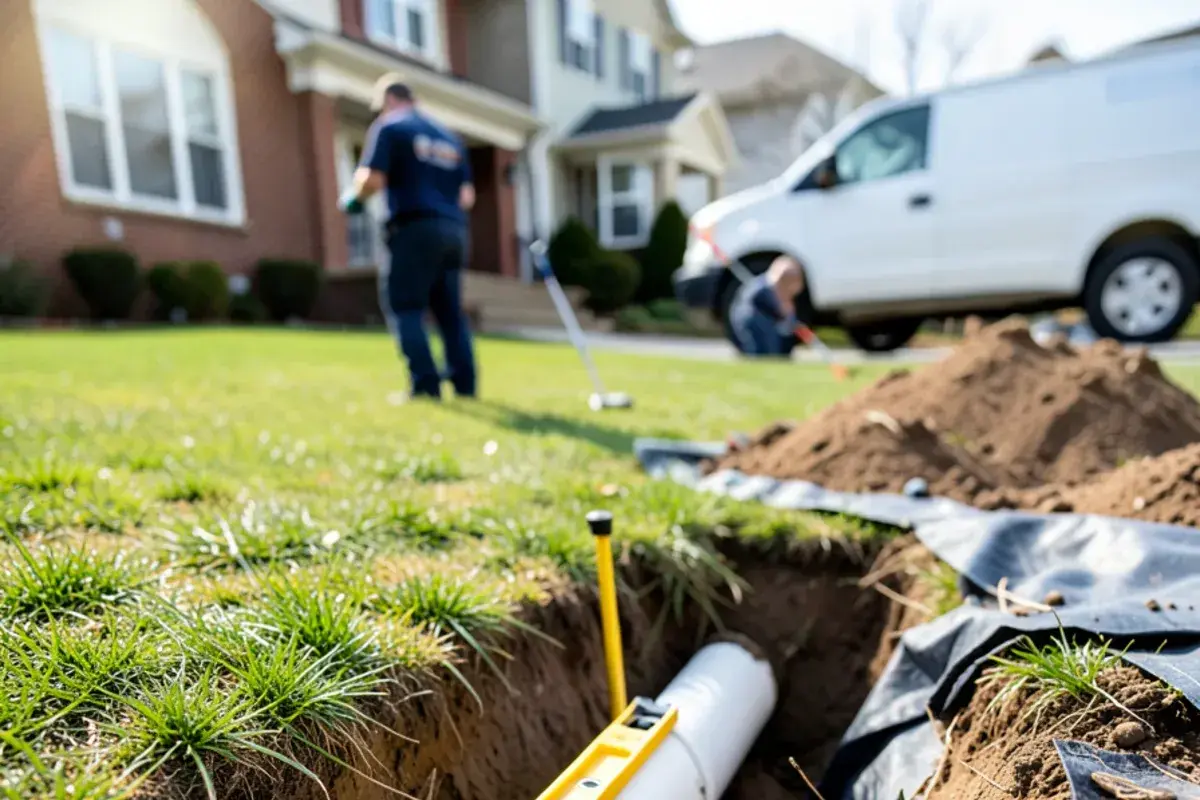
The permit and the MISS DIG notice add a few days before digging. Frozen ground in winter slows excavation, and groundwater in the hole adds pumping time.
Permits, ownership and backup claims
Replacing a section of sewer pipe is permitted work under LARA's rules, because it alters the piping. A licensed plumbing contractor pulls the permit, or a homeowner can for the single-family home they live in, and in Macomb Township the work can't be covered until it passes inspection. Ask for the contractor license number and check it on LARA's online lookup. In most Macomb County communities the homeowner is responsible for the lateral and the community maintains the main, but where one ends varies, so ask your water and sewer department. If you had a backup, report it first: Macomb Township and Mount Clemens both require a written claim within 45 days of discovery. Camera footage of a clear lateral up to the tap is useful evidence when the main was the cause, as our sewer camera inspection page explains.
What changes the cost of a sewer repair?
Depth is the biggest factor, followed by location. A shallow defect under the lawn is a smaller job than a deep one under a driveway, a mature tree or the sidewalk, and work in the public right-of-way may need its own permit. The number of defects, the pipe material at each end of the repair, equipment access to the yard, groundwater, and how much restoration is needed all count. Permits add an application fee plus item fees. Lining versus digging changes the mix of labor and material. Season counts too: frost in January means cutting through frozen ground, and spring groundwater can mean pumping the hole dry before the pipe can be set. A cast iron section under the basement floor adds concrete cutting and patching, and each change from clay or cast iron to PVC needs its own shielded coupling. You get those factors laid out against your footage before work begins.
Why call Plumbers in Macomb, MI about a sewer line repair?
A sewer repair is a big decision, and one number gets you started on it, the same number as every other plumbing problem. Plumbers in Macomb, MI is a referral service. Your call goes to an independent local plumber who covers your area, with no form to fill out first. Tell the plumber whether sewage is in the basement now and whether the line has been filmed, and ask how soon they can start. These pages explain how laterals fail, what moves the cost and which permits apply, so you can ask good questions: how deep the defect is, whether lining fits your pipe, and what restoration the quote includes.
After the repair: keeping the lateral clear
Keep grease and wipes out of the drains, and don't plant trees over the sewer path. A camera look a year or so after a root repair shows whether other joints are starting to take in roots. In Macomb Township, sump pump and footing drain water must stay out of the sanitary sewer by ordinance, which also keeps the lateral from being overloaded in storms. If backups have reached the basement before, a backwater valve is worth discussing, covered on our basement flooding prevention page. For root problems in particular, see tree roots in your sewer line, and for what to do the moment sewage appears, read sewage backup in the basement.
Sewer line repair: questions we hear
Is a second sewer backup in a year a sign the lateral needs repair?
Yes, usually. One backup can be a plain clog, but a repeat within months points to roots, a crack, an offset or a belly that cleaning can't fix. Get the line filmed after it's cleared so the footage shows the defect, its footage from the cleanout and its depth before anyone prices a repair.
Is a permit required to repair a sewer line in Michigan?
Yes. The only work Michigan lets you skip a permit for is fixing the working parts of a faucet or valve or clearing a stoppage, with no change to the piping. Cutting out a broken section and installing new pipe changes the piping, so the repair is permitted and inspected.
Can roots in a clay sewer pipe be removed without digging?
Yes, for a while. The roots inside the pipe can be cut with a cable or a jetter, but they grow back through the same joint. A short liner installed from a cleanout can seal a rooted joint without a hole when the pipe is still round and the grade is good. If the joint is broken or sagging, digging is the lasting fix.
Does homeowners insurance cover a sewer backup?
No, not under a standard policy in most cases. Michigan's Department of Insurance and Financial Services says backup damage typically needs a sewer backup endorsement. The broken pipe itself is a separate matter: some insurers sell a service line coverage rider for the lateral. Check both with your agent before the repair starts.
Can a sewer lateral be repaired in the middle of a Michigan winter?
Yes. Excavation goes on through the winter, but frost adds work, since the top layer of soil has to be broken before the digging gets easy. Lawn restoration usually waits for spring. If a backup is urgent, the line can be cleared and filmed now and the repair scheduled once the permit and MISS DIG ticket are in place.