Signs it's time to repipe instead of patching
One leak is a repair. A house that keeps finding new ones has a piping problem. These are the signs that point toward a repipe:
- low water pressure from old pipes that gets worse when two fixtures run at once
- brown or rusty water after the water has sat overnight or the main has been off
- a second or third pinhole leak in the same copper within a year or two
- galvanized joints weeping one after another
- gray polybutylene supply pipe, which was installed in many homes from the late 1970s to the mid-1990s
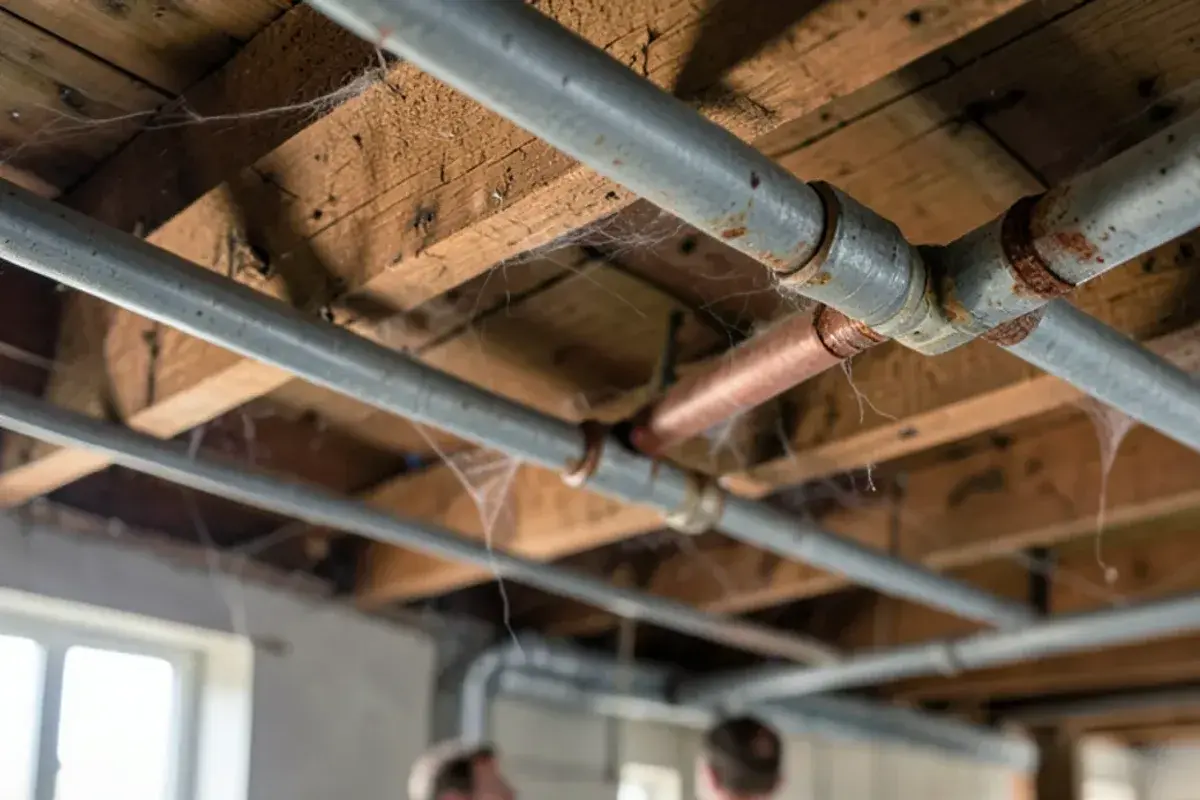
- a system that's more patches and mixed materials than original pipe
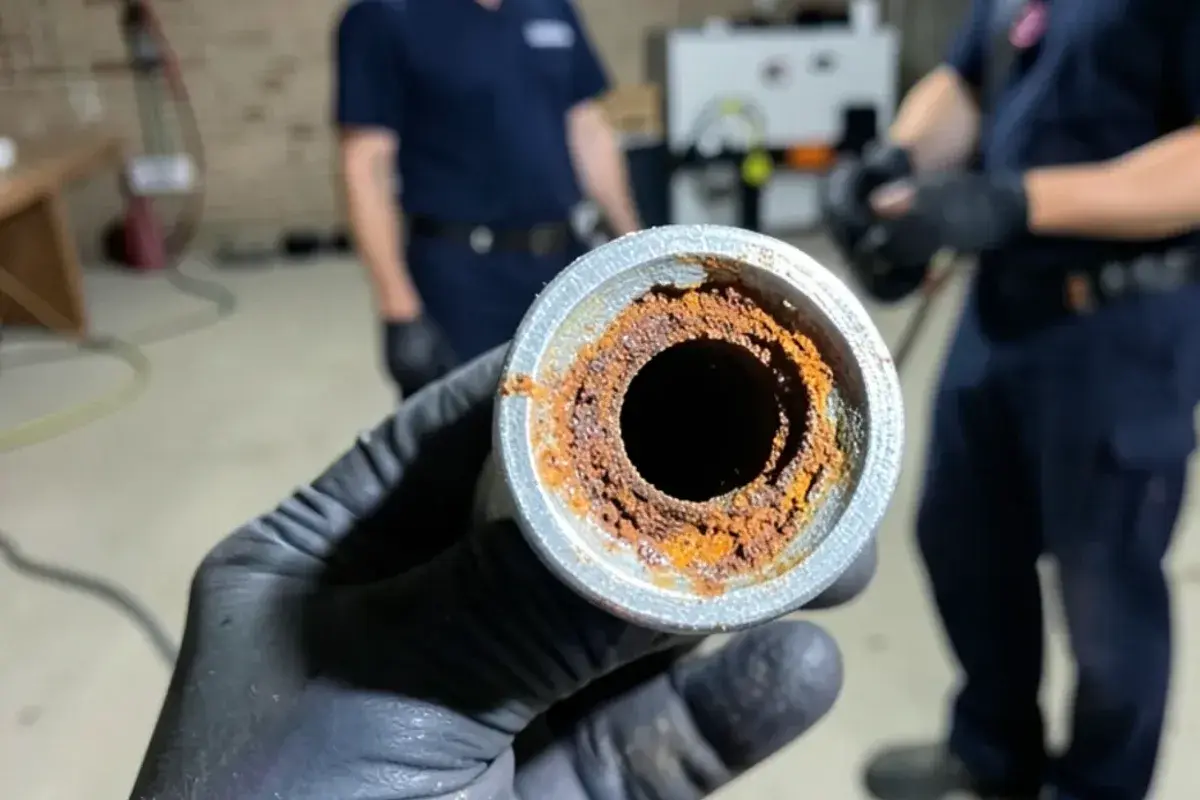
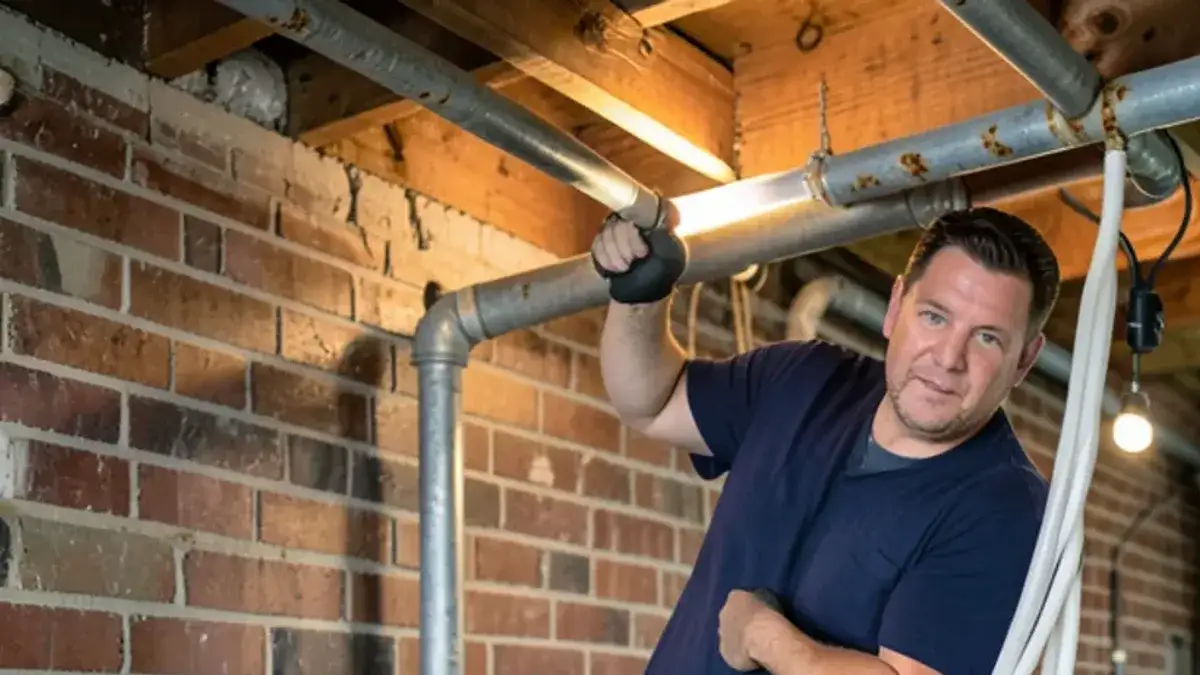
House age is the biggest predictor. Galvanized steel was common supply pipe in homes built before 1960, and it corrodes from the inside until the bore is a fraction of its original size. In Mount Clemens, about 62 percent of homes date from before 1960, and a quarter of Utica homes do too. Utica's city program replaces lead, galvanized or unknown service lines it has identified, but the pipes inside the house are the owner's to deal with. When weak flow is the only symptom, rule out a valve or regulator problem first with the whole-house low water pressure checklist.
Ready to stop patching old pipes?
- Your call goes to an independent local plumbing company that does the work.
PEX repipe or copper repipe: how the materials compare
| PEX | Copper | |
|---|---|---|
| How it runs | Flexible coils that bend around corners and fish through walls | Rigid lengths with a fitting at each turn |
| Wall openings | Fewer and smaller | More, and larger |
| Joints | Fewer, made with expansion or crimp fittings | Many, soldered or pressed |
| Freezing | More forgiving, though it can still split | Splits more readily when frozen |
| Limits | Must stay out of sunlight and clear of a gas water heater's flue | Can pit over time in some water conditions |
| Material cost | Lower | Higher |
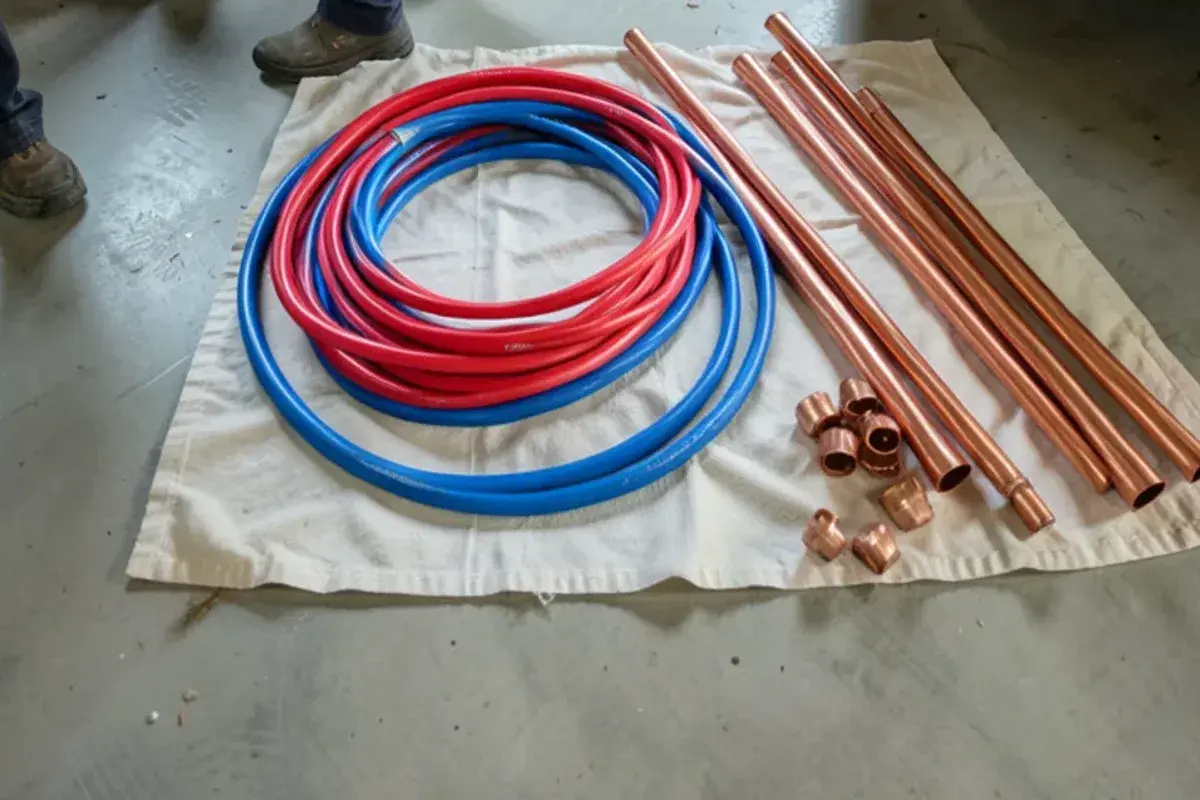
PEX comes in two common types for repipes: PEX-A, joined with expansion fittings, and PEX-B, joined with crimp or clamp rings. Copper for supply lines is usually Type L or the thinner Type M. Both materials meet Michigan's plumbing codes. For most whole house repipes in occupied homes, PEX is the practical pick because it disturbs fewer walls; copper still makes sense for exposed runs or for owners who prefer it.
What a whole house repipe includes
A whole house repipe replaces the supply side of the plumbing, the hot and cold lines that carry water under pressure, from the main shutoff where the service enters the basement out to every fixture. Drains, vents and the sewer stay as they are. A complete written scope usually lists:
- new hot and cold lines from the main shutoff to each sink, tub, shower, toilet and appliance
- a new main valve and a shutoff stop at every fixture
- reconnection of the water heater, washer, dishwasher, ice maker and outdoor faucets
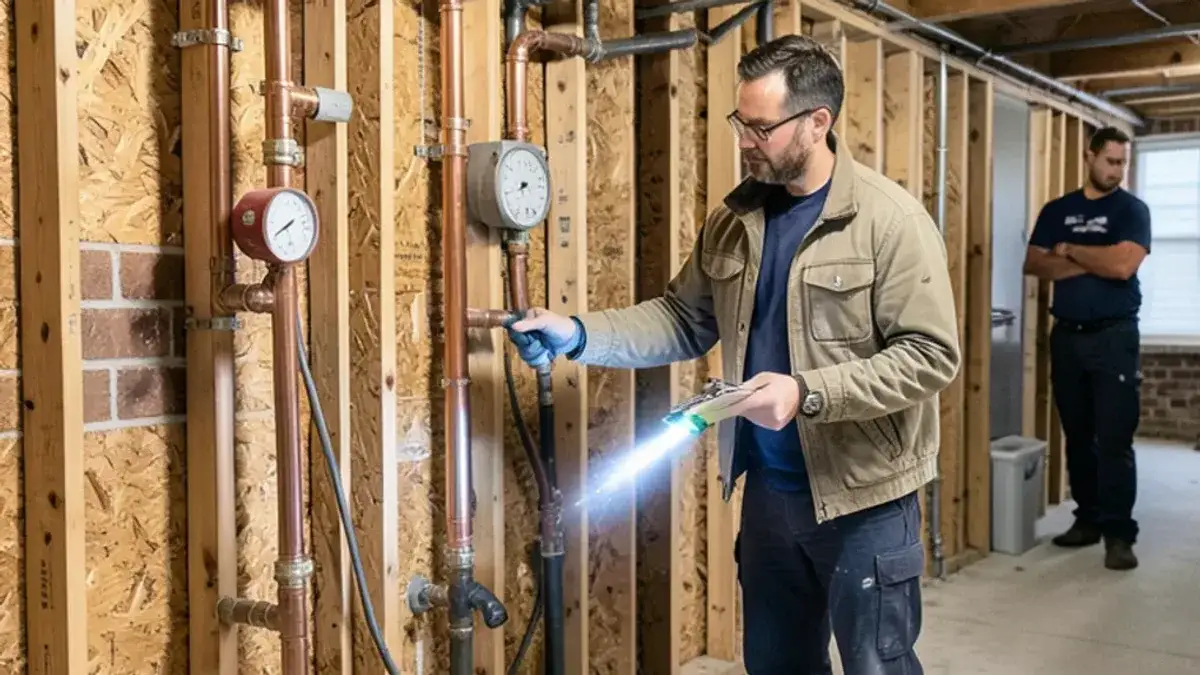
- the permit, a pressure test and the inspection before any wall is closed
- removal of exposed old pipe, plus the number of wall openings and who patches them
Get those items on paper. Two quotes that look far apart often differ on that last line.
Planning the layout: sizing, manifolds and shutoffs
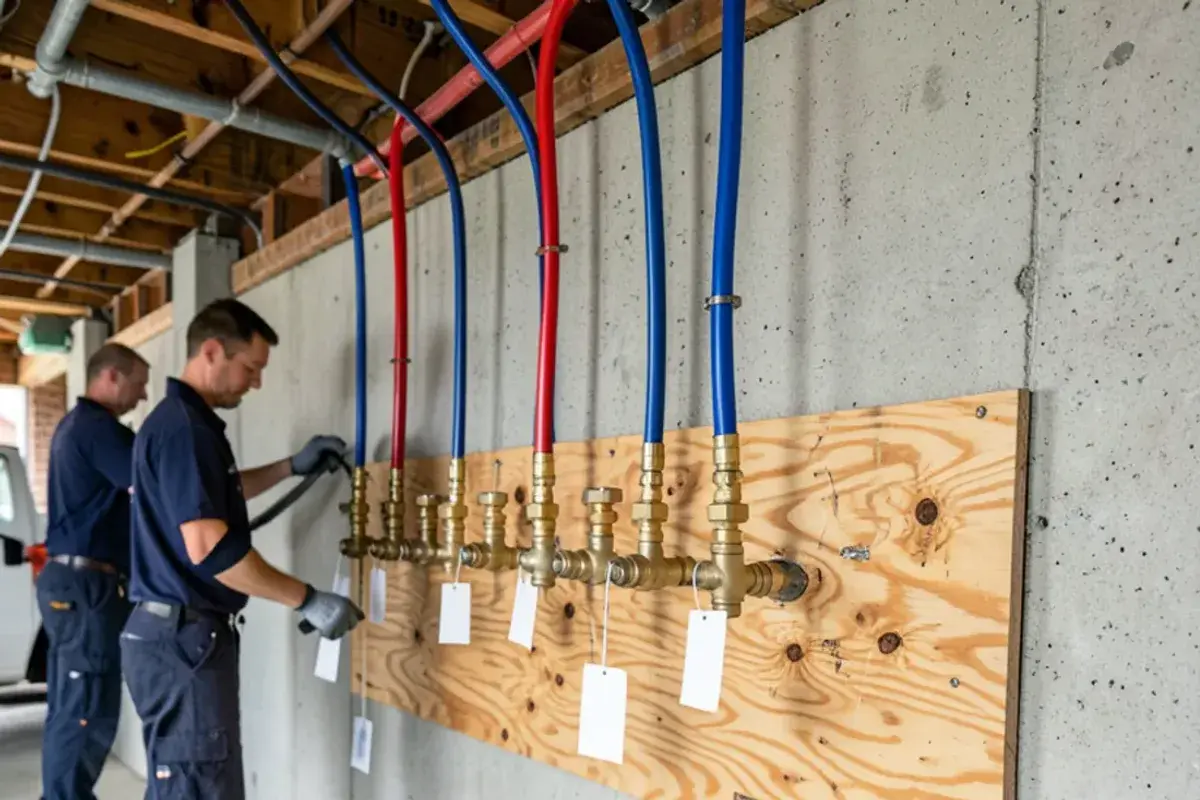
A repipe is the one chance to fix how the system is laid out, so the plan covers more than pipe. A trunk-and-branch layout uses less tubing. A home-run manifold gives every fixture its own line and a shutoff in one spot, which makes future repairs easier. Pipe sizes are set from the number of fixtures, the length of the runs and the incoming pressure, so a far-end shower doesn't starve when the dishwasher runs.
Static pressure gets checked too. High pressure calls for a pressure-reducing valve, and that valve or a check valve can require a thermal expansion tank at the water heater. If the old metal pipe was part of the home's electrical grounding, an electrician should confirm grounding and bonding once plastic replaces it.
Do you need a permit to repipe a house in Michigan?
Yes. Under LARA's rule, plumbing work can't begin until the enforcing agency issues the permit, and new supply piping is outside the small exemption for faucet and valve internals and cleared stoppages.
- The applicant is a licensed plumbing contractor working through its master plumber, or an owner doing the work personally in the single-family house they occupy or are about to occupy.
- Macomb Township's application prices residential water distribution piping as its own line, added to the application fee.
- The inspector has to see the new pipe before drywall covers it.
- A Macomb Township permit expires if work hasn't started within six months.
Houses with one or two units are built under the Michigan Residential Code, and Sterling Heights, Shelby Township and Clinton Township issue their own permits. Before signing, look up the contractor's license on LARA's verification site; the Michigan plumbing permits post walks through the paperwork.
What happens to your walls during a whole house repipe
- Walk-through and route plan. The plumber maps every fixture, plans which runs use the basement and where lines climb, and marks each opening.
- Permit and prep. The permit is issued, and floors and furniture in the work rooms get covered.
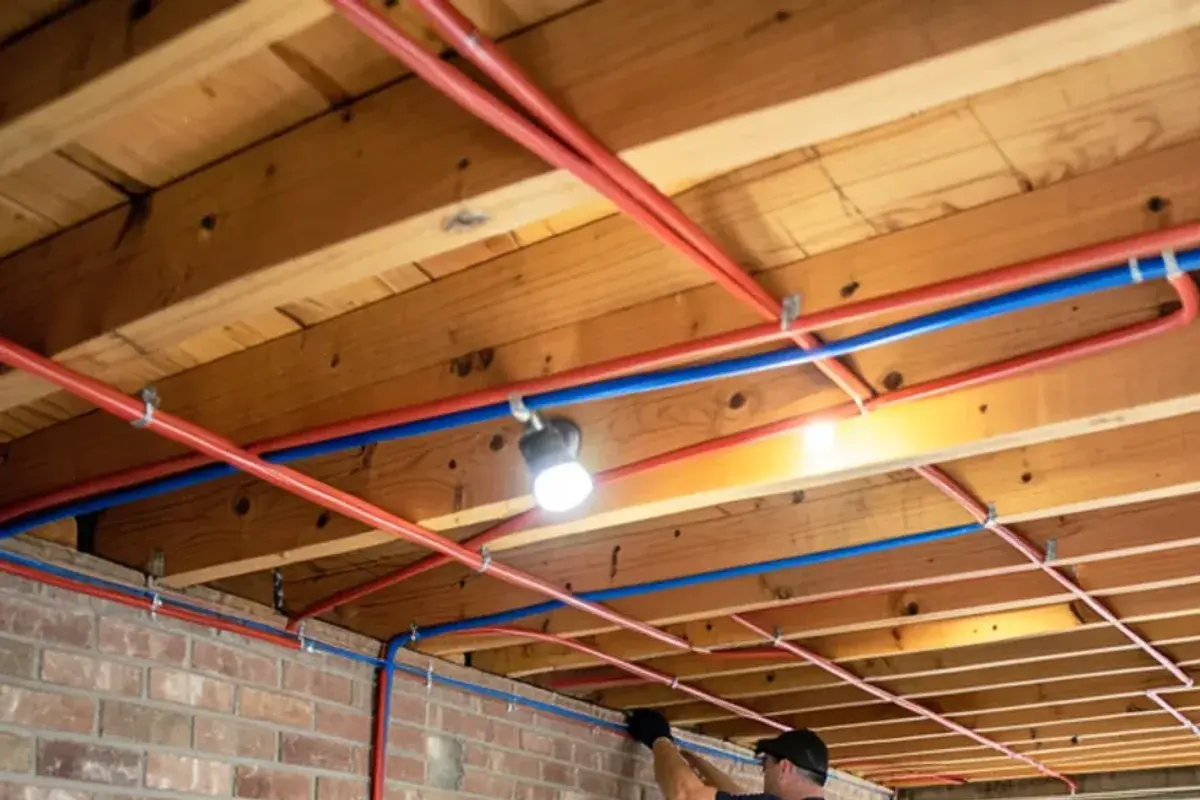
- Basement first. With an unfinished basement, the main lines run along open joists, so much of the new pipe goes in without opening a wall. Drop-ceiling tiles lift out; a drywall ceiling needs openings, and a slab house routes through the attic or ceilings instead.
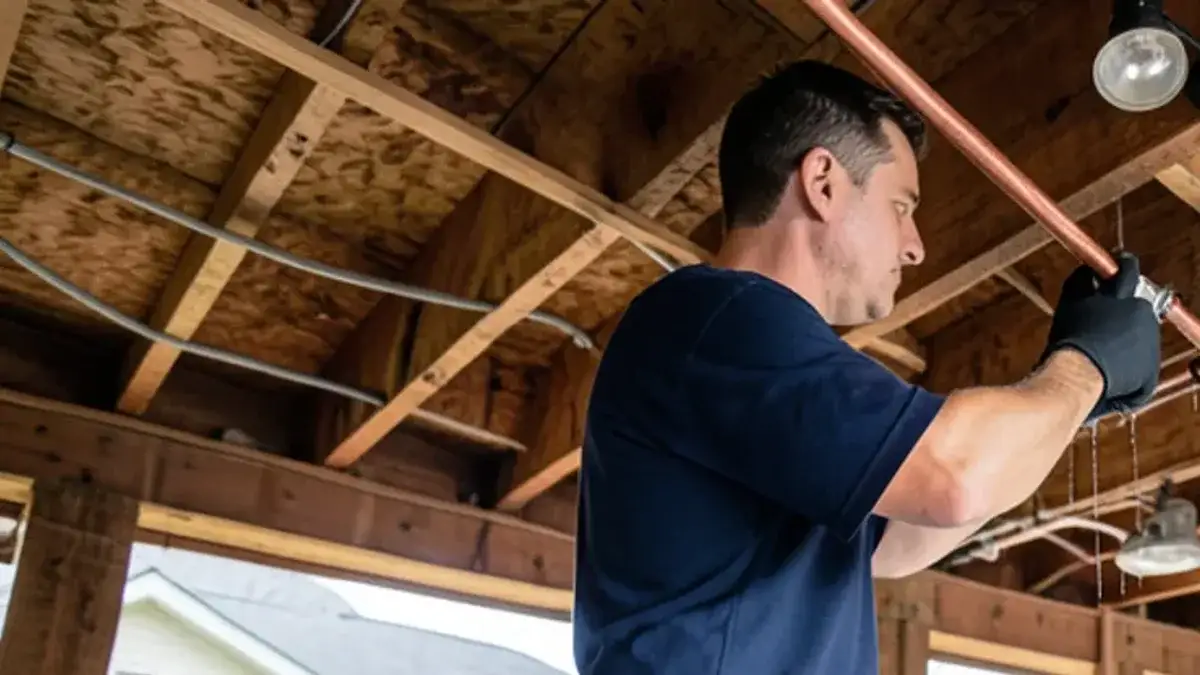
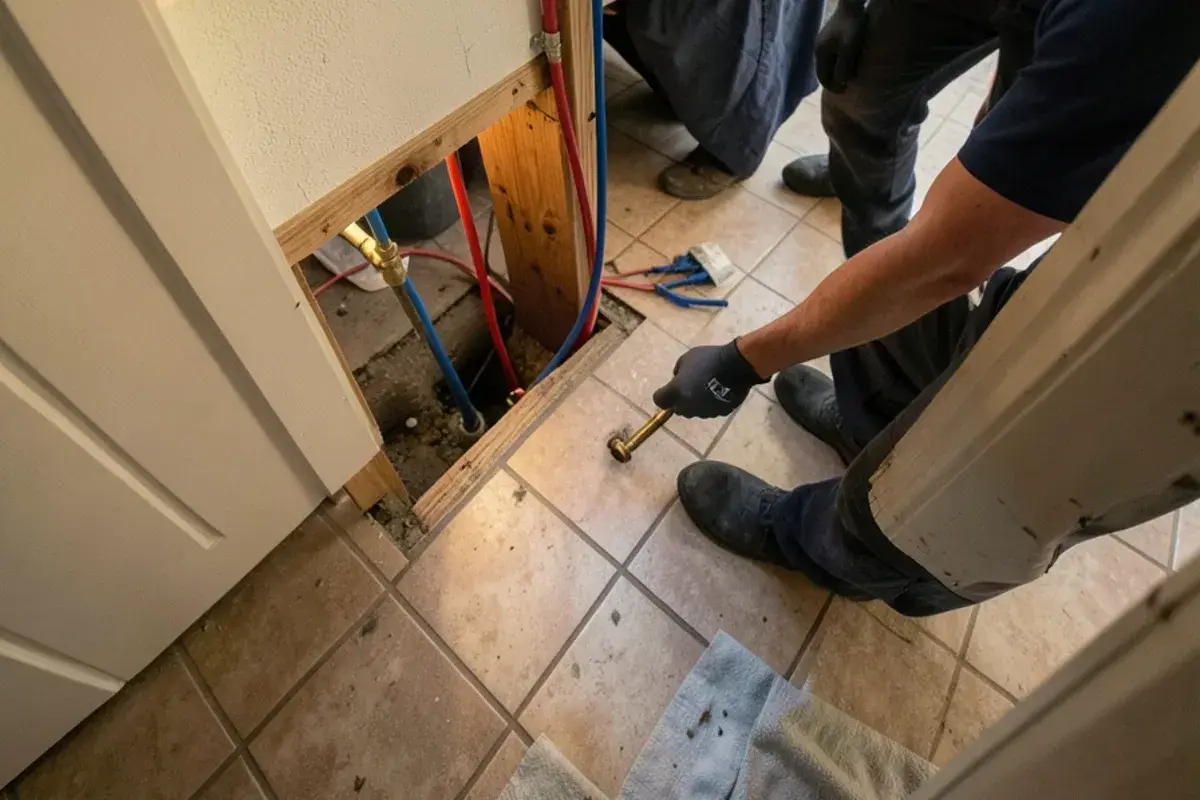
- Small openings upstairs. Openings go where a line has to reach a fixture or change direction, usually behind a vanity, inside a closet or under a sink, and PEX is fished through the cavities between them.
- Cutover and pressure test. New lines are connected fixture by fixture, with water back on in the evening where the layout allows, then the whole system is pressure-tested.
- Inspection and close-up. The inspector sees the piping before any opening is closed. Old pipe is removed where it's exposed and abandoned in place inside walls.
Before
After
Manufacturer warranties and caring for new pipe
PEX makers offer limited warranties that generally depend on using their matching fittings and following their installation instructions, so keep the paperwork (the brand is printed along the tubing). Copper tube and fittings carry the manufacturers' material warranties. Neither type of manufacturer warranty covers workmanship. Afterward, keep PEX out of direct sunlight, don't hang anything from the lines, insulate runs near exterior walls, and label the new shutoffs. If a leak ever shows up later, leak detection and a targeted pipe repair handle it without reopening the whole house.
Repiping cost factors in Macomb County homes
The house sets most of the labor, so two repipes in the same county can land far apart. A 1950s ranch in Eastpointe or St. Clair Shores with an open basement ceiling is a different job from a two-story colonial with a finished basement, where every run to the second floor needs a path. Access and the number of openings often move the total as much as the pipe itself. The variables a written quote should reflect:
- the size of the house and the number of fixtures
- one story or two, and whether the basement ceiling is open or finished
- PEX or copper, and manifold or trunk-and-branch layout
- how many wall openings are needed, and who patches them
- add-ons: main valve, pressure-reducing valve, expansion tank, outdoor faucets, water heater connections
- permit and inspection
- whether the service line from the street also needs replacing, which is a main water line repair job
- working around a family living in the house versus an empty one
Why call Plumbers in Macomb, MI about a repipe?
A repipe usually starts with a small symptom: brown water, a third pinhole leak, a fading shower. The same number handles that call and any other plumbing trouble at home. When you call (207) 419-2600, you're connected with an independent local plumber who works in your area, and the walk-through, the quote and the schedule come from that plumber. This page is here so you go into that conversation knowing how PEX and copper differ, what the permit covers and which lines belong in a written scope. Nobody asks you to fill out a form first. Describe the pipe you see in the basement and what the water is doing.
Repiping: questions we hear
How long does it take to repipe a house?
A typical single-family repipe takes several working days, plus time to schedule the inspection before walls are closed. A ranch with an open basement ceiling goes faster than a two-story with a finished basement. The plumber should give you the plan and expected schedule before work starts.
Is PEX or copper better for repiping a Michigan home?
No, neither wins in every house. Both meet code. PEX usually means fewer wall openings and fewer joints, and it handles a freeze better than copper, though it can still split. Copper has the longer track record and suits exposed runs. Your layout, budget and preference decide it.
Can we stay in the house while it's being repiped?
Yes, usually. Water is off during working hours while lines are cut over, and the work can usually be planned so you have water back each evening wherever the layout allows. Expect some noise, dust barriers and moved furniture in the rooms being worked on.
Will repiping fix low water pressure?
Yes, when the cause is rust-choked galvanized pipe, usually by a lot. If the cause is a failing pressure-reducing valve, a partly closed main valve or the service line from the street, new interior pipe alone won't fix it, so the plumber should test for those first.
Does a whole house repipe replace the drain lines too?
No. A repipe replaces the pressurized supply lines, hot and cold, from the main shutoff to the fixtures. Drains, vents and the sewer lateral are separate systems. In a pre-1960 Macomb County home with cast-iron or galvanized drains, ask for a camera look at the main drain while walls are open, since pairing the jobs can save a second round of openings.