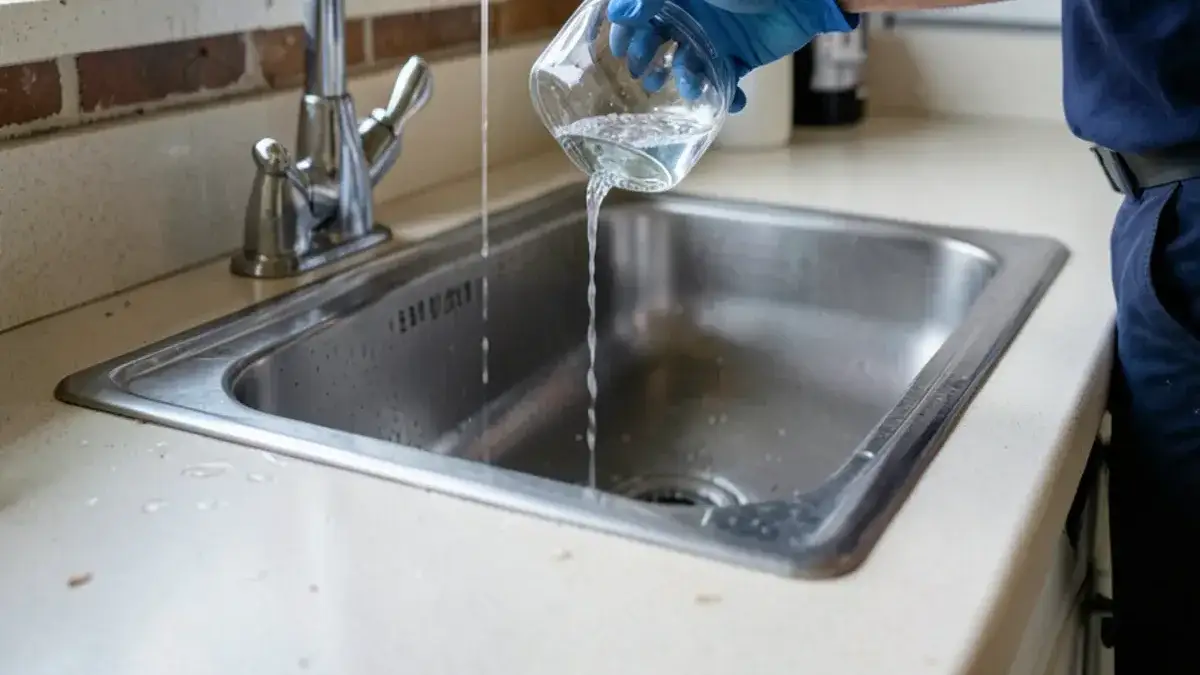

Is the leak on the line under your yard?
The water service line is the pipe that runs underground from the curb stop near the street to the main shutoff in your basement. When it fails, the clues usually show up outside or on the bill before you see anything in the house:
- A soggy or sunken strip of lawn between the street and the house that stays wet in dry weather
- Water bubbling up around the curb box
- A water bill that jumps with no change in use and no drips inside
- A sudden drop in pressure at every tap
- Water seeping in where the pipe comes through the basement wall
- No water at all after several days well below freezing
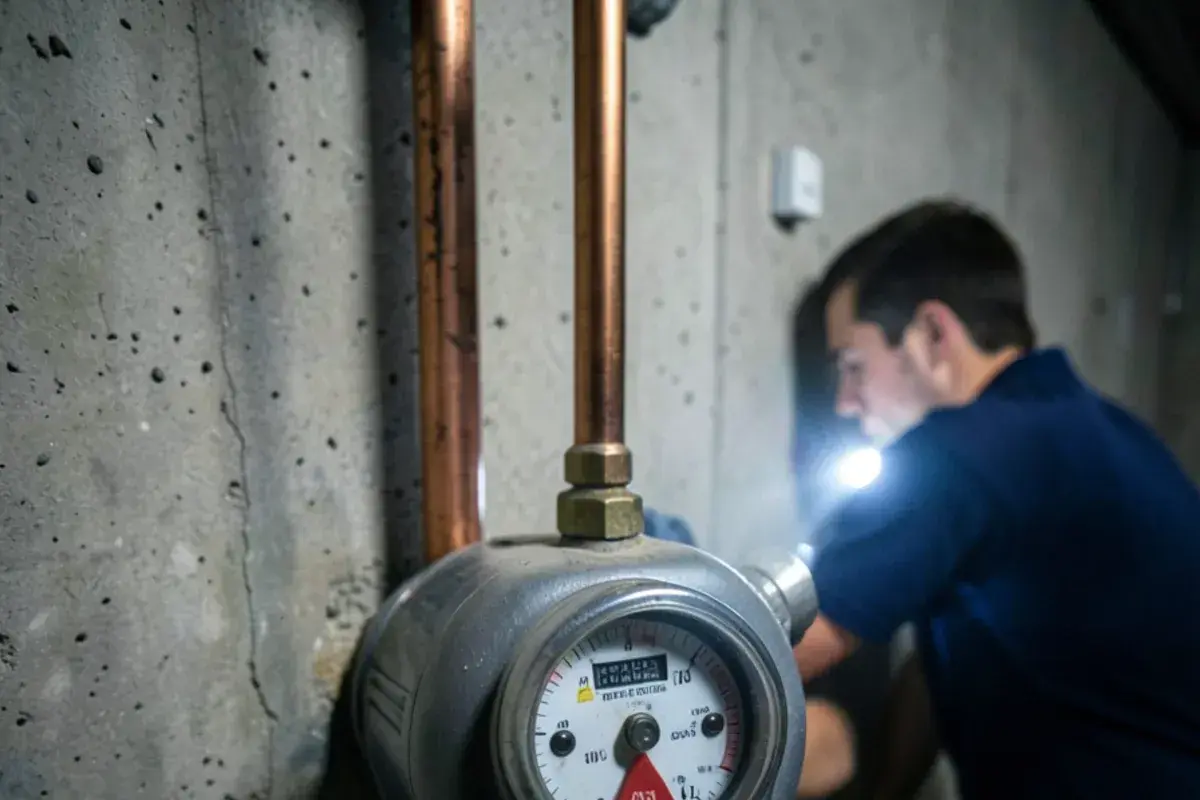
The quickest home check is the meter. Shut off every fixture, then look at the small low-flow dial. If it moves, water is leaving the system somewhere. Close the main shutoff and look again. A dial that keeps moving can point to the line on the street side of the meter, depending on where your meter sits. If pressure is your main complaint, our guide on low water pressure in the whole house covers the other suspects.
Think the leak is between the street and your house?
- Your call goes to an independent local plumbing company that does the work.
Why water service lines fail in Macomb County
Age and material come first. Older galvanized steel lines rust from the inside until they leak or choke the flow. Copper lasts much longer but can pit. Early plastic lines can fail at joints and fittings.
Frost is the Michigan factor. Clinton Township requires water service pipe to sit at least 5 feet below grade, but older or disturbed lines can be shallower in spots, especially under driveways, near garages, or where the grade was cut down after the line went in. Those spots freeze first in a long cold snap.
Ground movement adds the rest. Heavy trucks on a driveway, tree roots tightening around the pipe, a fence post or sprinkler install that nicked it, or settling after nearby digging can all crack a line that was otherwise sound.
What main water line repair includes
Main water line repair covers the private part of the water service: the buried pipe from the curb stop to the wall entry, the main shutoff and the connection at the meter. Mains in the street, and in most systems the curb stop itself, belong to the water department. The work runs from finding the leak to closing the ground over it. A typical job includes:
- confirming the leak with a meter test and tracing the line's route
- identifying the pipe material where it enters the house
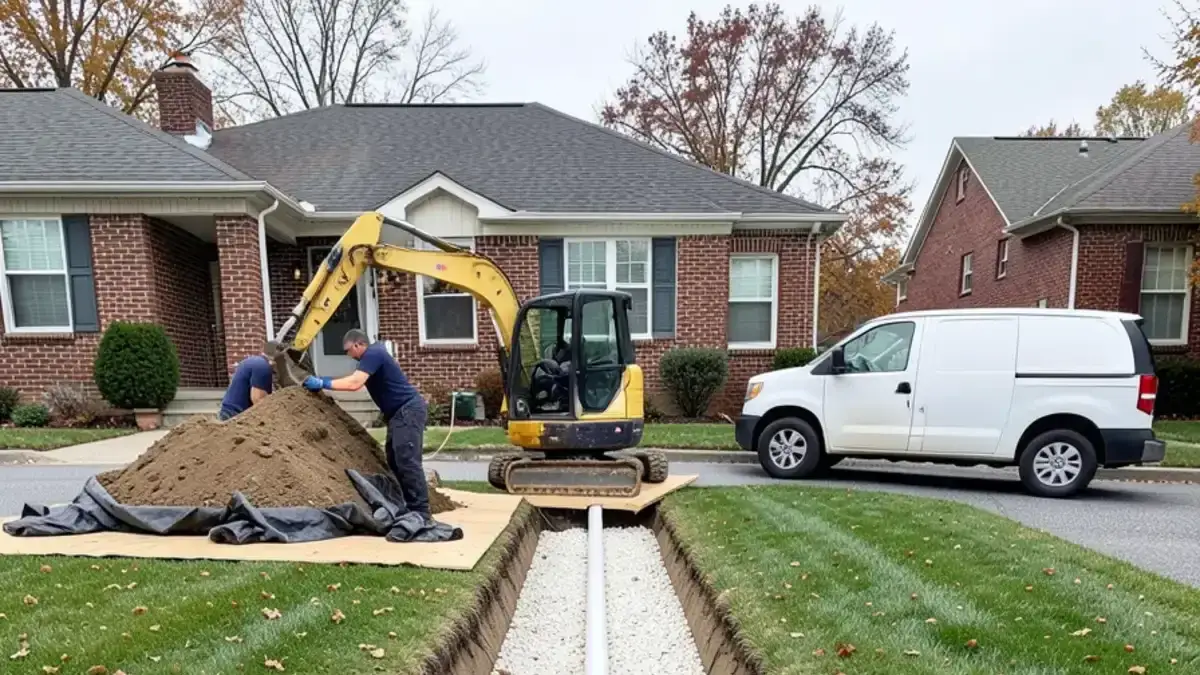
- excavating at the leak, or at each end of a trenchless pull
- splicing in new pipe, or replacing the line with copper or approved plastic
- pressure testing and flushing before backfill and the agreed restoration
Thawing a frozen service and replacing a failing main shutoff valve fall under the same service. Sod, concrete and landscaping are often restored by other trades, so ask what's included.
Repair, replace or go trenchless
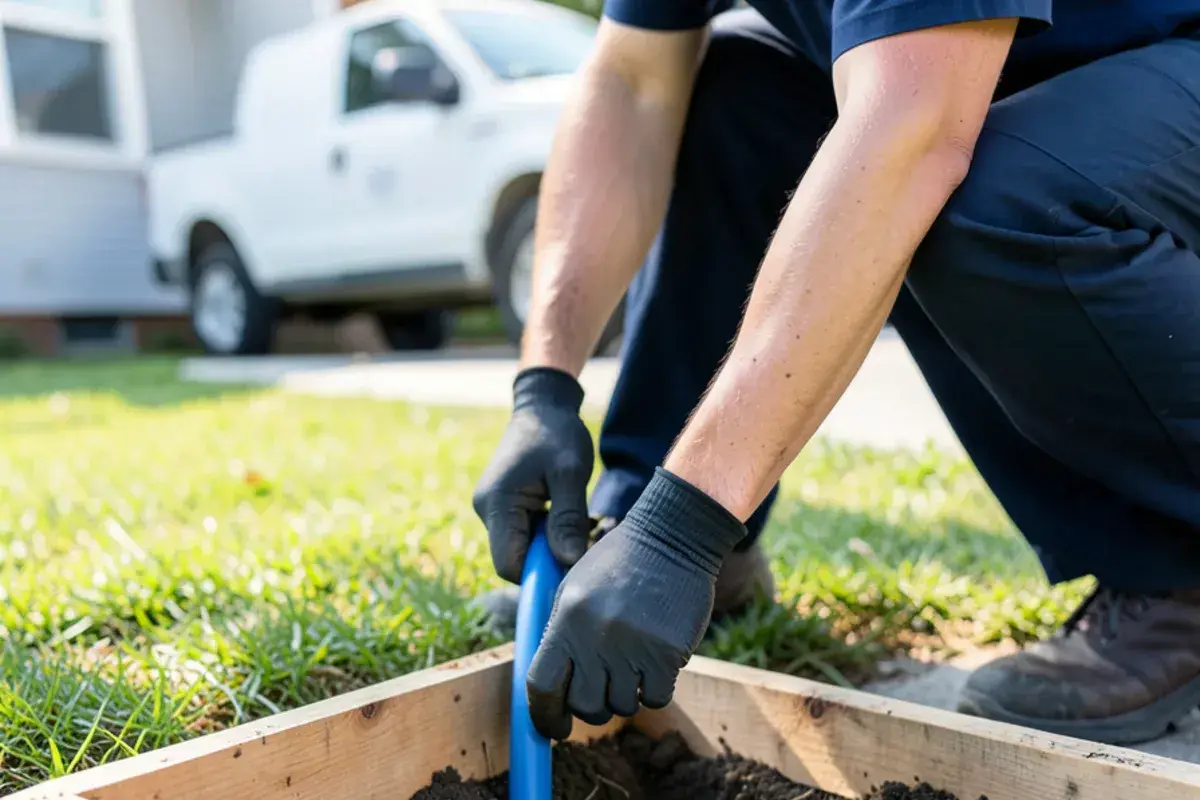
A spot repair fixes one leak by digging at that point and splicing in new pipe. It makes sense when the rest of the line is sound. Full water line replacement by open trench lays new copper or approved plastic pipe at proper depth, with the most disturbance to the lawn. Trenchless replacement pulls new pipe through a bored path or the old pipe's route between two pits, which spares the lawn and driveway when soil and obstructions allow. If your house pipes are also failing, repiping can be planned with it.
Who owns which part of the line, and what is a curb stop?
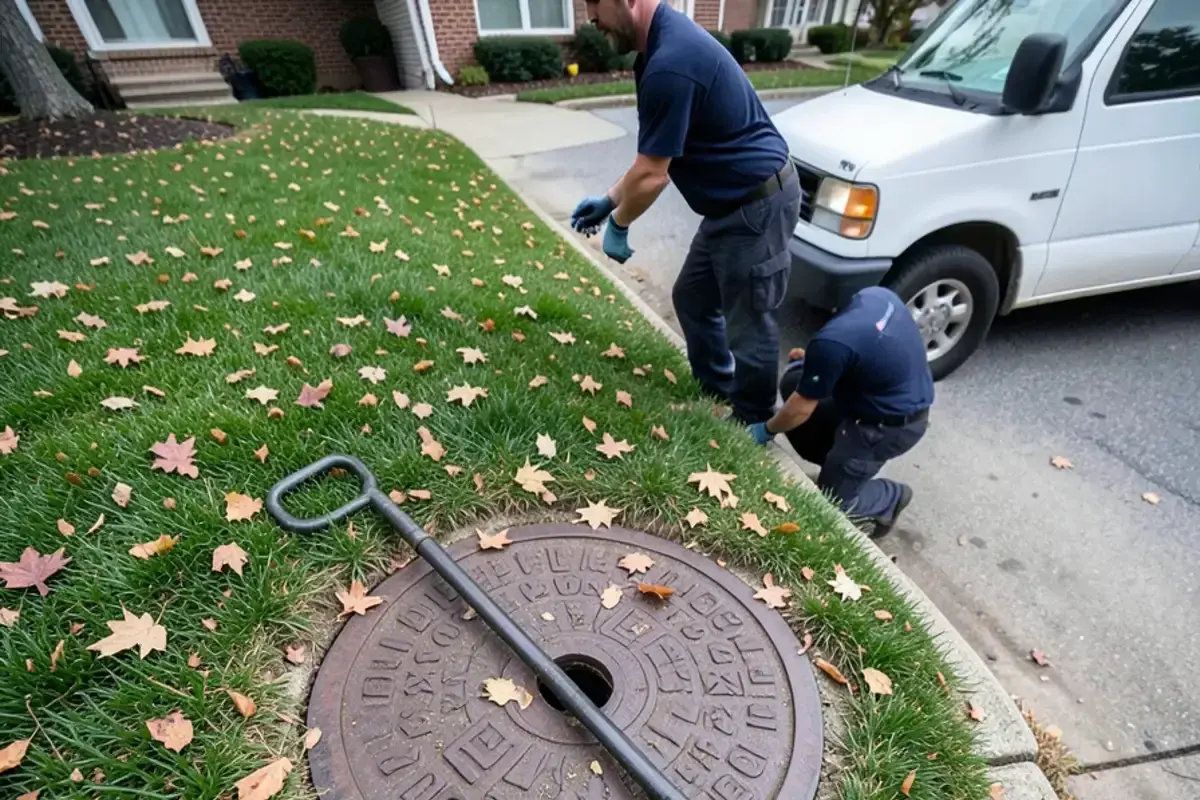
The curb stop is a buried valve near the property line, reached through a small round cover called the curb box. In many systems the water department owns the main in the street and the line up to the curb stop, and the property owner owns the line from the curb stop into the house. Mount Clemens, for one, spells out exactly that split. Your own department's rules decide it, so call them before anyone digs on the street side.
That split matters for cost and for speed. A leak on the department's side is theirs to fix. A leak on yours is a private repair, usually under a permit.
Permits, MISS DIG and licensing for service line work
Michigan's permit rule applies here: no plumbing work starts before the enforcing agency issues the permit, and splicing or replacing a service line alters the piping, so the narrow faucet-and-valve exemption doesn't reach it. LARA allows water service permits to be issued to someone other than a licensed contractor in some cases, but local requirements apply, so ask your township or city building department first. Local codes set the details; Clinton Township's requires water service pipe at least 5 feet below grade and 10 feet from the sewer. Digging also needs MISS DIG 811 notice at least three business days ahead. For the plumbing itself, get the contractor's license number and look it up on LARA's verification site.
Lead service line replacement in Michigan
Michigan requires every public water system to replace all lead service lines, and galvanized lines that were ever connected to lead, at the system's own expense within 20 years starting in 2021. A line counts as lead if any part of it is lead, and partial replacement is banned. If your line might be lead, call your water supplier before paying for private work. They must keep an inventory and notify owners of lead or unknown lines.
Macomb Township reports no lead service lines at all. Mount Clemens reported 213 confirmed lead lines and over 2,000 of unknown material as of late 2025, so the answer depends on where you live. Our post on checking for lead service lines in Michigan explains how to look at your own pipe.
How main water line repair works, step by step
- You call and describe what you're seeing. If water is running into the house, close the main first.
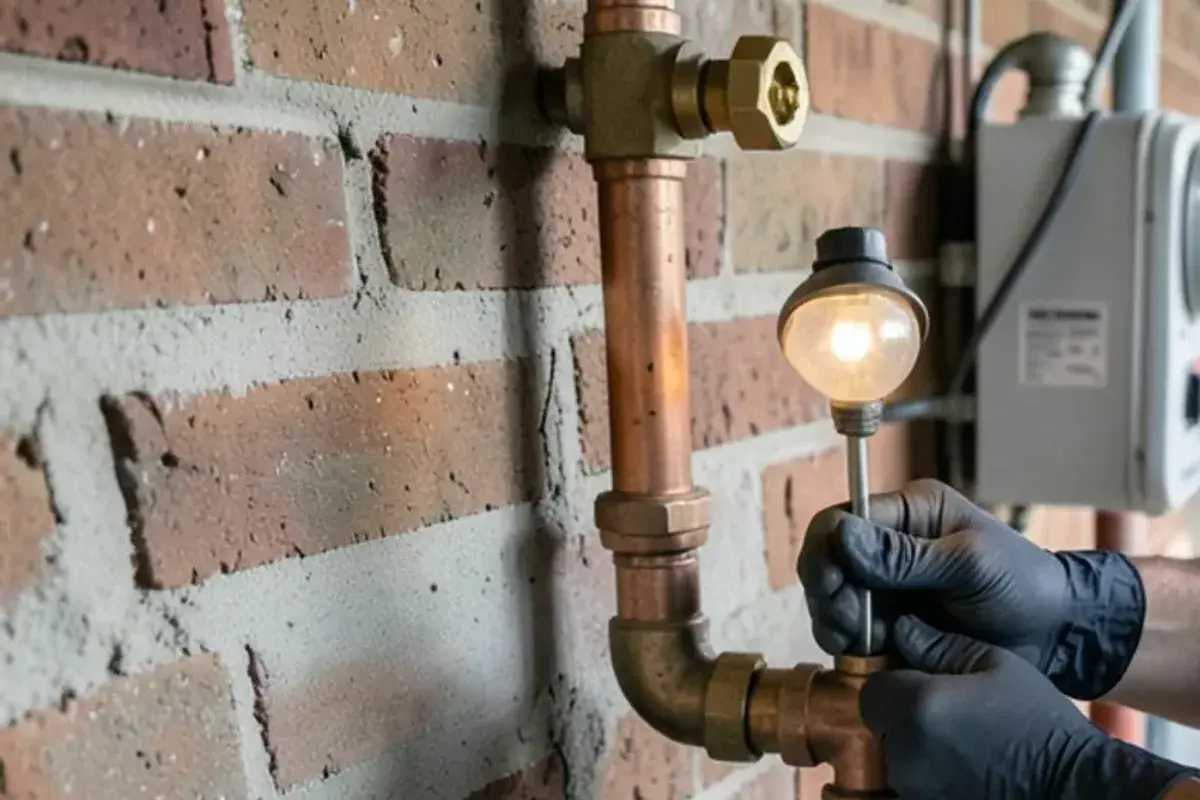
- The plumber tests the meter, finds the line's route, checks the material where it enters, and narrows down the leak area. Some leaks need leak detection equipment to pinpoint.
- You hear which side of the curb stop the problem is on, the repair options, and what drives the cost before work starts.
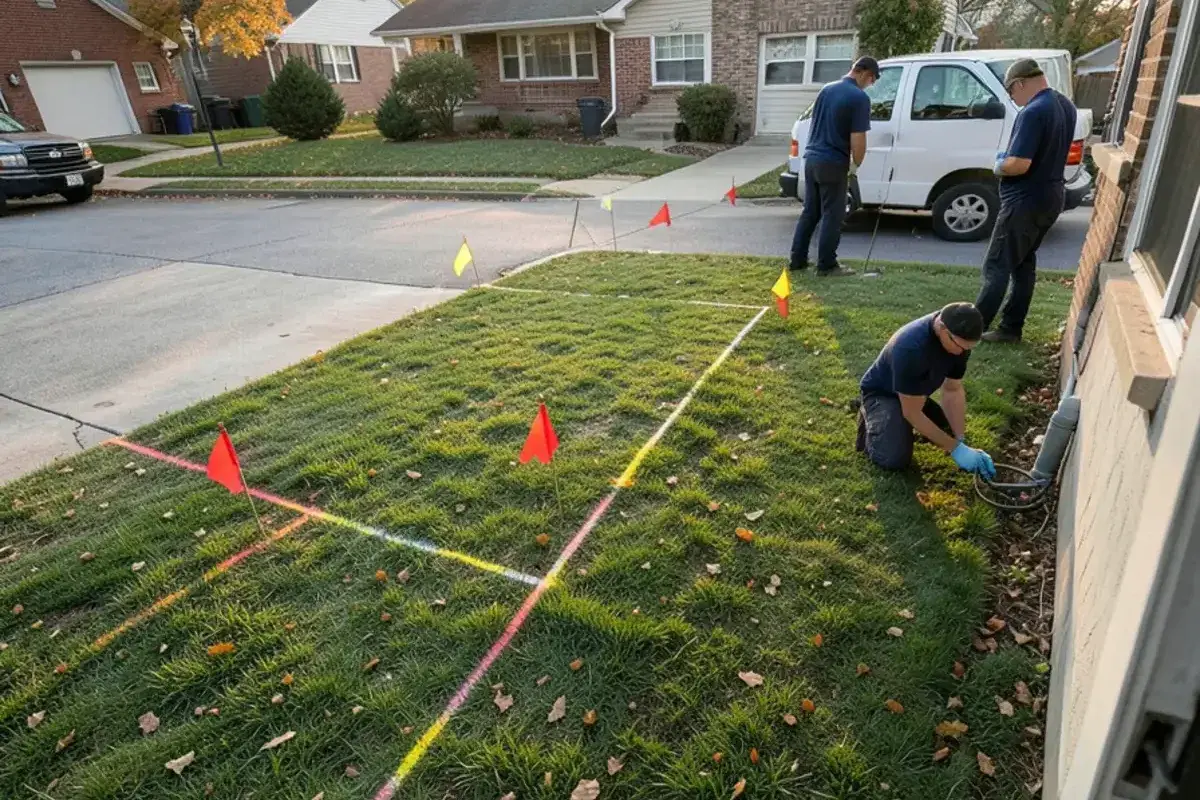
- MISS DIG 811 gets notice at least three business days before digging. Utilities mark their own lines, but private lines like yours aren't marked, and digging within 4 feet of the marks is done by hand.
- The permit is pulled, and the leak is repaired or the line replaced and pressure-tested.
- Where the permit calls for it, the line is inspected before backfill, then the trench is filled and the agreed restoration is done.
Diagnosis happens on the first visit. Digging waits out the MISS DIG notice period, and an inspection before backfill adds a scheduling step. Sod and concrete usually get restored last.
Cost factors for a water service line repair
A service line job is mostly digging and restoration, so the yard matters as much as the pipe. These set the cost:
- Spot repair or full replacement
- Line length and burial depth
- Trench or trenchless method
- Driveways, sidewalks, trees and other utilities in the path
- Soil conditions and frozen ground
- New pipe material and the wall entry and meter reconnection
- Curb stop work, if your department assigns it to the owner
- Permit and inspection fees
- Lawn, concrete and planting bed restoration
In Macomb County, check two things before comparing quotes: whether your water department assigns curb stop work to the owner, and whether your line could be lead or unknown material, since Michigan puts full lead line replacement on the water system's bill.
To keep it from happening again, know where your main shutoff and curb box are, keep the curb box cover visible and clear of mulch, keep heat on where the line enters near a garage, and don't plant trees over the line's route.
Why call Plumbers in Macomb, MI about a water service line?
A wet strip of lawn raises the who-fixes-what question before anything else. One call to (207) 419-2600 covers it, along with every other plumbing problem in the house. Describe the symptom and what the meter does with everything off, and we connect your call to a local, independent plumber in your area. That plumber tests the line, explains which side of the curb stop the problem is on, quotes the repair and does the work. These pages cover ownership, MISS DIG, permits and cost drivers so you can ask good questions first. No forms, just the phone.
Main water line repair: questions we hear
Who pays to fix a water main leak in my yard?
It depends on where the leak sits and your water department's rules. Many systems own the main and the line up to the curb stop, leaving the owner responsible from there into the house. Mount Clemens, for example, puts the split at the curb stop. If the leak is on the street side, call the water department first.
What should I do in a water line emergency?
If water is pouring into the basement or the yard is washing out, close the main shutoff inside the house. If the leak is between the curb and the house and the shutoff won't stop it, the water department can close the curb stop. Then call (207) 419-2600 and describe what you're seeing.
Does Macomb Township have lead service lines?
No. The township's 2024 water quality report says it has none. Its roughly 30,200 service lines are copper or plastic, and a field check of older lines matched the records. Other systems differ, so check your own supplier's inventory if you live elsewhere in the county.
Can a frozen water service line be thawed without digging?
Yes, often. Depending on the pipe material and where the freeze is, a line can be thawed with a hot-water thawing machine fed from inside the house or with other non-flame methods. Never use a torch on a buried or wall-entry line. Once water flows, find out why that spot froze.