
Rules and permits
Lead service lines in Michigan: how to check yours
Every lead service line in Michigan has to be replaced by the water system that serves it, at the system's cost. Here's what the rule covers, how to check your own line, and what to do while you wait.
By Plumbers in Macomb, MI · Published · Last updated
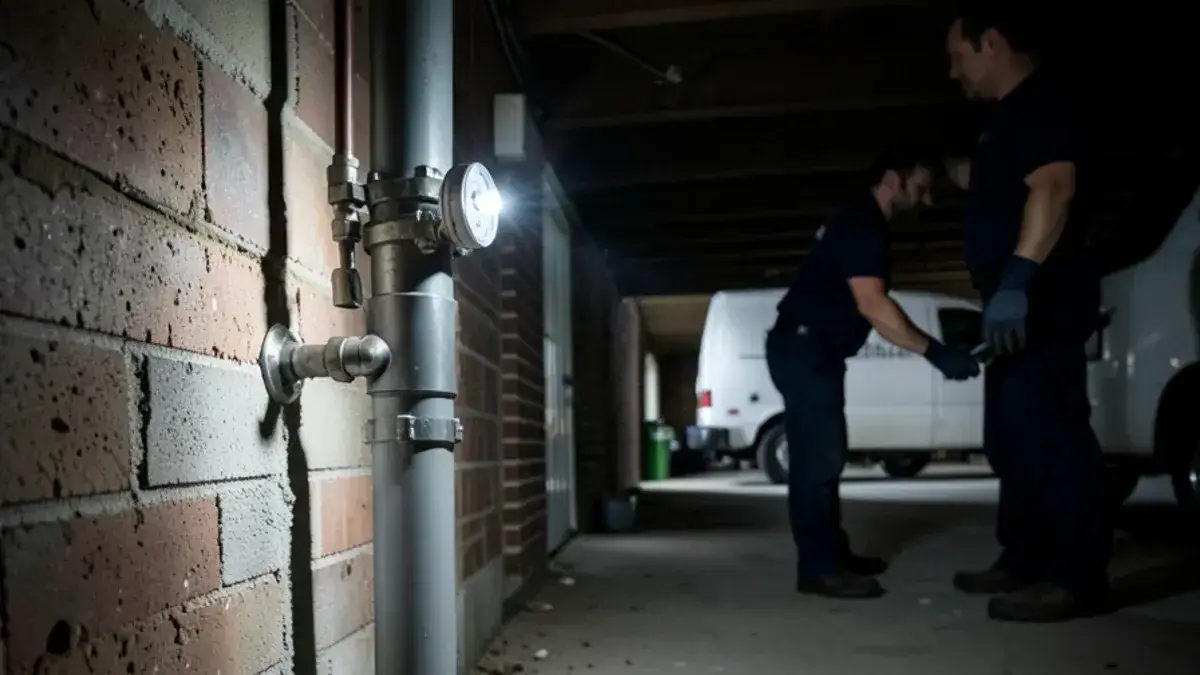
Check your water system's service line inventory first, then look at the pipe where it enters your basement. Lead is dull gray, scratches to bright silver and won't hold a magnet. If any part of the line is lead, Michigan requires your water system to replace the entire line at its own expense, so call them before hiring anyone.
What Michigan's rule requires
Michigan requires community water supplies to replace every lead service line, and every galvanized line that was connected to lead, at the supply's expense. Starting in January 2021, systems have 20 years to finish. EGLE describes the pace as an average of 5% a year, and a system can follow an approved alternative schedule. Statewide, EGLE counted 98,253 lines replaced from 2021 through 2025.
Two details make Michigan's rule stronger than it first sounds. Even a short lead gooseneck or pigtail at the main makes the whole line a lead line for the rule's purposes. And partial replacement isn't allowed: when the system replaces a line, it replaces the whole thing, whether the pipe is on its side of the property line or yours.
Not sure what your water service line is made of?
- Your call goes to an independent local plumbing company that does the work.
Who owns which part of the line
In most Michigan communities the water system owns the pipe from the main to the curb stop, a shutoff valve usually buried near the sidewalk or property line. From that valve to the house, the pipe belongs to the homeowner. Mount Clemens spells out this division on its water and sewer page.
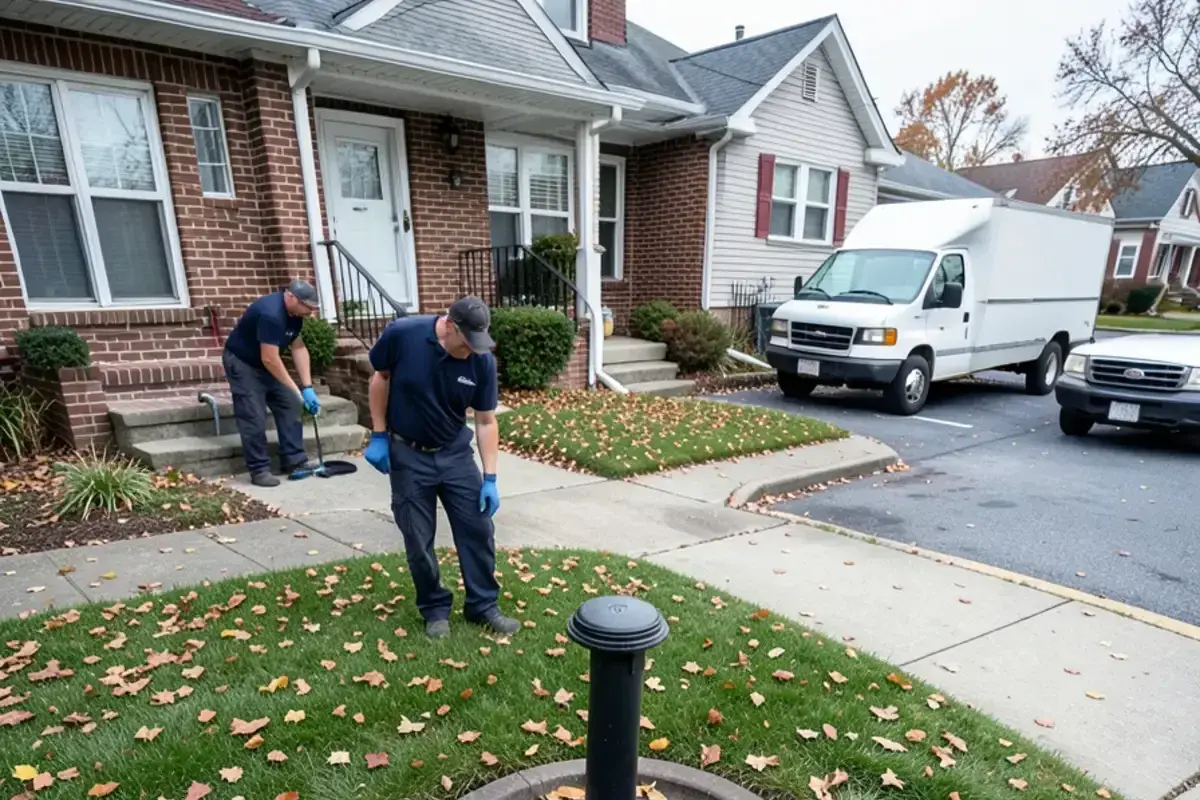
Under the lead rule, that ownership line doesn't decide who pays for lead replacement. It still matters for everything else. A leak or break on your side of a copper or plastic line is your repair, and that's where main water line repair comes in.
How to check your line
Start with your water system's inventory
Every water system in Michigan has to keep an inventory of service line materials that covers both the public and private sides of each line. The complete version was due at the start of 2025. Systems also have to notify owners whose lines are lead, galvanized connected to lead, or unknown, and the inventory is public, so you can ask for your address even without a letter. If you got a letter, it tells you how your line is classified. Some systems go further. Romeo has an online service line viewer, and Utica sends letters to residents whose lines are lead, galvanized or unknown so they can schedule replacement.
Look where the pipe enters the house
Find the water meter and main shutoff, usually in the basement on the street side, sometimes in a crawl space or utility room. Follow the pipe from the shutoff back toward the floor or wall where it enters. The few inches of bare pipe before the shutoff are what you'll test.
The scratch test
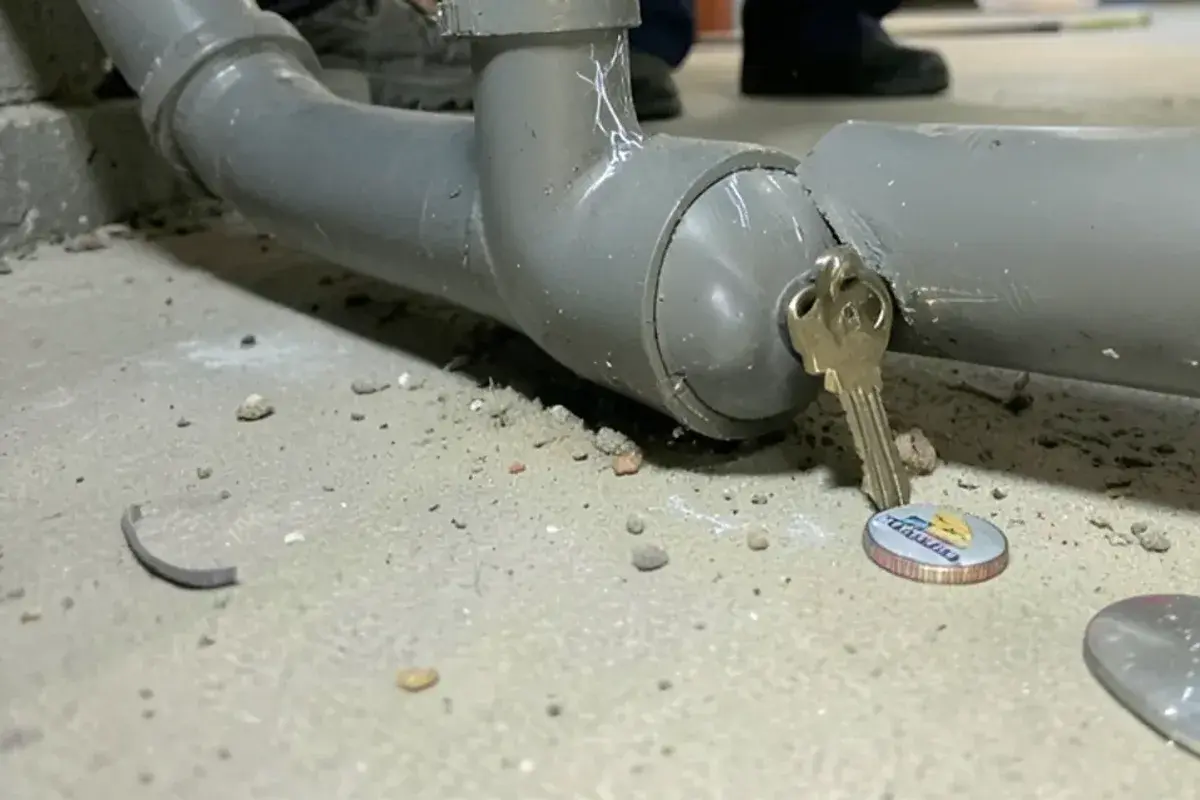
Use a key or a coin and scratch the pipe gently through any paint or tarnish.
The magnet test
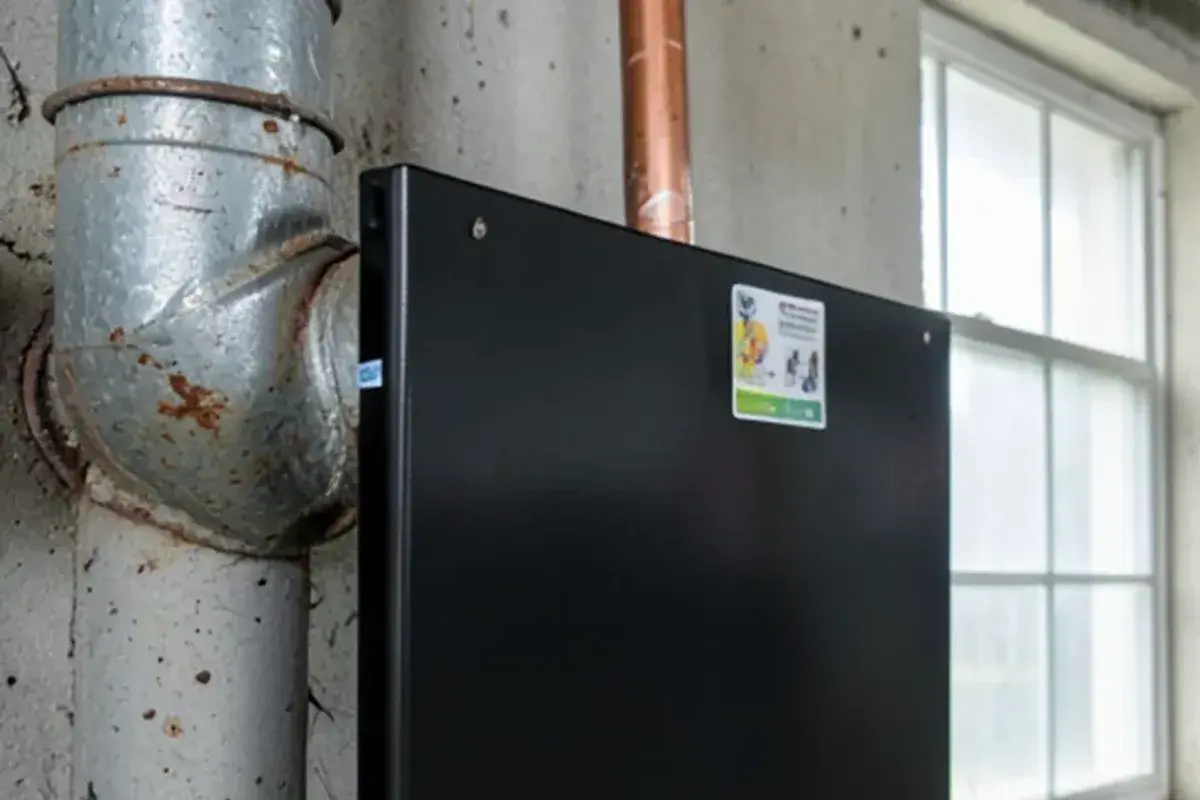
Hold a refrigerator magnet against the pipe. Lead and copper won't hold it. Galvanized steel will.
| Material | After a scratch | Magnet | What it means |
|---|---|---|---|
| Lead | Soft, bright silver under dull gray | Doesn't stick | Report it to your water system |
| Galvanized steel | Hard, stays gray | Sticks | May count if it was ever connected to lead |
| Copper | Penny-colored | Doesn't stick | Not lead at that spot |
| Plastic | No metal, often blue, black or white | Doesn't stick | Not lead at that spot |
Lead pipe also tends to look bulbous at the joints and bends easily. If you're unsure, take a clear photo and send it to your water department.
What Macomb County systems report
The answer varies a lot depending on where you live in the county.
Macomb Township reports zero lead lines in its system. Although lines installed before 1989 are classed as unknown under EGLE rules, a field check confirmed the township's records. Sterling Heights reported zero lead and zero unknown lines out of 39,866 in its 2024 report. Chesterfield Township reports none, and Harrison Township had three known lead lines, all replaced.
Older cities are a different story. Mount Clemens reported 213 confirmed lead service lines and 2,363 of unknown material out of 6,037 as of December 2025. Utica and Romeo both run service line programs. If you live in one of the older cities, check your community's latest water quality report for its current count.
If your line is lead or galvanized
Call your water department and ask where your address falls in its replacement schedule. Replacing a line means digging at the main and at the house, laying new pipe, connecting it inside, and restoring the lawn or driveway. MISS DIG 811 needs notice at least three business days before the excavation starts, and that duty sits with the crew doing the digging.
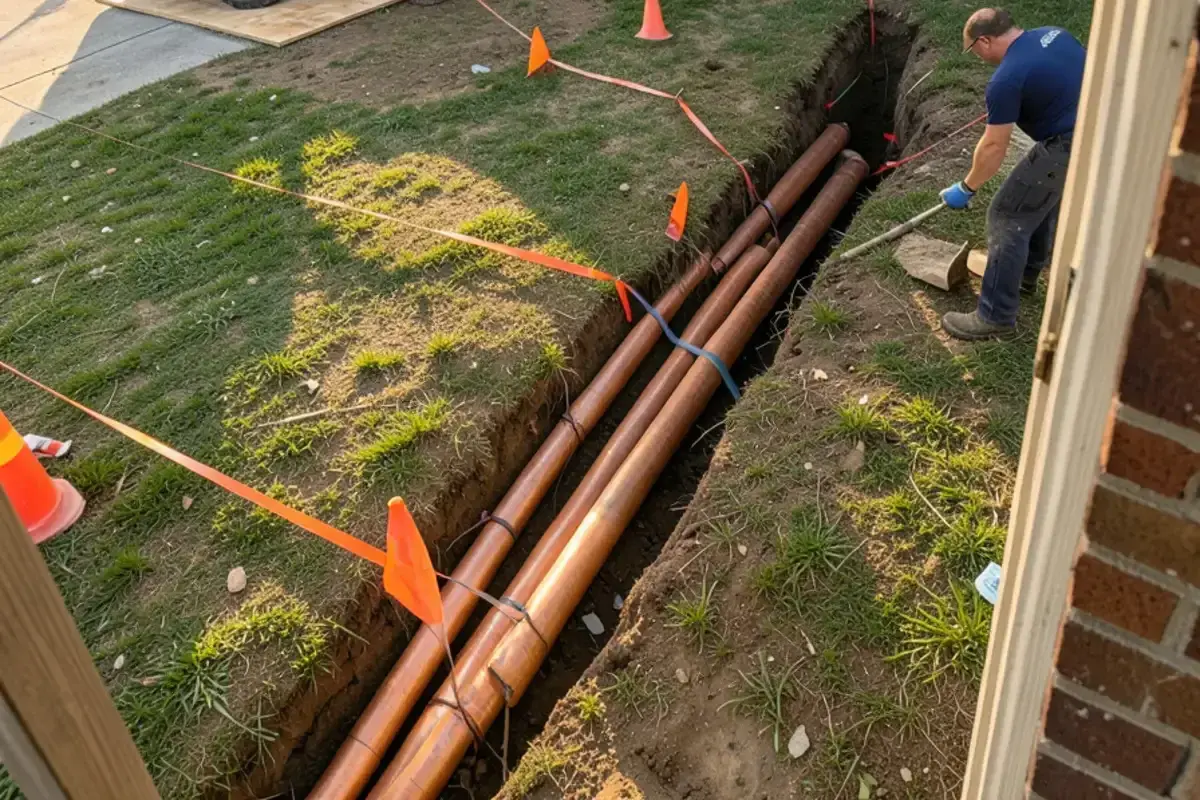
Talk to the water department before you hire anyone to replace a lead line on your side. The rule puts that cost on the system, and a partial job can stir up lead. If the inside pipes are old galvanized too, ask about repiping while the walls are being opened anyway.
Lowering exposure while you wait
Until the line is replaced, a few habits help:
- Use a filter certified to NSF/ANSI Standard 53 for lead reduction for drinking and cooking water, and change the cartridge on schedule.
- After water sits for several hours, run the cold tap until it turns noticeably colder before you drink it.
- Use cold water for drinking, cooking and baby formula. Hot water picks up more lead.
- Clean faucet aerators every few months, since particles collect in the screen.
A water softener isn't a lead treatment. If you want point-of-use filtration fitted under the sink, our water softener and filtration page covers the certified options.
What plumbers find when they look at an older Michigan water line
A basement check answers less than people hope. The scratch test only covers the bare inches before the meter. Plumbers regularly find a copper stub inside the wall joined to galvanized or lead pipe just outside the foundation, from a repair decades ago that stopped at the basement. The reverse also happens: a lead-looking pipe turns out to be heavily painted galvanized once it's scraped.
Galvanized lines raise their own question. Under Michigan's rule, galvanized pipe counts only if it was ever downstream of lead, and in an older city neighborhood nobody may have a record. That's why so many lines sit in the unknown column until someone digs at the curb stop.
Replacing the service line also doesn't make the rest of the house lead-free. Copper pipe joined with lead solder was common until the late 1980s, and older brass faucets and valves can carry some lead too. If your home has both a lead service line and that era of copper, a certified filter at the kitchen tap still makes sense after the line is replaced.
Construction stirs things up. For a while after any line replacement or nearby main work, particles can shake loose inside the pipes. Ask the water system for its flushing instructions after the work, and clean the aerators.
Your next step if you're unsure about the line
Look up your address in the water system's inventory or call and ask, then do the basement check and keep a photo. If the line is lead or unknown, the water system is the first call. If you're on copper or plastic and the line leaks, or the inside piping needs work, call (207) 419-2600 and we'll connect you with a local plumber who covers your community.
Common questions
Does Macomb Township have lead service lines?
No. Macomb Township's 2024 annual water report states there are none in the township, with every one of its roughly 30,200 lines made of copper or plastic. Lines put in before 1989 are classed as unknown under EGLE rules, but digging up a sample of 361 of them backed up the township's records.
Who pays to replace a lead service line in Michigan?
The water system pays. Michigan's rule requires community water supplies to replace lead lines, and galvanized lines that were ever connected to lead, at the supply's expense. That includes the part on private property between the curb stop and your basement wall, and the system has to replace the whole line rather than a partial section.
Can I tell what my line is made of just from the basement?
No, not the whole line. You can test the few inches of pipe you can see where it enters the house, but the buried run to the main stays hidden, and a short lead gooseneck at the main still counts as lead. Use your own scratch and magnet check alongside the water system's inventory, which covers both sides of the curb stop.
Where we can help
Not sure what your water service line is made of?
- Your call goes to an independent local plumbing company that does the work.