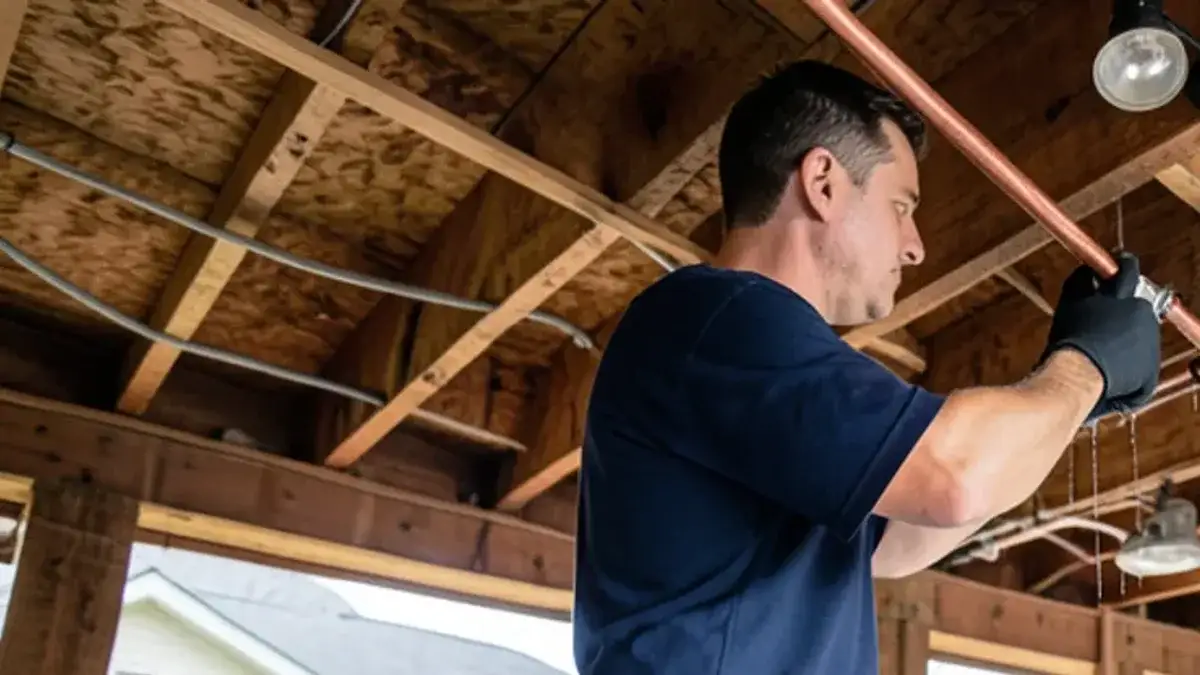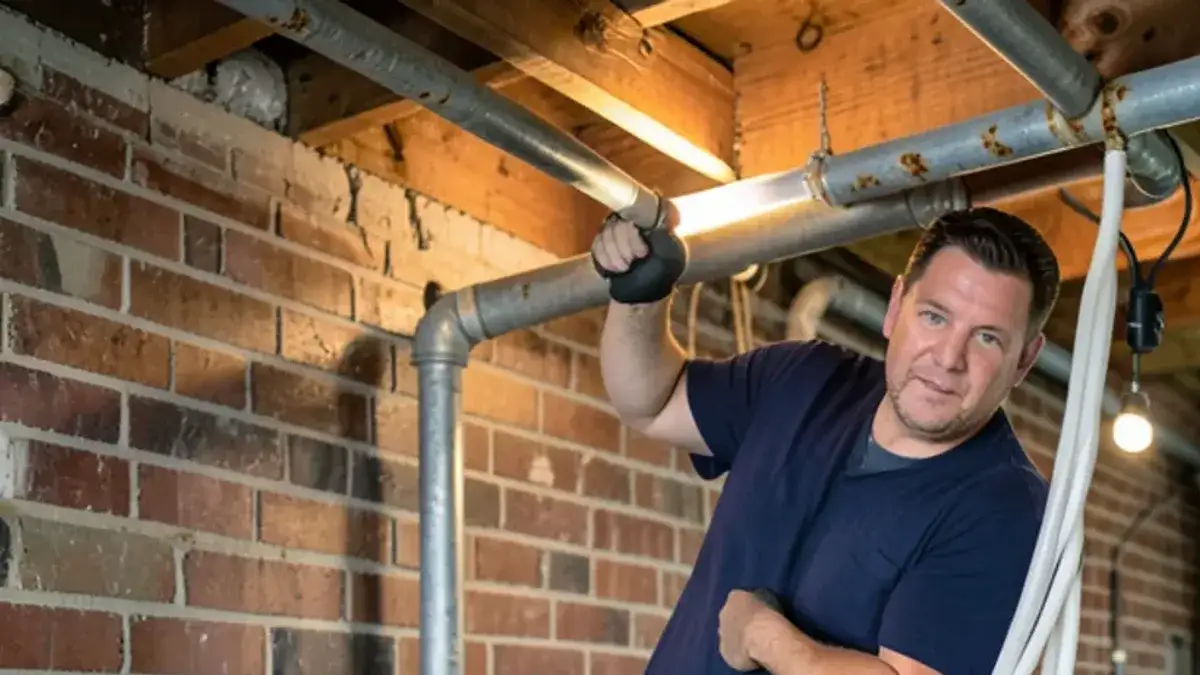
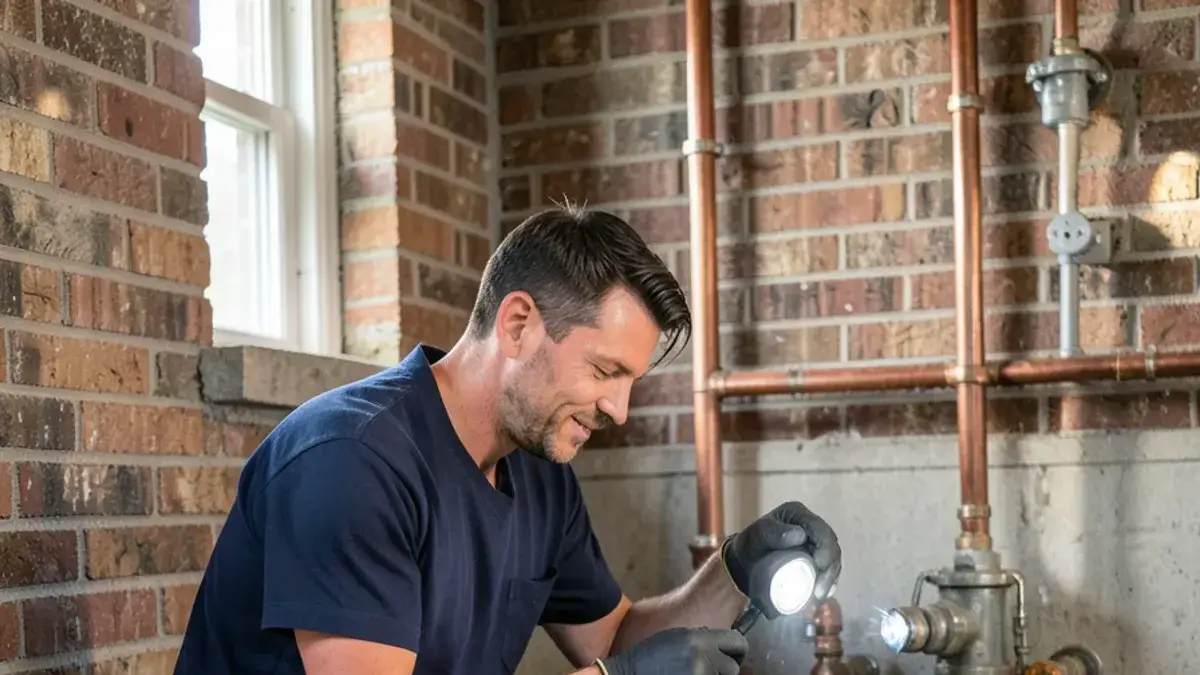
Below is the meter test you can run yourself, and how a plumber traces the result.
Signs of a hidden water leak on the bill, the meter and the ceiling
Most hidden leaks give themselves away in one of a few ways:
- a water bill that's higher than usual with no change in how the household uses water
- the meter's leak indicator moving when nothing in the house is running
- a stain, bubbling paint or a sagging ceiling tile below a bathroom or kitchen
- a warm spot on a floor, which can mean a hot-water line leaking under it
- the sound of running water when every fixture is off
- a musty smell, or mold along a baseboard
- a water heater that seems to run constantly
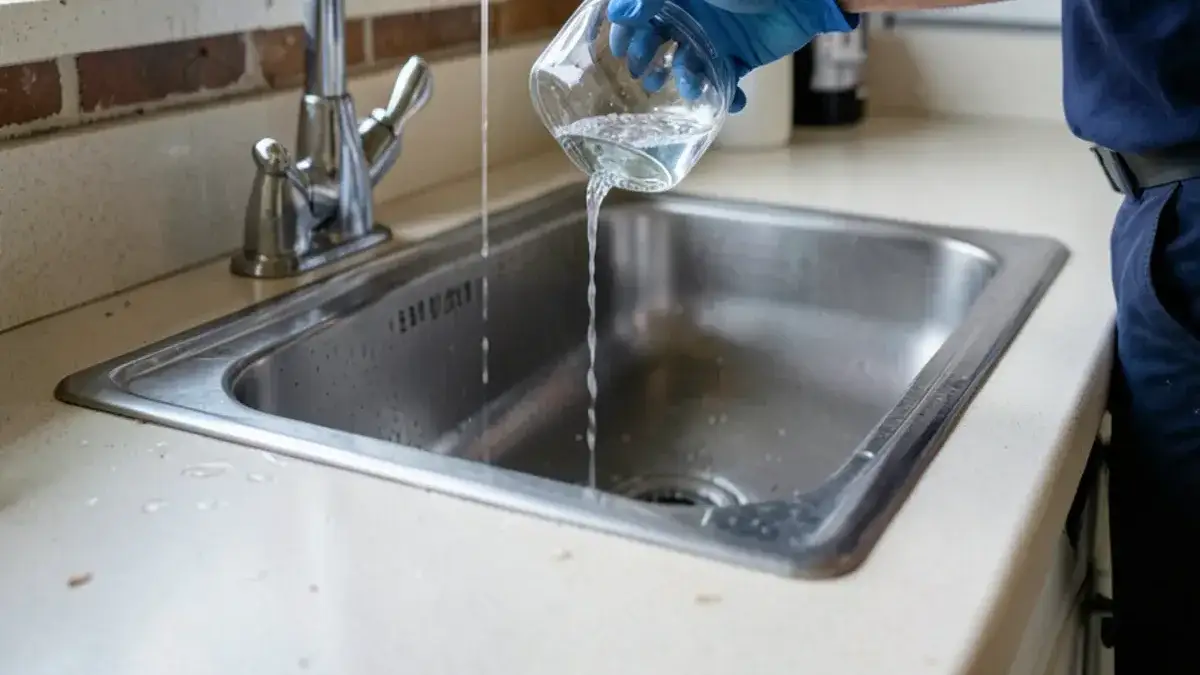
Before anyone hunts inside walls, check the toilets. A flapper that doesn't seal can leak into the bowl silently for weeks. Put a few drops of food coloring in the tank, wait fifteen minutes without flushing, and look for color in the bowl.
Think there's a hidden leak? Get a local plumber to pin it down
- Your call goes to an independent local plumbing company that does the work.
How do you run a water meter leak test?
You can do the first round yourself. It takes a few minutes and tells you whether to keep looking.
- Turn off every faucet and appliance that uses water, including the ice maker, irrigation and any softener that might regenerate.
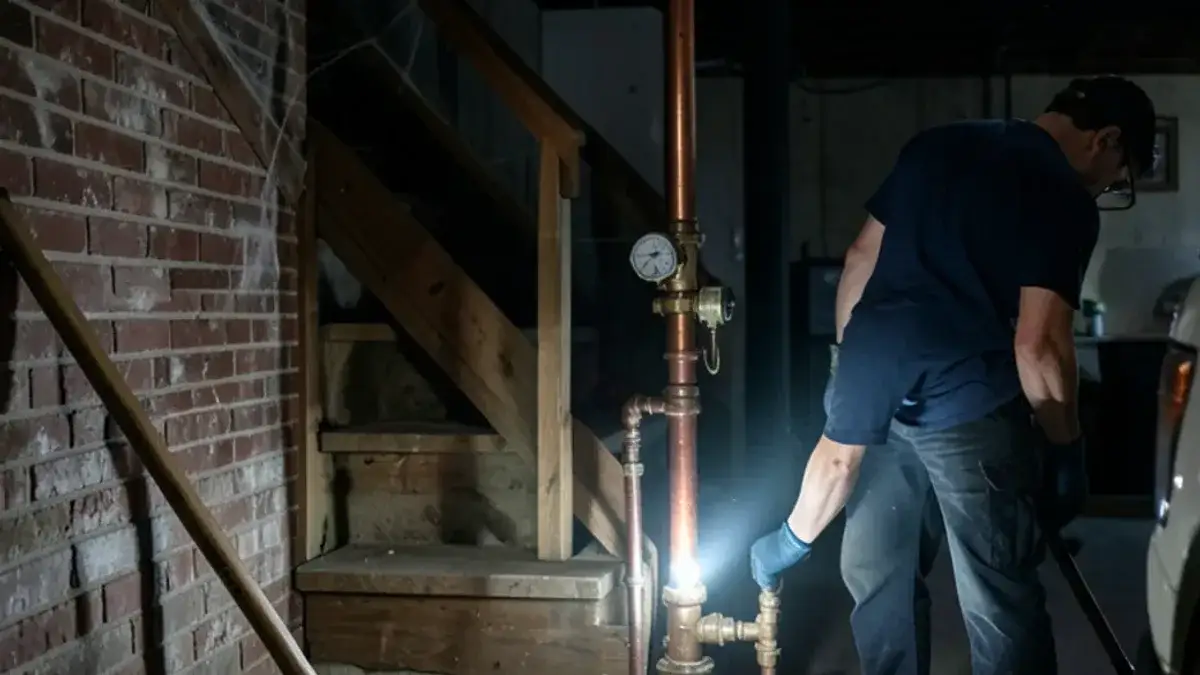
- Find the meter, usually in the basement near where the water service comes in, and look for the leak indicator: a small triangle, star or dial that spins with even a slight flow.
- Watch it for a few minutes. Any movement means water is going somewhere.
- For a slow leak, write down the reading, use no water for a couple of hours, and read it again.
- Close the main shutoff and watch once more. If the meter stops, the leak is inside the house. If it keeps moving, the problem is between the meter and the valve, the valve isn't sealing, or, with an outdoor meter pit, the buried line is leaking.
Our guide on finding your main water shutoff helps with step five. A leak on the service side of the house is usually a main water line repair job.
Where leaks hide, including a leak in the wall
In Macomb County homes, hidden leaks tend to cluster in the same places: basement ceilings under bathrooms, exterior walls that carry a line to a hose bib or kitchen sink (where an old freeze crack can drip for months), supply lines to toilets, ice makers and dishwashers, shower valves behind tile, and water heater connections. Older copper adds pinholes to the list. In Clinton Township, for instance, more than half the homes were built between 1960 and 1989, per Census estimates, so much of the original pipe has been in service for decades.
Newer houses have their own pattern. In subdivisions built since 1990, such as much of Chesterfield and Macomb townships, leaks tend to start at a push-fit fitting, a dishwasher or washer hose, or a line nicked by a drywall screw. Michigan winters add one more: a hose bib line that froze in January may not drip until the thaw.
How a plumber traces a leak with the least opening possible
What leak detection includes
The goal is a confirmed source and a repair plan before anything is cut. A visit usually covers:
- a repeat of the meter test and a split between the house side and the service side
- pressure isolation of zones and of hot and cold lines
- acoustic, thermal and moisture checks where they fit the pipe and the wall
- tracer gas for plastic or buried lines when sound won't carry
- a marked spot, the repair options and what drives their cost
Isolate it first
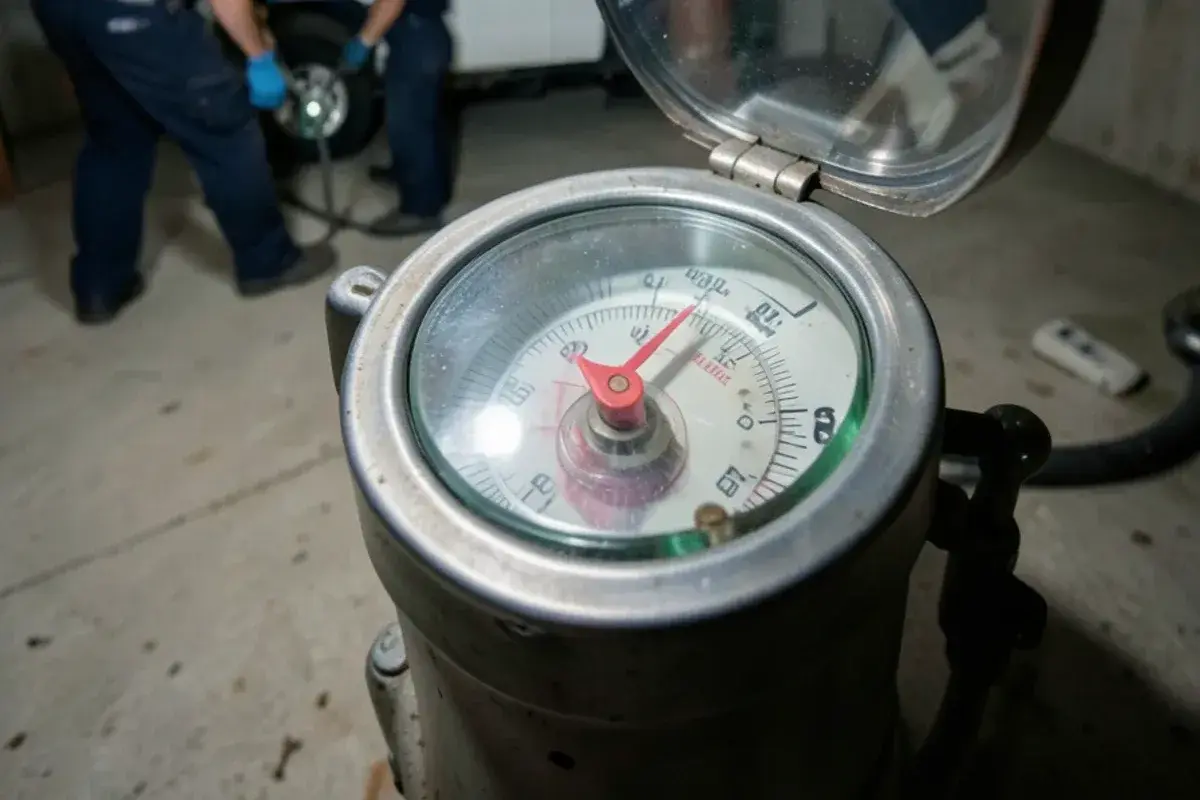
The plumber repeats the meter test, then closes valves zone by zone and test the hot and cold sides separately with a gauge. That alone often narrows a whole-house mystery to one bathroom or one run.
Listen, then look
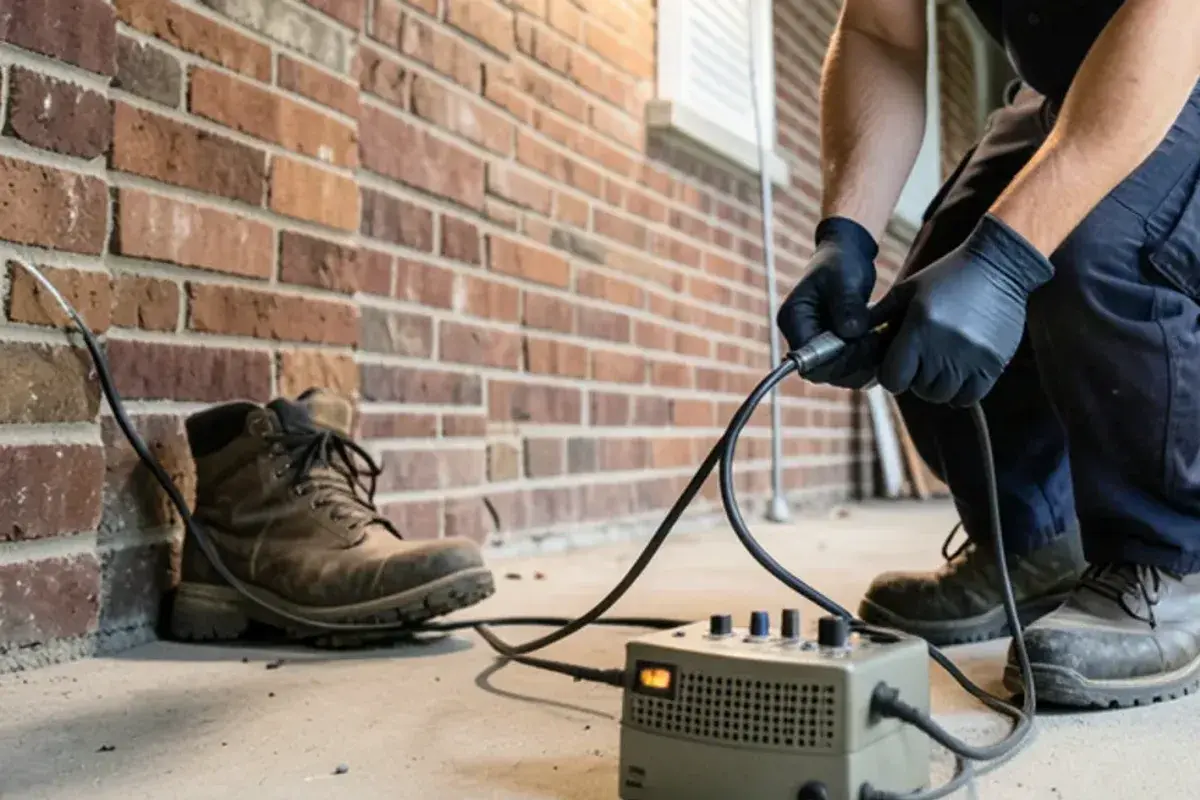
On metal pipe under pressure, escaping water makes a hiss that acoustic equipment picks up through drywall and concrete. A thermal camera shows the warm plume of a hot-water leak, or the cool patch where wet drywall is evaporating. A moisture meter maps how far water has spread.
Tracer gas when sound won't carry
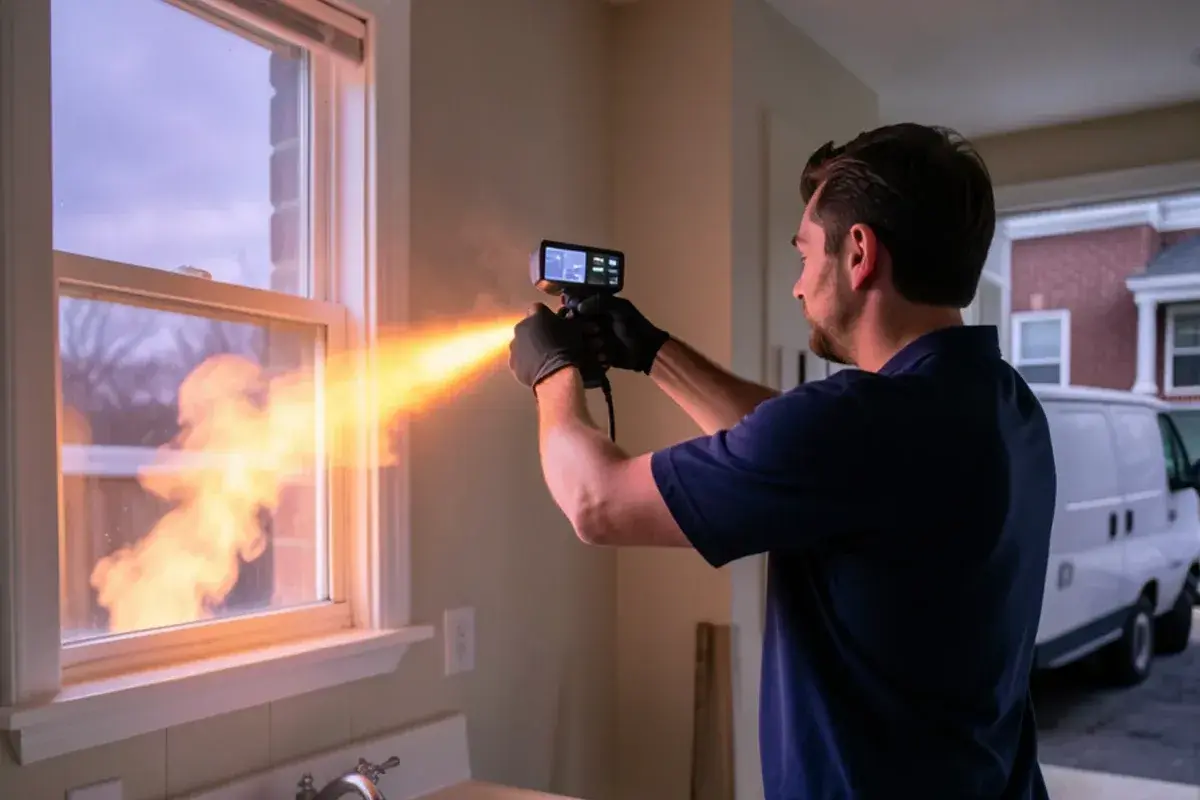
Plastic pipe and deep lines carry sound poorly. For those, the line can be drained and filled with a safe hydrogen and nitrogen mix, and a detector finds where the gas escapes through the floor or soil.
Then open small
The plumber marks the spot, explains the repair options and cost drivers, and only then cuts an opening sized for the fix. A steady leak can usually be pinned down in one visit; a leak that comes and goes may need a second look after the area dries.
The visit, start to finish
- You describe the bill, the stain or the sound, and your meter test.
- The plumber repeats the test and closes the main to split inside from outside.
- Zones and the hot and cold sides are isolated with valves and a gauge.
- Acoustic, thermal, moisture or tracer gas checks narrow it down.
- You see the marked spot and the repair options before any cut.
- The opening is made, the repair is done or scheduled, and the line is tested.
Slab leaks: finding a leak under concrete
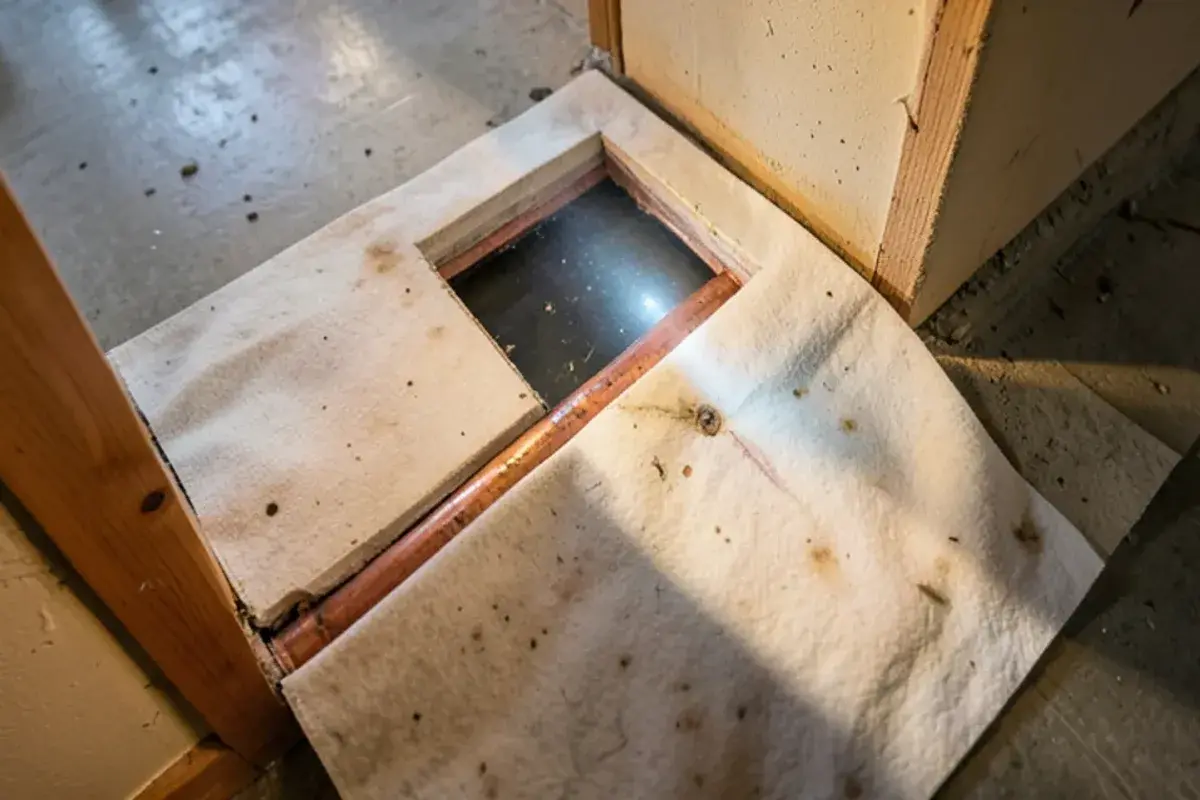
Even a house with a basement can have water lines under concrete: the service line coming up through the basement floor, lines to a basement bathroom, a slab-on-grade addition or sunroom, or a garage with a laundry. Signs include a warm or damp spot on the floor, the sound of water with everything off, and a meter that never rests.
Slab leak detection follows the same order as above, with acoustic listening and tracer gas doing most of the pinpointing. Once it's found, there are two ways to fix it:
- A spot repair opens the concrete over the leak, repairs the pipe and patches the floor. It keeps the original route but leaves the rest of the old line in place.
- A reroute abandons the under-floor section and runs new pipe through the basement ceiling or walls. It avoids breaking concrete and retires pipe that has already failed once.
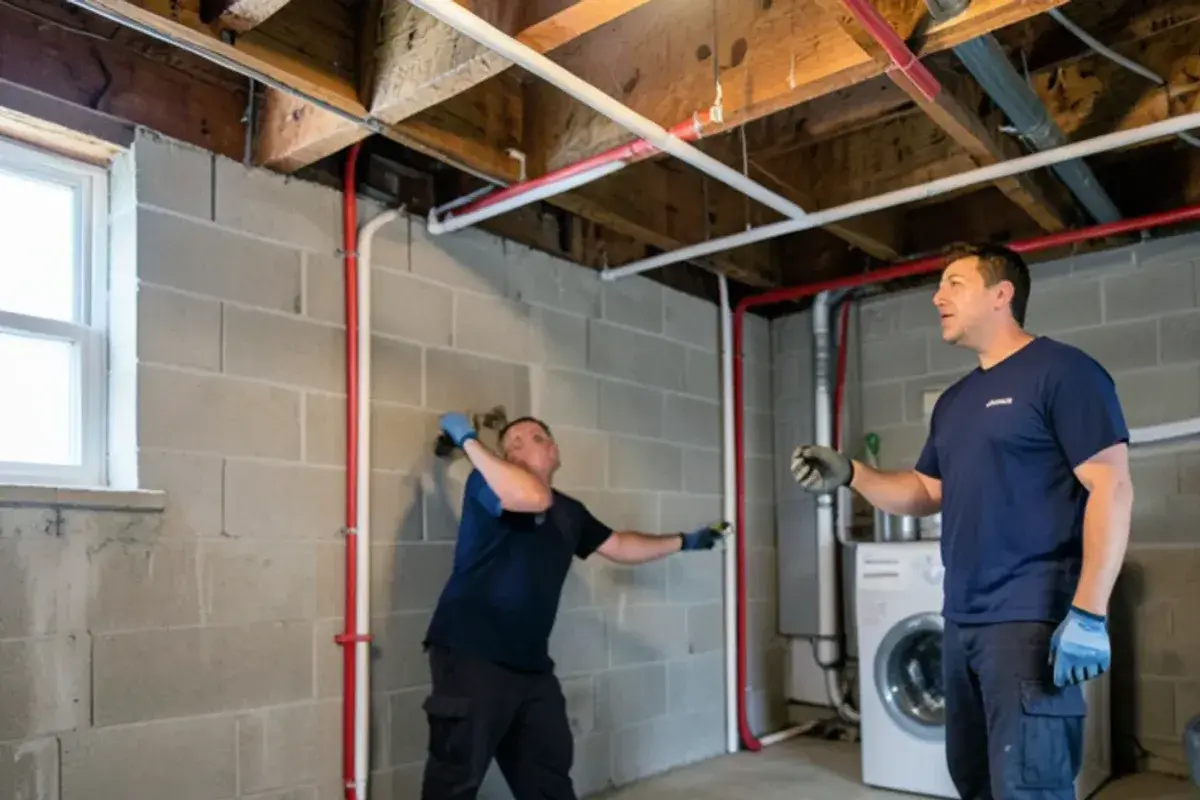
If an under-floor line has leaked before, rerouting is usually the smarter choice, and in older homes it can be the first step of repiping.
What leak detection cost depends on
An unfinished basement with open joists is the easiest place to trace a leak. A finished lower level, a tiled shower wall or a line under concrete takes more test time and leaves more to patch. The main variables:
- whether the leak is steady or comes and goes
- how many zones have to be isolated and tested
- which tools the job needs: acoustic, thermal or tracer gas
- access: an open basement ceiling, finished walls, tile or concrete
- the repair itself, priced separately once the source is known (see pipe repair)
- a permit when the fix replaces or reroutes piping
- whether drywall or concrete patching is in the plumber's scope or arranged separately
Permits and licensing once the leak is found
Finding a leak doesn't need a permit. Fixing it might: Michigan's exemption covers only the working parts of faucets and valves and clearing stoppages without altering piping, so ask the plumber which side of that line your repair falls on. Replacing a section of pipe or rerouting a slab line is permitted work; the township or city issues that permit to a licensed plumbing contractor or to an owner-occupant doing it themselves. Under LARA's rules, a permit for service-line work alone can go to a non-contractor, subject to local requirements. Before work begins, ask which license the contractor holds and confirm it's active in LARA's search. If pressure dropped along with the leak, the low water pressure in the whole house post walks through the other usual causes.
Why call Plumbers in Macomb, MI about a leak you can't see?
A hidden leak is easy to put off because it isn't obvious whom to call. Plumbers in Macomb, MI keeps it to a single number for any plumbing trouble, leaks included. Call (207) 419-2600, tell us what the meter did and where the damage shows, and we'll connect you with an independent plumber who takes calls in your town. That plumber traces the leak, explains the repair choices and prices them. This page sets out the tests, the cost drivers and the permit line ahead of the visit, so you know what to ask. There's no online form; the call is all it takes.
Leak detection: questions we hear
How do I check my house for a water leak?
Turn off everything that uses water, then watch the small leak indicator on your meter for several minutes. If it moves, water is flowing somewhere. Close the main shutoff and look again to tell whether the leak is inside the house or on the service line.
Can you find a leak in a wall without tearing it open?
Yes, usually. Isolating zones with valves, listening with acoustic equipment, thermal imaging and moisture readings narrow it to a small area before anything is cut. The opening the plumber makes is sized for the repair, and they should show you where before cutting.
What does slab leak detection involve?
The plumber confirms water is escaping with a meter and pressure test, isolates the line that runs under the concrete, then pinpoint the spot by listening through the floor or with tracer gas. After that you choose between opening the floor at that spot or rerouting the line.
Is the leak fixed on the same visit it's found?
Yes, it can be. Once the source is confirmed, the plumber explains the repair options and what drives the cost, and you decide whether to go ahead. Finding the leak and fixing it are separate steps, so you see both before approving anything.
Does homeowners insurance pay for leak detection?
No, not reliably. Many policies cover sudden water damage but not the cost of finding the leak, and many exclude damage from seepage that went on for weeks. Read the policy or call the insurer before work starts, photograph stains and wet areas, and ask the plumber for a written note on where the leak was and what failed.