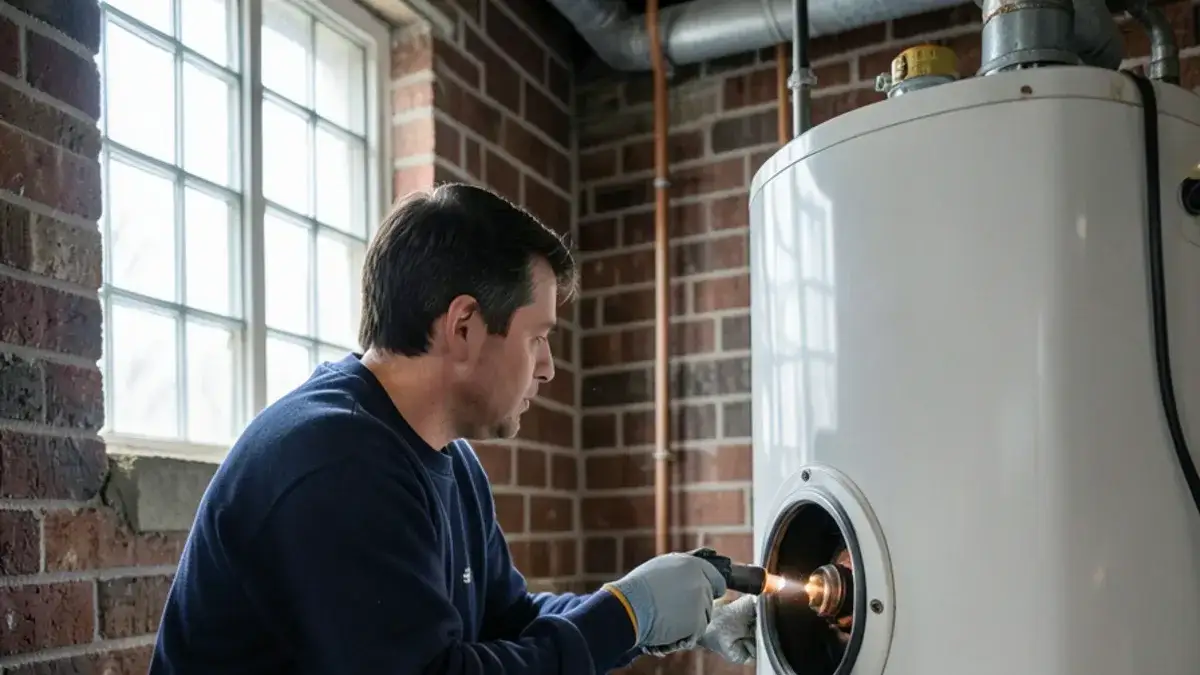
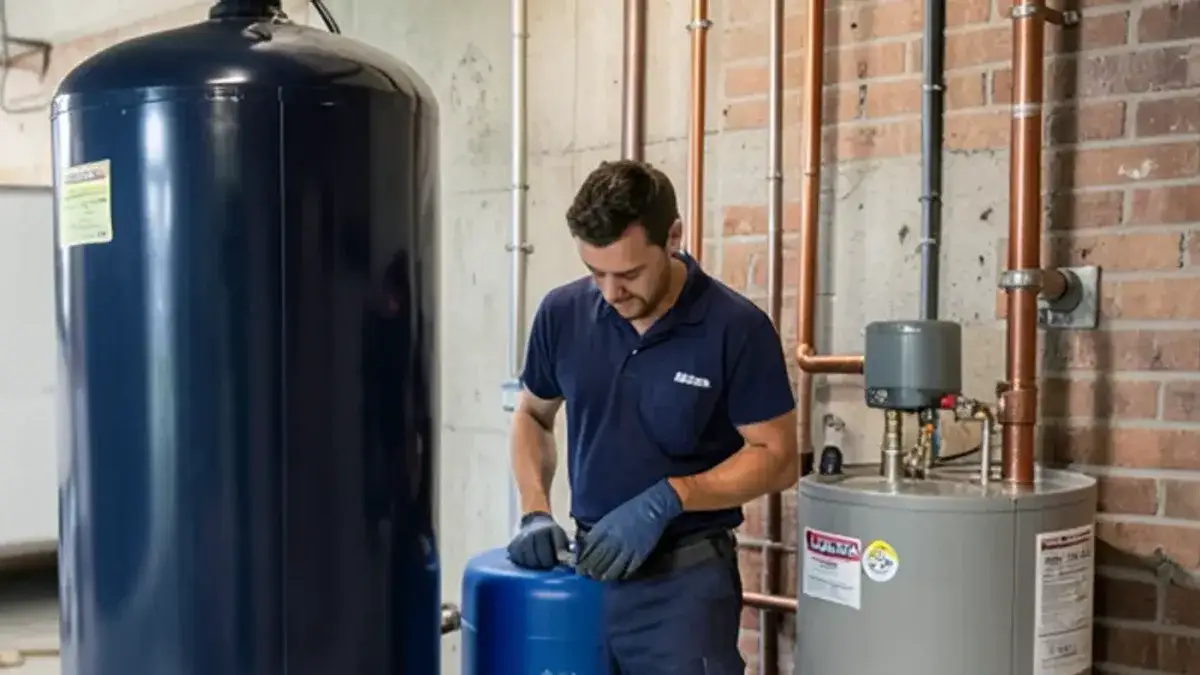
Most of the county drinks moderately hard GLWA water, while Romeo and rural homes up north often start from a well.
Why test your water before choosing a water softener?
Equipment should match what's actually in the water, and that depends on where it comes from. Macomb Township buys its water from the Great Lakes Water Authority, treated at the Lake Huron plant near Port Huron. In the township's 2024 water quality report, average total hardness was 99 ppm, with a range of 88 to 106. That works out to about 5.8 grains per gallon, which is moderately hard on the usual scale. Some sales sheets quote far higher numbers for Macomb-area city water, and those don't match the published reports.
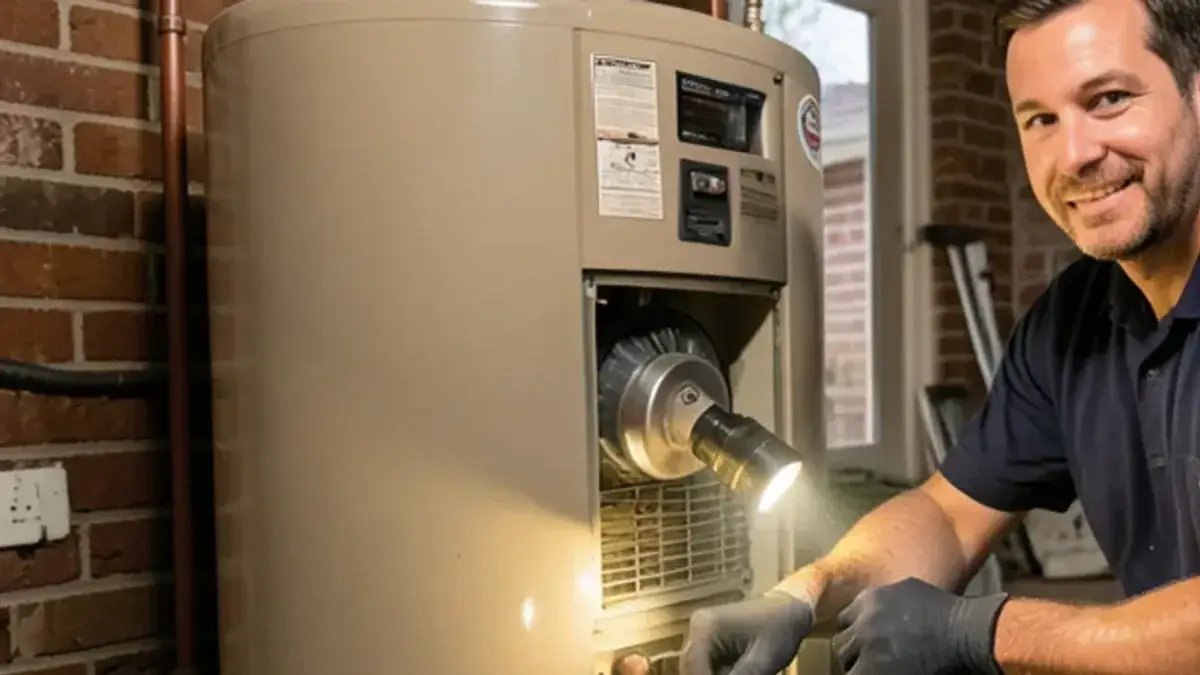
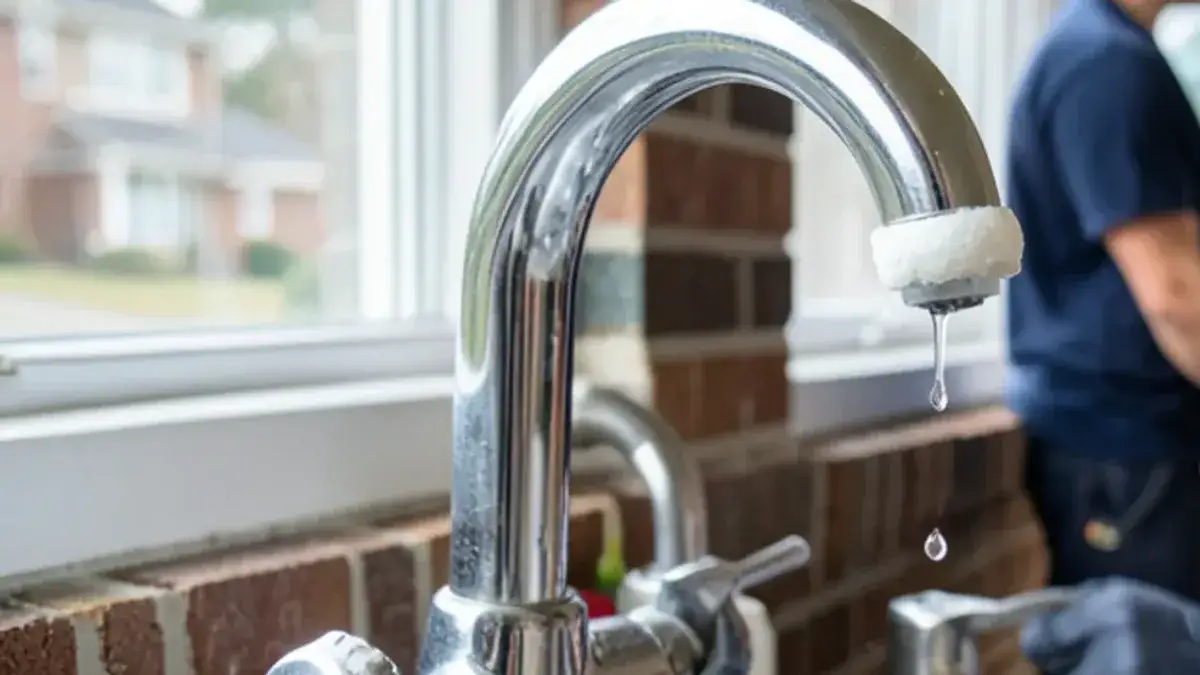
The signs that send people looking are familiar: white crust on aerators and shower glass, spots on dishes, and an electric water heater element that comes out caked.
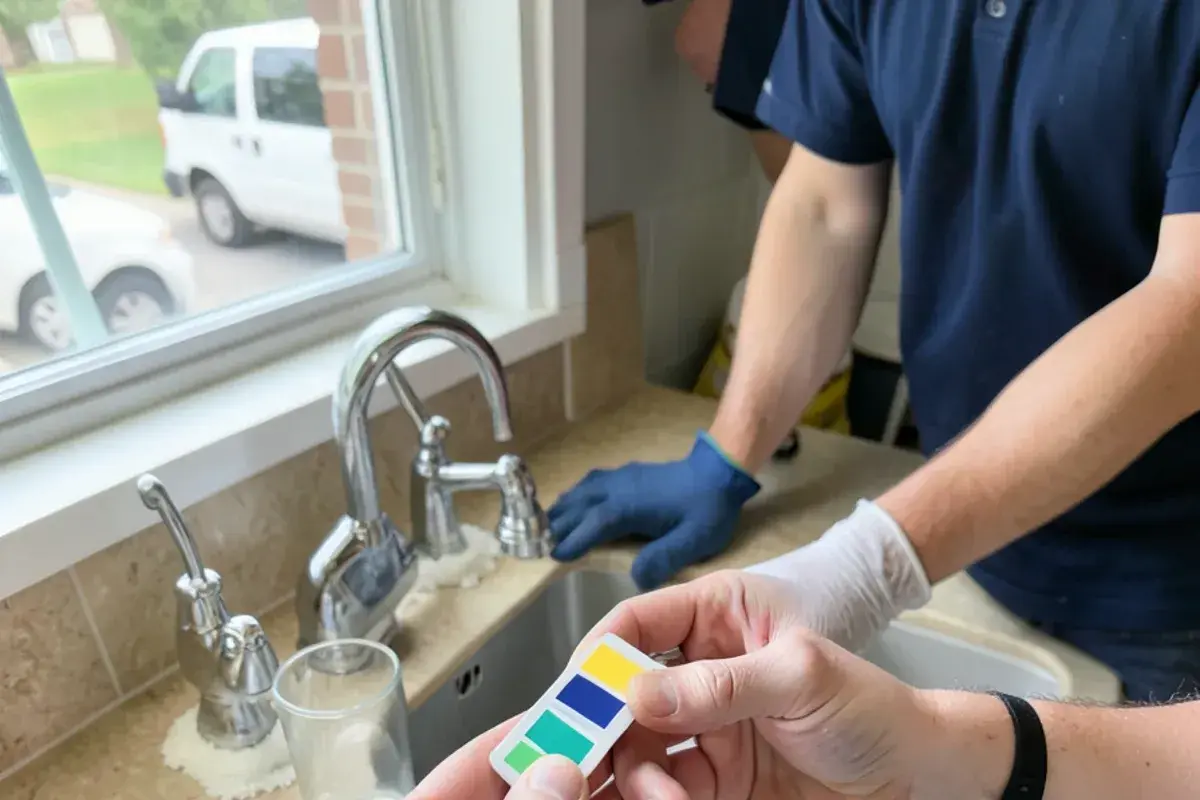
At a visit, the plumber runs a hardness test at the tap and checks for iron and pH, then reads the result against your supply. On city water, the township's annual report fills in the rest. On a private well, a certified lab test is the only way to know what you're treating. Our article on hard water in Macomb County explains what that hardness does inside your plumbing.
Get your water tested before you buy equipment. Call (207) 419-2600
- Your call goes to an independent local plumbing company that does the work.
Hard water in Macomb County: city supply versus north-county wells
Macomb Township and Washington Township are both on GLWA water. Water from a big treatment plant is consistent, so one test usually tells the story, and the main question is whether 5.8 grains is enough to bother you.
North of there the picture changes. The village of Romeo draws its water from groundwater wells. In Ray Township, homes rely on private wells, and the Macomb County Health Department permits wells and septic systems there. Older rural houses elsewhere in north Macomb may still be on a private well even where newer subdivisions nearby have city water. Well water varies from one well to the next, so a neighbor's result tells you little about yours.
Well water filtration: iron, hardness and bacteria
A private well owner is the water utility. Test once a year, and again after flooding, after work on the well, or if the taste, color or smell changes. Ask the lab about bacteria, nitrate, iron and hardness at a minimum, and which other tests make sense for your area.
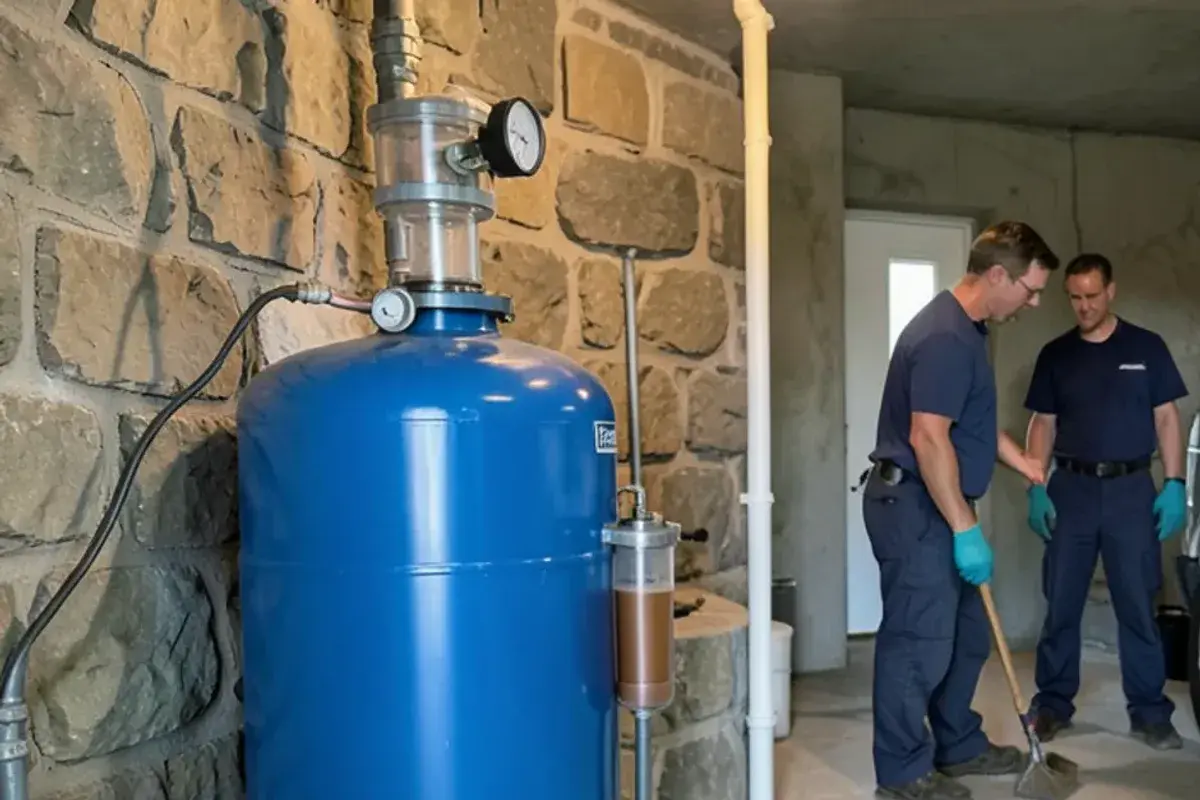
Iron shows up as orange stains in toilets and laundry. A rotten-egg smell points to hydrogen sulfide. A positive coliform test means the well needs disinfection and a look at why bacteria got in. A softener doesn't treat bacteria. When a well needs several stages, the usual order is a sediment filter, then an iron or sulfur filter, then the softener, and an ultraviolet unit last, since UV light needs clear water to work.
Softener, whole house water filter or reverse osmosis?
| Equipment | What it treats | What it leaves alone | What it needs |
|---|---|---|---|
| Water softener | Calcium and magnesium, small amounts of iron | Bacteria, chlorine taste, lead | Drain, outlet, salt |
| Sediment filter | Sand, grit, rust flakes | Dissolved minerals | Cartridge changes |
| Whole house carbon filter | Disinfectant taste and odor, some organic compounds | Hardness | Media or cartridge changes |
| Iron or sulfur filter | Dissolved iron, manganese, sulfur odor | Bacteria | Backwash drain, sometimes an outlet |
| UV disinfection | Bacteria and other microbes | Minerals, sediment | Clear water ahead of it, outlet, lamp changes |
| Reverse osmosis | Most dissolved solids, including sodium a softener adds | Nothing at other taps | Space under the sink, drain, faucet hole |
On GLWA water, the common setups are a softener alone, a softener with a carbon filter, or a reverse osmosis system under the kitchen sink for drinking water.
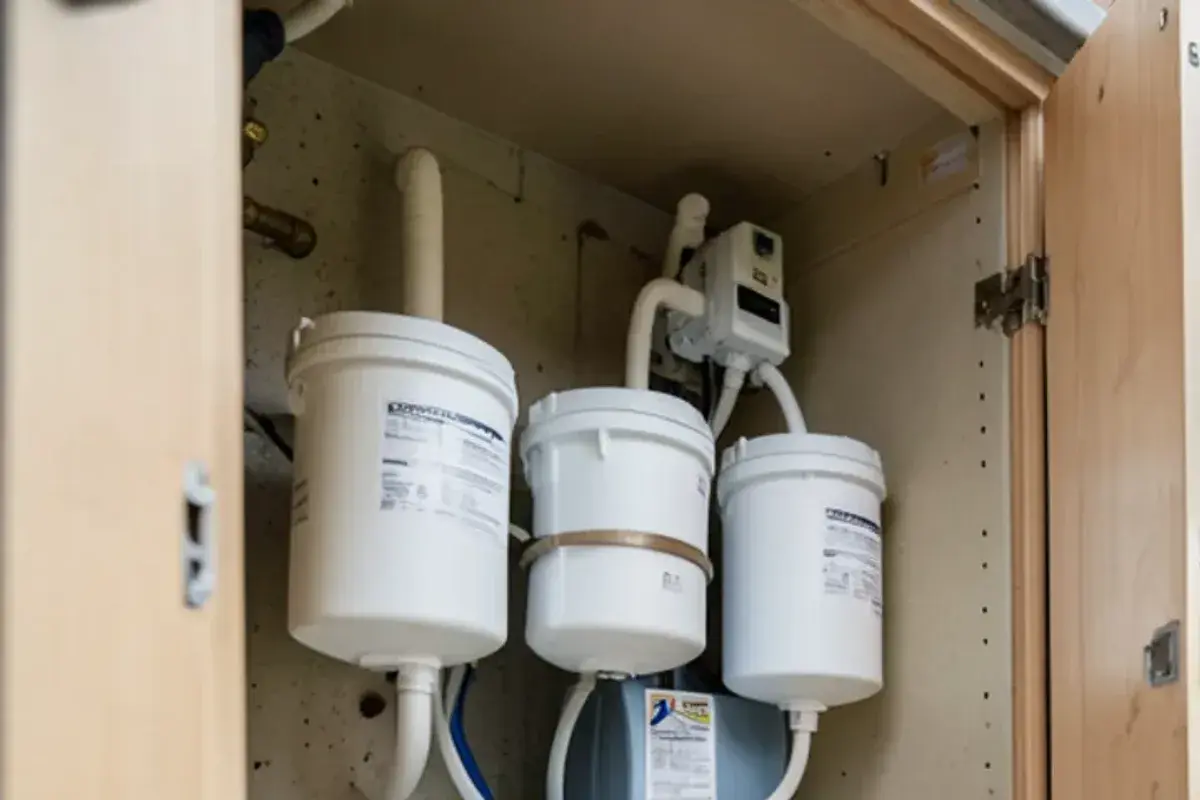
What a water softener installation includes
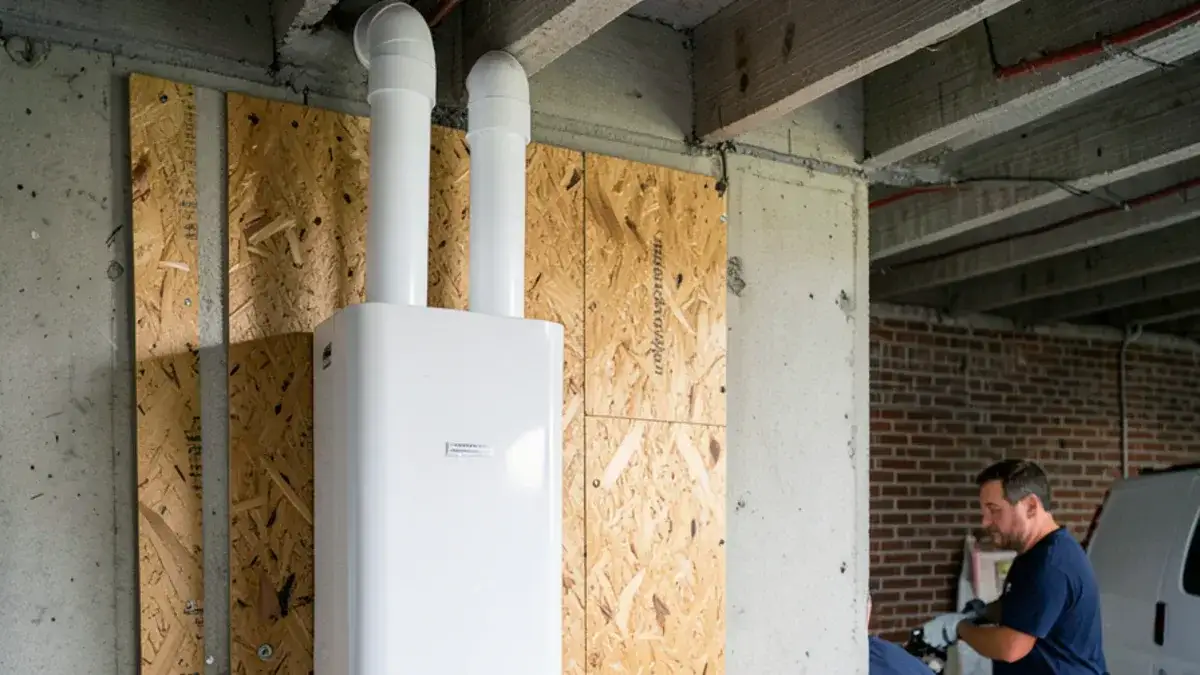
The softener itself is the easy part. Most of the work is the plumbing around it: where it cuts into the supply, where its regeneration water goes, and how you get water if it ever has to come out of service. A complete install covers:
- a cut into the main line after the meter and main shutoff, ahead of the water heater
- a bypass valve, either on the control head or built from three valves
- a drain line to a floor drain or standpipe, ending with an open air gap
- a brine tank overflow line and an outlet for the control head
- a separate cold line for outdoor faucets or the kitchen tap, if you want them left hard
- the hardness setting, a first regeneration and a walk-through of the salt routine
A basic softener on city water usually fits in part of a day. A multi-stage well system takes longer, since each stage needs its own space and bypass.
Sizing, drain and bypass: how a softener install goes
Capacity is sized from hardness and water use. At 5.8 grains per gallon, a household using about 300 gallons a day removes roughly 1,700 grains of hardness daily, and the softener is sized to go several days between regenerations. Iron on a well adds to the load.
- Test the water and agree on the equipment, settings and any permit the building department wants.
- Shut off the main and cut the softener in after the meter and main shutoff, ahead of the water heater.
- Install a bypass valve so the softener can be isolated without shutting off the house.
- Run the drain line to a floor drain or standpipe and end it with an open air gap, so drain water can't siphon back.
- Plug in the control head, set the hardness and regeneration schedule, and load salt.
- Check for leaks, run a manual regeneration, and show you the bypass.
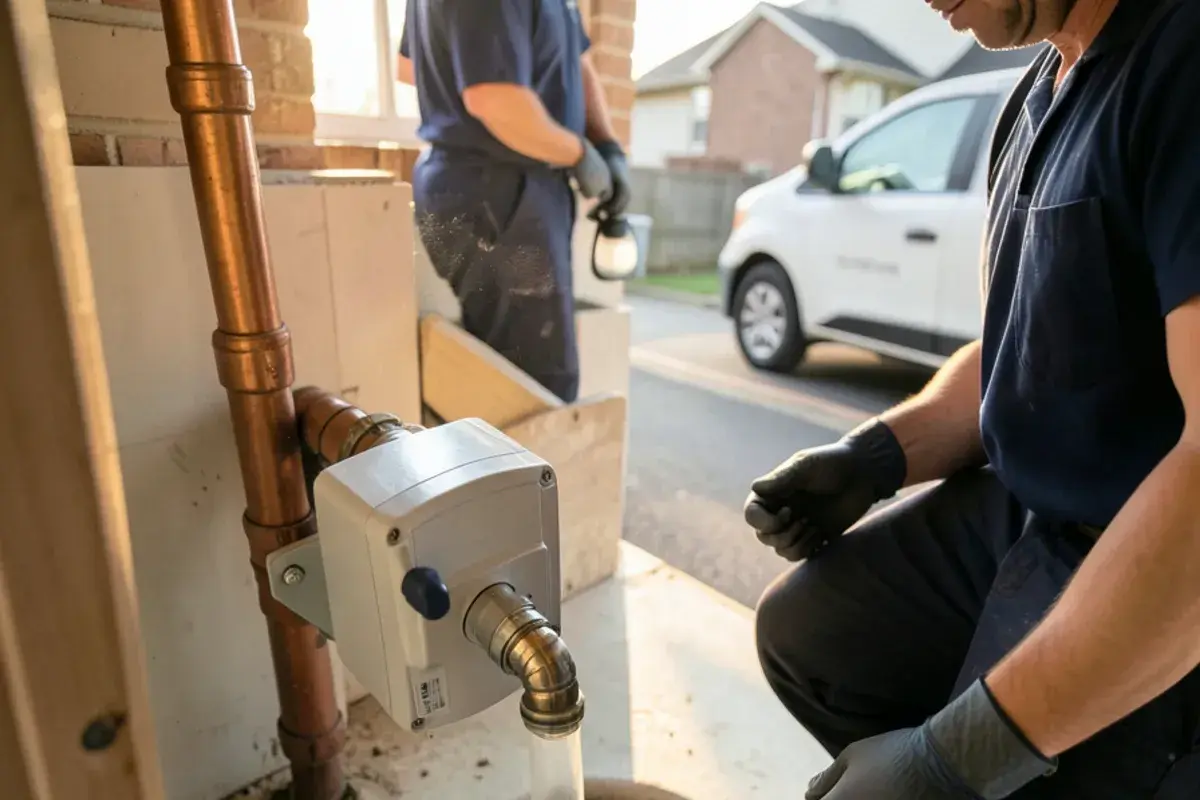
Outdoor hose bibs are often left on unsoftened water, since lawns and gardens don't need soft water.
Permits, cross-connections and well rules
LARA requires a permit before plumbing work begins, and its exemption reaches only faucet and valve internals and cleared stoppages where no piping changes. A softener cut into the supply changes the piping, so ask your building department first. Michigan lets a licensed plumbing contractor pull it, or an owner-occupant doing their own single-family house. Macomb Township's cross-connection survey, approved in March 2026 and run with HydroCorp, asks residents about softeners, one more reason the drain air gap matters. New wells are permitted by the Macomb County Health Department. Before work starts, check the contractor's license number in LARA's online search.
Salt, upkeep and what drives the cost
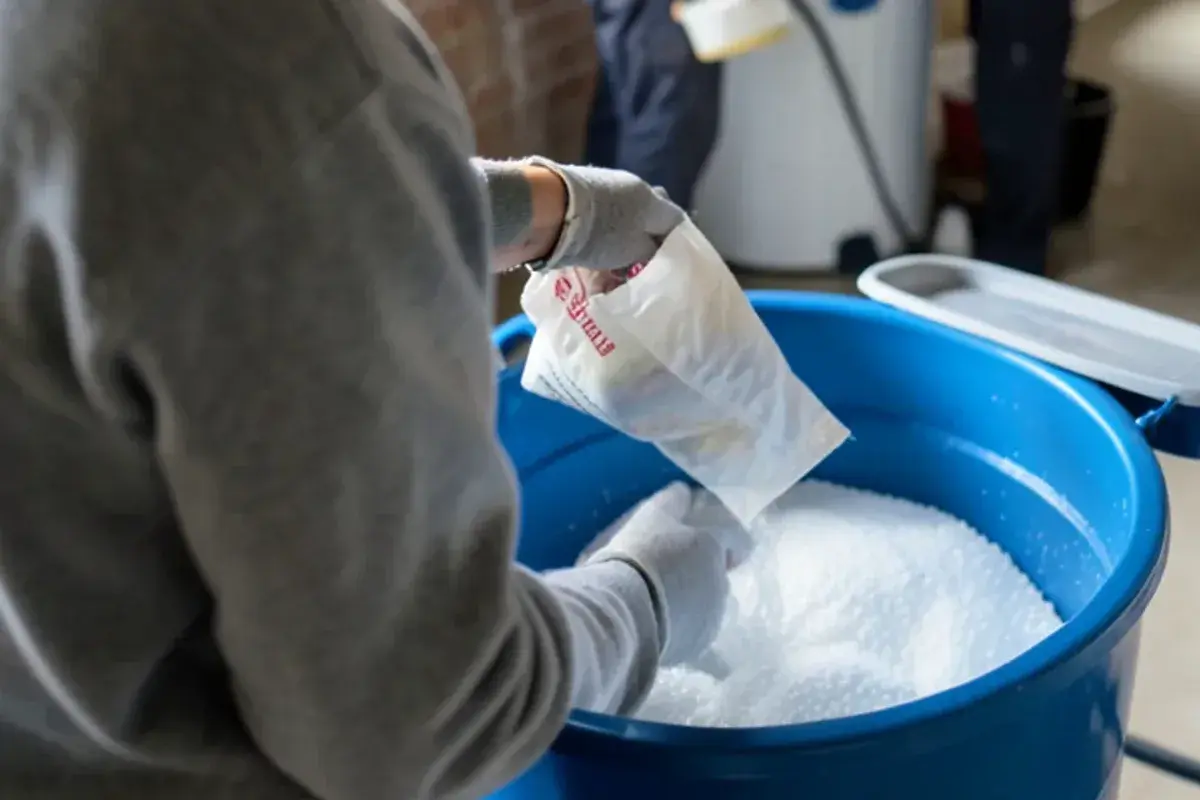
Most softeners use sodium chloride pellets or crystals; potassium chloride costs more but avoids added sodium. Check the salt monthly and break up any crust. Use a resin cleaner if your water carries iron, change filter cartridges on schedule, and replace RO membranes when the manual says to.
The equipment sets the starting point: the type of system, its grain capacity, and whether the control head regenerates on a meter or a timer. A well adds pre-filtration and maybe a UV unit, each with its own housing and fittings. Then comes the plumbing at your main: copper, PEX and old galvanized pipe take different fittings, and a cramped corner takes longer than an open wall. Distance matters too: a floor drain two feet away is a short run, while a drain across the basement or a missing outlet adds parts and, for the outlet, an electrician. An RO system adds a faucet hole in the countertop or sink and a drain connection under it. Any permit the building department requires adds its fee and inspection.
Manufacturer warranties often cover the tanks and the control valve for different terms, and most ask you to register the unit. If scale has already damaged a tank, start with water heater repair. If you're planning a tankless water heater installation, softened water stretches the time between descaling.
Why call Plumbers in Macomb, MI about a water softener?
Crusted aerators, orange stains in a well-fed toilet and a scaled-up water heater all go to one number. Calling (207) 419-2600 links you to a local, independent plumber for your town, and the test, equipment and install are agreed with that plumber. This page is meant to help you ask good questions: what your supply's hardness actually is, whether a filter or a softener fits, where the drain will go and whether a permit is needed. There's no form to fill in first. Say whether you're on city water or a well, and what you're seeing.
Water softeners and filtration: questions we hear
Is Macomb Township water hard enough to need a softener?
No, not every home does. The township's 2024 water quality report averaged 99 ppm, about 5.8 grains per gallon, which counts as moderately hard. Many homes do fine without a softener. If scale keeps building on fixtures or your water heater, or you have a tankless unit, softening is worth considering.
Will a softener help my water heater last longer?
Yes, it helps. It reduces the calcium that settles in a tank and crusts electric elements, so flushing and descaling become easier and less frequent. It doesn't replace that maintenance or stop a tank from wearing out for other reasons, such as a used-up anode rod.
Can a softener remove iron from well water?
Yes, in small amounts. A softener can take out a little dissolved iron along with hardness. Higher iron, or iron that has already turned to rust particles, usually needs a dedicated iron filter ahead of the softener, or the resin fouls and stops working.
How often do I add salt to a water softener?
Check the brine tank about once a month and keep it roughly half full. How fast salt goes depends on your hardness, household size and how the softener is set. If the salt level never drops, look for a hard crust, called a salt bridge, sitting above empty space.
Does a water softener add sodium to my drinking water?
Yes, a little. Ion exchange trades calcium and magnesium for sodium, so the amount added rises with hardness, and at roughly 5.8 grains on Macomb Township water it stays modest. Anyone limiting sodium can switch the brine tank to potassium chloride, leave the kitchen cold tap on unsoftened water, or add a reverse osmosis faucet under the sink.