
Problem solving
No hot water? Seven checks before you call a plumber
No hot water in the house usually traces back to a short list of causes, and several of them you can check safely in a few minutes.
By Plumbers in Macomb, MI · Published · Last updated
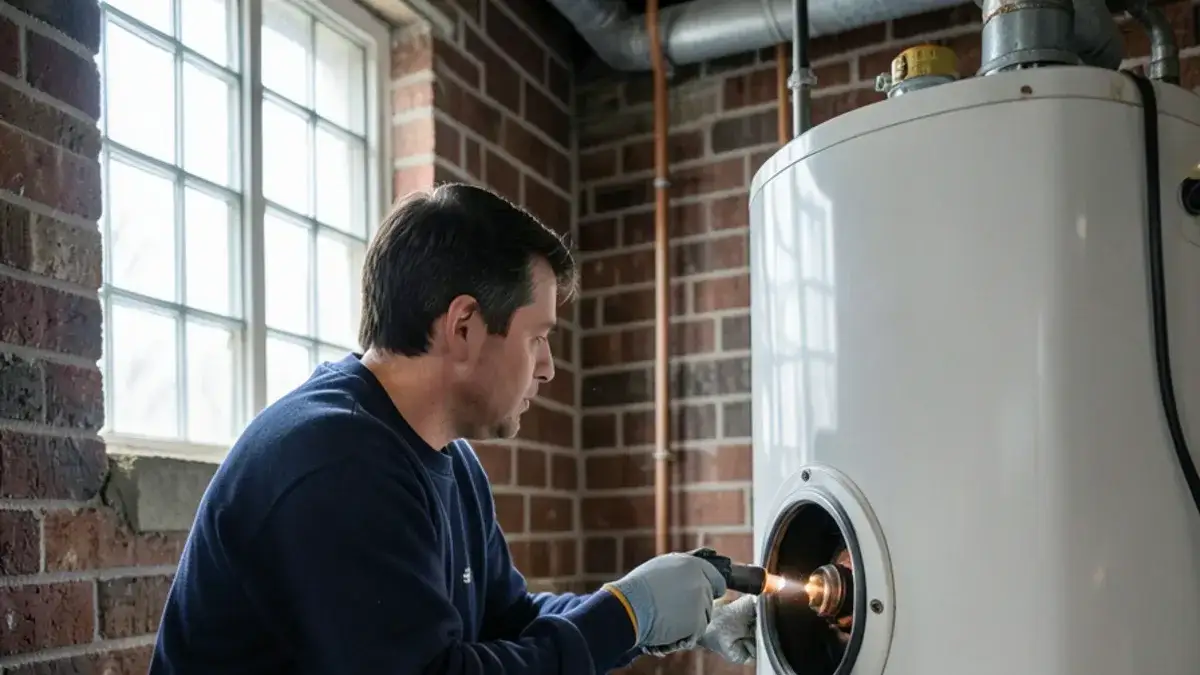
When no hot water comes out of any tap, the cause is usually one of seven things: a pilot or igniter that's out, a gas control bumped off, a fault code, a blocked vent, a tripped breaker, a popped reset button, or a failed heating element. Each one can be checked safely in minutes.
First, make sure it's the water heater
Two rules come before any check. If you smell gas (a rotten-egg odor) near the water heater, don't flip switches or try to relight anything. Get everyone out, and once you're outside, call 911 or the emergency line of your gas utility. And if water is pooling around the base of the tank, close the cold water valve on top of the heater and turn off the gas control or the breaker before doing anything else.
Run hot water at two or three faucets on different floors. If one faucet is cold and the rest are hot, the problem is that faucet or its valve, not the heater. If every tap is cold or lukewarm, keep going.
Ask yourself whether the house just used a lot of hot water. Three showers in a row, a washing machine on hot and a filled tub can drain a tank, and it needs time to recover.
Then identify what you have. A gas tank has a burner at the bottom, a gas line with a valve on the side, and a vent pipe on top. An electric tank has a thick cable entering a box on top and two small access panels on the side. Tankless units hang on the wall and have a display.
Checked everything and the water is still cold?
- Your call goes to an independent local plumbing company that does the work.
The seven checks at a glance
| # | Heater | What to check | What you might find | What it usually means |
|---|---|---|---|---|
| 1 | Gas | Pilot or igniter | No flame in the viewing window | Pilot out or igniter not lighting |
| 2 | Gas | Gas control and supply valve | Knob on Off, Pilot or Vacation; valve handle across the pipe | Gas isn't reaching the burner |
| 3 | Gas | Status light or error code | A blinking pattern or a code on the display | The control is reporting a specific fault |
| 4 | Gas | Vent and exhaust | Snow, ice, a nest, or a loose vent pipe | A safety switch has shut the burner off |
| 5 | Electric | Breaker | Tripped double-pole breaker | A short or a one-time overload |
| 6 | Electric | High-limit reset button | Red button popped out | The water overheated, often from a stuck thermostat |
| 7 | Electric | Heating elements | Hot water runs out fast, or none at all | One element or thermostat has failed |
Gas water heaters: four checks
1. Look for the pilot or the igniter
Newer gas tanks have a sealed burner chamber with a small window near the gas control. Shine a flashlight through it. On a standing-pilot model you're looking for a small steady blue flame. Models with an electronic igniter won't show a flame until they call for heat.
If the pilot is out, relight it by following the instructions on the label on the tank, exactly as printed, one time. If it lights but goes out when you let go of the knob, the thermocouple or thermopile isn't proving the flame. If it won't light at all, the flammable vapor sensor may have locked the burner out. Check for gasoline, paint thinner or solvents stored nearby. Never pry open the sealed inner door.
2. Check the gas control and the supply valve
The gas control knob should be on On, with the temperature dial at its normal setting. Kids, pets and a box shoved against the tank have all bumped one to Pilot or Vacation. On the gas line feeding the heater, the shutoff lever should run parallel to the pipe.
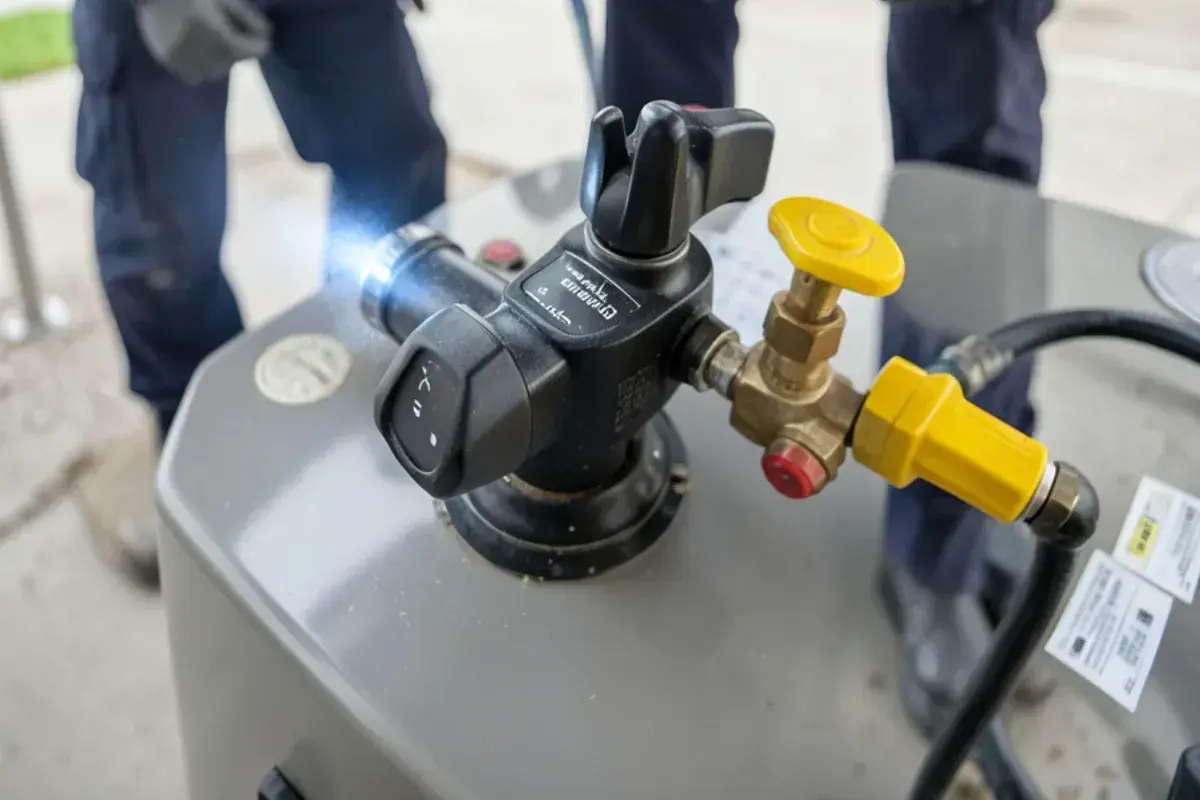
If the stove and furnace aren't getting gas either, the problem is upstream of the heater, and that's a call to your gas utility. If they work and the water heater alone gets no gas, the branch line or its valve may be at fault. That's gas line work, done under Michigan's mechanical license categories.
3. Read the status light or error code
Many gas controls have a small light that blinks in a pattern when something's wrong. Count the blinks, then match the count to the chart on the tank's label or in the manual. Power-vent and tankless models show a code on a display. Write the code down before you call. A flame-sensing fault and a venting fault need different parts, and the code points to which one.
4. Check the venting
Power-vent heaters have a fan on top and a plastic vent pipe running to a side wall. In a Macomb County winter, a snowdrift or ice at that outside opening can block the exhaust, and a pressure switch shuts the burner down. Go outside, find the vent, and clear snow or ice away by hand. The heater may restart on its own or after you cycle its power.
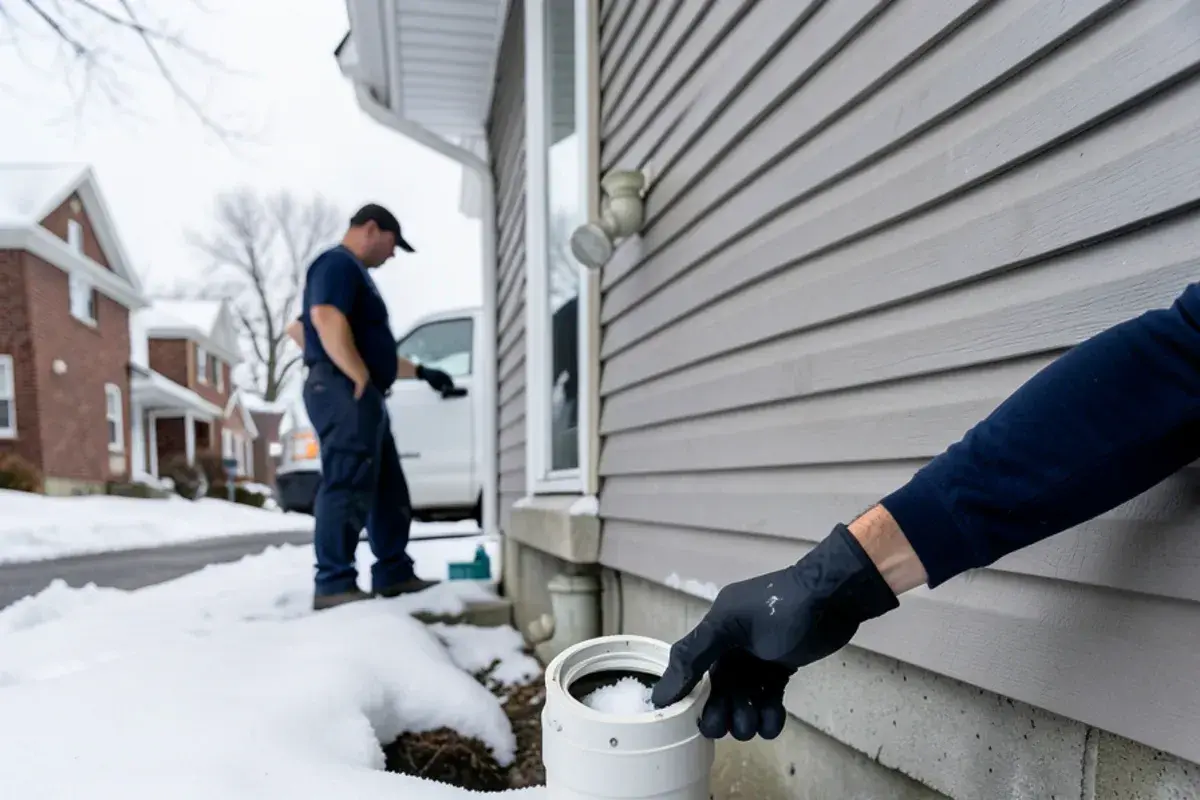
On a natural-draft tank, the metal vent pipe on top should be firmly attached all the way to the chimney. Soot, scorch marks around the top of the heater, or melted plastic on nearby fittings are signs exhaust is spilling into the basement. If you see that, turn the gas control to Off, leave it off, and make sure your carbon monoxide alarm works.
Electric water heaters: three checks
5. Look at the breaker
An electric water heater runs on a double-pole 240-volt breaker. If it's tripped, push it fully off, then back on. If it trips again right away, leave it off. That points to a shorted element or a wiring fault.
6. Press the high-limit reset button
Turn the breaker off first. Remove the upper access panel and fold back the insulation. On the upper thermostat you'll find a red reset button. If it's popped out, press it until it clicks, put the insulation and cover back, then turn the breaker on. Don't reach in with the power on.
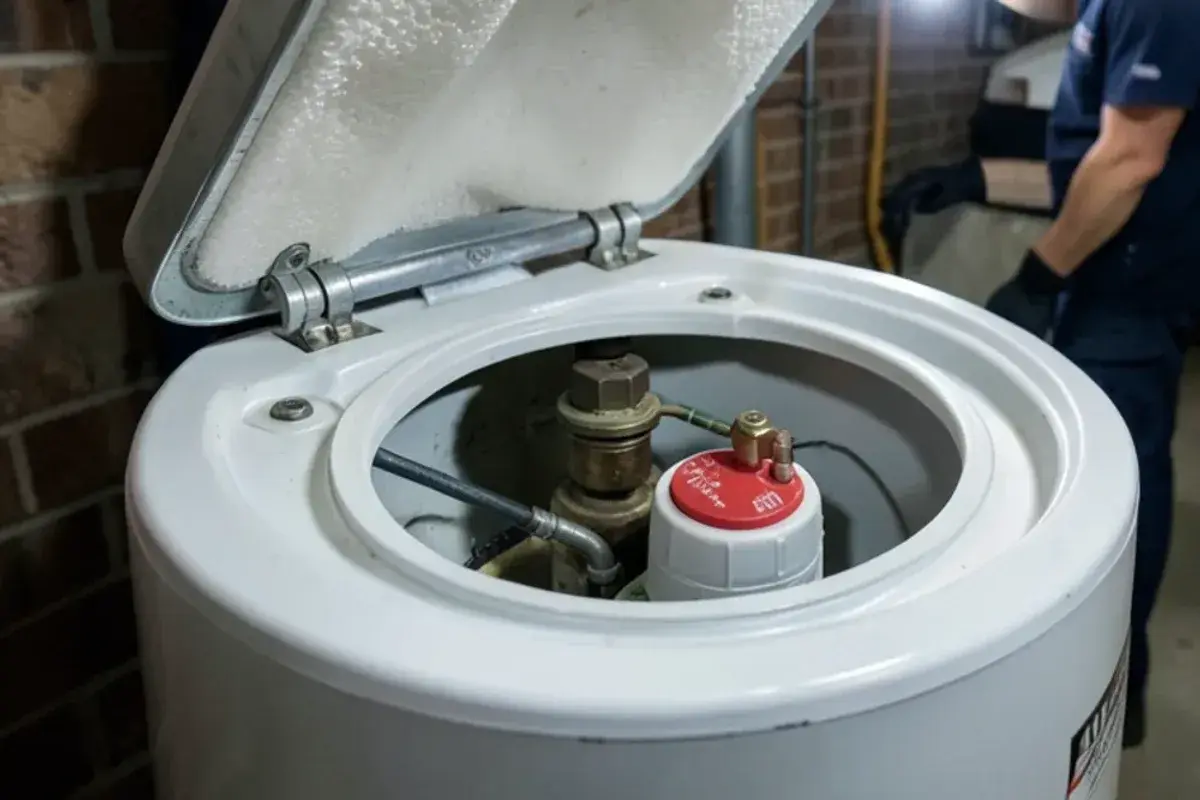
A reset that holds may have been a one-off. If it trips again within a day or two, a thermostat is sticking or an element is grounded, and resetting it over and over only hides the fault.
7. Think about the heating elements
The pattern tells you a lot. No hot water at all after a reset usually means the upper element or upper thermostat, since the upper one heats first. Hot water that runs out much sooner than it used to usually means the lower element has failed. Moderately hard water, like the GLWA supply in much of Macomb County, coats that lower element with scale over the years.
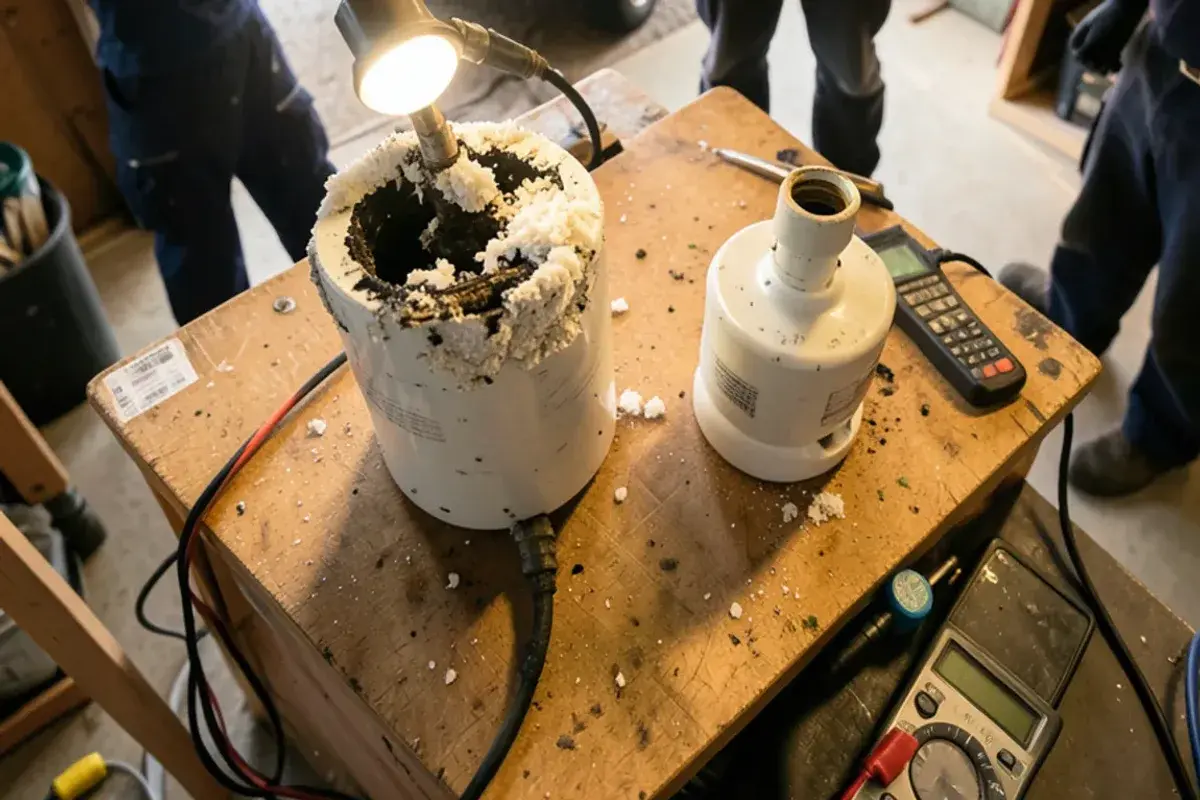
Testing an element with a multimeter means working near 240-volt terminals. If that's not something you do regularly, stop at the symptom and let a plumber test it.
What plumbers commonly find on a no-hot-water call
On gas tanks, the usual culprit is the part that proves the flame. A thermocouple, or the thermopile on sealed-burner models, weakens with age, and the pilot drops out a day or two after every relight. People often go through the lighting routine three or four times before calling. Relighting can't fix a weak sensor. It only buys a few hours.
The next most common find is a flammable vapor sensor lockout, often after a gas can, paint or a mower was stored beside the heater. On many models that lockout can't be reset, and the burner assembly or gas control has to be replaced.
On electric tanks, it's usually a lower element crusted in scale. GLWA's Lake Huron water averaged 99 ppm hardness in Macomb Township's 2024 report, which is only moderately hard, but years of heating cycles still leave a crust on the element and sediment in the bottom of the tank.
Lukewarm water instead of none
Water that's warm but never hot has its own short list. The dial may have been turned down, the upper thermostat on an electric tank may be failing, or the dip tube may have broken, letting incoming cold water mix at the top of the tank. Small white plastic bits in faucet aerators are the giveaway for a dip tube. A shower mixing valve set low can fool you too, but only at that one fixture.
What each fix can and can't do
A new thermocouple, igniter, element or thermostat brings a sound tank back to work. None of them help a tank that leaks from the shell or sends out rusty hot water from a corroded lining. Flushing an old, heavily sedimented tank is a trade-off as well: it can restore lost capacity, and it can also open a pinhole the sediment was sealing. If the answer turns out to be a replacement, Michigan treats the gas connection as mechanical work, and cities such as Utica require a permit and inspection for a new water heater.
When to stop and call
Stop checking and call if you notice any of these:
- a gas smell at any point (leave the house first)
- water seeping from the tank body itself, not a fitting
- the relief valve dripping or discharging
- a pilot that won't stay lit after one relight
- a breaker or reset button that trips twice
- soot, scorching or a rumbling, banging tank
A leak from the tank shell can't be repaired, and the conversation turns to water heater installation. Most of the other causes are parts: thermocouples, igniters, gas controls, elements, thermostats and vent switches, covered on our water heater repair page.
Bring your results to the call
A no-hot-water visit goes faster when the plumber knows what you've already ruled out. In Sterling Heights, where most houses went up between the 1960s and the 1980s, the heater in the basement is rarely the original, so its label matters more than the house's age. Write down the model and serial number, any error code or blink count, and which of the seven checks failed. Then call (207) 419-2600 and we'll connect you with a local plumber who covers your street.
Common questions
Why do some faucets have hot water and others don't?
If the kitchen runs hot and the shower runs cold, the heater is working. Look at the faucet instead, usually a worn cartridge or the anti-scald limit stop inside a single-handle shower valve, which a plumber can adjust. A whole-house loss points back to the heater.
How long after relighting a pilot will I have hot water again?
A gas tank that has gone fully cold needs time to reheat the whole tank. Expect usable hot water in roughly an hour on a typical gas tank, longer on an electric one. If the water is still cold well after that, the burner probably isn't staying on.
Is it safe to relight a water heater pilot myself?
Yes, it's safe to follow the lighting instructions printed on the tank's label, once, if there's no gas smell. Don't remove the sealed burner door or bypass any sensor. If it won't light or won't stay lit, stop there and call.
Where we can help
Checked everything and the water is still cold?
- Your call goes to an independent local plumbing company that does the work.