
Cost questions
What drives water heater replacement cost in Michigan
Water heater replacement cost comes down to a handful of decisions about size, fuel, venting, code items and access, and most of them are settled by what's already in your basement.
By Plumbers in Macomb, MI · Published · Last updated
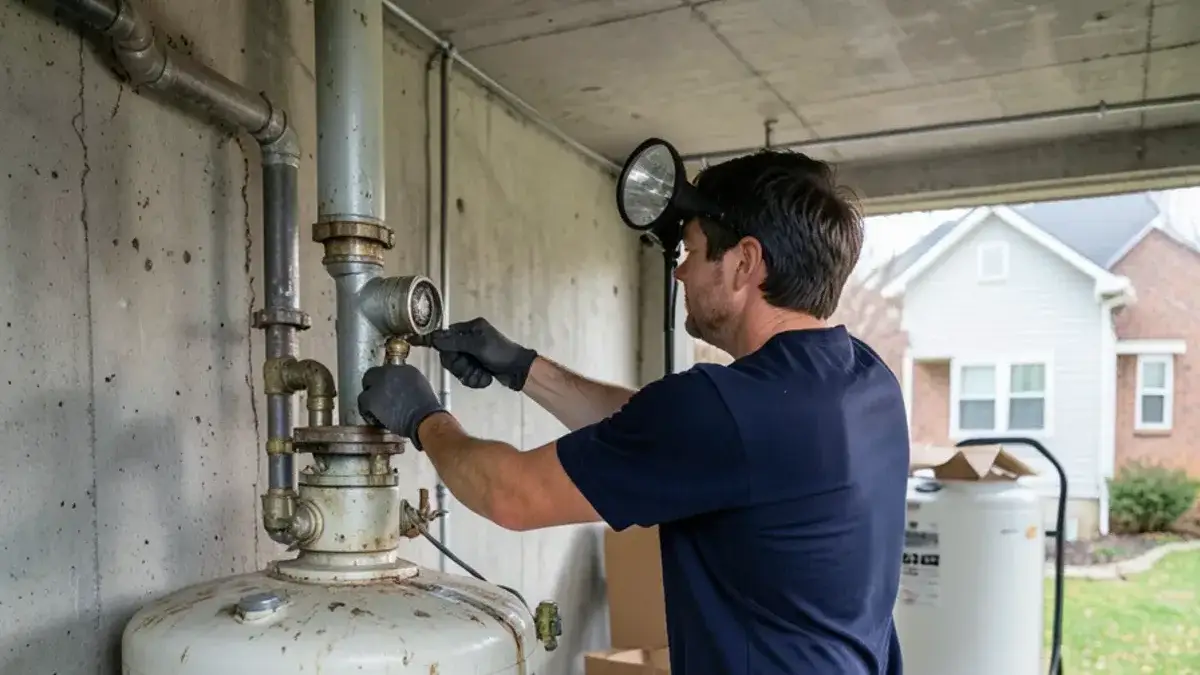
Water heater replacement cost depends less on the tank than on your basement: the fuel it burns, how it vents, the code items today's inspector expects, the permit, and how hard it is to get the old tank out and the new one in. The tank itself is one line on the quote.
Why two quotes for the same tank can look different
You won't find prices here. The same factor can be a small add-on in one house and the biggest line in the next.
Picture two 50-gallon gas tanks in two Macomb County basements. The first sits beside a floor drain, vents into a sound chimney, and already has an expansion tank. The second sits in a finished utility room with no drain nearby, shares a chimney the new high-efficiency furnace no longer uses, and has a pressure-reducing valve on the main with no expansion tank.
Same water heater. Very different afternoon of work.
A good quote names those differences. If one quote is far lower than another, look for what it leaves out: the permit, the expansion tank, the venting changes, or hauling away the old tank.
Want the cost factors for your own basement explained?
- Your call goes to an independent local plumbing company that does the work.
Water heater replacement cost factors at a glance
| Factor | Why it changes the price |
|---|---|
| Tank size and first-hour rating | Bigger tanks cost more, weigh more, and may need wider space or new pipe connections |
| Fuel type | Gas, electric and heat pump units are priced differently, and switching fuel adds gas piping or a new circuit |
| Venting | A chimney may need a liner, and a power-vent unit needs a wall vent and an outlet |
| Code upgrades | Expansion tank, relief discharge pipe, drain pan and gas connection items get added when the old setup falls short |
| Permit and inspection | The permit, the inspection and any corrections the inspector asks for are part of the job |
| Access | Turning stairs, finished ceilings, closets and crawl spaces add labor and sometimes a second person |
| Haul-away | Draining, carrying out and disposing of the old tank takes time |
| Tank vs tankless | A conversion changes the gas supply, venting, drainage and electrical needs |
Size and fuel
Most Michigan homes replace like with like, usually a 40- or 50-gallon gas tank. Size it by the first-hour rating printed on the tank; that figure tells you how much hot water the tank delivers in a busy hour starting full. A household that runs two showers back to back, then the dishwasher, can outgrow a 40-gallon tank.
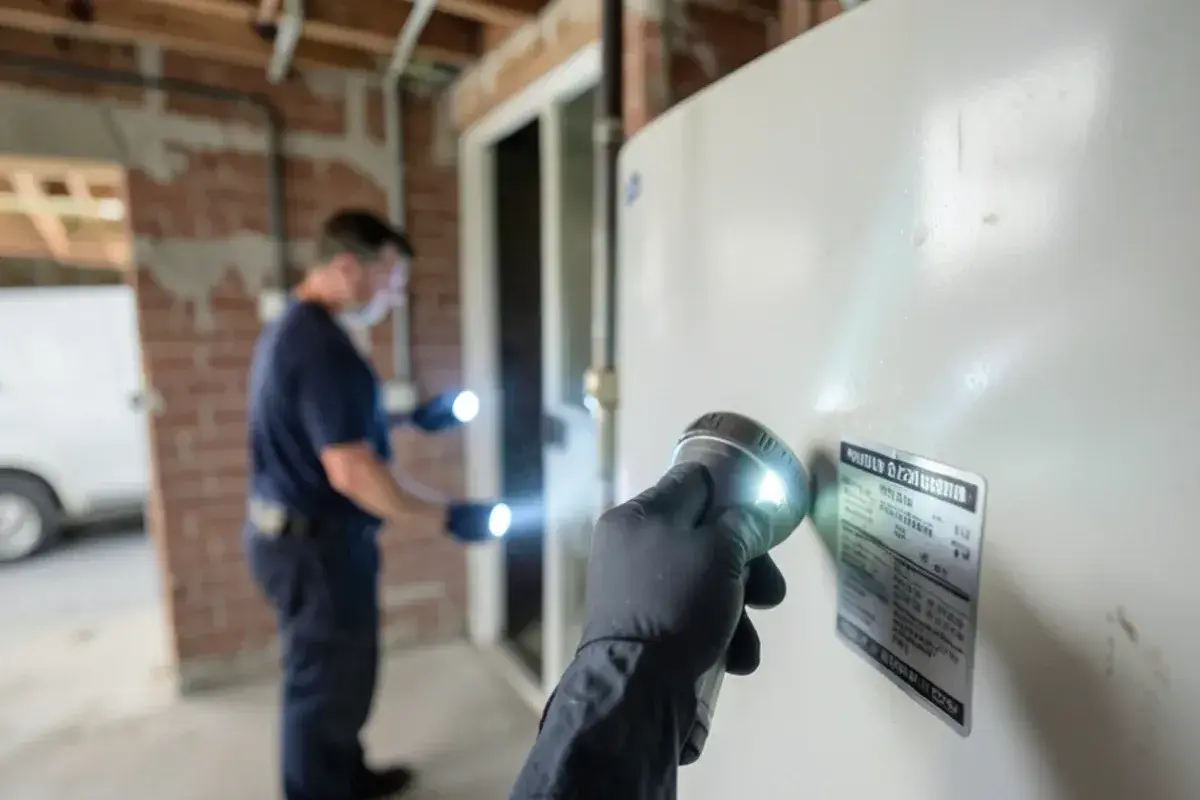
Fuel matters twice. Electric, gas and heat pump models carry different price tags. Switching fuel adds a second trade. Going from electric to gas means new gas piping, which Michigan licenses under its mechanical contractor categories, with its own permit and pressure test. Going from gas to electric usually means a dedicated 240-volt circuit from an electrician. Heat pump water heaters also need open air around them and a condensate drain.
Venting the new heater
Venting is where basement layouts start to show up in the price. A standard gas tank sends exhaust up a metal connector into the chimney by natural draft. If the furnace that shared that chimney has been replaced with a high-efficiency model venting through plastic pipe, the water heater may now be alone in a flue sized for two appliances. A small appliance in a large, cold masonry chimney can draft poorly and leave condensation inside the chimney. The usual fix is a liner sized for the water heater.
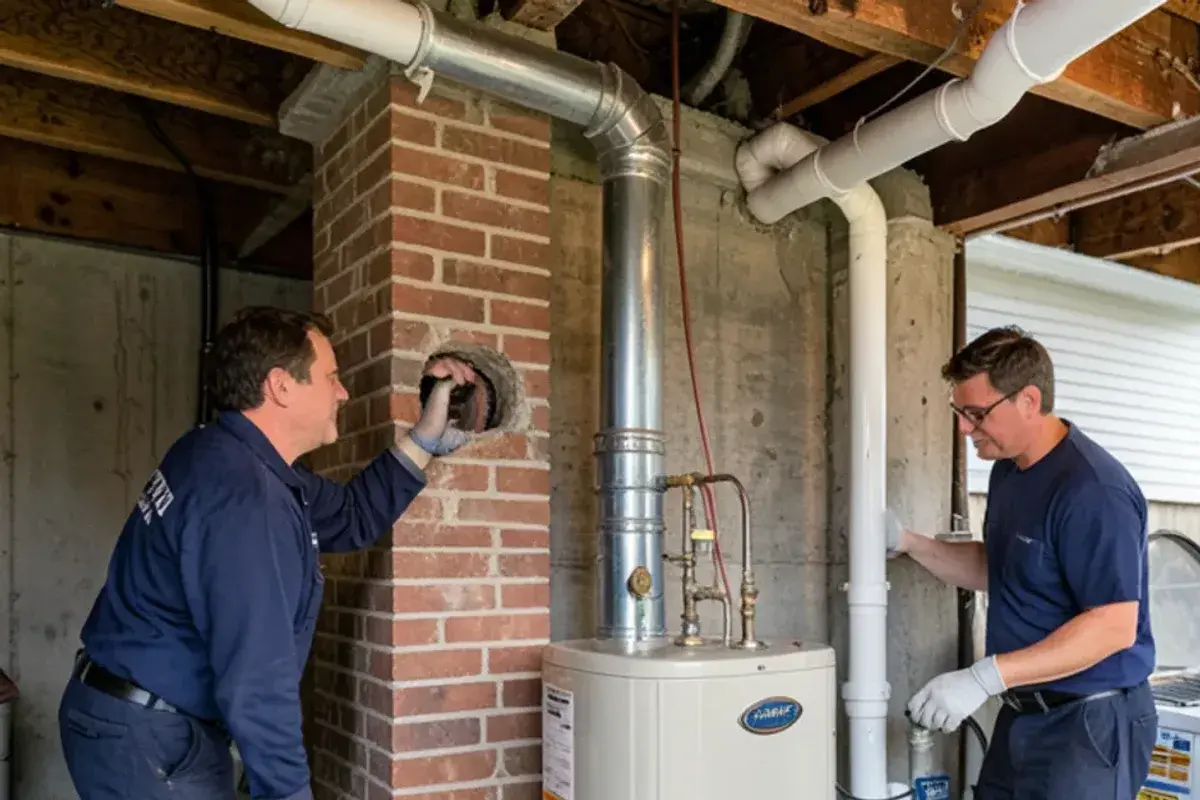
Power-vent tanks use a fan to push exhaust out a side wall, so they need an outlet nearby and a termination clear of windows, the gas meter and the winter snow line. Switching between natural draft and power vent changes the scope.
Code upgrades that come with a replacement
A replacement is installed to the code in force now, which for one- and two-family homes is the Michigan Residential Code. Four items come up again and again.
Expansion tank
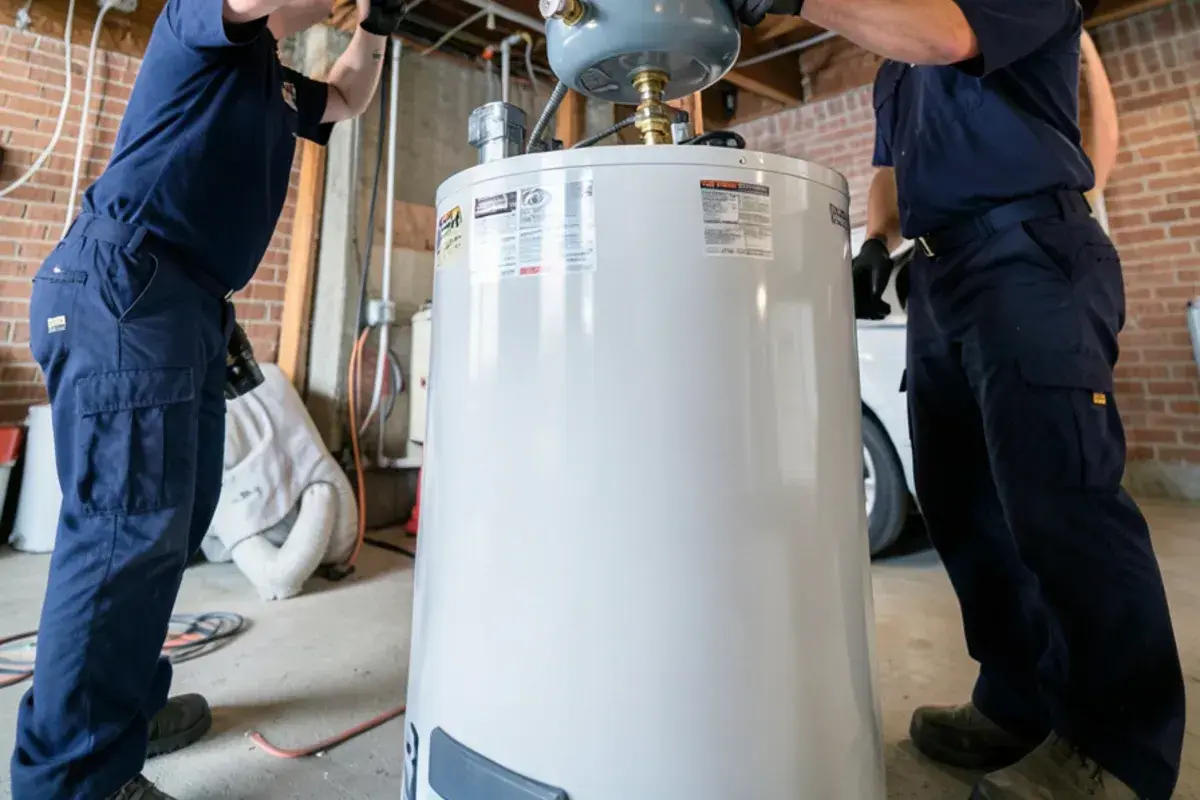
Heated water expands. If your cold water line has a check valve, a pressure-reducing valve or a backflow preventer, the expanding water is trapped in the house piping, so the code calls for thermal expansion control. In a house that's usually a small expansion tank on the cold supply. Macomb Township's plumbing permit fee table lists the expansion tank as its own item.
Relief valve discharge pipe
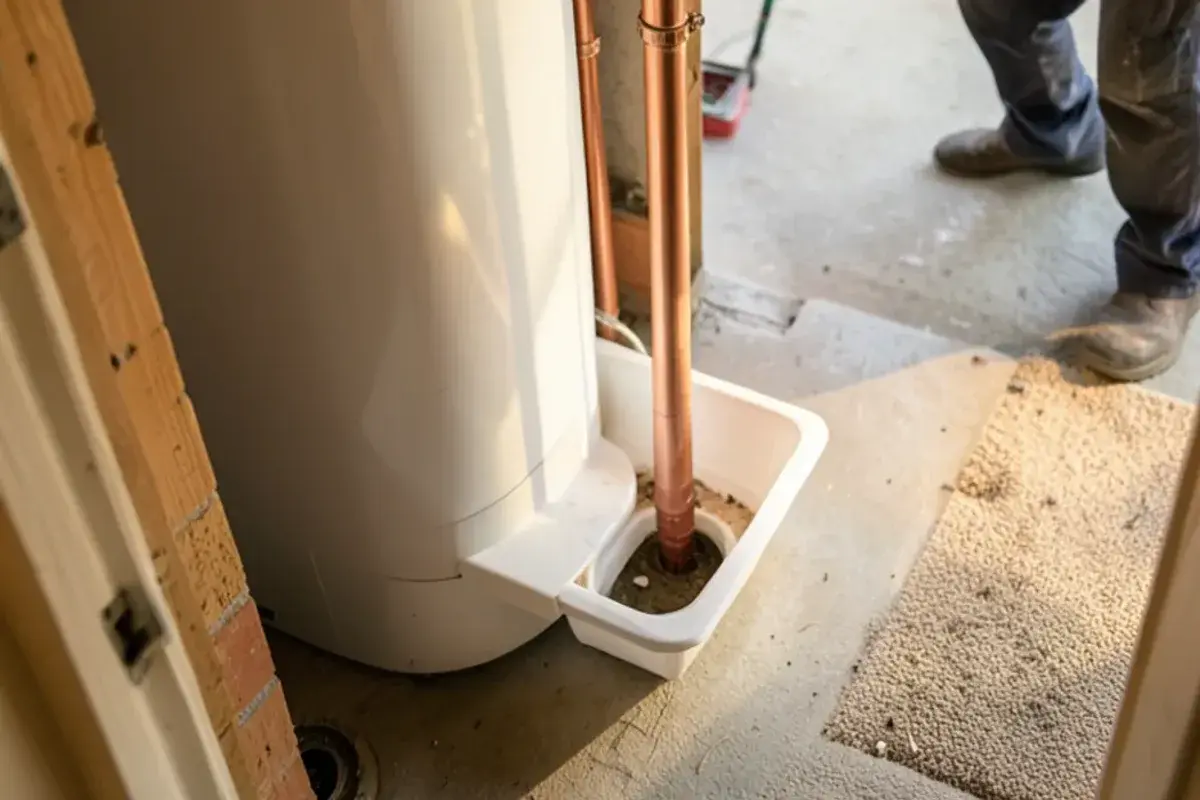
The temperature and pressure relief valve needs a full-size discharge pipe that runs down to an approved spot near the floor, a pan or a waste receptor, with an air gap, no threads on the end, no valves and no sags. Older installs often have a short stub or a pipe tied straight into a drain. Those get redone.
Drain pan
Where a leaking tank would damage the space, the heater sits in a pan piped to a safe place. A tank in a finished basement or a closet next to living space usually lands here.
Gas connection
On gas units, the connection gets an accessible shutoff valve and a sediment trap at the appliance. Old, corroded flexible connectors are replaced rather than reused.
Permit and inspection
In most Macomb County communities, replacing a water heater is permitted work. Macomb Township puts residential water heaters on its plumbing fee table, and Utica's building department says a water heater replacement needs a permit and inspection. So does Harrison Township. Expect an application fee plus per-item fees, and an inspection that looks at venting, the gas connection, the relief discharge and expansion control. If the inspector asks for a correction, that work is part of finishing the job.
Michigan lets two kinds of applicants pull it: a licensed plumbing contractor, or an owner doing their own work in the one-family house they occupy. If the gas piping or the vent is changing, check whether your building department also wants a mechanical permit.
Access and haul-away
A tank at the bottom of straight basement stairs, next to a floor drain, is the easy case. Add a finished ceiling, a turn in the stairs, a crawl space, or a heater boxed in behind a wall, and the job takes longer. Sediment from moderately hard water can also plug the drain valve and slow the draining.
The old tank has to leave the house and go somewhere. Removal and disposal is usually its own line, so check that your quote includes it.
When tankless enters the picture
If you're weighing a tankless unit, the estimate changes shape. These units need far more gas than a tank, which can mean a larger line from the meter, and that's gas line work under a mechanical license. They also need dedicated venting, an outlet, and often a condensate drain. Our comparison of tank and tankless heaters covers Michigan water temperatures and flow, and the tankless water heater installation page covers that job.
What plumbers find when the old tank comes out
Plenty of replacement quotes change once the old heater is drained and disconnected, and the reasons repeat from house to house.
The cold-water shutoff above the tank is often an old gate valve that hasn't been turned in years. When it won't close fully, the main has to be shut and the valve replaced too. Steel nipples and dielectric unions on top of an older tank are commonly rusted enough that they come out with the tank rather than being reused.
On gas units, a draft test after the new tank is lit can show the chimney isn't pulling the exhaust up. That turns a straight swap into a liner job, and it's better found then than by a carbon monoxide alarm later. Going up a size can also expose a gas branch that was barely adequate for the old burner.
Timing changes the bill as much as hardware does. A tank replaced on a planned weekday, with the right model ordered ahead, is a simpler job than one swapped after the shell starts leaking on a Saturday, when the choice comes down to what's on the shelf.
It also helps to know what replacement can't fix. A tank that leaks from the shell is finished, but a gas tank with a failed thermocouple, igniter or gas valve, or an electric tank with a burned-out element or thermostat, can often be repaired for a fraction of the disruption. A bigger tank won't cure low pressure from old galvanized pipe, and a new tank won't stop scale from coming back. Longer manufacturer warranties usually come with heavier construction, such as a thicker anode or more insulation, so compare what the warranty years actually buy rather than the number alone.
What to ask before you approve a quote
Read the quote against this short list:
- Is the permit, and the inspection, included?
- Does it include an expansion tank, or explain why one isn't needed?
- What venting changes, if any, are planned?
- Is the relief discharge pipe being redone to code?
- Who drains and hauls away the old tank?
- What manufacturer warranty does the new tank carry?
When you're ready to price your own, our water heater installation page explains how a replacement is sized, permitted and installed. Call from Macomb Township or a nearby community, and we'll connect you with a local plumber who explains each of these factors for your basement before any work starts. The number is (207) 419-2600.
Common questions
Does a water heater replacement need a permit in Macomb County?
Yes, in most Macomb County communities. Macomb Township puts residential water heaters on its plumbing fee schedule, and Utica and Harrison Township both call for a permit and an inspection on a replacement. Harrison Township runs its plumbing inspections on Monday, Wednesday and Friday mornings, so the inspection may not land on the day the new tank goes in. Plan for that when you schedule the work.
Why does my quote include an expansion tank when the old heater never had one?
The new heater is installed to the code in force today. If your cold water line has a check valve, a pressure-reducing valve or a backflow preventer, the code calls for thermal expansion control on the cold side, which in a house usually means a small expansion tank.
Is a tankless heater always the more expensive replacement?
No, though it usually is. The unit is only part of it. Converting from a tank usually adds a larger gas supply, new venting, a condensate drain and an outlet, so the installation scope is bigger. Whether that's worth it depends on how long you plan to stay and how your household uses hot water.
Where we can help
Want the cost factors for your own basement explained?
- Your call goes to an independent local plumbing company that does the work.