
Emergency guides
What to do when a pipe bursts in your Michigan home
Knowing what to do when a pipe bursts decides whether you end up mopping a floor or replacing one. This is the order to work in, starting with the main valve and ending with the plumber's repair.
By Plumbers in Macomb, MI · Published · Last updated
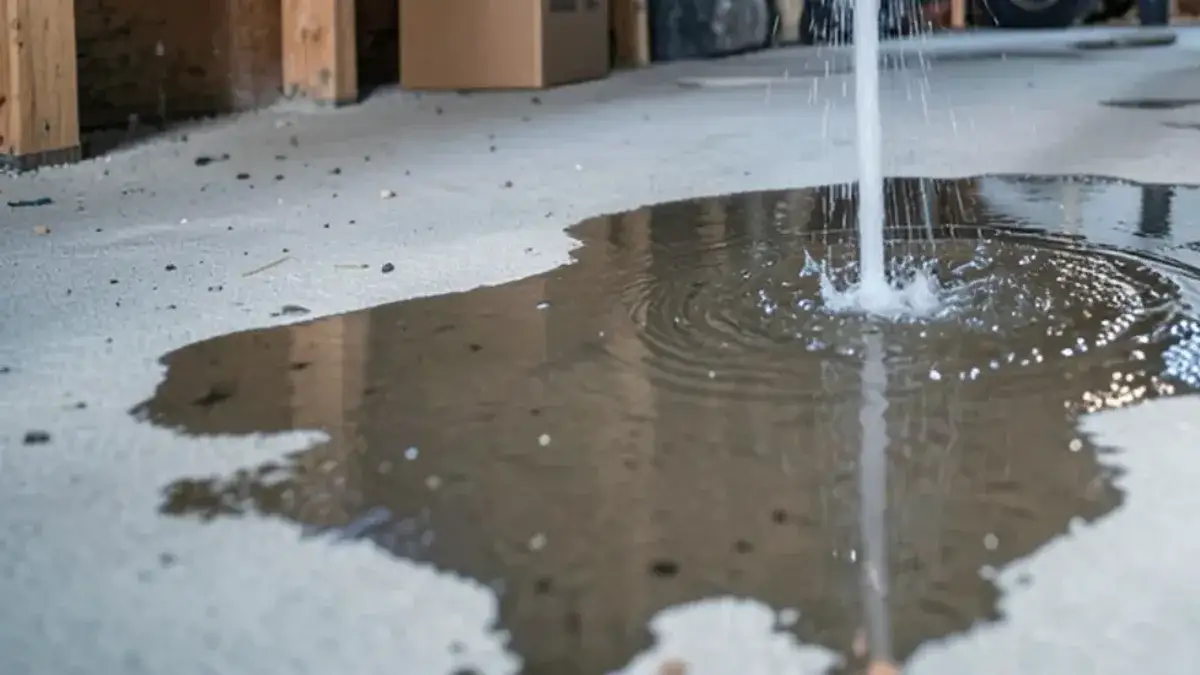
When a pipe bursts, shut off the main water valve first, then open the lowest faucet to drain the lines, take the water heater out of service, and stay out of water near anything electrical. Photograph the damage before cleanup, start drying within 24 to 48 hours, and call a plumber to cut out and replace the split section.
The first five minutes after a pipe bursts
A split pipe in a Michigan house rarely gives a warning. Many are found on the first mild day after a deep freeze, when ice in a wall or ceiling thaws and the water finally has somewhere to go. The steps below are written for a typical Macomb County home with a basement, where the main valve, the water heater and the breaker panel tend to sit within a few feet of each other.
Work through these in order. The first one matters most.
- Shut the main water valve. In most basements around here it's low on the front foundation wall, next to the water meter, where the service line comes in from the street. A round wheel handle turns clockwise until it stops. A lever handle turns a quarter turn so it sits across the pipe. If you've never found yours, our guide to finding your main water shutoff valve shows where to look.
- Open the lowest faucet in the house. A laundry tub or basement utility sink works well. Then open a tap on the top floor. This drains what's left in the lines so the split stops pushing water.
- Take the water heater out of service. Turn a gas control to pilot, or switch off the breaker for an electric heater, so it doesn't fire on a tank that's draining.
- Move what you can. Boxes, rugs, electronics and anything made of paper go upstairs or onto a shelf.
- Contain the rest. Buckets under the drip, towels at the edge of the puddle, and a wet vac if you have one.
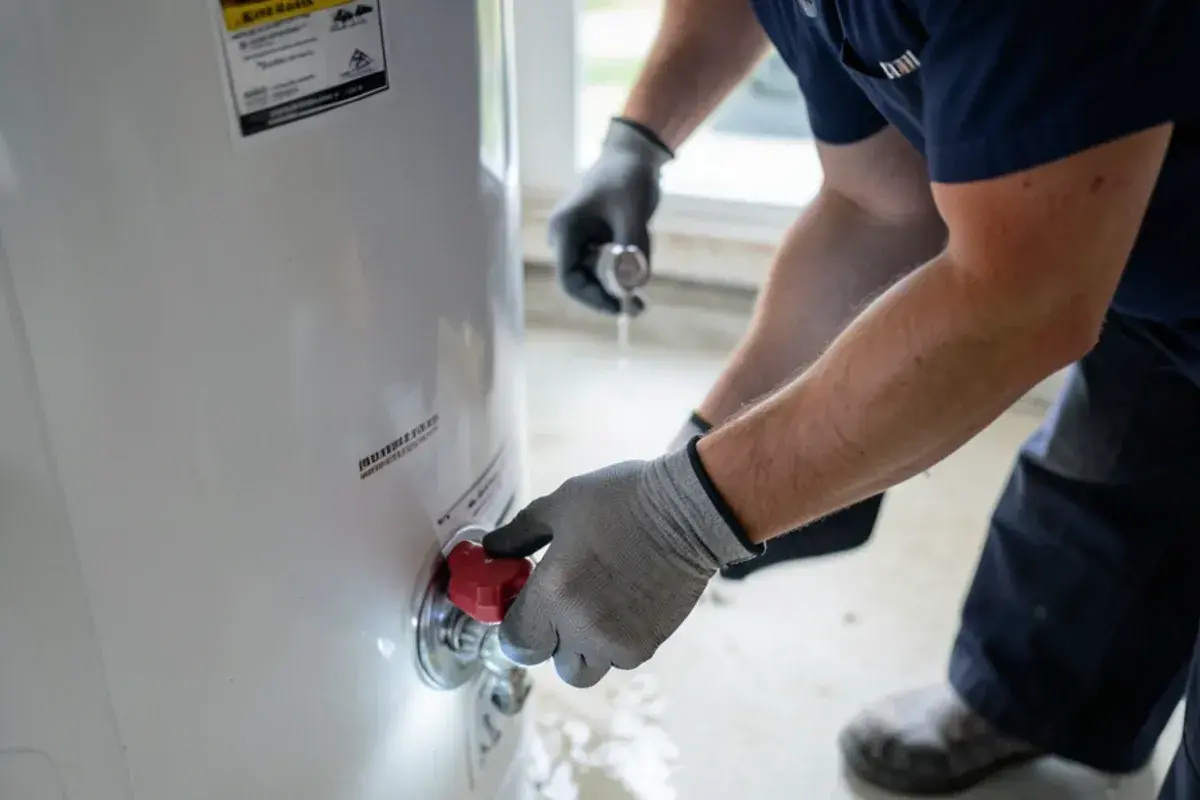
Electrical safety comes before the mop
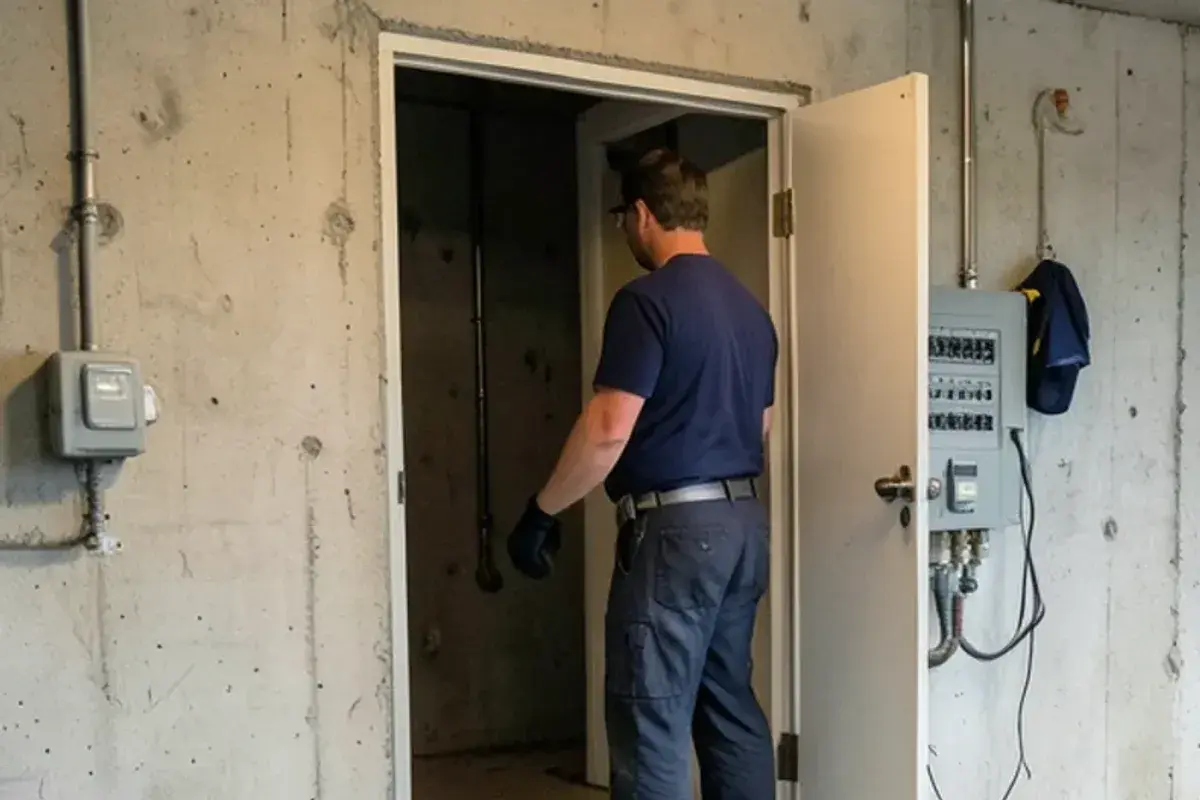
Water and a basement full of extension cords, a chest freezer and a sump pump plug is a real shock risk. Don't walk into standing water if it could reach an outlet, a cord or an appliance. If the breaker panel sits on a dry part of the floor, switch off the basement circuits from there. If you'd have to cross water to reach it, stay out and call an electrician or your electric utility instead.
Water dripping through a ceiling light is a separate warning. Switch that circuit off at the panel, and leave the wall switch alone.
Water shut off but the pipe is still split? Talk to a plumber
- Your call goes to an independent local plumbing company that does the work.
Photograph everything before you clean
Your insurer will want to see the damage as it was, so take pictures before the first towel goes down. Policies differ on what they cover, so read yours or call your agent before you throw anything out.
| What to photograph | Why it helps your claim |
|---|---|
| The split, crack or failed fitting, up close | Shows the cause of the water |
| A wide shot of each wet room from the doorway | Shows how far the water spread |
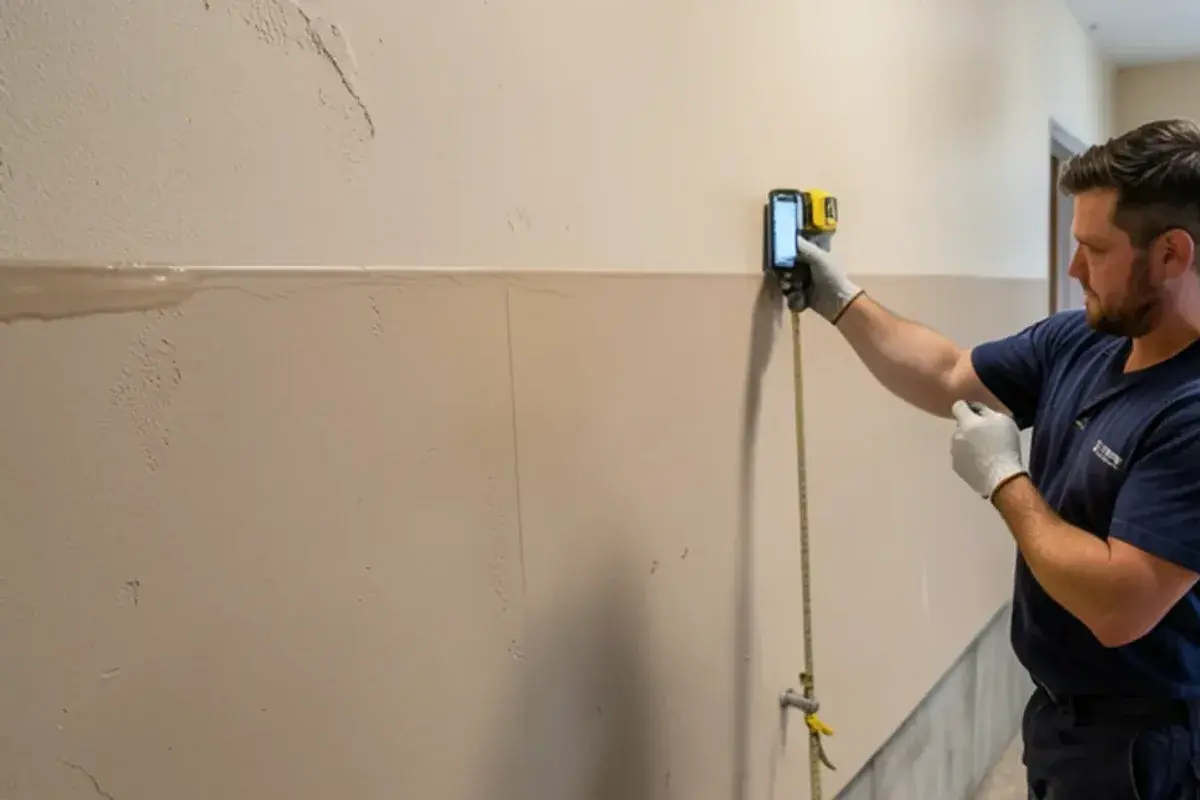
| The waterline on walls, with a tape measure | Shows how high the water rose |
| Damaged items with model or serial labels | Supports replacement value |
| The thermostat setting, if the pipe froze | An adjuster may ask whether the house was heated |
Write down the time you found the water and the time you shut it off. Ask the plumber to keep the cut-out section of pipe for you. Some adjusters like to see it, and it fits in a bag in the garage.
Renting, or living in a condo
Attached homes add a second set of people to call. A large share of housing in Clinton Township is condos, and in Utica about four in ten homes are in buildings with two or more units, so a burst line often reaches a neighbor's ceiling or a shared wall. Tell the landlord or the association manager as soon as the water is off, since the building's master policy and your own policy may split the damage between them. Renters usually leave the pipe repair to the owner, while renters insurance, if you carry it, is what covers your belongings.
The 24 to 48 hour drying window
The EPA's mold guidance sets a target of 24 to 48 hours for getting wet building materials dry. That clock starts when the water hits the floor, which is why a burst pipe found on a Sunday night should still get fans running before Monday.
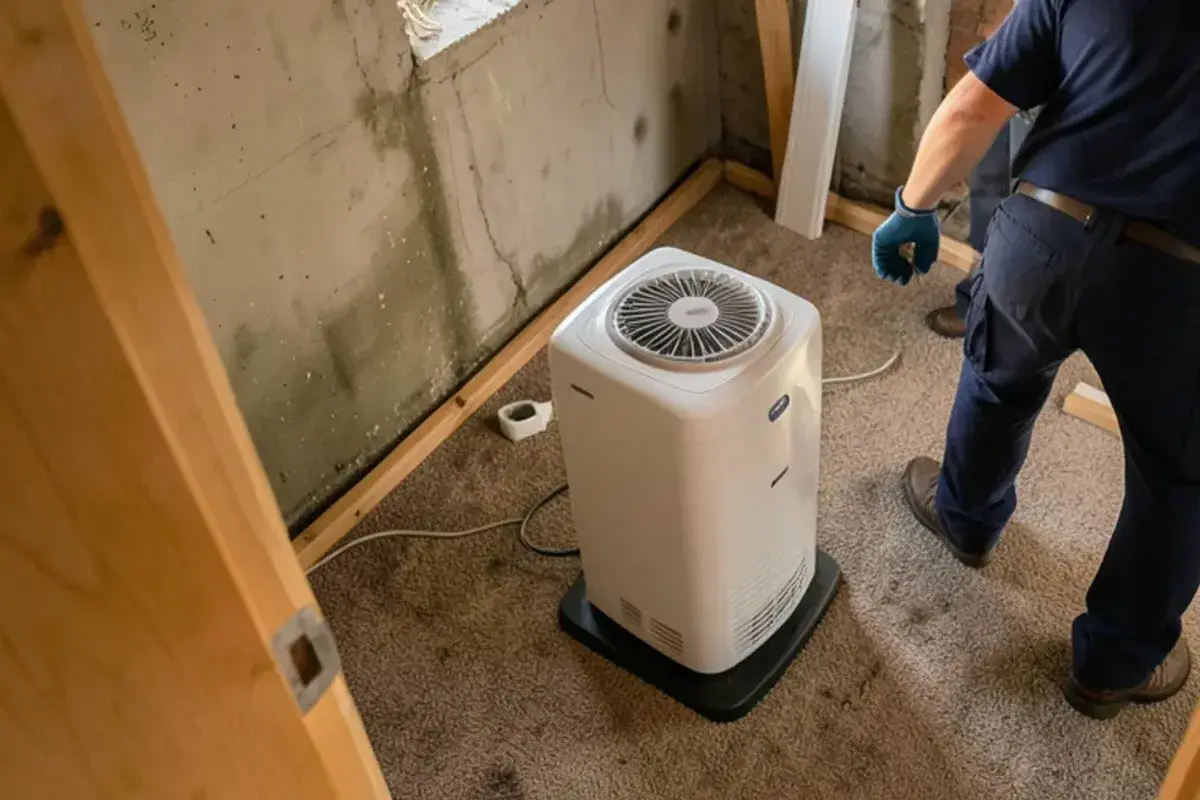
Pull up carpet pad, since it holds water like a sponge and rarely dries in place. Get cardboard boxes out of the room entirely. Run a dehumidifier with the door closed and point fans across wet surfaces. In winter, the furnace helps, because heated indoor air holds more moisture for the dehumidifier to pull out.
Drywall that wicked water up from the floor usually needs the bottom cut away so the wall cavity can dry. Large jobs are worth a call to a water restoration company. One exception changes everything here: if the water came up through a floor drain rather than out of a supply pipe, treat it as sewage. Our guide to sewage backups in the basement covers that cleanup.
Why pipes burst in Michigan homes
Ice in the line
When water freezes in a pipe, the ice plug traps the water between itself and a closed faucet. Pressure builds in that trapped section until the pipe splits, often a few feet from where the ice formed. Lines in exterior walls, the rim joist area above the foundation, attached garages and the supply to an outdoor spigot freeze most often. The split leaks only after the ice melts. Our frozen pipe repair page explains how thawing and repair work on those lines.
Age, pressure and worn parts
Plenty of bursts have nothing to do with cold. A washing machine hose gives out, a flexible connector under a sink cracks, or old galvanized pipe rusts through at a threaded joint. High street pressure and water hammer (the bang you hear when a valve snaps shut) both add stress to old joints. Homes in Sterling Heights, where much of the housing went up in the 1970s, are reaching the age where original fittings and supply hoses start to fail.
What the plumber does when they arrive
You call and describe what happened and what you've already shut off. When the plumber gets there, the visit usually runs like this:
- Confirm the water is off and look at every run near the leak, because one freeze can split a line in more than one spot.
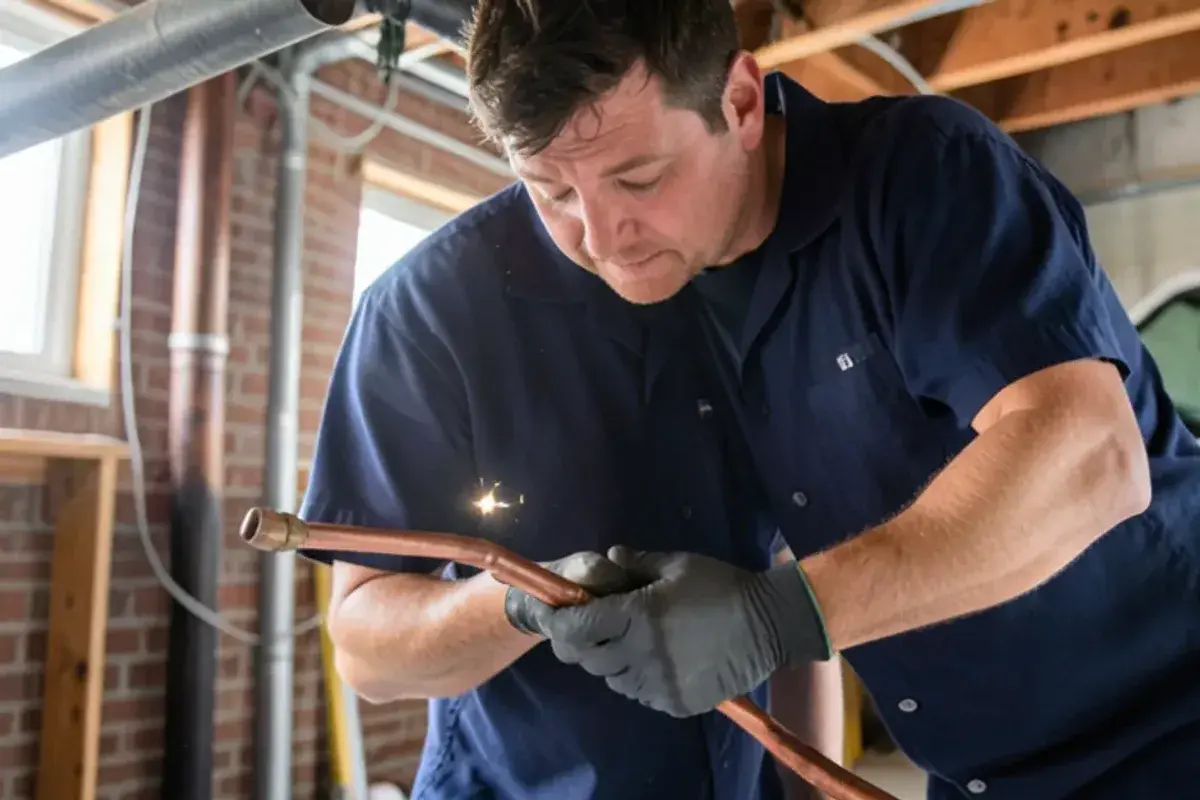
- Cut out the damaged length and join in new copper or PEX, depending on what's already in the house.
- Refill the system slowly with faucets open to push out the air, then check each joint under pressure.
- Explain what caused the failure and whether the line should be rerouted off an outside wall or insulated.
Before any work starts, the plumber explains the cause, the repair choices and what affects the price. If the fix means rerouting or replacing a long run, ask whether it needs a permit. Under Michigan's rules, the only repairs that skip a permit are ones limited to a faucet's or valve's moving parts, or to clearing a clog, with no change to the piping or fixtures. Our pipe repair page goes through repair methods in more detail, and emergency plumbing repair covers what happens when water is still running and you need someone now.
What plumbers often find after a burst, and the limits of a quick fix
The split you can see is not always the only damage. A single cold night can crack a line in two or three places along an outside wall, and a second leak inside a finished wall may not show until the system is back under pressure. That's why the refill step is done slowly and with someone watching the ceiling below.
A repair clamp or a push-fit coupling can stop the water in minutes, and either one is a fair way to get the house running again. Some are rated as permanent repairs, some are meant to hold until the line is properly cut and joined, so ask which kind went in. On old galvanized pipe, a patch at one rusted joint often moves the next leak a few feet down the line. When that keeps happening, the conversation turns to repiping rather than another fitting.
Many winter bursts trace back to a hose bib. A frost-free spigot only protects itself if it slopes toward the outside and the hose is off before the first freeze. Leave a hose attached and the water trapped in the long valve body splits it inside the wall, where nobody sees it until spring.
Rerouting a line away from an outside wall fixes the cause. Insulating it or adding heat cable treats the symptom and can fail when the power goes out or the insulation gets wet. PEX tolerates a freeze better than copper, but its fittings can still be pushed apart, so a PEX line in a cold wall is still a risk.
Two things fall outside the plumber's work. Drying the structure is usually a separate restoration trade, and a sagging, water-filled ceiling needs care. Put a bucket under the lowest point and keep everyone out from under it until the power to that area is off.
Water off first, then the call
Shut the main, drain the lines, keep clear of anything electrical, photograph the damage and start drying. Those steps limit the damage no matter when the plumber arrives. If the pipe burst in a Macomb Township home or one of the communities around it, shut the water off first, then call (207) 419-2600 and we'll connect you with a local plumber who covers your street.
Common questions
Should I turn off the water heater when a pipe bursts?
Yes, if you shut the main and drain the house. A gas heater can go to its pilot setting and an electric one should be switched off at its breaker. That way the burner or elements can't run on a tank that's losing water through an open hot line. Turn it back on only after the plumber has refilled the system and the tank is full again.
Can I still flush the toilet with the main water valve off?
Yes, once. Each tank holds one flush, and it won't refill until the water is back on. You can flush again by pouring a bucket of water into the bowl. Keep in mind the drains still work, so any sink you run will drain normally, but no new water comes in.
How long do I have to dry the basement out?
For clean-water damage, the EPA's guideline is a 24 to 48 hour window to get wet materials dry before mold gets started. It's a guideline, so mold can still appear on something dried in time. Carpet pad, cardboard and the bottom of drywall soak up the most, so deal with those first.
Where we can help
Water shut off but the pipe is still split? Talk to a plumber
- Your call goes to an independent local plumbing company that does the work.