
Michigan seasons
How to prevent frozen pipes in a Michigan winter
You can prevent frozen pipes in most Michigan houses with an afternoon of prep before winter and a few habits once the forecast drops toward zero.
By Plumbers in Macomb, MI · Published · Last updated
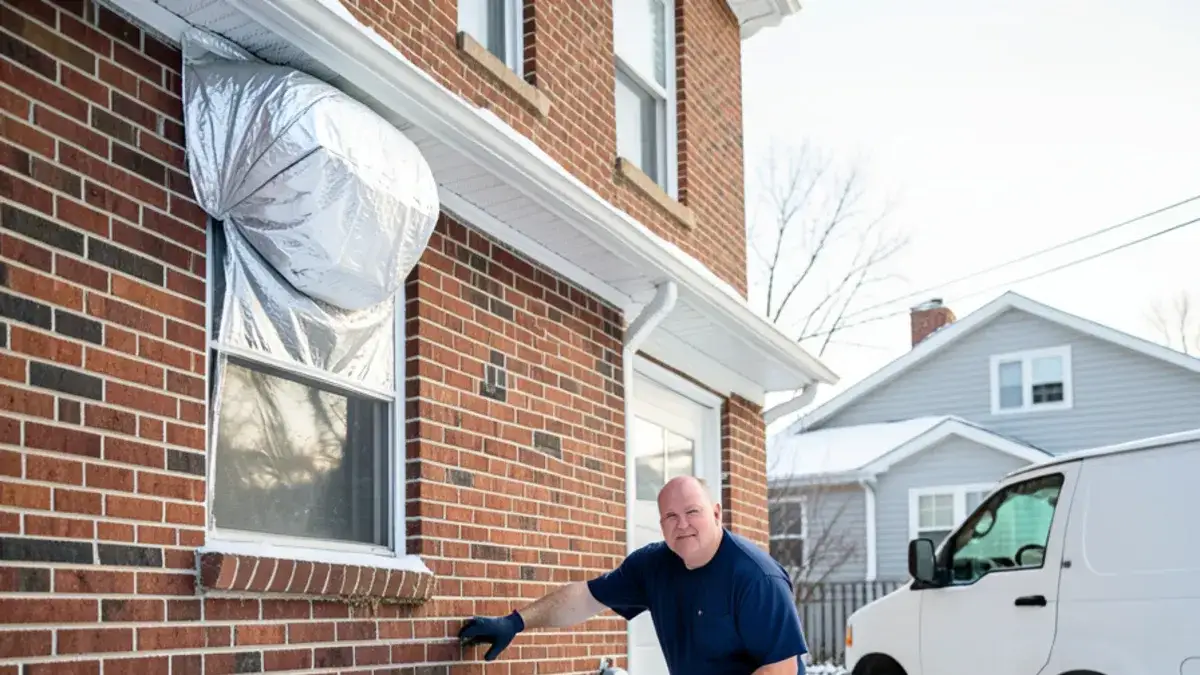
To prevent frozen pipes in a Michigan house, keep heat reaching every water line. Insulate pipes on outside walls and along the rim joist, shut off and drain outdoor spigots in the fall, open sink cabinets and run a thin drip on the coldest nights, and keep the heat at 55°F or higher when you travel.
Which pipes freeze first in Macomb County homes
Most freezes are predictable. They tend to hit on the first night below zero with a stiff wind, in a line someone forgot was there. A basement keeps most plumbing warm, so the trouble is at the edges of the heated space. These are the usual suspects.
| Where the pipe runs | Why it freezes | What to do before winter |
|---|---|---|
| Line to an outdoor spigot through the rim joist | The rim joist is the least insulated part of the basement, and cold air leaks in around the pipe | Shut the inside valve, drain the spigot, seal the gap |
| Kitchen or bath sink on an outside wall | Thin wall cavity between the pipe and the siding | Insulate the cavity if it's open, open cabinets on cold nights |
| Attached garage | Unheated space, often with a laundry or utility line | Keep the overhead door closed, insulate exposed pipe |
| Bathroom over a garage or a cantilevered floor | Cold air under the floor on three sides | Insulate the floor bay, keep the door to the bathroom open |
| Crawl space or slab addition | Little or no heat reaches it | Close vents for winter, insulate pipe, consider heat cable |
| Sprinkler supply and backflow device | Outdoors and above ground | Shut off and blow out in fall |
Older houses add to the list. In Romeo, more than 40 percent of homes were built before 1960, and houses of that era often have less wall insulation and plumbing that was rerouted during later remodels. Lakeside homes take their own beating. Along Anchor Bay in New Baltimore, the older homes in the waterfront core take the open wind off the bay, which pulls heat out of any wall that faces it.
A line already froze? Have it thawed and checked for splits
- Your call goes to an independent local plumbing company that does the work.
Before a cold snap
Most of this takes an afternoon in October or November. The rest is a few habits for the coldest nights.
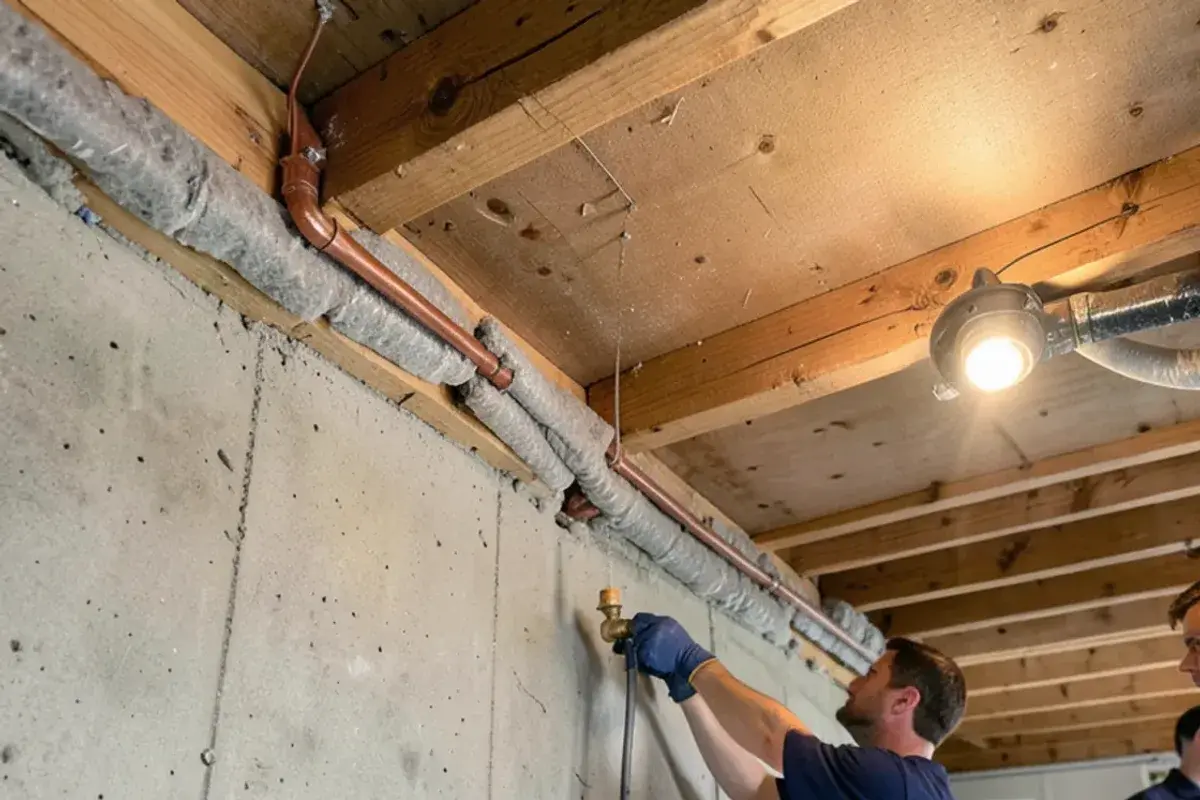
- Insulate water lines along exterior walls. The Michigan State Police included that advice in their 2025 winter preparedness release, and foam sleeves from a hardware store fit most basement copper.
- Seal gaps in the rim joist with spray foam, especially where pipes, cables and the dryer vent pass through.
- Shut the inside valve for each outdoor spigot, open the spigot outside, and leave it open for the winter. Take the hose off, even on a frost-free model.
- If any water line passes through the garage, keep the big door shut.
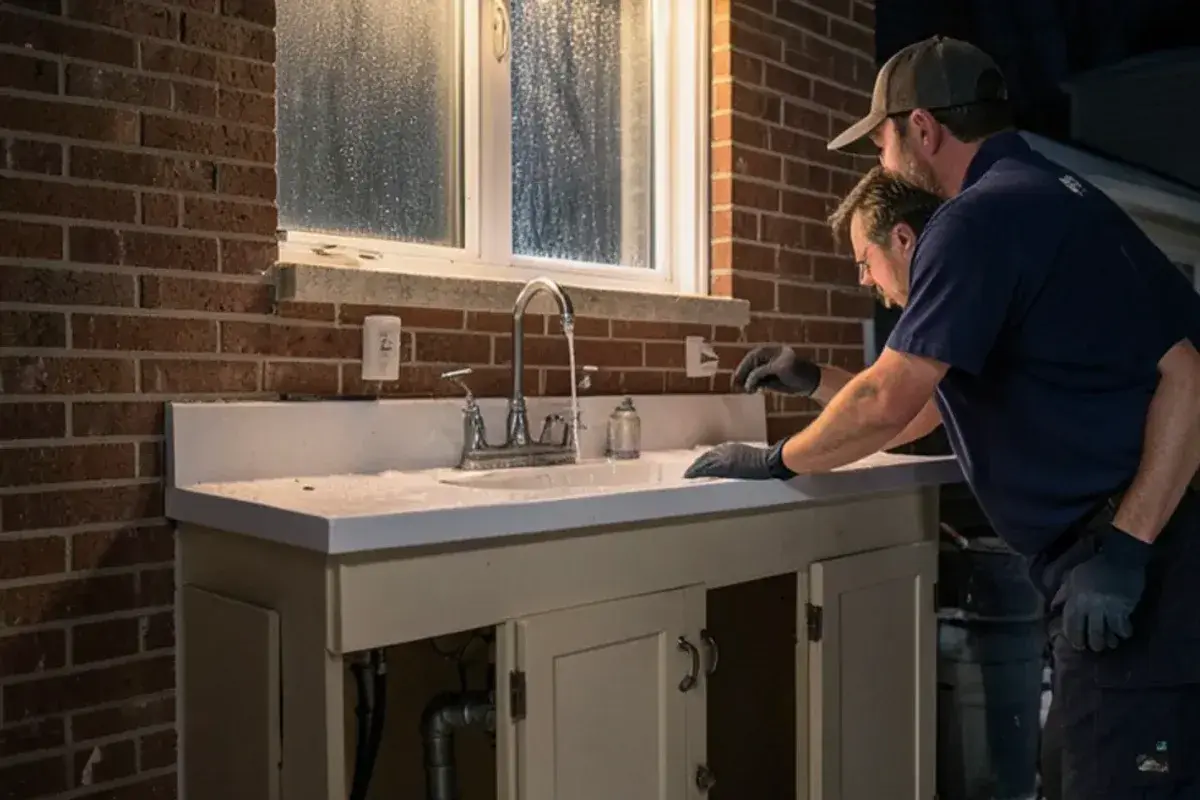
- On the coldest nights, open the cabinet doors under sinks on outside walls.
- Let a thin stream of cold water run from faucets served by exposed pipes.
- Keep the thermostat at one setting day and night during a deep freeze.
Electric heat cable can protect a line that can't be insulated well, like one in a crawl space. Use a product listed for pipe use and install it exactly as the instructions say.
Going away for the holidays
An empty house in January is where the worst freeze damage happens, because nobody is there to notice the first drip. The Red Cross advises keeping the heat at 55°F or higher while you're gone. Leave cabinet doors open on outside walls. For a long trip, consider shutting the main valve and opening a faucet at the lowest point to drain the lines, and set a gas water heater to its vacation setting. Ask someone to walk through the house every few days, or use a thermostat or sensor that texts you when the temperature drops.
If the power goes out in a cold snap
A winter outage takes away the furnace and, in many basements, the sump pump as well. A tight house holds heat for a while, so start with cabinet doors open and a pencil-thin drip at the faucets on outside walls. If the outage looks likely to run into a second cold night, shut the main valve, open the lowest faucet and one on the top floor to drain the lines, and turn off the water heater (gas control to Pilot, or the breaker for an electric tank). Run a generator outdoors only, well away from windows and doors. Heat cable won't help here, because it runs on the same power you just lost.
How to tell a pipe is frozen
One faucet gives a trickle or nothing at all while the rest of the house works normally. A toilet tank doesn't refill. You may see frost on an exposed pipe or a slight bulge in it. If every fixture in the house stops at once during extreme cold, the freeze may be at the service line or the meter, and the water department should hear about it.
Thawing a frozen pipe safely
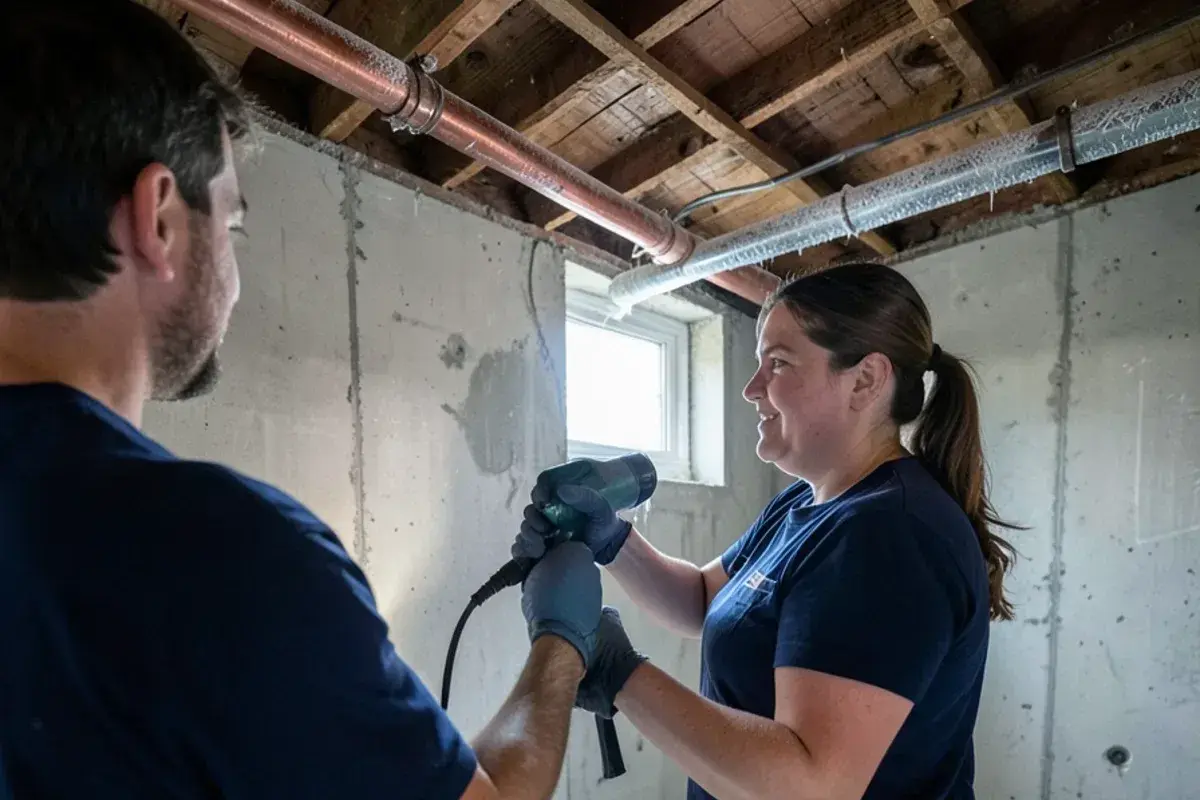
The American Red Cross guidance is straightforward. Keep the faucet open so melting ice has somewhere to go and running water can help clear the rest. Warm the pipe with a heating pad, a hair dryer, a space heater kept away from anything that can burn, or towels soaked in hot water. Start near the faucet and work back toward the frozen spot.
Never use a torch, a kerosene or propane heater, or any open flame. Pipes sit next to wood framing, paper-faced insulation and dust, and a torch can start a fire inside a wall that nobody sees until it's too late. Keep the hair dryer and space heater away from standing water.
If you can't find the frozen section or can't reach it, stop and call. Our frozen pipe repair page explains how plumbers locate and thaw lines hidden in walls and ceilings.
What splits when the ice melts
Ice doesn't usually burst a pipe where it forms. As the plug grows, it squeezes the water trapped between the ice and a closed faucet, and the pressure in that section climbs until the weakest spot gives. Copper tears open lengthwise. PEX stretches more, but the fittings can crack. You won't see a drop while everything is frozen. The leak starts when the ice melts.
That's why it pays to have someone standing by the main valve while a line thaws, ready to close it. It's also why a frost-free spigot that froze with a hose attached may not show damage until spring. The split is inside the wall, and the first time someone turns on the hose, water pours into the basement ceiling.
When a line does split, the plumber removes the torn length, joins in new pipe and inspects the rest of the run. Our pipe repair page covers how that's done, and faucet repair and replacement covers outdoor spigots that cracked over the winter.
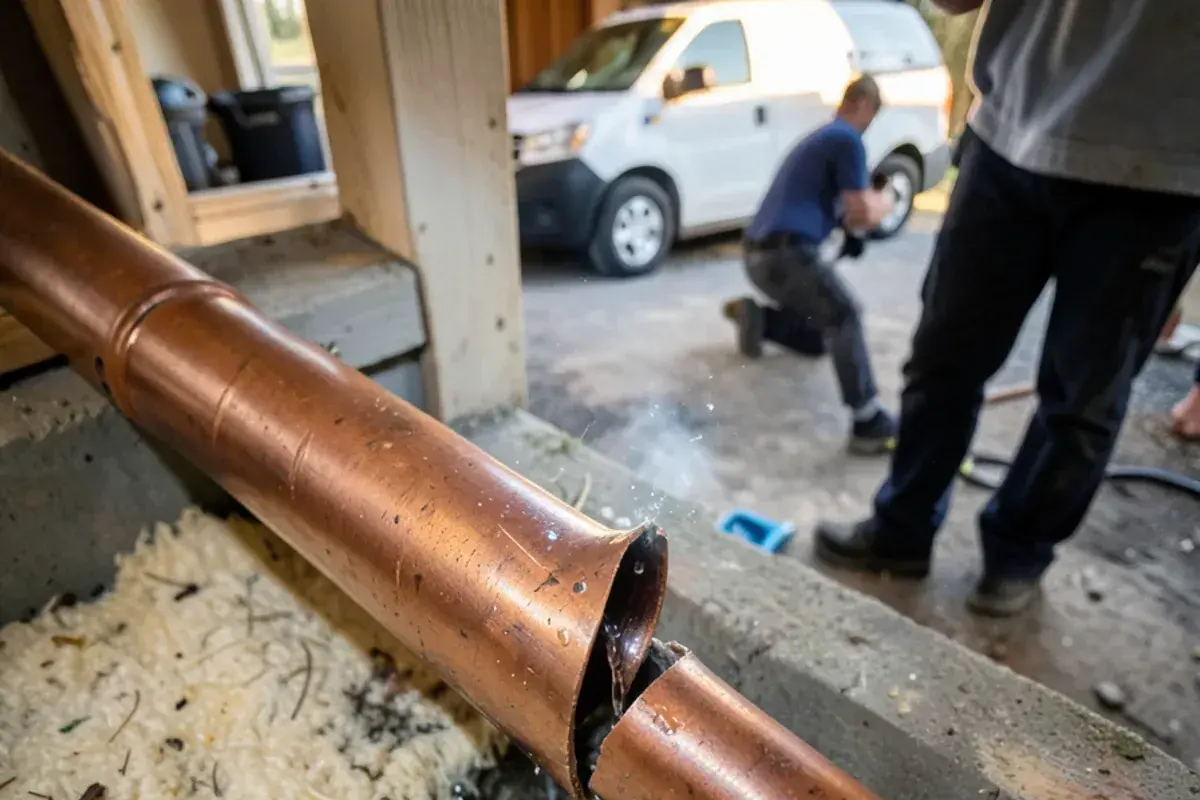
What plumbers find after a Michigan deep freeze
Calls after a hard cold snap follow a pattern. The most common is a frost-free spigot that split inside the wall. Those valves close a foot or more inside the house, so they only protect themselves if the hose comes off and the body pitches slightly down toward the outside. A hose left on in December holds water in the barrel, and the crack waits for the first spring watering.
Next comes a line hidden in a finished basement: a supply pipe boxed into a soffit along the rim joist, where new drywall now blocks the heat that used to reach it. Kitchen sinks in bump-outs and bay windows, and bathrooms over an attached garage, round out the list.
What each fix can and can't do
Foam insulation slows heat loss, but it adds no heat, so a sleeved pipe in an unheated garage still freezes after a few days of single digits. Heat cable adds heat, but it fails quietly. Nothing tells you when a section burns out or the plug gets pulled for the holiday lights. A drip keeps water moving at the faucet it serves and does nothing for a frozen run feeding a different fixture.
The only permanent fix for a pipe that freezes every winter is moving it inside the heated space. Rerouting changes the piping, so it falls outside Michigan's permit exemption, which covers only the working parts of a faucet or valve and clearing stoppages.
When the whole house goes dry at once, the trouble may be the service line. Those are laid below the frost (Clinton Township's code requires at least 5 feet of cover), but frost reaches deeper under plowed driveways and shoveled walks, where no snow blanket insulates the ground.
A five-minute check before the first hard freeze
Pick a cold, windy day and walk the edges of the basement with a flashlight, feeling for drafts where pipes cross the rim joist. Confirm every outdoor spigot is shut inside and open outside. Make sure everyone in the house knows where the main shutoff is. Those three habits cover the spots that freeze most often. If a line freezes anyway, or a spigot starts dripping into the ceiling come spring, call (207) 419-2600 and we'll connect you with a local plumber who covers your area.
Common questions
How cold does it have to be before pipes freeze?
There's no single number, because wind, insulation and where the pipe runs matter more than the thermometer. In practice, trouble in Michigan homes tends to start when outdoor lows sit in the teens or below for a day or more, and sooner for lines in garages, crawl spaces and outside walls.
Does letting a faucet drip really help?
Yes, for faucets served by pipes on outside walls. The American Red Cross recommends a cold-water drip in very cold weather. Moving water is slower to freeze, and an open faucet relieves the pressure that splits a pipe if ice does form. The Michigan Committee for Severe Weather Awareness has noted that an eighth-inch crack can release up to 250 gallons a day, so a drip costs far less water than a split.
What should I set the thermostat to when I leave for a winter trip?
Keep it at 55°F or higher, which is the American Red Cross guidance for an empty house in winter. Leave the cabinet doors open on outside walls, skip the deep nighttime setback before you go, and have someone check the house every few days, since a split pipe in an empty house runs until somebody notices.
Where we can help
A line already froze? Have it thawed and checked for splits
- Your call goes to an independent local plumbing company that does the work.