
Cost questions
Sewer line replacement cost factors for Macomb County homes
Sewer line replacement cost comes down to things you can measure before anyone digs: how deep and how long your lateral runs, what it's made of, what sits on top of it, and which method fits.
By Plumbers in Macomb, MI · Published · Last updated
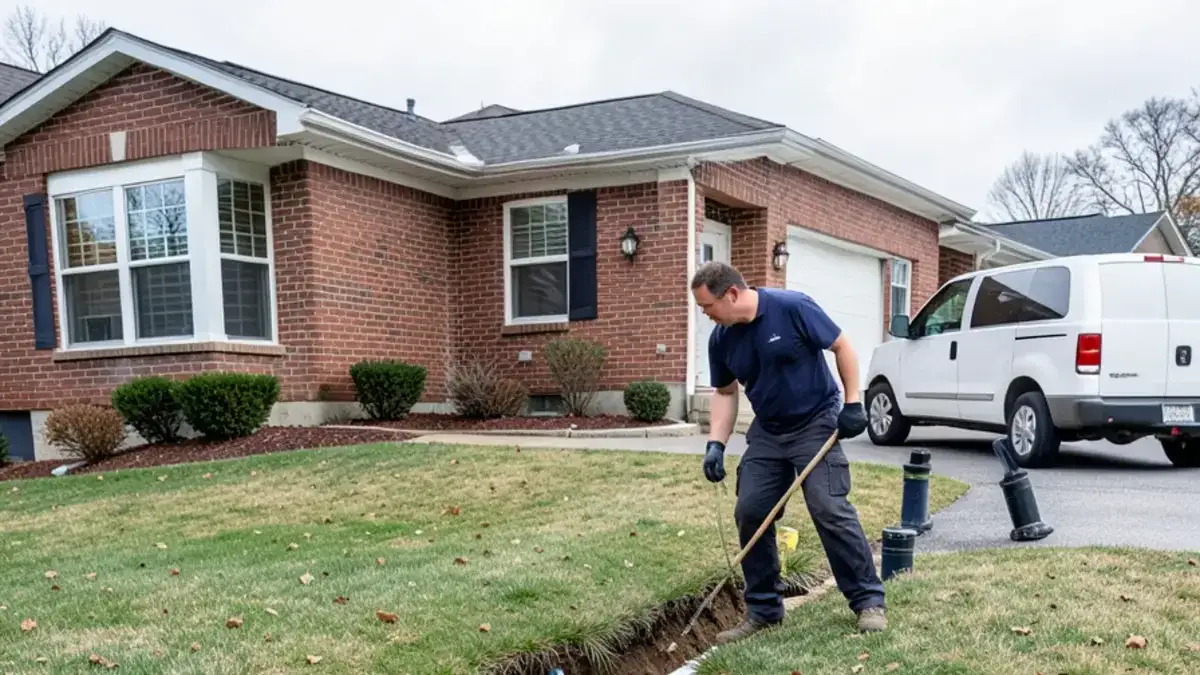
Nobody can price a sewer replacement fairly over the phone, but the number follows from facts a plumber can measure: the depth and length of the lateral, the old pipe material, the method (open trench, bursting or lining), driveways and trees on top, where it connects, permits, and restoration. A camera inspection settles most of them.
Start with what the camera shows
This guide covers the building sewer, the pipe that runs from your basement wall out to the public main or the connection near the street. Once each feature of that pipe is known, the written quote you get later reads like a list of facts instead of a mystery.
Every honest sewer estimate begins with a look inside the pipe. A sewer camera inspection finds where the line is broken, sagging or full of roots, and the footage counter on the cable tells you the distance from the cleanout to each defect. A locator above ground picks up the camera head and reads its depth, so you learn both how far and how deep the problem sits.
That footage also settles the biggest question before cost even comes up: whether you need a full replacement at all. One cracked joint 20 feet from the house is a repair. A pipe with offsets, cracks and roots from end to end is a replacement.
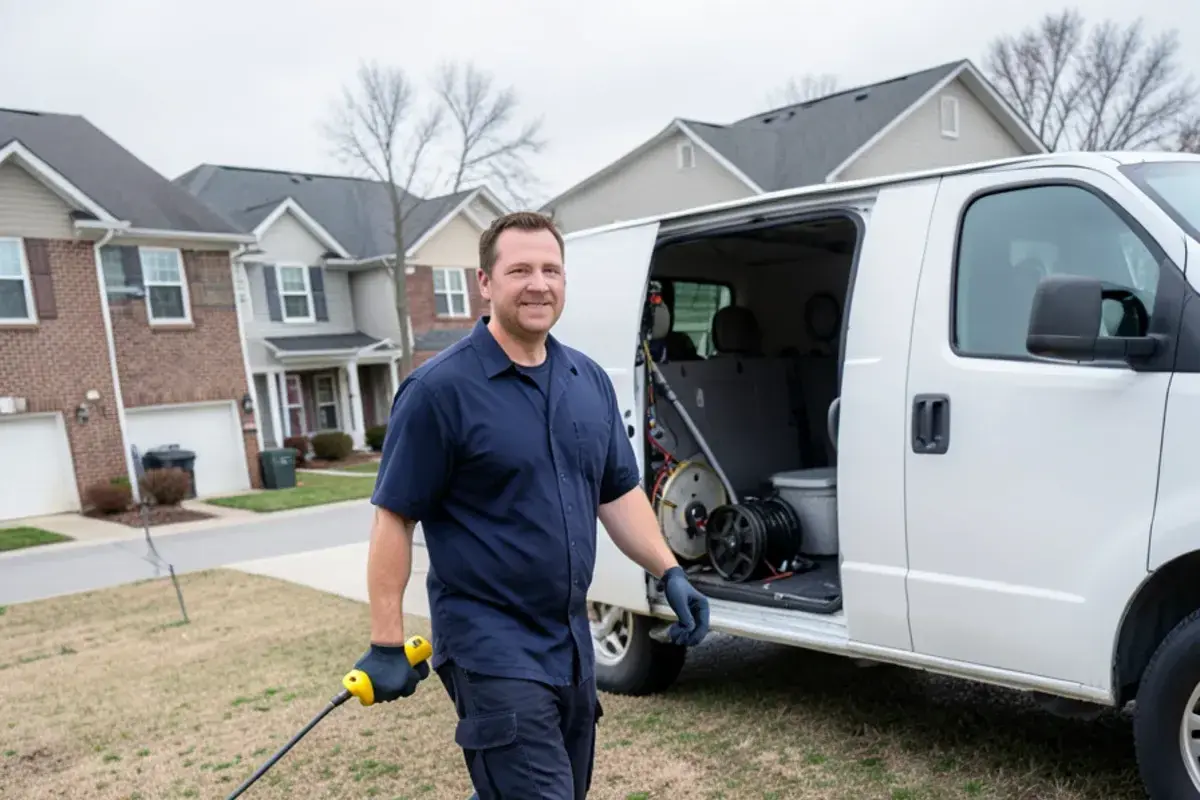
Want your sewer lateral measured before you budget?
- Your call goes to an independent local plumbing company that does the work.
The factors that move a sewer replacement quote
Here's how each part of the job tends to shift the price. None of these carry a fixed number, because two houses on the same street can differ on half of them.
| Factor | What raises cost | What keeps cost down |
|---|---|---|
| Depth | Deep basement exit or a deep public main | A shallow run with stable trench walls |
| Length | Long setback from the street | Short run from wall to connection |
| Existing pipe | Collapsed fiber pipe or crushed clay | Intact pipe that can take a liner or a bursting head |
| Method | Open trench under finished surfaces | Bursting or lining with two small pits |
| Crossings | Driveway, sidewalk, mature tree, patio | Open lawn the whole way |
| Connection point | Tap at a main under the street | Connection at a cleanout near the property line |
| Ground conditions | Wet soil that needs pumping and shoring | Dry, firm soil |
| Permits and inspections | Extra inspection trips or a street opening permit | One plumbing permit and one inspection |
| Restoration | Concrete, asphalt or pavers to replace | Topsoil and seed |
| Cleanouts | Adding a new two-way cleanout | An accessible cleanout already in place |
Depth and length
Most Macomb County homes have basements, so the sewer leaves through the foundation wall several feet below the yard and only gets deeper on its way to the main. Every extra foot of depth means more soil to move and haul. Once a trench gets past about five feet, the walls need shoring or a trench box so nobody gets buried, and that equipment adds time. Length works the same way: a home set far back from the road simply has more pipe to replace.
What the old pipe is made of
Older laterals here are usually vitrified clay, cast iron, or bituminous fiber pipe (often called Orangeburg). Clay comes in short sections with many joints. Cast iron tends to rust through along the bottom. Fiber pipe softens and squashes into an oval. The material matters for cost because it decides which methods are even possible. A liner needs a host pipe that still holds its shape, and a flattened fiber line usually can't take one.
Clay laterals are common enough in older neighborhoods that Clinton Township ran a pilot program to help income-qualified owners whose houses went up in 1974 or earlier replace failed clay sewer leads. New laterals are almost always PVC, with solvent-welded joints that keep roots and groundwater out.
Open trench, pipe bursting or lining
Open trench
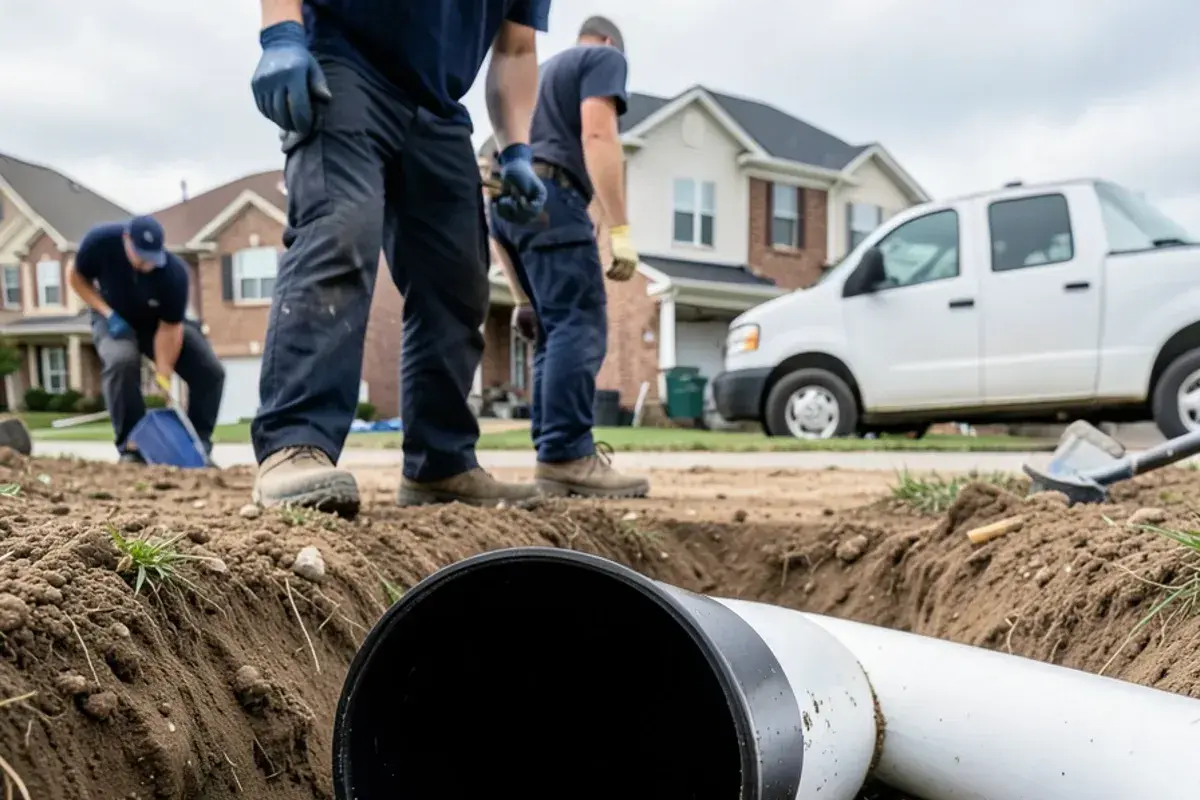
The excavator digs from the house to the connection, the old pipe comes out and new PVC goes in on a graded bed. It handles any condition, including a collapsed pipe or a belly that needs a new slope. The cost of digging grows with depth, and everything on top has to be removed and rebuilt.
Pipe bursting
A cone-shaped head is pulled through the old line, splitting it outward while it drags new pipe in behind. You need a pit at each end and little else. It works best when the existing route and slope are acceptable, and it struggles where the old line has a deep sag or sharp bends.
Cured-in-place lining
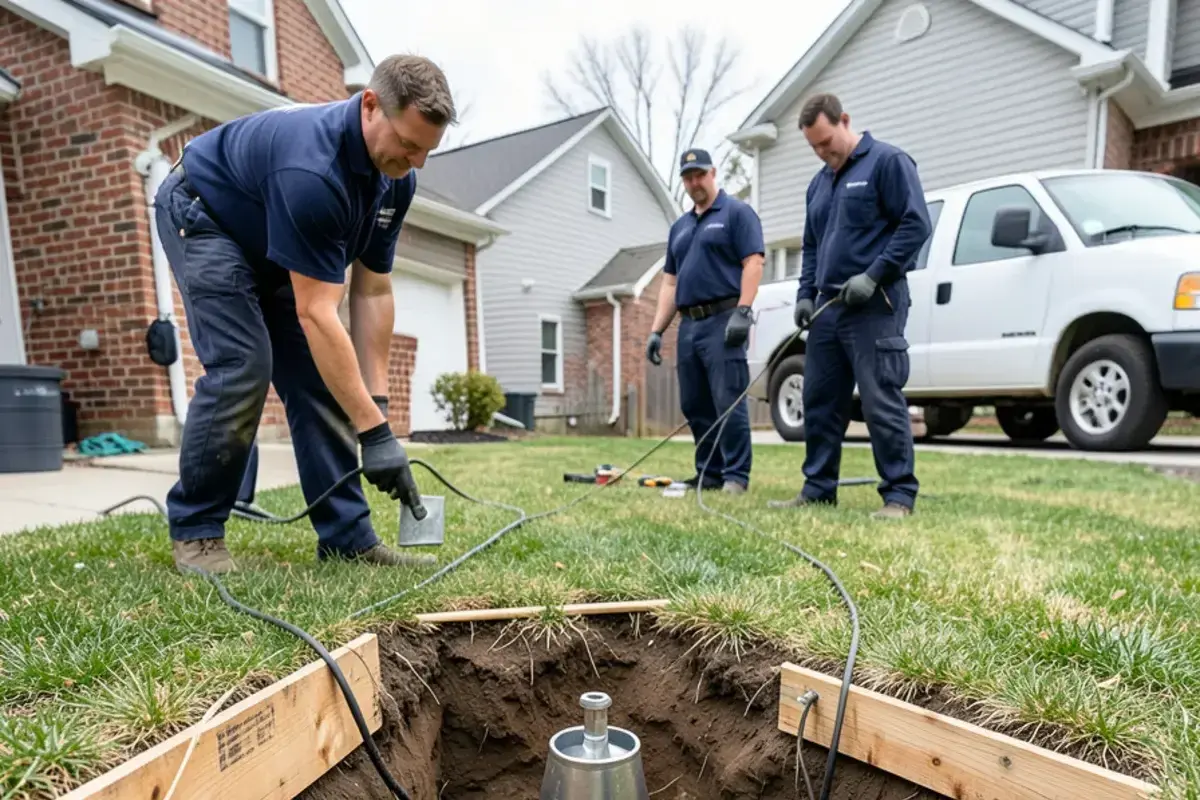
A resin-soaked liner is pulled or inverted into the cleaned pipe and cured into a new pipe inside the old one. Lining needs the least digging of all, but the host pipe must be round enough and clean enough to accept it, and it slightly reduces the inside diameter.
Driveways, trees and sidewalks in the path
What sits above the sewer often matters as much as the pipe itself. A concrete driveway has to be saw-cut, removed and repoured. A mature tree over the line may lose roots during digging, and the root mass is often the reason the pipe failed in the first place. If the connection is at a main under the street, a road opening and the city or county permit for work in the right-of-way come into play, along with traffic control. Those crossings are where trenchless methods earn their keep.
Permits, inspections and MISS DIG
Replacing a building sewer is permitted work in Michigan, and the new pipe gets inspected while the trench is still open. Communities price this as a permit application fee plus per-item fees. In Sterling Heights, for example, the plumbing permit application lists a separate fee item for a building sewer connection.
Whoever digs has to notify MISS DIG 811 no less than three business days ahead of excavation, which gives public utilities time to mark their lines. MISS DIG does not mark private lines such as sprinkler piping, a gas line to a detached garage or buried low-voltage wiring, and digging within four feet on either side of a utility mark has to be done by hand. Hand digging around a crowd of marks adds labor.
Restoration and cleanouts
Ask every bidder what "restoration" means in their quote. For some it means rough-graded soil. For others it includes topsoil, seed and a repoured driveway apron. That single line can explain a wide gap between two numbers.
A new two-way cleanout outside the foundation adds a small amount now and makes every future cleaning or camera look easier, because the plumber can work toward the street without pulling a toilet or opening a basement fitting.
How to compare two sewer quotes
Lay the quotes side by side and check that they describe the same job:
- The same length of pipe and the same connection point.
- The same method, or a clear reason one bidder chose differently.
- Who pulls the permit and schedules the inspection.
- Whether the MISS DIG ticket, spoil hauling and restoration are included.
- Whether a new cleanout is part of the price.
If one quote is far lower, the difference is usually hiding in one of those lines. When you want a closer look at your own lateral before deciding, our page on sewer line replacement explains how that work is planned, and sewer line repair covers the spot-fix route when only one section has failed.
What crews commonly run into once digging starts
A quote is written from camera footage and a locator reading, and both have blind spots. A few surprises turn up on Macomb County laterals often enough to ask about before you sign.
The material can change partway down the line. A run that leaves the basement as cast iron may turn to clay or fiber pipe past the foundation, and an old spot repair may have left a rubber coupling or a short PVC piece in the middle of the yard. The camera sees the inside of each change, but it can't always tell how sound the outside of the pipe is.
The connection at the main is the other unknown. If the tap at the public sewer is cracked or the fitting is offset, the community may require it to be redone to its standards, and in some places that part of the work falls to the municipality instead of your contractor.
Groundwater slows everything down. A trench dug in a wet spring can fill as fast as it's opened, and a dewatering pump, extra stone bedding and shoring all show up as line items.
What each method can't do
Lining can't change slope. A belly that held water before lining still holds water afterward, just inside a smoother pipe. Bursting follows the old path and grade as well, and it needs clearance from nearby gas and water lines, because the old pipe gets pushed outward into the soil. An open trench corrects slope and handles anything it finds, but it rebuilds every surface it crosses.
Ask each bidder how they handle a surprise: a written change-order rate, or a stop-and-call before any extra work. A quote that answers that question is easier to trust than one that's simply lower.
Getting a number you can plan around
Start with camera footage and a depth reading, then ask for itemized quotes built on the same length, method and connection point. Keep a copy of the video, because it's the one document every bidder can price from. When you're ready to have your lateral looked at, call (207) 419-2600 and we'll connect you with a local plumber who covers your area.
Common questions
Is trenchless sewer replacement always cheaper than digging a trench?
No. Trenchless methods save the most when a driveway, mature tree or finished landscaping sits over the line. Across open lawn, a straight trench can come out close to or below a bursting or lining job, because the specialized equipment and access pits carry their own cost.
Can only part of my sewer line be replaced?
Yes, when a camera inspection shows one bad section and the rest of the pipe is sound. A dig at that spot fixes the break. If the footage shows offsets, cracks or roots along most of the run, spot repairs tend to chase one failure after another and full replacement usually makes more sense.
Is a permit required to replace a sewer lateral in Macomb County?
Yes. Replacing a building sewer is permitted work in Michigan, and the line has to be inspected before the trench is backfilled. Michigan allows building sewer permits to go to someone other than a licensed plumbing contractor, and your city or township may layer its own requirements on top, so ask the local building department.
Where we can help
Want your sewer lateral measured before you budget?
- Your call goes to an independent local plumbing company that does the work.