
Problem solving
Why your sump pump is running constantly
A sump pump running constantly in early spring may be doing exactly what it was installed to do. It may also be wearing itself out on a stuck switch, a bad check valve or water that loops straight back into the pit.
By Plumbers in Macomb, MI · Published · Last updated
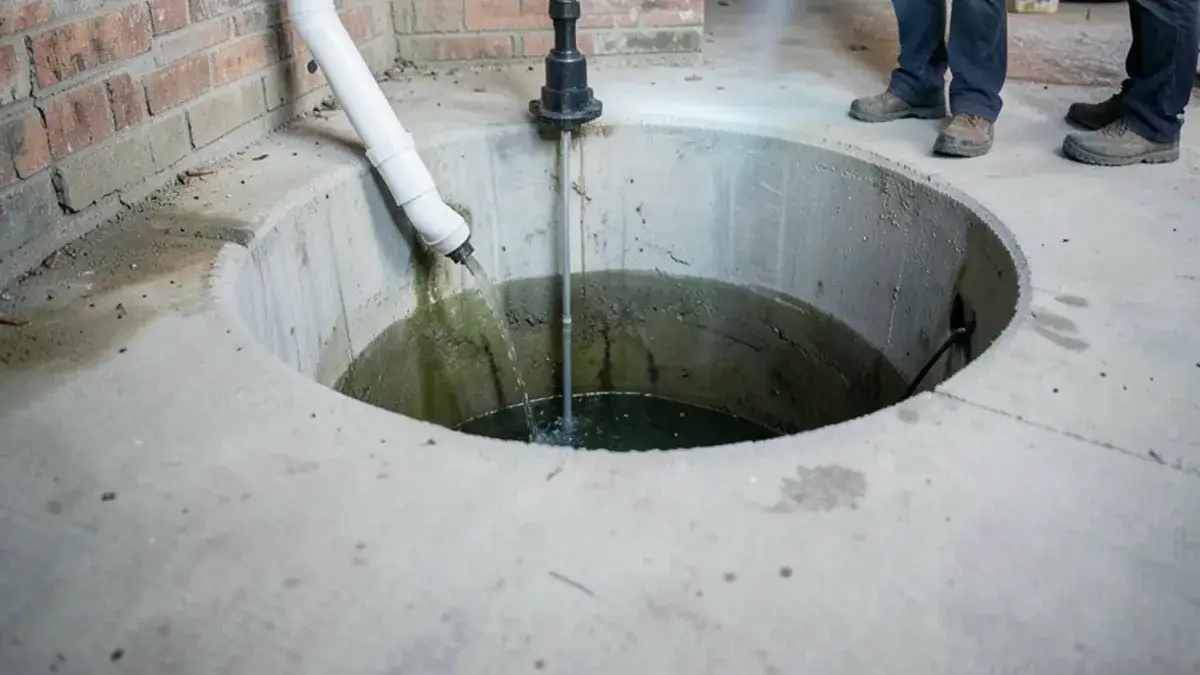
A sump pump runs constantly for one of two reasons. Either water really is reaching the pit faster than usual, from snowmelt, heavy rain, high groundwater or discharge water that loops back, or a part has failed: a stuck float or switch, a check valve that lets water fall back, or a pump too worn to keep up.
Normal spring cycling or a real problem
In Macomb County, March and April bring snowmelt and spring rain on top of ground that's still cold and saturated. The footing drains around your foundation collect that groundwater and feed it to the sump pit, which is their job. During a wet stretch, a healthy pump may kick on every few minutes for days and sound like it never stops.
Here's the test. Watch the pit after the pump shuts off. If water keeps flowing in from the drain tile openings and the level climbs back to the switch point, the pump is keeping up with real inflow. If the pit stays dry and the pump keeps running anyway, or the pump shuts off and the water level jumps right back up with no new water coming in, something is wrong with the pump or its plumbing.
Sump pump cycling nonstop and you can't tell why?
- Your call goes to an independent local plumbing company that does the work.
What you see and what it usually means
| What you see | Likely cause | Next step |
|---|---|---|
| Pump runs, pit is empty or nearly empty | Stuck float or failed switch | Unplug, free the float, test again |
| Pump stops, water rushes back into the pit, pump restarts | Failed or missing check valve | Replace the check valve |
| Pump runs and the water level barely drops | Pump too small, worn impeller or clogged intake | Have the pump tested and sized |
| Steady inflow from the tile for days after rain or melt | High groundwater, normal footing drain flow | Confirm the pump keeps up and add a backup |
| Pump cycles more after each rain, pit refills fast | Discharge water flowing back toward the house | Extend or reroute the outdoor outlet |
| Pump hums but moves no water | Jammed impeller or frozen discharge line | Unplug and call |
| Pump runs loud, water level stays put, no ice outside | Air trapped between the pump and the check valve | Look for a weep hole; have it checked |
| Clear water trickles in after a week of dry weather | Leaking buried water line or sprinkler line | Watch the water meter with every fixture off |
Causes worth checking
A stuck float or failed switch
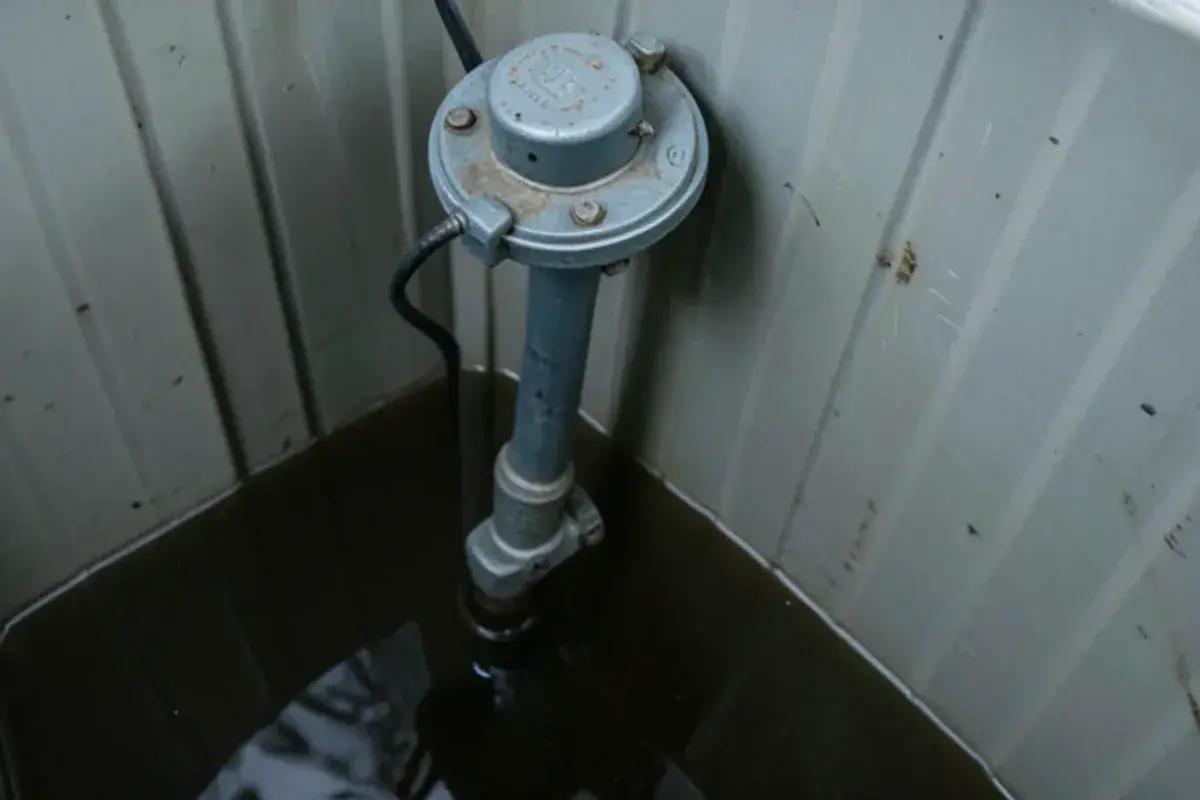
Tethered floats swing on a cord and can catch on the pit wall, the discharge pipe or the power cord. Vertical floats ride a rod and can bind on debris or a bent bracket. Either way, the switch stays in the "on" position and the pump runs dry. Electronic and pressure switches fail too, usually by sticking on. Running dry overheats the motor, so this is the cause to rule out first.
A check valve that lets water fall back
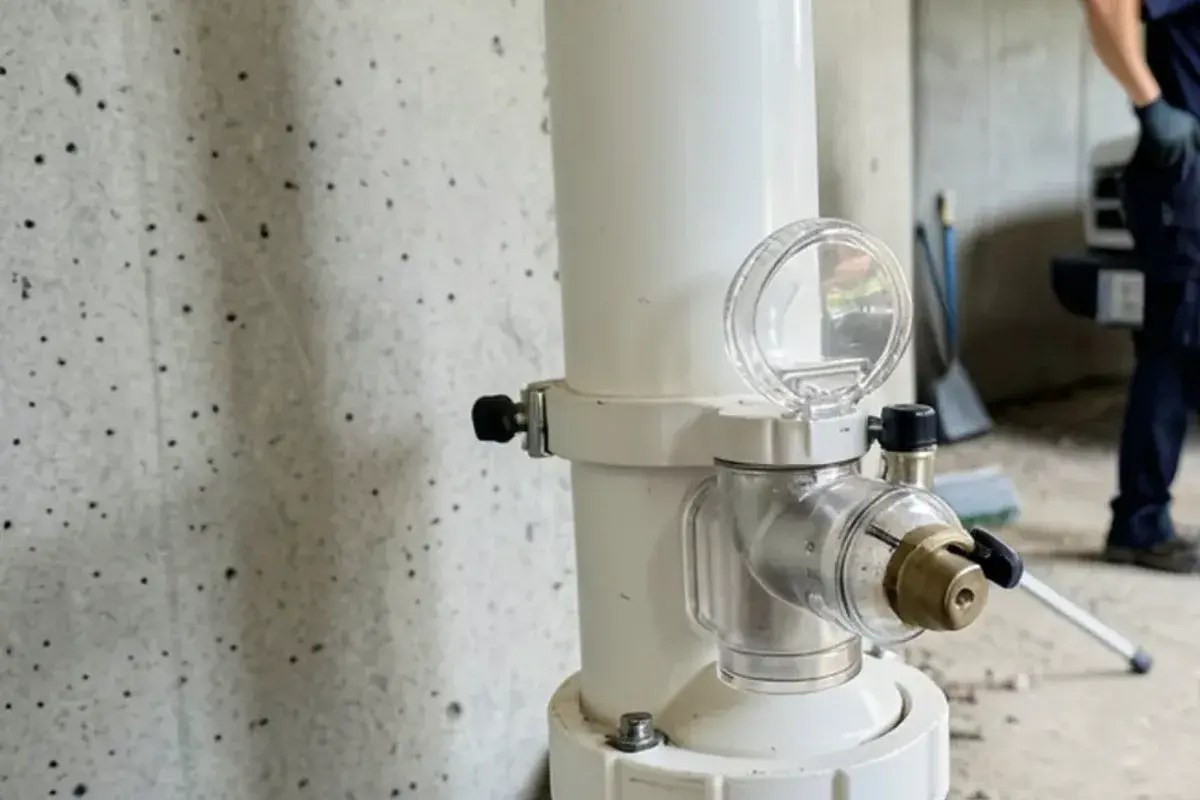
After each cycle, a column of water sits in the discharge pipe. The check valve holds it there. When the flapper wears out or sticks open, that water drains back into the pit and lifts the float again. You'll often hear a loud thunk or a gush when the pump stops, followed by another cycle a few seconds later.
A pump that's too small or too worn
Every pump has a rated flow at a given lift height. A pump that was sized for a dry year, or one pushing water up a tall basement wall and through a long run outside, may barely keep up during the spring peak. Impellers also wear and intake screens clog with silt, so an older pump can lose capacity without any obvious failure.
High groundwater and footing drains doing their job
Some basements sit in ground that stays wet for weeks every spring. In those homes, steady pumping isn't a defect. The fix is making sure the system can handle it: a properly sized primary pump, a backup, and a discharge that carries water well away from the foundation.
Discharge water coming right back
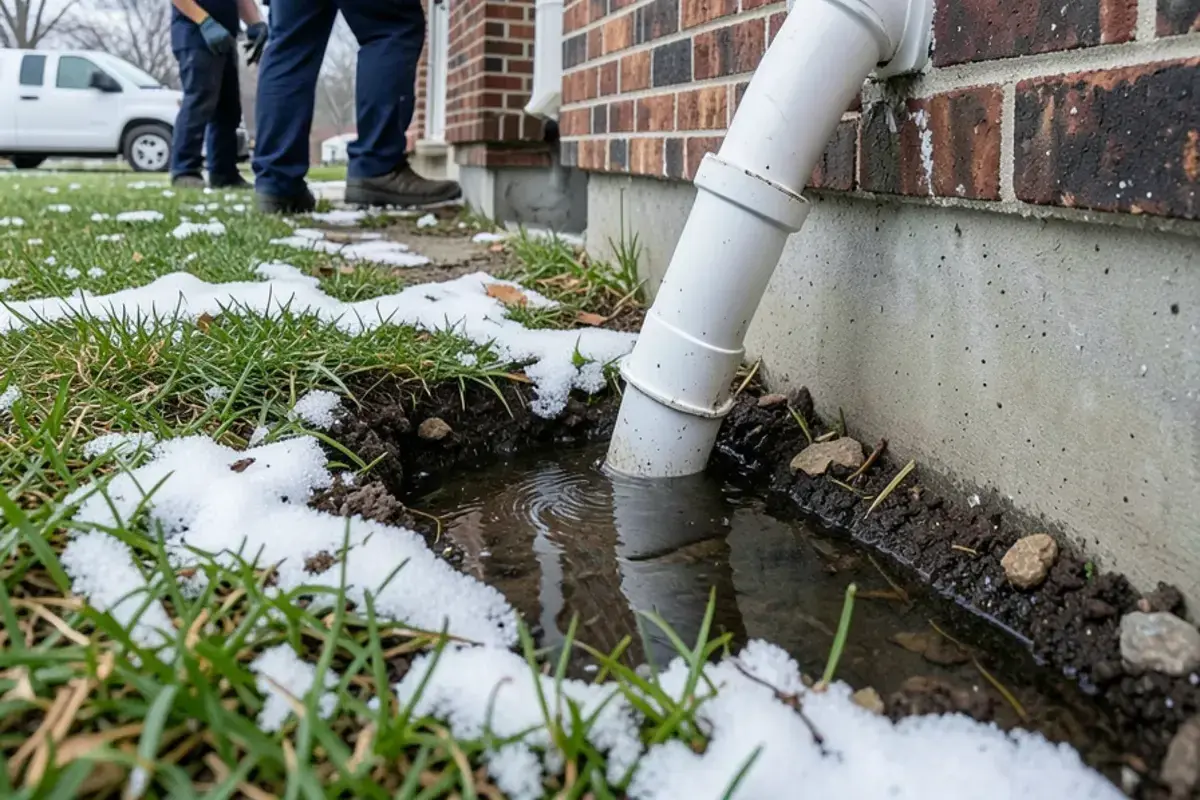
If the discharge empties onto the ground next to the house, or onto a slope that tilts back toward it, the water seeps back through the soil to the footing drains and returns to the pit. The pump ends up moving the same water over and over. A frozen or ice-blocked outdoor line can do something similar by forcing water out of a relief opening right at the wall.
A leak that feeds the pit on dry days
Footing drains collect any water in the soil around the house, including water that was never rain. A cracked buried water service, a leaking sprinkler line or a split hose bib pipe inside the wall can soak the backfill and send a slow, steady stream to the pit long after the yard has dried out. The giveaway is clear water arriving at the same pace day after day, whatever the weather. Turn off every faucet, the ice maker and the irrigation, then watch the water meter for ten minutes. If the dial or the leak indicator moves, the sump is moving city water, and the fix is the leak, not the pump.
An air-locked pump
Some pumps run loudly without lowering the water at all. When air gets trapped between the impeller and a closed check valve, the pump spins in a pocket of air and can't push the water column out. Plumbers usually prevent this with a small weep hole drilled in the discharge pipe just above the pump, below the check valve. A pump that was swapped recently and now runs without draining the pit is a good candidate for this problem.
What you can check safely
Sump pits hold water and electricity a foot apart, so take these steps in order:
- Unplug the pump before touching anything in the pit. If the outlet is in standing water, stay out and call.
- Shine a flashlight in and look for inflow from the drain tile openings.
- Use a stick or rod to lift and drop the float and see whether it moves freely.
- Check that the cord, pipe and float aren't tangled.
- Plug the pump back in and watch one full cycle. Listen for a thunk and watch for water falling back.
- Go outside and follow the discharge to its end. Look for ice, crushed pipe or water pooling near the wall.
Never reach into the pit with the pump plugged in.
Where the discharge is allowed to go
Some homeowners try to solve a short-cycling pump by sending the water into a laundry tub or floor drain. In Macomb Township, that's against the township code, which bans discharging groundwater or subsurface drainage into the sanitary sewer and requires it to be sent to a storm sewer or an approved natural outlet instead. Clear water in the sanitary system also adds to the load that causes basement backups during big storms. In Clinton Township, the public services department inspects any sump discharge line that is new, repaired or rerouted, and that inspection happens before backfill. Check with your own community before you change the outdoor run.
What plumbers commonly find, and what each fix can't do
Most service calls for a pump that never stops end in one of three places: a float or switch that sticks, a check valve that has worn out, or a pump that is healthy but outmatched by the water. Each fix solves one problem and leaves the others alone, which is worth knowing before you approve anything.
A new float switch is the smallest repair, but on an older pump the motor may have been running dry for weeks before anyone noticed. Ask the plumber to check the motor's draw and the impeller before you decide between a switch and a whole pump.
A new check valve stops fallback and the rapid restarts that come with it. It does nothing about high groundwater, and it needs that weep hole below it so the pump doesn't air-lock.
A bigger pump sounds like the answer to constant running, but in a small pit it can empty the basin in seconds and short-cycle, which wears the switch and motor faster. Pit size, lift height, the length of the outdoor run and the switch's on and off points all have to fit the pump. Sometimes the better change is a deeper or wider basin or an adjusted switch, not more horsepower.
Backups buy time rather than fixing anything. A battery unit runs only until the battery is spent, so its age and charge matter. A water-powered unit uses city water pressure and needs backflow protection. Macomb Township's residential cross-connection program, set to start July 1, 2026, looks for these devices, and Sterling Heights puts them on a three-year residential test cycle, because they connect a sump pit to the public water supply. And when the cause is high groundwater in a wet spring, the honest finding may be that nothing is broken. In that case, the work is redundancy and better discharge routing.
When to call a plumber
Call if the pump runs with a dry pit after you've freed the float, if it hums without moving water, if it cycles every few seconds, or if the water keeps rising while the pump is running. Those signs usually mean a failing switch, check valve or motor. Testing and replacement are covered on the sump pump repair and installation page, and basement flooding prevention explains backups, discharge routing and the other pieces that keep a wet spring out of your basement.
If your pump won't settle down and you'd rather have someone look at it, call (207) 419-2600 and we'll connect you with a local plumber who covers your part of Macomb County.
Common questions
How long should a sump pump run each cycle?
Most cycles last somewhere between several seconds and a minute, depending on pump size and pit size. What matters more is the pattern. A pump that runs, stops, and runs again within seconds is short-cycling, and one that never shuts off with the pit nearly empty has a switch or float problem.
Is it bad for a sump pump to run all the time?
Yes, when it runs with no water to move, because the motor relies on the surrounding water to stay cool and overheats in a dry pit. Running nonstop against real inflow is what the pump was installed for, though it shortens motor life. A pump that seldom rests through a Macomb County spring is a reason to add a second pump or a battery backup.
Should I add a battery backup sump pump?
Yes, for most basements that take on steady spring water, since the main pump can fail or lose power in the same storm that fills the pit. A battery unit is the simpler choice. Water-powered backups run on city water pressure, so they need backflow protection, and Macomb Township lists them as a permitted plumbing item.
Why does my sump pump run when it hasn't rained?
Usually because water is still reaching the pit from somewhere. Yards can stay saturated for days after a thaw, discharge dumped beside the foundation loops back, and a leaking buried water line or sprinkler line can feed the drain tile. If the pit stays dry and the pump still runs, suspect the float or switch instead. A water meter that moves with every fixture off points to a leak.
Where we can help
Sump pump cycling nonstop and you can't tell why?
- Your call goes to an independent local plumbing company that does the work.