
Michigan seasons
Spring thaw and basement water in Macomb County
Basement water during the spring thaw tends to show up in Macomb County in March and April, when melting snow and early rain hit ground that is still frozen or soaked and has nowhere else to send the water.
By Plumbers in Macomb, MI · Published · Last updated
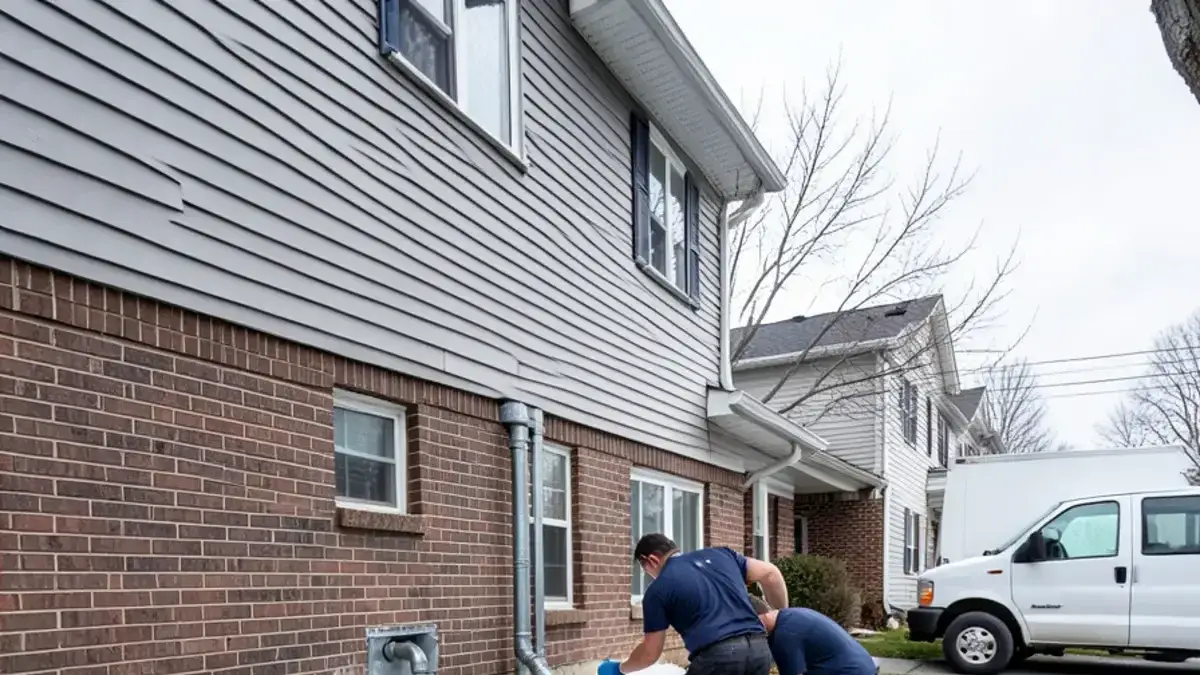
Basement water during the spring thaw in Macomb County usually comes from one of three places: groundwater pushing through the floor-wall joint when the sump can't keep up, meltwater pooling against the foundation, or a sewer backup at the floor drain. The fix depends on which one, so check before you mop.
Why March and April are hard on Macomb County basements
The thaw doesn't arrive on a schedule, but the pattern repeats most years. A stretch of warm days melts the snowpack, a spring storm follows, and basements that stayed dry all winter suddenly have a damp corner or a puddle by the floor drain.
All winter, snow stores water on your lawn and roof. When it melts quickly, that water lands on soil that's often still frozen a few inches down, so it can't soak in the way summer rain does. It runs along the surface until it finds the low spot, and around many homes the low spot is the backfilled soil right against the foundation.
At the same time, the groundwater level climbs. Footing drains around the base of the foundation collect it and route it to the sump pit, and your pump may run more in these weeks than the rest of the year combined. Storm sewers fill with meltwater, and sanitary sewers take on extra flow from leaks and illegal connections. Every part of the system is busy at once.
Basement taking on water as the snow melts?
- Your call goes to an independent local plumbing company that does the work.
Groundwater, sewer backup or surface water
Each source leaves a different signature. Take a minute to look before you start mopping.
| Where the water shows up | What it looks and smells like | Likely source | First step |
|---|---|---|---|
| Along the floor-wall joint or through wall cracks | Clear, no odor | Groundwater pressing on the foundation | Check that the sump pump is running and keeping up |
| Up through a floor drain | Gray or brown, sewage odor | Sewer backup from the lateral or the public main | Stop using water and call |
| Near a window well or high on one wall | Clear or muddy, often near a downspout | Surface water from melt or roof runoff | Clear the window well and redirect the downspout |
| Overflowing the sump pit | Clear, pit full to the rim | Pump failed or can't keep up | Check power and the float, then call |
| Around the water heater or a supply line | Clear, steady even on dry days | A plumbing leak, unrelated to the thaw | Shut off the supply to that fixture |
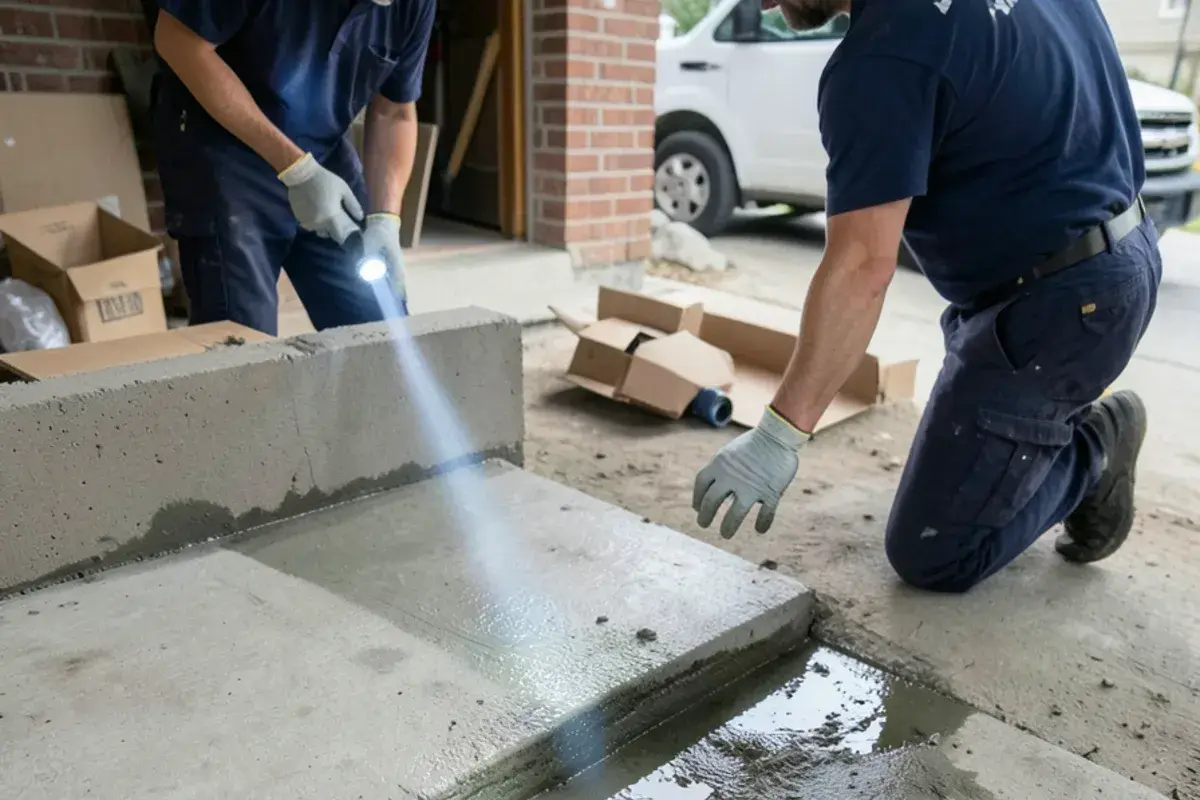
Sewer backups behave differently depending on where you live. Most of Macomb County drains to separate sanitary sewers. Combined sewers, which move storm runoff and sewage in the same pipe, are found only in the older southeast corner of the county, in places like St. Clair Shores, Roseville and Eastpointe. In a big melt or storm, those systems lean on overflow retention basins, and basements with low floor drains feel the strain.
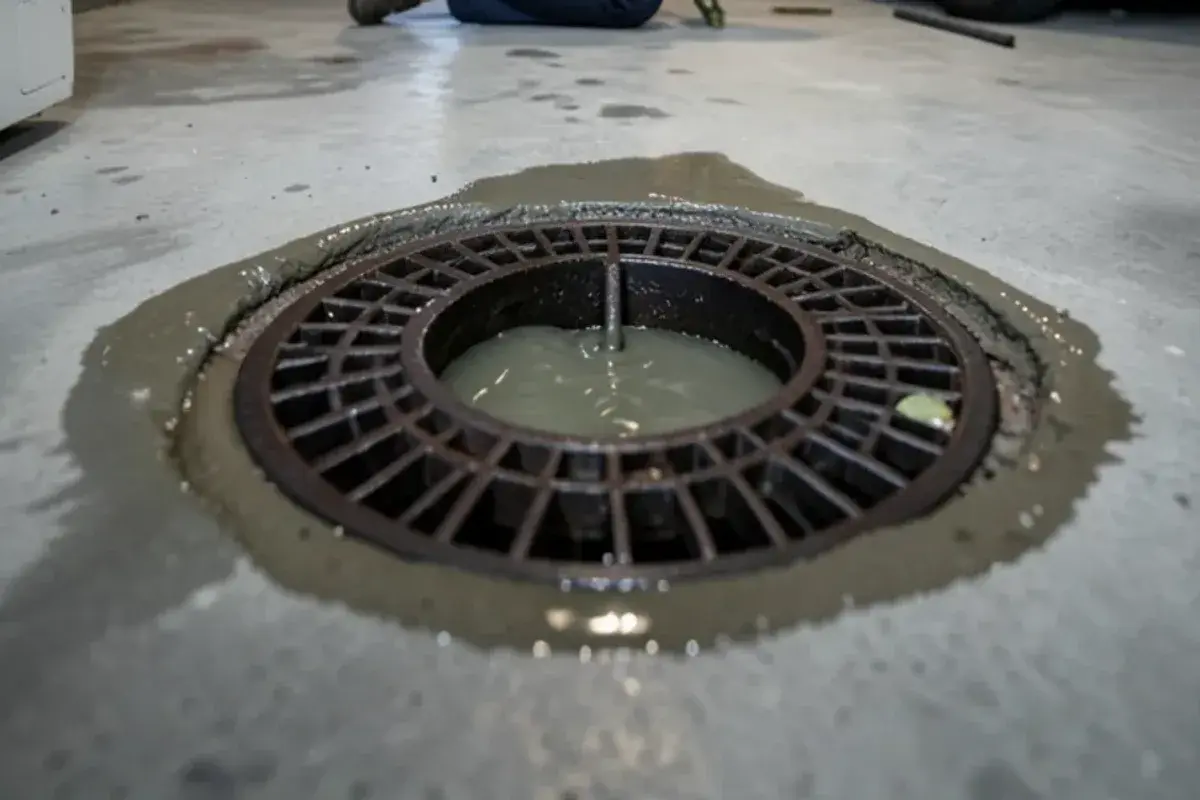
Check the sump and its discharge before the melt
Do this in late February or early March, before the snowpack goes:
- Lift the pit lid and look for debris, silt or a float tangled in the cord.
- Dump a bucket of water in slowly. Watch the float rise, the motor kick on, the level drop and the motor stop on its own.
- Listen when it stops. A gush of water falling back means the check valve needs attention.
- Walk outside and find where the discharge ends. Knock any ice out of the line and make sure the end isn't buried under a snowbank.
- If you have a battery backup, check the battery's age and test the backup pump.
A pump that won't start or struggles to empty the pit is far easier to replace on a dry day than in the middle of a melt. Our page on sump pump repair and installation describes how a failing pump gets diagnosed and swapped.
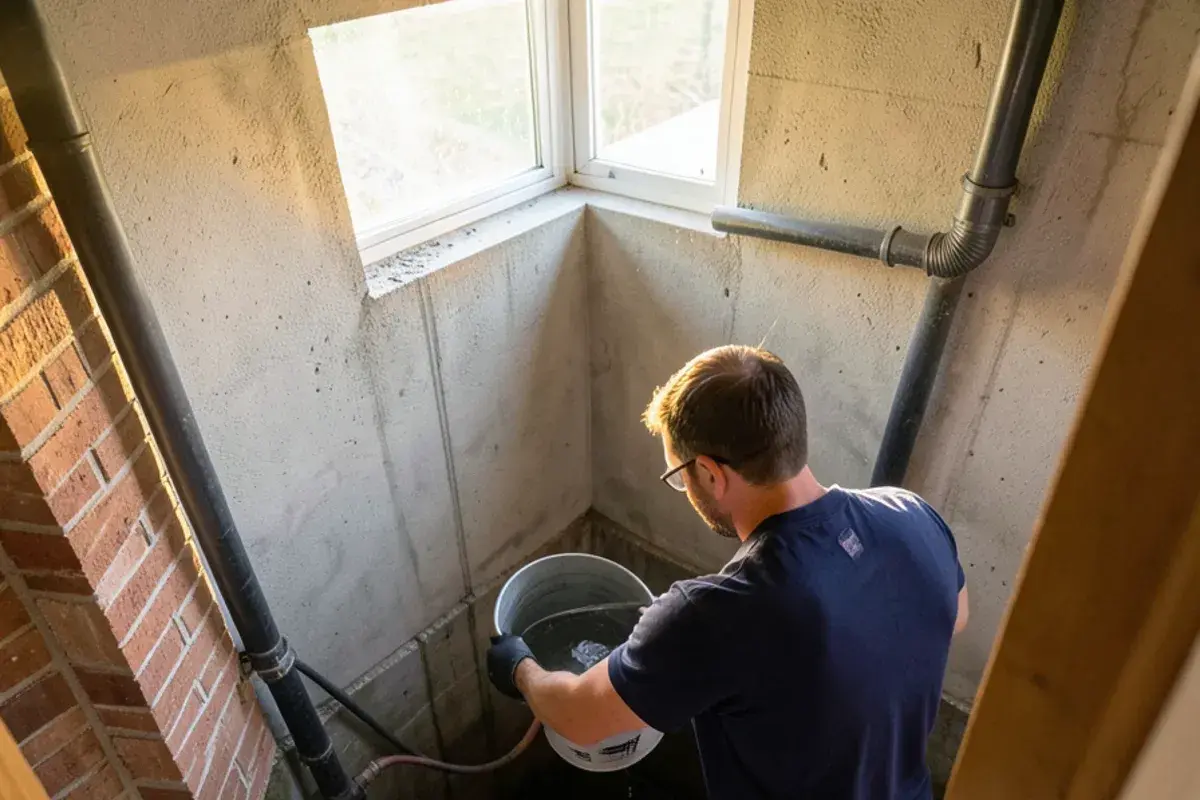
Downspouts, snowbanks and grading
Your roof sheds a surprising volume of meltwater. North Dakota State University Extension estimates that a 1,000-square-foot roof under a foot of snow can release roughly 2,500 gallons as it melts. Every downspout should empty several feet from the foundation onto ground that slopes away from the house. Extensions get kicked aside and buried in snow over the winter, so reattach them before the thaw.
Shovel snow away from window wells and the foundation on the uphill side of the house. Plowed and shoveled snow piled against a wall is a slow-release water tank aimed straight at your basement.
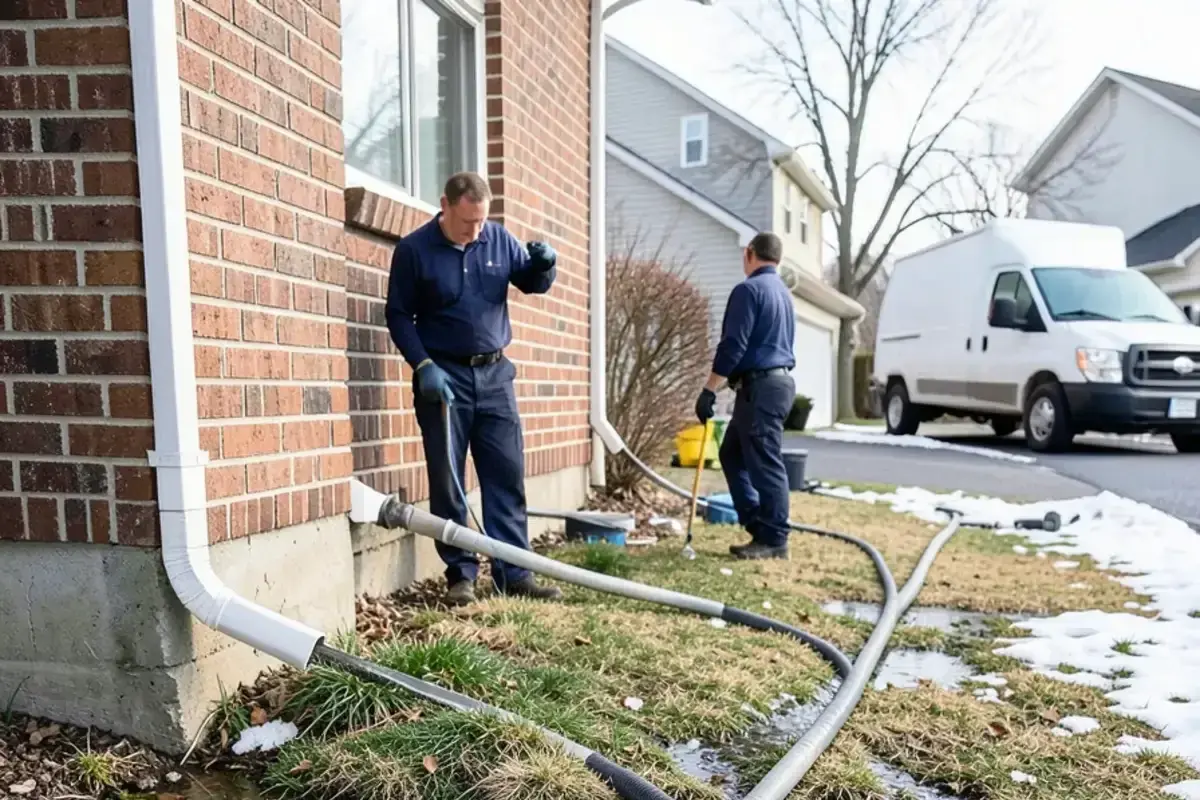
Where sump water is allowed to go
Macomb Township code forbids discharging unpolluted water into the sanitary sewer, and it names groundwater, stormwater, roof runoff and subsurface drainage specifically. Sump pump and footing drain water fall squarely under that rule. It belongs in a storm sewer or some other outlet the township approves. Hoses run from the pit into a laundry tub or floor drain break that rule, and they add clear water to a sanitary system that is already strained in spring. Under Michigan's sewer backup law, a backup caused mainly by a sump or downspout connection is excluded from a municipality's liability, so that shortcut can also cost you a claim.
If sewage comes up the floor drain
Stop running water, flushing toilets and doing laundry, since everything you send down the drain has nowhere to go. Keep children and pets away, and wear boots and gloves if you have to walk through it. Take photos before cleanup.
If you live in Macomb Township and the backup came from the public sewer, you have 45 days from the day you find it to file a written claim with the township, and a late claim can bar recovery. EPA guidance says materials wet with clean water should dry out inside a 24 to 48 hour window to hold off mold. Anything soaked with sewage is different: it calls for protective gear and usually has to be removed. A camera in the lateral afterward shows whether the backup started in your line or the main, and sewer line repair covers what happens when your side is the problem.
Our guide to sewage backups in the basement walks through cleanup and the claim in more detail.
What plumbers find in basements that flood every spring
When the same basement takes water every March, the cause is often in the sump system rather than the walls. A few patterns come up again and again.
The discharge ends too close to the house. Water pumped out a short pipe at the foundation soaks straight back down to the footing drain, and the pump moves the same water in a loop until it can't keep up. A missing or failed check valve does something similar inside the pit, letting the column in the pipe fall back every cycle. A discharge line that froze in February, or ends under a plowed snowbank, can leave a healthy pump pushing against a plug.
Older homes add their own wrinkle. Footing drain tile from decades back can silt up or collapse, so water never reaches the pit and comes through the floor-wall joint instead. A camera pushed up the inlet pipe from the sump pit can often show it.
What each fix can and can't do
A bigger pump moves more water, but it won't fix a discharge that recirculates or a clogged footing tile. A battery backup covers a power outage or a failed primary, and it shares the same pit, inlet and discharge, so it can't help when those are the problem. A water-powered backup runs without electricity, but it connects to the drinking water supply and needs backflow protection. Sterling Heights tests those devices every three years, and Macomb Township's cross-connection survey asks about them. Installing a sump pump or a water-powered backup is permitted work in Macomb Township, which lists both on its plumbing permit fee table. A backwater valve stops sewer water from coming back up the floor drain, and it does nothing about groundwater at the walls.
When the water keeps coming back
Call when the sump pump can't keep up or won't run, when water comes up through a floor drain, or when the same corner floods every spring despite clear downspouts. The plumber can test the pump, camera the lateral and look at whether a backwater valve or a second pump makes sense, and the basement flooding prevention page goes through how those options fit together. Before the next melt, call (207) 419-2600 and we'll connect you with a local plumber who covers your neighborhood.
Common questions
Who handles spring seepage, a plumber or a waterproofing contractor?
Often both, each on its own side of the problem. Water through cracks and wall joints is a foundation and drainage issue, while the sump pump, discharge line, floor drains and sewer lateral are plumbing. A plumber can confirm whether the pump and drains are working, which tells you whether the remaining water is coming through the walls.
Can I run my sump pump into the floor drain during the thaw?
No, not in Macomb Township. Its code keeps groundwater out of the sanitary sewer, and a floor drain empties straight into that sewer. Other communities have similar rules, and the extra clear water raises the chance of a sewer backup for you and your neighbors.
Will my insurance pay for a sewer backup in the basement?
No, not unless your policy includes it. According to Michigan's insurance regulator (DIFS), standard homeowners policies usually leave out sewer backup and sump overflow damage, and you add that protection with an endorsement. Flood insurance is a separate policy again. Read yours before spring, not after.
Where we can help
Basement taking on water as the snow melts?
- Your call goes to an independent local plumbing company that does the work.